
Understanding the Quiet Ways Maine Coons Show Their Love
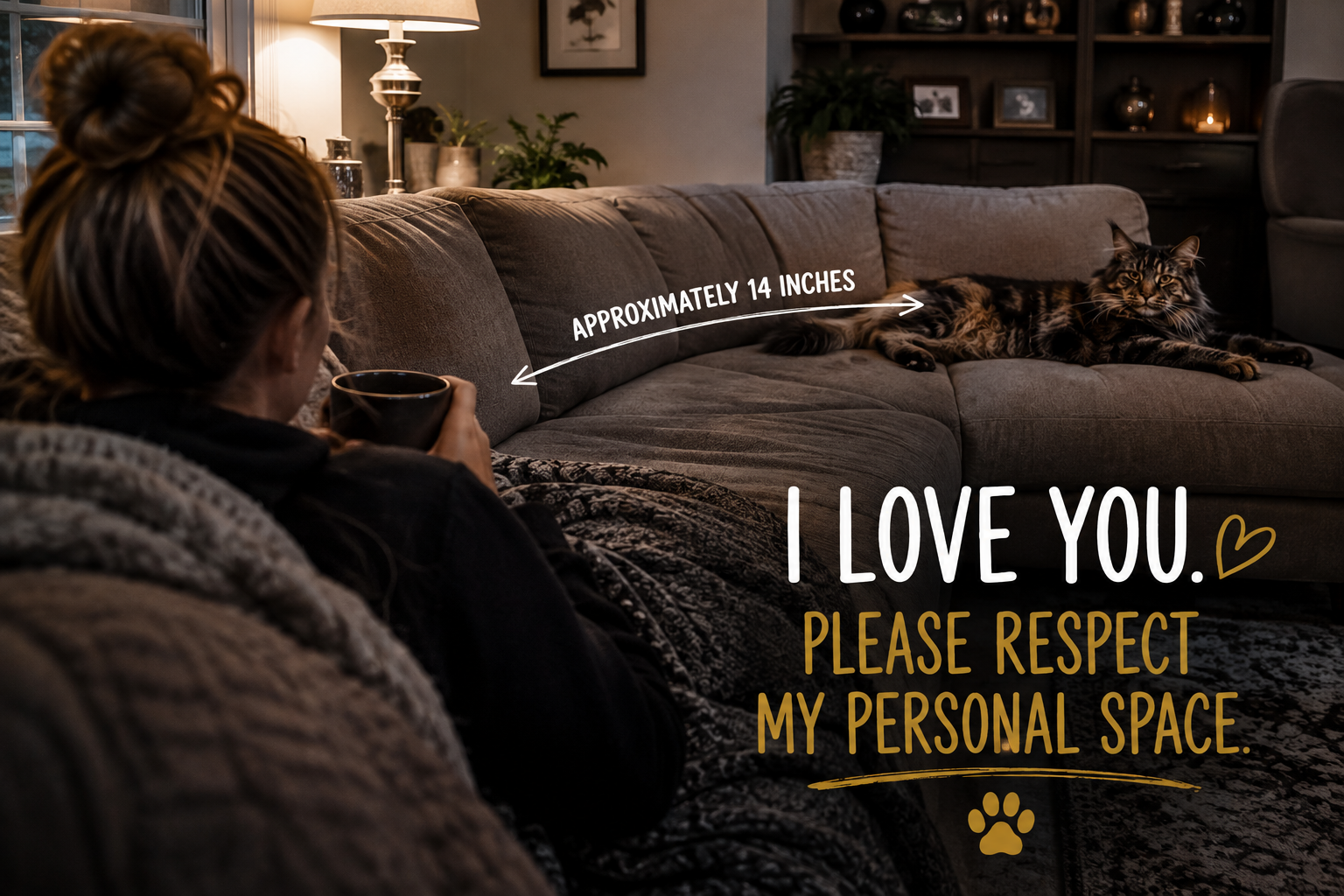
You imagined it perfectly. A giant, fluffy Maine Coon curled peacefully in your lap while you watch television. Maybe they're purring. Maybe you're running your fingers through that enormous coat. Maybe you've finally achieved the ultimate Maine Coon-owner dream. Then you actually get a Maine Coon. You sit down. They walk over. Your heart skips a beat. This is it. They jump onto the couch... walk right past your lap... and lie down approximately 14 inches away from you. 😂
Excuse me?
But here's something important every Maine Coon owner should understand: A Maine Coon doesn't have to be a lap cat to be an incredibly affectionate cat. In fact, some of their sweetest displays of affection are much quieter. They may not always want to sit on you. They just want to be with you. And there's a big difference.
1. Affection Doesn't Always Mean Cuddling ❤️
Humans tend to associate affection with physical closeness. We hug. We cuddle. We hold hands.
So it's natural to assume that a cat who loves us should want to be held or curled up in our lap. Cats don't necessarily see affection the same way. For some Maine Coons, love looks like: Following you into another room. Sleeping beside you. Sitting near your feet. Watching you work.
Greeting you when you come home. Giving you a head bump. Slowly blinking at you. Or simply choosing to spend their time in the same room.
Your Maine Coon may be thinking: “Of course I love you. I'm literally sitting right here.”
Meanwhile, you're wondering why they won't move six inches closer. 😂
2. Maine Coons Often Prefer to Be Beside You
This is something many Maine Coon owners notice. Their cat wants companionship—but doesn't necessarily want constant physical contact. You sit on the couch. They lie beside the couch. You work at your desk. They sleep nearby. You go to bed. They settle somewhere close. You walk into another room.
A few moments later... fluffy supervisor has arrived. This kind of proximity can be a wonderful sign of trust and bonding. Your Maine Coon has an entire house available to them. Yet they repeatedly choose the room you're in.
That matters.
3. Sometimes They're Just... Really Big 😂
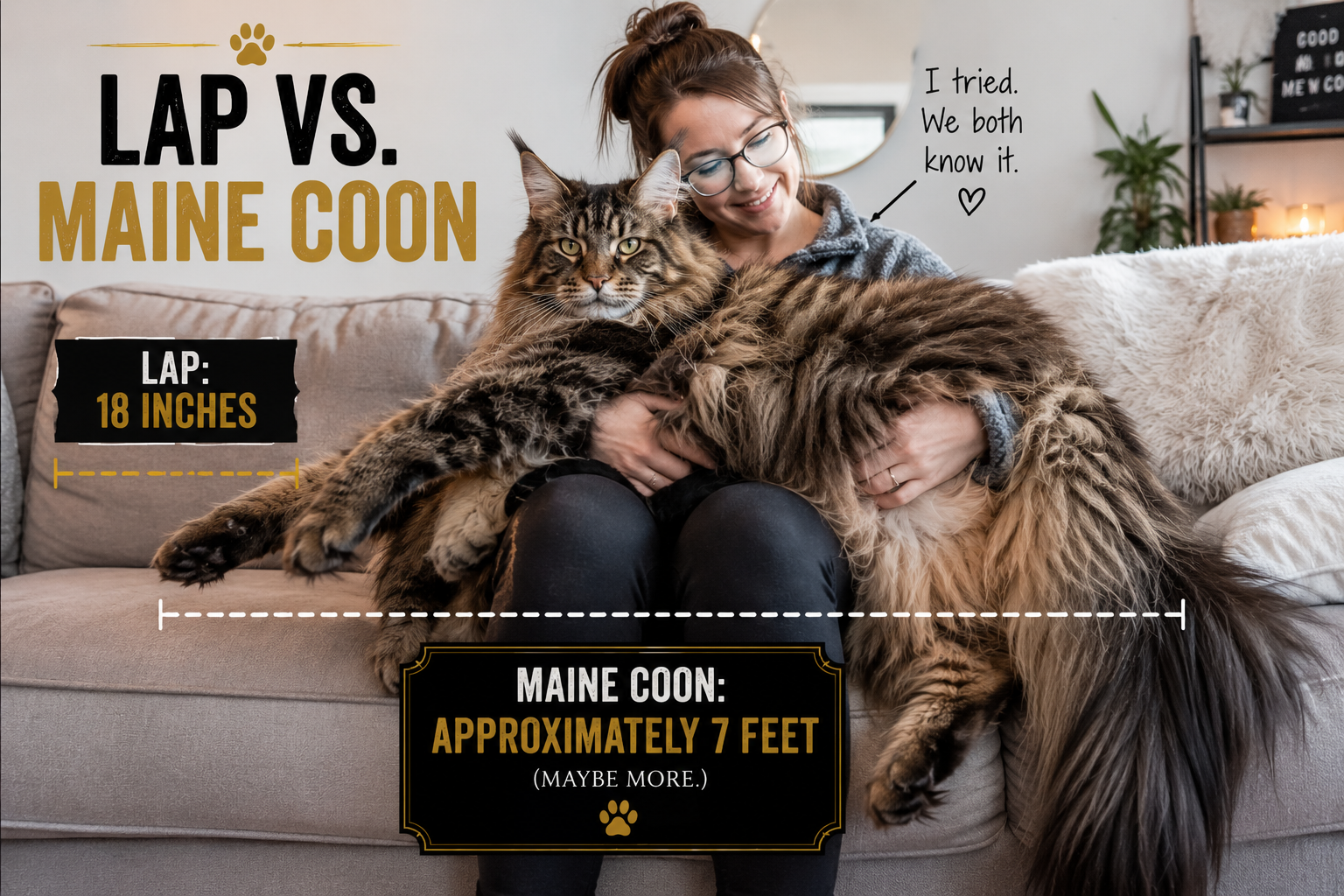
We should acknowledge the obvious. Maine Coons are substantial cats. A tiny cat can curl neatly into your lap. A large adult Maine Coon may attempt the same maneuver and discover that approximately half of the Maine Coon remains unsupported.
Legs hanging off one side. Tail hanging off the other. One enormous paw somehow resting on your face. Nobody is comfortable. 😂
Some larger cats may simply find stretching out beside their humans more comfortable than trying to fold themselves into a lap-sized space. And considering how long Maine Coons can become...
That's understandable.
4. Every Maine Coon Has Their Own Personality 🐾
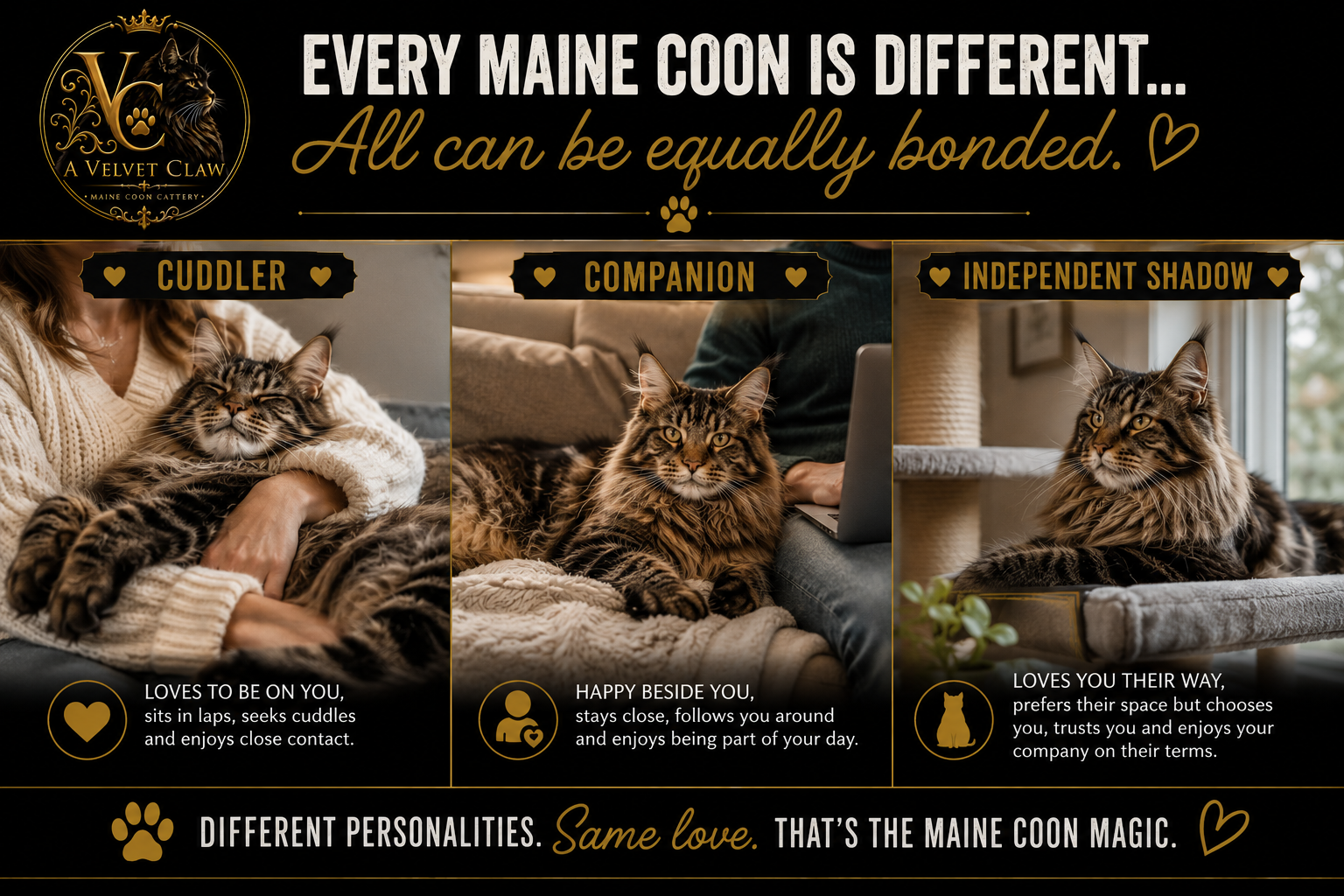
Breed tendencies can tell us what Maine Coons are often like. They cannot tell us exactly what an individual Maine Coon will be like. Some Maine Coons are professional cuddlers. They want laps. They want arms. They want blankets. They would crawl inside your sweatshirt if given the opportunity. Others prefer occasional affection. And some are extremely loving while maintaining very clear personal-space requirements. “You may admire me from here.” 😂
Genetics, early experiences, socialization, environment, age and individual personality can all influence how comfortable a cat is with physical affection. There isn't one correct Maine Coon personality.
5. Following You Can Be Their Version of Cuddling
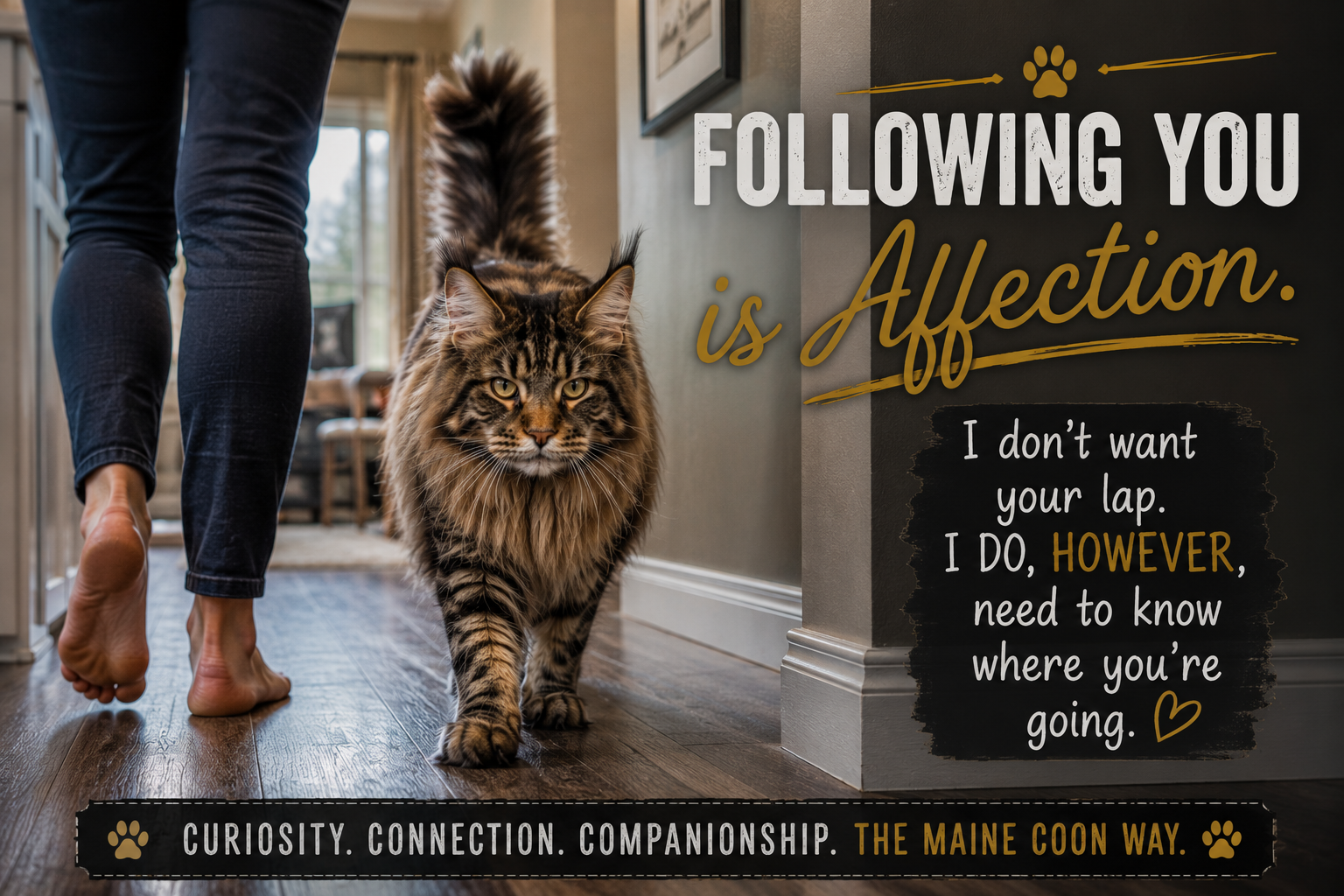
You've probably already noticed this one. Your Maine Coon may refuse to sit in your lap... while simultaneously refusing to allow you to go anywhere alone. Kitchen? Coming. Bedroom? Coming. Laundry room? Obviously coming. Bathroom? Don't even THINK about closing that door. 😂
A Maine Coon who consistently chooses to follow you may be demonstrating social attachment and curiosity. They want to know what you're doing. They want to participate. And most importantly... They want to be where you are. That's a pretty affectionate cat—even if your lap remains completely empty.
6. Sleeping Near You Is a Big Compliment 😴❤️
Sleep leaves animals vulnerable. Cats naturally seek places where they feel comfortable and secure. So when your Maine Coon chooses to sleep beside you—or even simply in the same room—that can be meaningful. Maybe they sleep at the foot of your bed. Maybe beside your pillow. Maybe on the floor next to you.
Or perhaps they choose the exact portion of the bed your legs were supposed to occupy. You adjust. They stretch. You adjust again. They stretch further.
Eventually you're sleeping sideways on approximately 11% of your own mattress. But congratulations. You've been chosen. 😂
7. Maine Coons Have Lots of Ways to Say “I Love You”
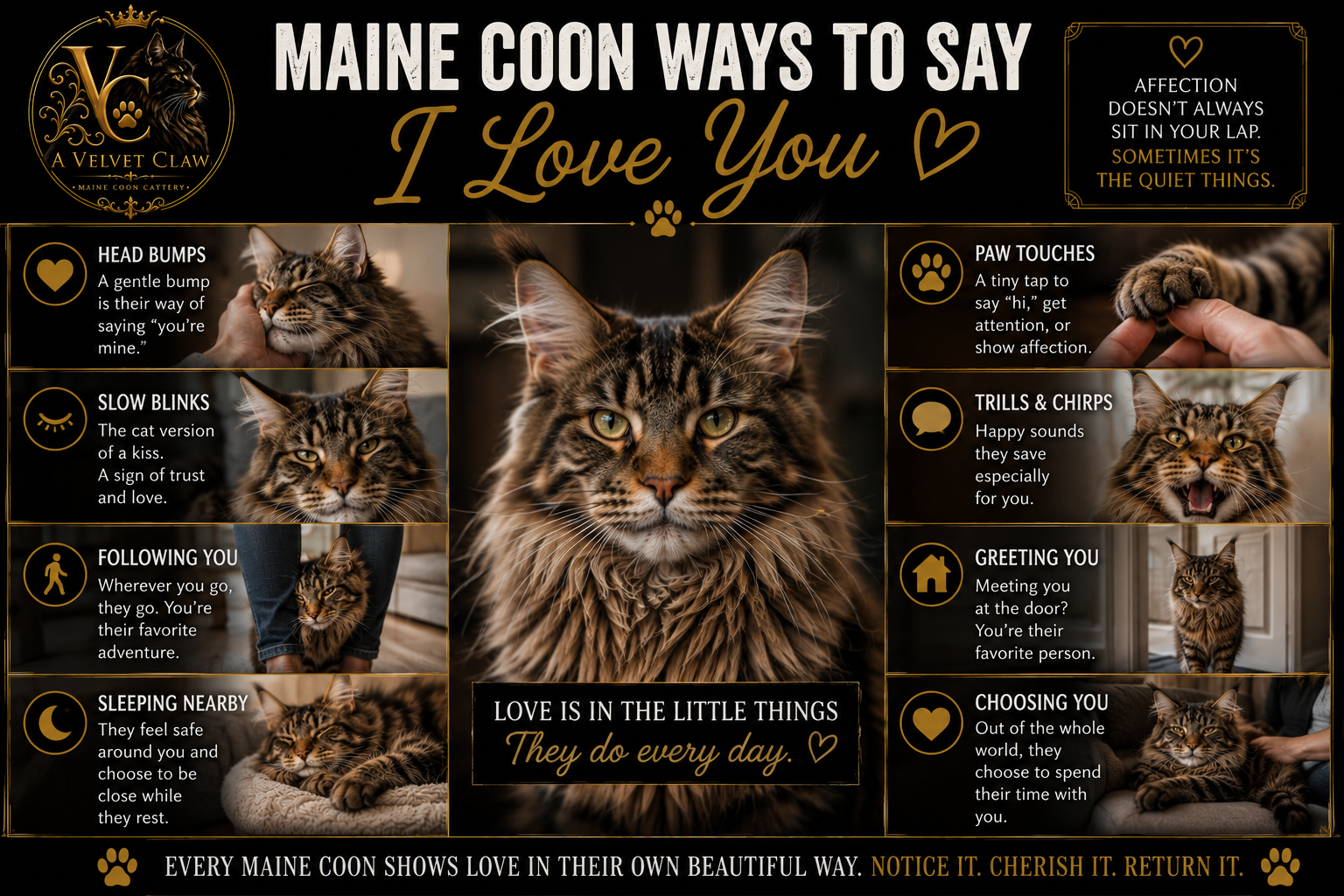
Lap sitting is only one possible display of affection.
A bonded Maine Coon may show affection through:
Head bumps
Slow blinking
Purring
Chirping or trilling when they see you
Rubbing against your legs
Grooming you
Bringing you toys
Sleeping nearby
Following you
Touching you with a paw
Greeting you at the door
Relaxing with their belly exposed
Choosing to spend time near you
Sometimes their affection is obvious. Sometimes it's subtle. And sometimes it's your Maine Coon staring at you from across the room like a Victorian portrait. Still counts. 😂
8. Don't Force a Maine Coon to Be a Lap Cat
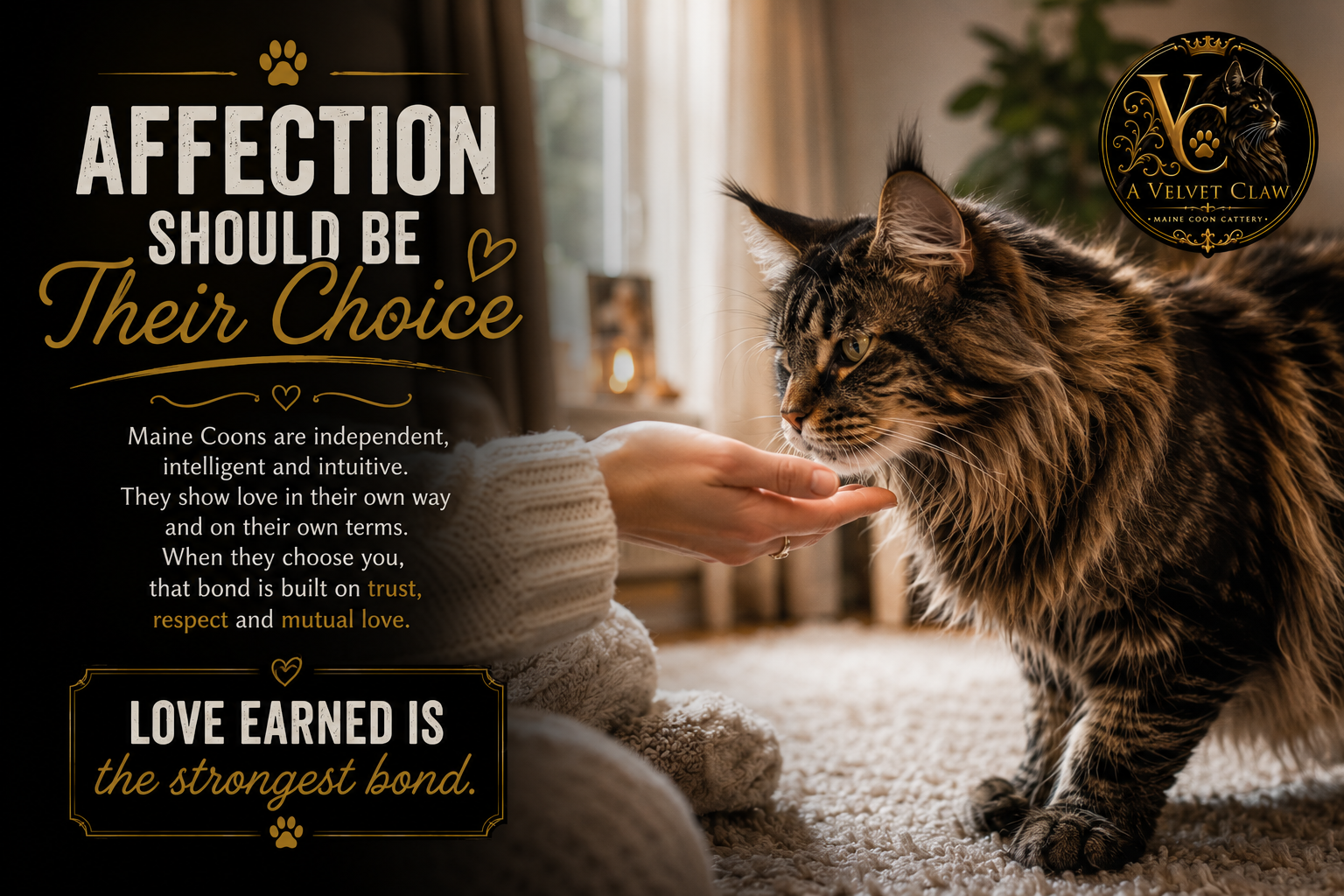
This one is important. If your Maine Coon doesn't enjoy being held or sitting in laps, repeatedly forcing them to do it is unlikely to turn them into a cuddler. It may do the opposite. Cats should be allowed to choose when and how they interact physically. If your Maine Coon approaches you for affection, let the interaction be positive.
Pet them where they enjoy being touched. Pay attention to their body language. Allow them to leave when they're finished. Over time, respecting those boundaries can help build trust. And trust is much more important than whether your cat sits in your lap.
9. Some Maine Coons Become Cuddlier With Age 🥰
A kitten's personality isn't necessarily their finished adult personality. Young Maine Coons have important things to accomplish.
Things like:
Running.
Climbing.
Investigating.
Chasing invisible enemies.
Launching themselves across the furniture.
Discovering that gravity still works. 😂
As some Maine Coons mature, they may become calmer and more interested in quiet companionship. A kitten who couldn't sit still for 30 seconds may eventually become an adult who happily curls beside you for an entire movie. Others remain independent throughout their lives. Both are perfectly capable of forming strong bonds with their people.
10. Your Maine Coon May Have a Favorite Type of Affection
Sometimes the question isn't: “Is my Maine Coon affectionate?”
It's: “How does my Maine Coon prefer to receive affection?”
One cat might adore chin scratches. Another loves having their cheeks rubbed. Another wants to be brushed. Another wants interactive play. Another wants to lie beside you without being touched. And another apparently believes affection means sitting directly on your chest at 3:00 a.m.
Every cat has preferences. Learning those preferences is part of building a relationship with them.
11. They May Be More Affectionate Than You Realize 🖤
Sometimes owners expect dramatic displays of love and accidentally overlook the quieter ones. Think about your cat's choices.
Do they follow you?
Do they greet you?
Do they sleep near you?
Do they relax completely in your presence?
Do they seek you out?
Do they bring toys into your room?
Do they chirp when they see you?
Do they sit nearby when you're working?
Does your Maine Coon repeatedly choose your company when they could be somewhere else?
Those behaviors can tell you much more about your relationship than whether they occupy your lap.
Your Maine Coon may have been telling you: “You're my person.” You just weren't speaking Maine Coon yet.
What If My Maine Coon Suddenly Stops Being Affectionate?
Personality differences are normal. Sudden behavioral changes are different. If a Maine Coon who normally seeks affection suddenly starts hiding, avoiding touch or behaving unusually, pay attention.
Changes in social behavior can sometimes occur with stress, discomfort or illness. Look for other changes involving appetite, drinking, litter-box habits, grooming, sleep, activity or mobility. If the change is significant or you're concerned, a veterinarian can help determine whether there may be an underlying medical reason.
🖤 Love Doesn't Have to Sit in Your Lap
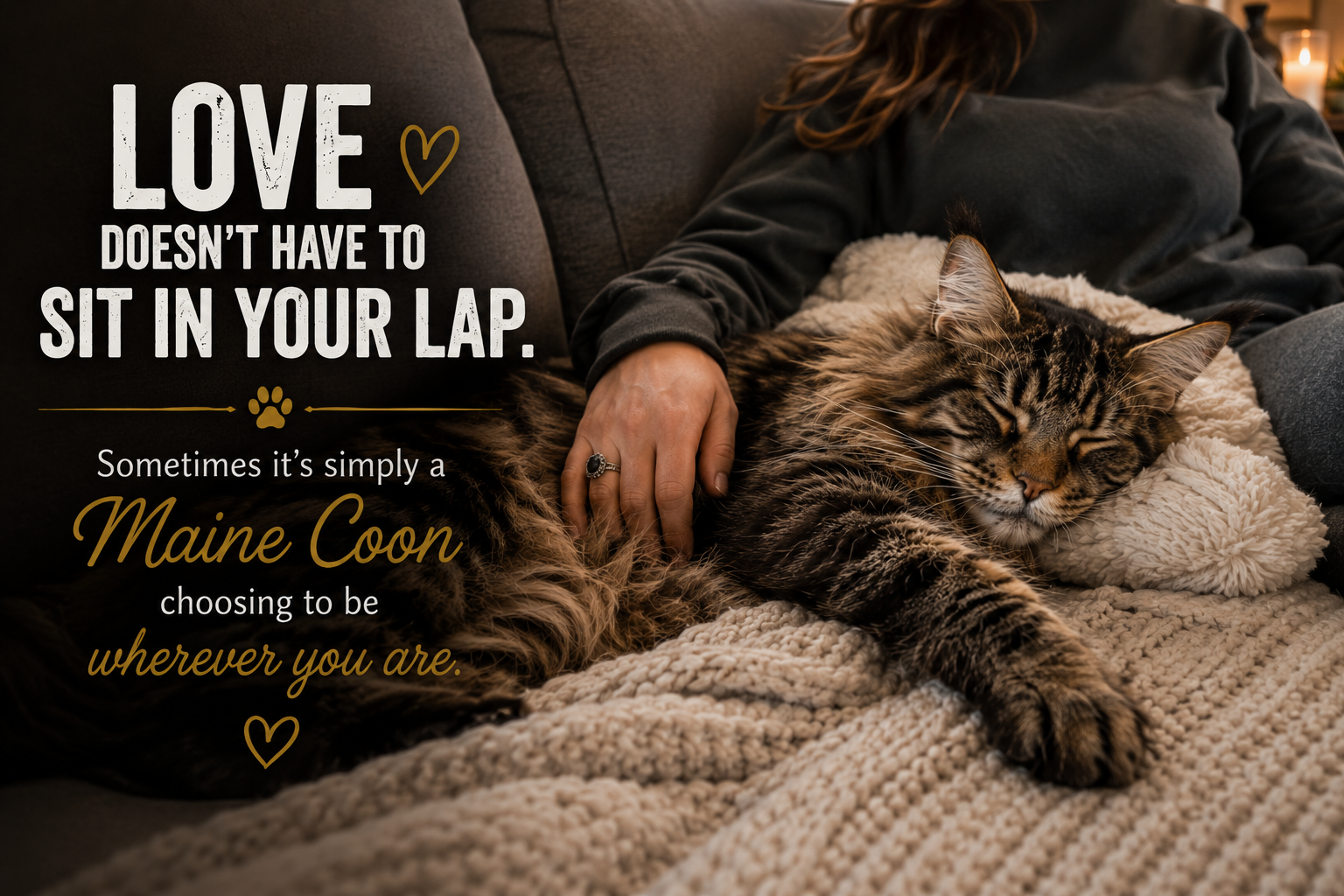
One of the beautiful things about living with cats is learning that affection doesn't always look the way humans expect it to. Your Maine Coon may never become a traditional lap cat. They may prefer the other end of the couch. The floor beside your chair. The foot of your bed. The doorway to whatever room you're occupying.
Or that oddly specific spot approximately 14 inches away from you. 😂 But look a little closer. They're there when you wake up. They follow you through the house. They chirp when you enter the room. They touch you with those giant paws. They sleep where they can see you. They quietly choose your company again and again.
And maybe that's the best way to understand Maine Coon affection: They don't always need to be on you to feel close to you. Sometimes love isn't a cat curled in your lap. Sometimes it's a giant fluffy Maine Coon lying nearby, completely relaxed, perfectly content... because being close to you is exactly where they wanted to be. 🖤💛🐾
Fur - ever grateful: Lexie & Melina
Are Maine Coons lap cats • are Maine Coons affectionate • Maine Coon affection
Maine Coon personality • why isn’t my Maine Coon a lap cat • how do Maine Coons show affection