
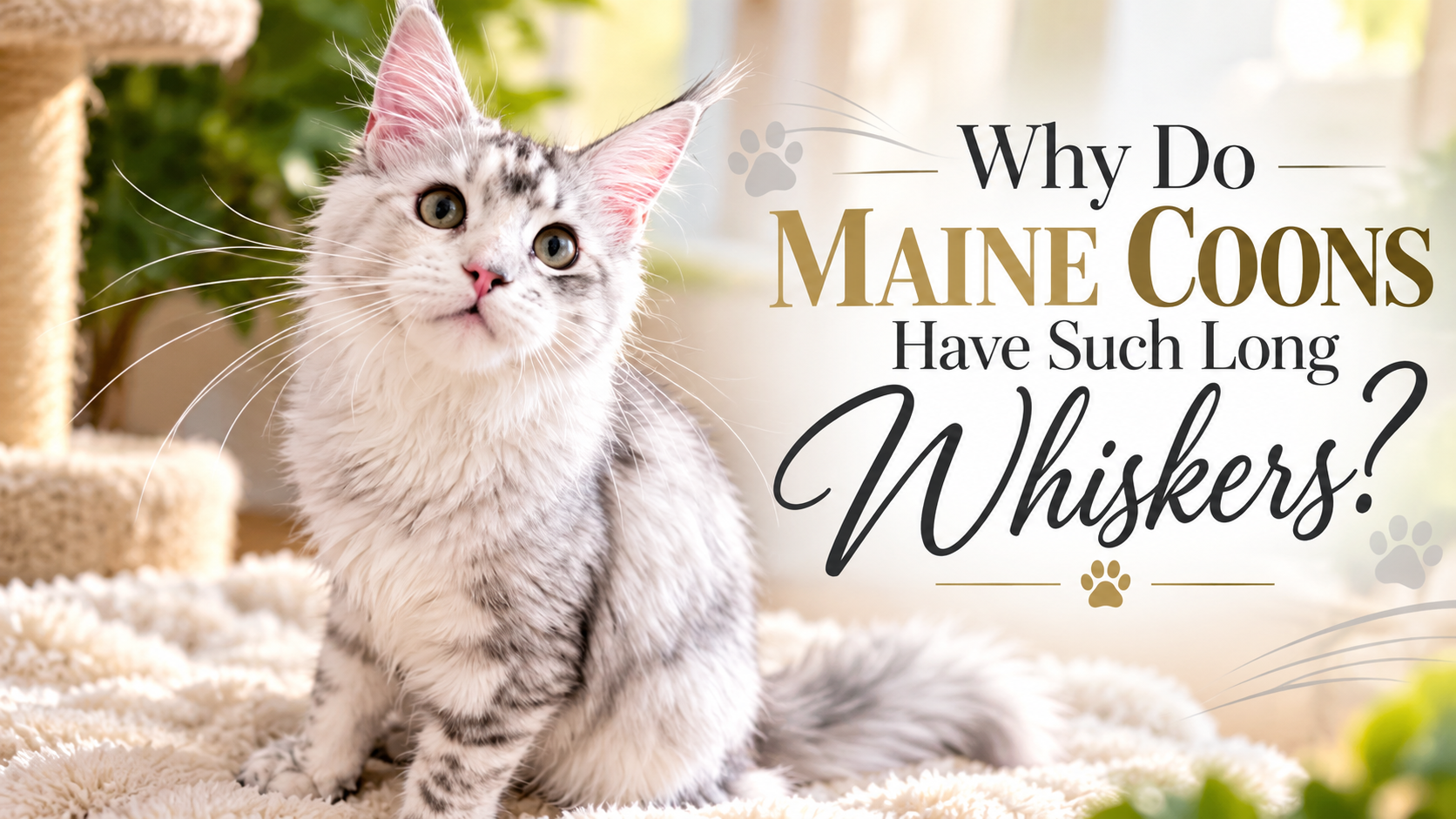
🐾 Why Do Maine Coons Have Such Long Whiskers?
Why do Maine Coons have such long whiskers? Learn how whiskers help cats sense movement, navigate spaces, communicate and explore their environment.
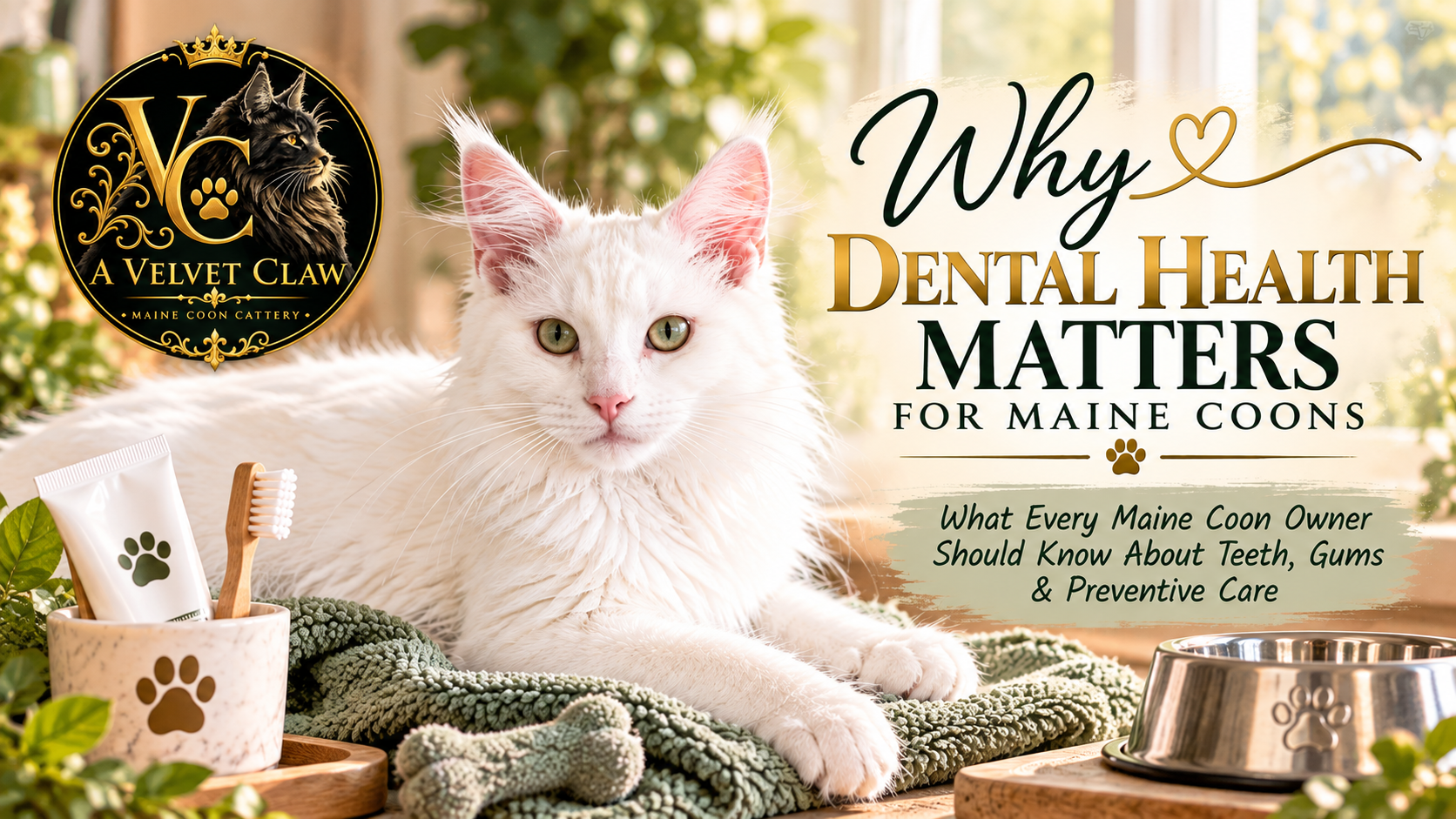
🦷 Why Dental Health Matters for Maine Coons
Learn why Maine Coon dental health matters, including signs of dental disease, tooth resorption, bad breath, brushing and preventive dental care.
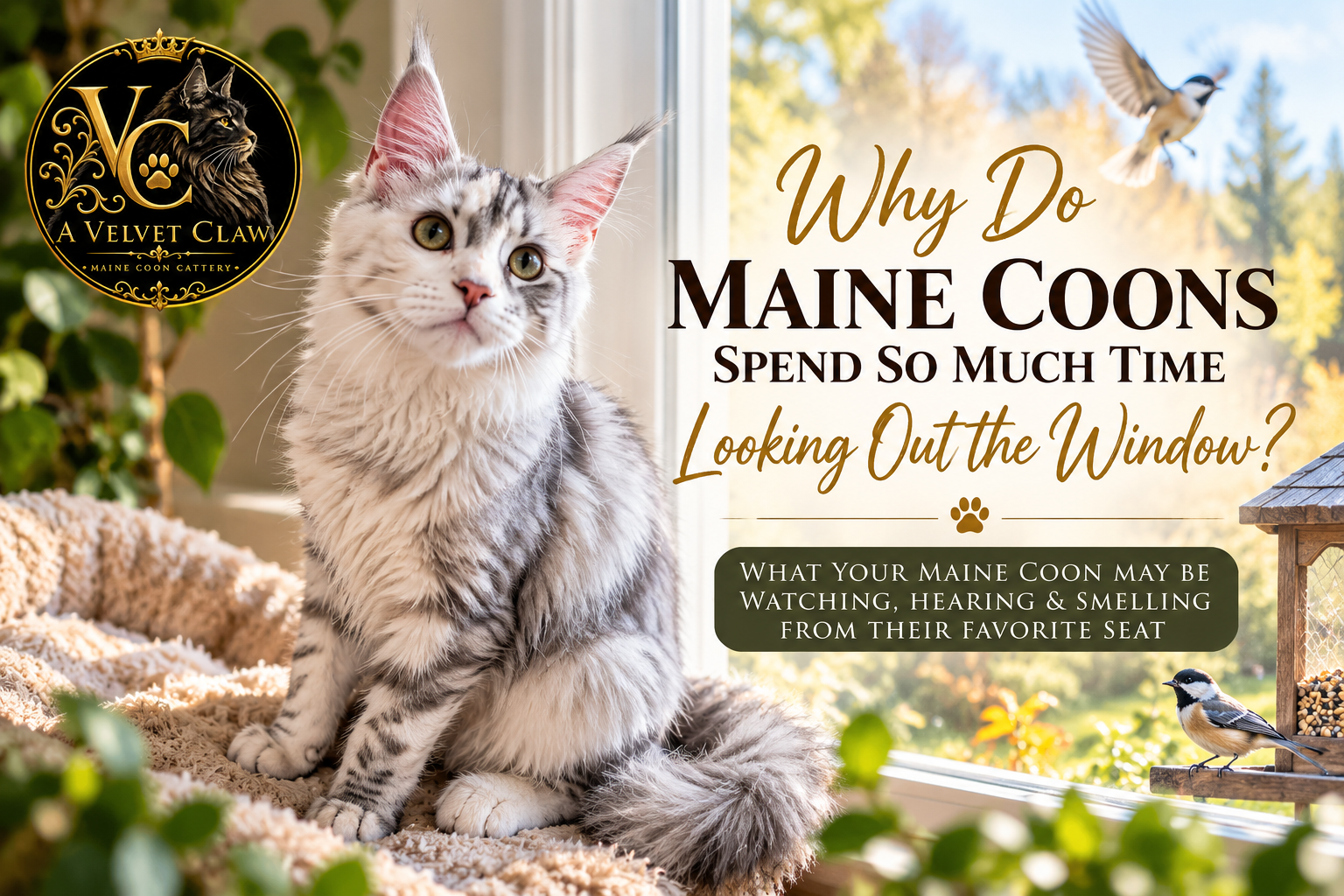
🪟 Why Do Maine Coons Spend So Much Time Looking Out the Window?
Why do Maine Coons look out the window? Learn how birds, movement, sounds, scents, sunshine and enrichment can make windows fascinating for your cat.
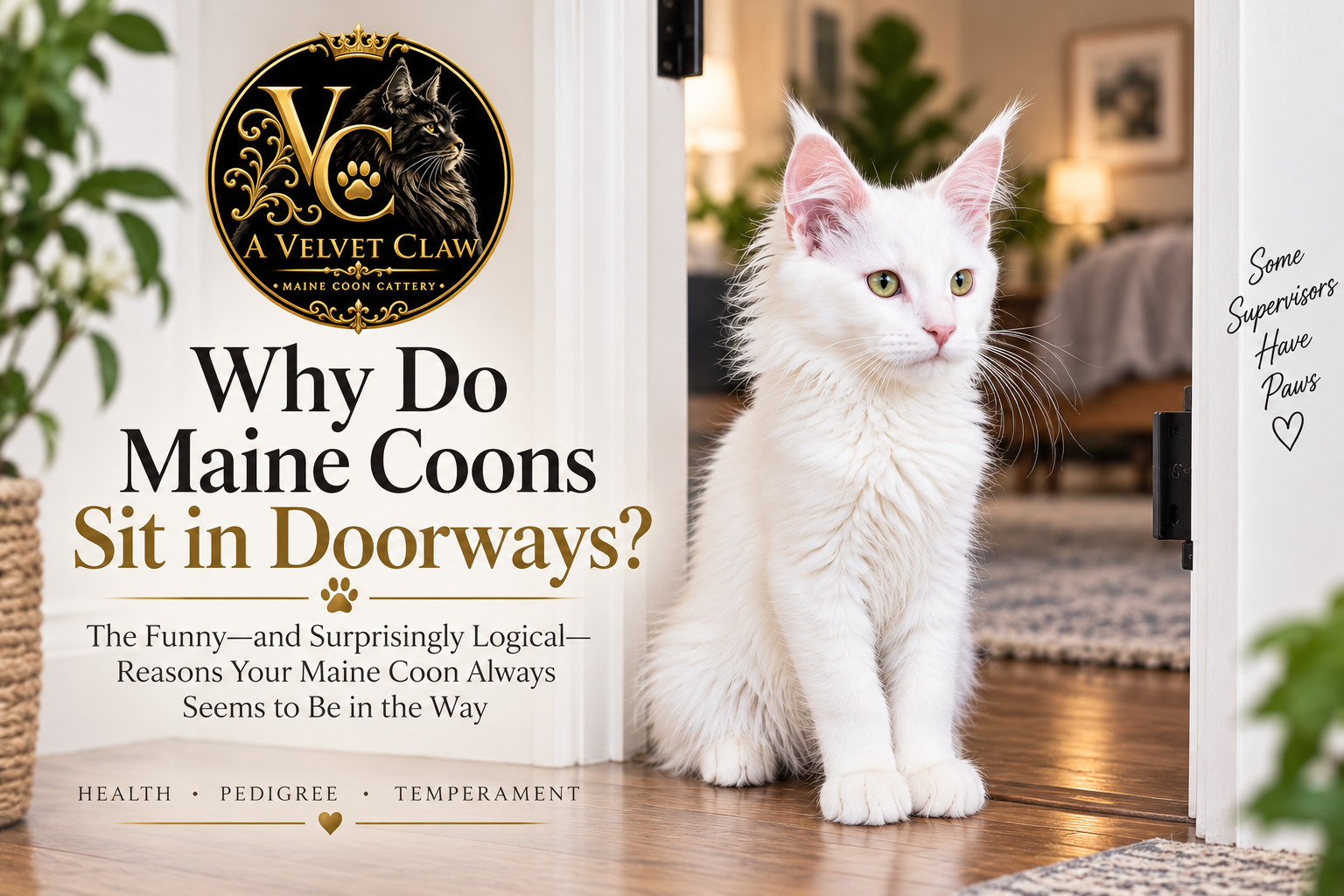
🐾 Why Do Maine Coons Sit in Doorways?
Why do Maine Coons sit in doorways? Learn how curiosity, comfort, household routines and social behavior may influence this funny Maine Coon habit.
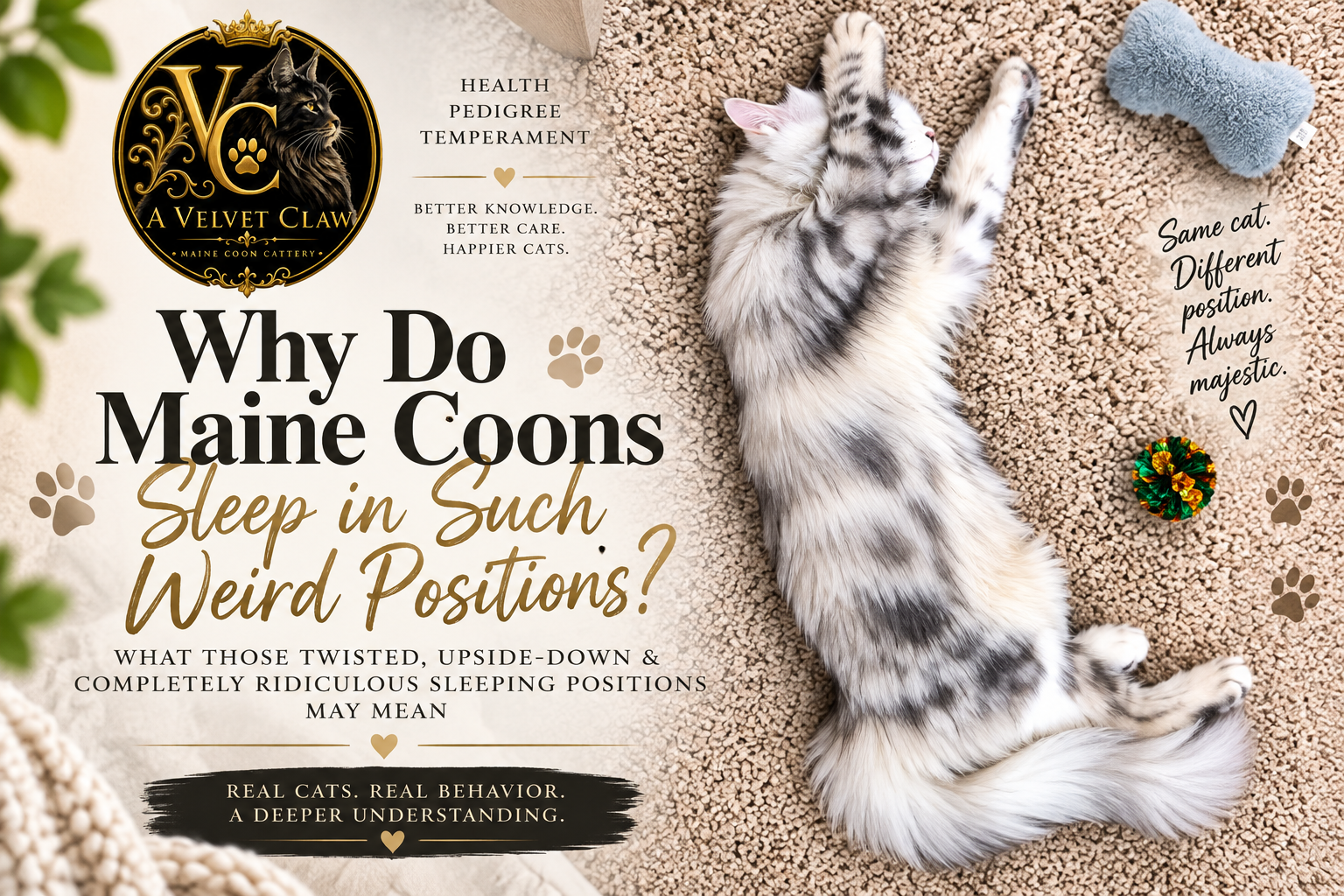
😴 Why Do Maine Coons Sleep in Such Weird Positions?
Why do Maine Coons sleep in weird positions? Learn what belly-up, stretched-out, curled and upside-down sleeping positions may reveal about your cat.
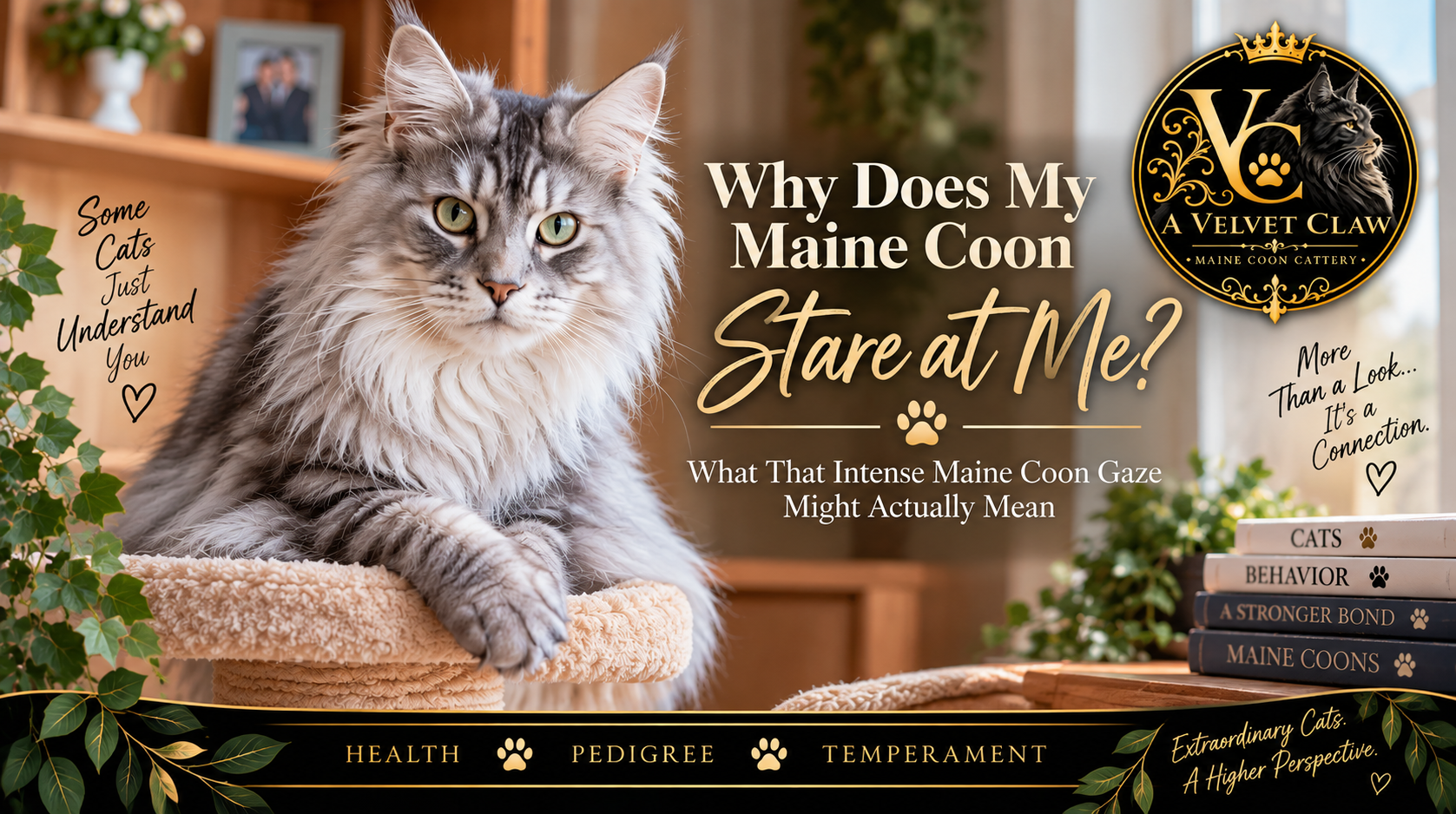
👀 Why Does My Maine Coon Stare at Me?
Why does your Maine Coon stare at you? Learn what staring, slow blinking, body language and other behaviors may reveal about your Maine Coon.
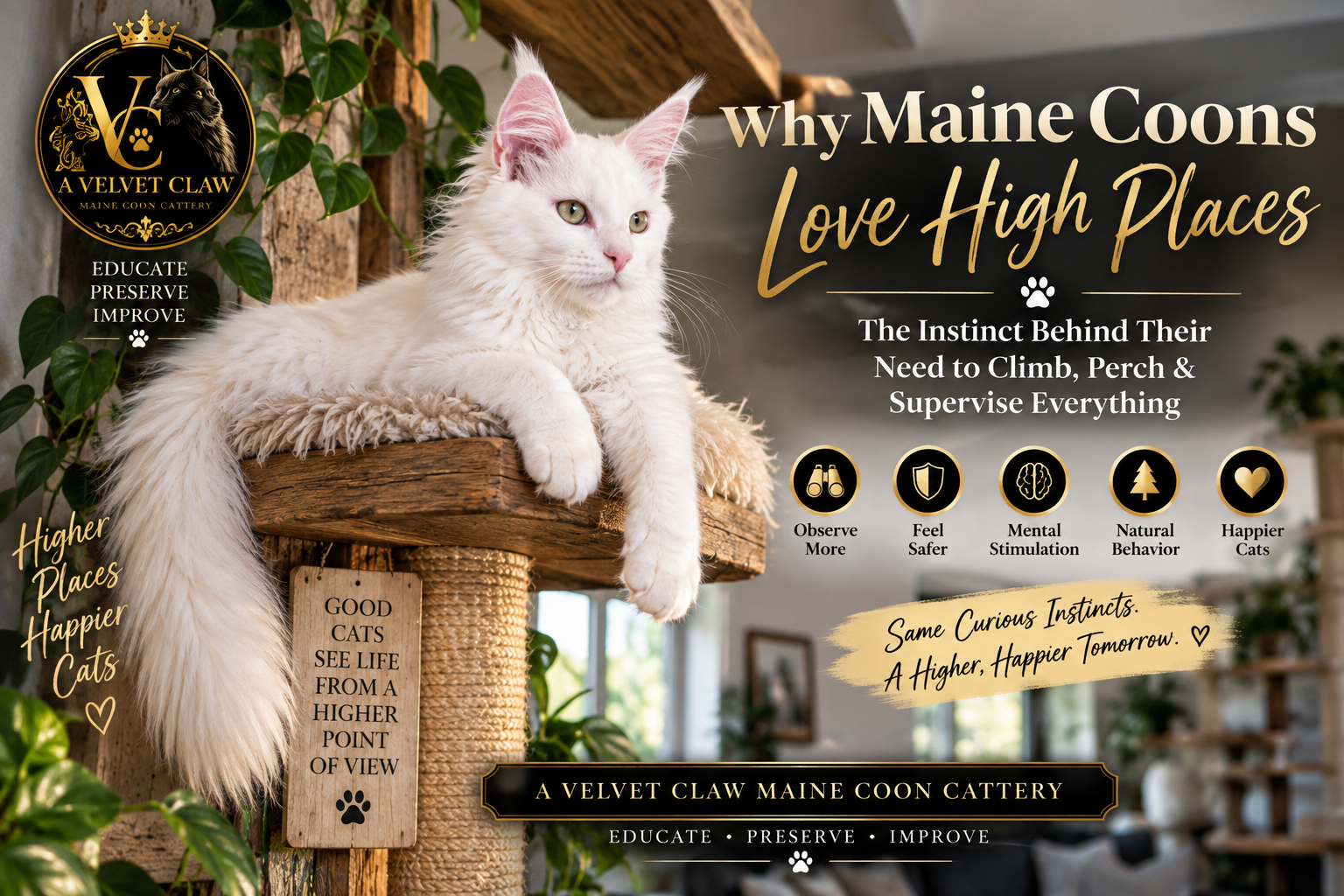
🐾 Why Maine Coons Love High Places
Why do Maine Coons love high places? Learn how climbing, vertical territory, security and enrichment influence this natural Maine Coon behavior.
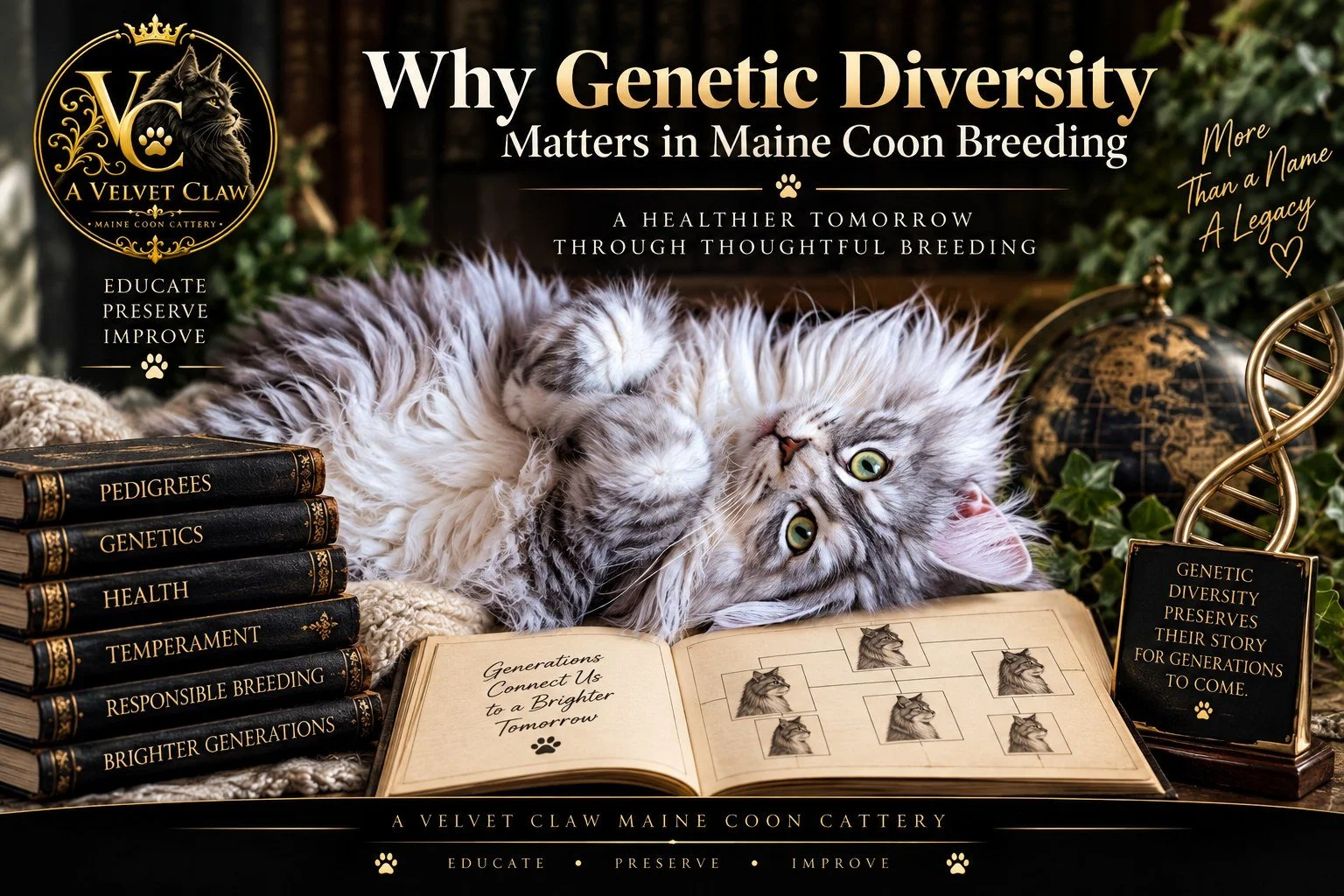
🧬 Why Genetic Diversity Matters in Maine Coon Breeding
Why does genetic diversity matter in Maine Coons? Learn how COI, pedigrees, bloodlines and genetic variation help breeders plan responsible pairings
How to Read a Maine Coon Pedigree: What All Those Names and Numbers Actually Mean
Learn how to read a Maine Coon pedigree, including sire and dam, generations, registration numbers, color codes, common ancestors, COI and bloodlines.
🧬 What Is COI in Maine Coons—and Why Does It Matter?
What does COI mean in Maine Coons? Learn how coefficient of inbreeding, pedigree depth and genetic diversity help breeders plan responsible pairings.
❤️ HCM in Maine Coons: Why a DNA Test Isn’t Enough
Can a Maine Coon develop HCM after a negative DNA test? Learn why MYBPC3 testing, echocardiograms and ongoing heart screening all matter.
🦴 Hip Dysplasia in Maine Coons: It’s Not Just a Dog Problem
Can Maine Coons get hip dysplasia? Learn the signs, causes, hip screening options and why responsible Maine Coon breeders evaluate hip health.
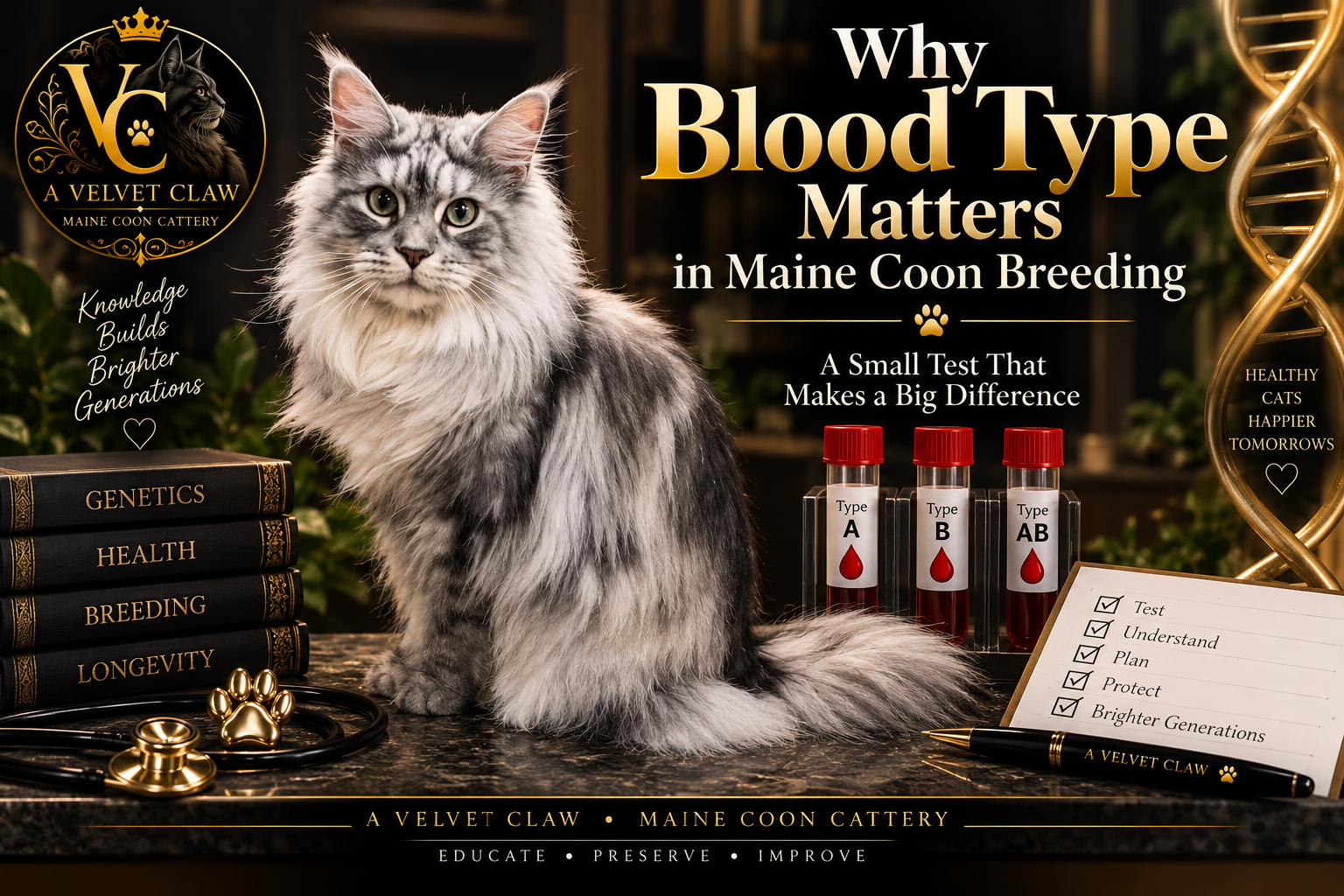
Why Blood Type Matters in Maine Coon Breeding 🩸🐾
Why does blood type matter in Maine Coon breeding? Learn about Type A, B and AB cats, neonatal isoerythrolysis and why responsible breeders test.
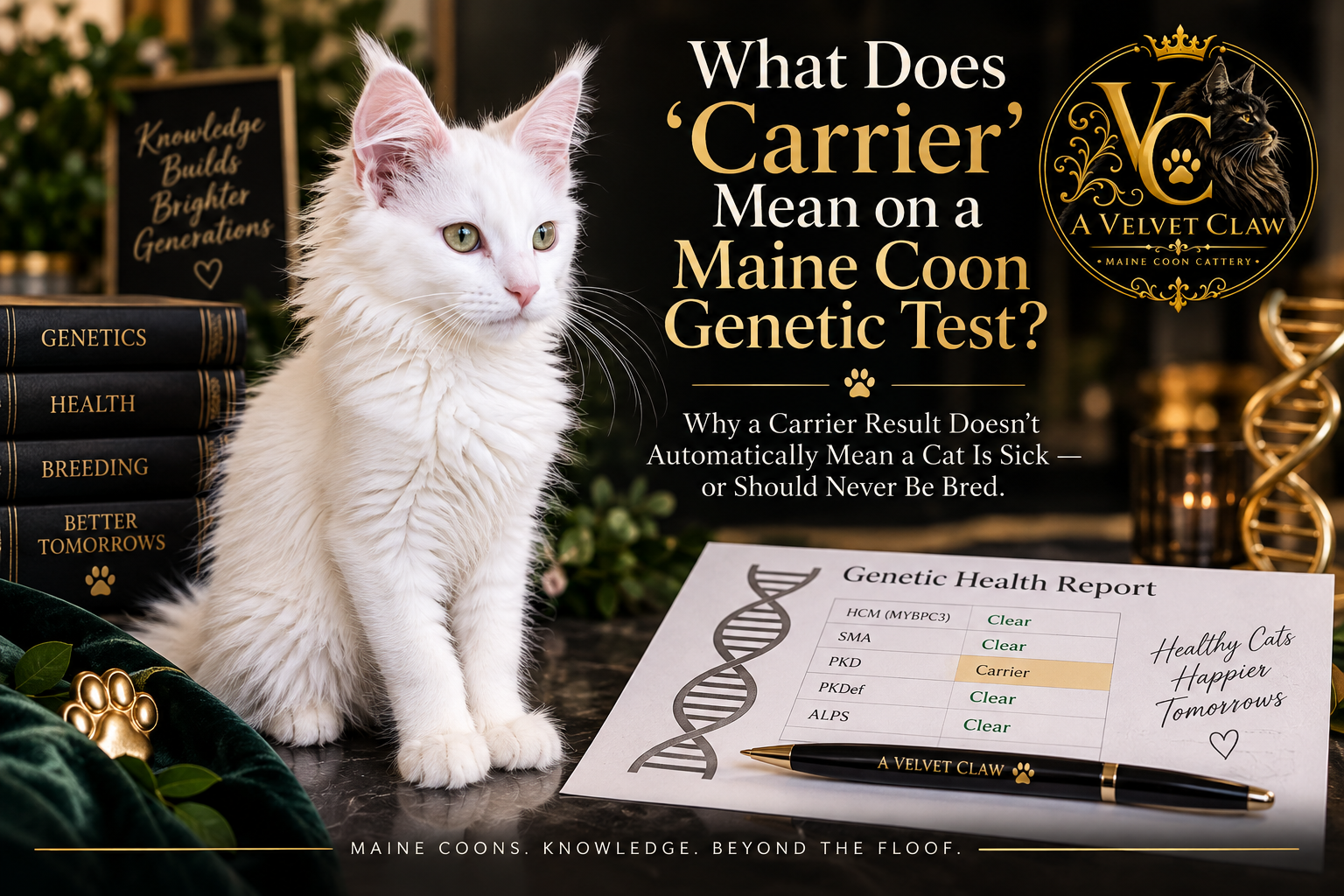
What Does “Carrier” Mean on a Maine Coon Genetic Test? 🧬🐾
What does “carrier” mean on a Maine Coon genetic test? Learn the difference between clear, carrier and affected results and what they mean for responsible breeding.
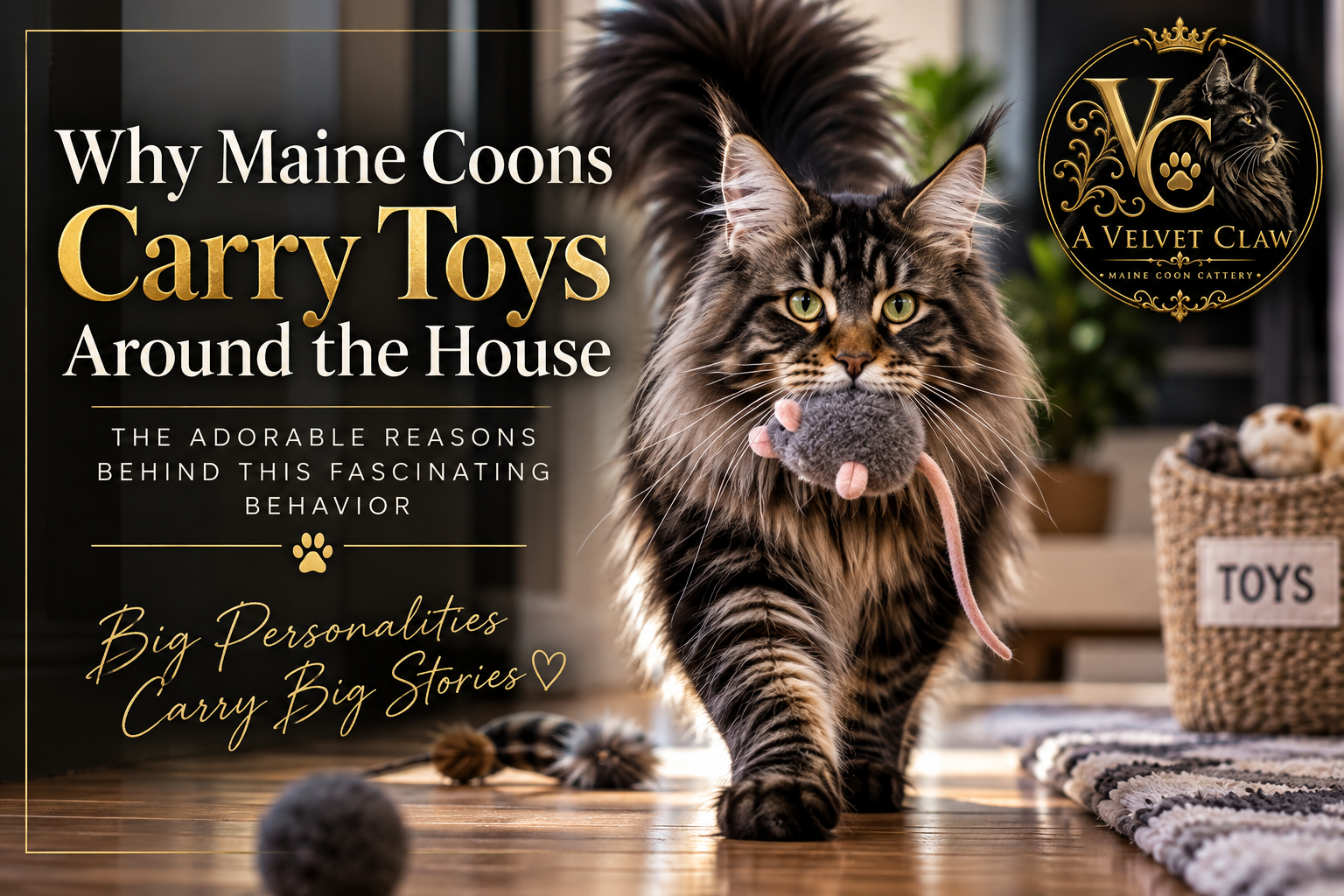
Why Maine Coons Carry Toys Around the House
Why does your Maine Coon carry toys around the house? Learn how hunting instincts, play, bonding and intelligence may explain this adorable behavior.
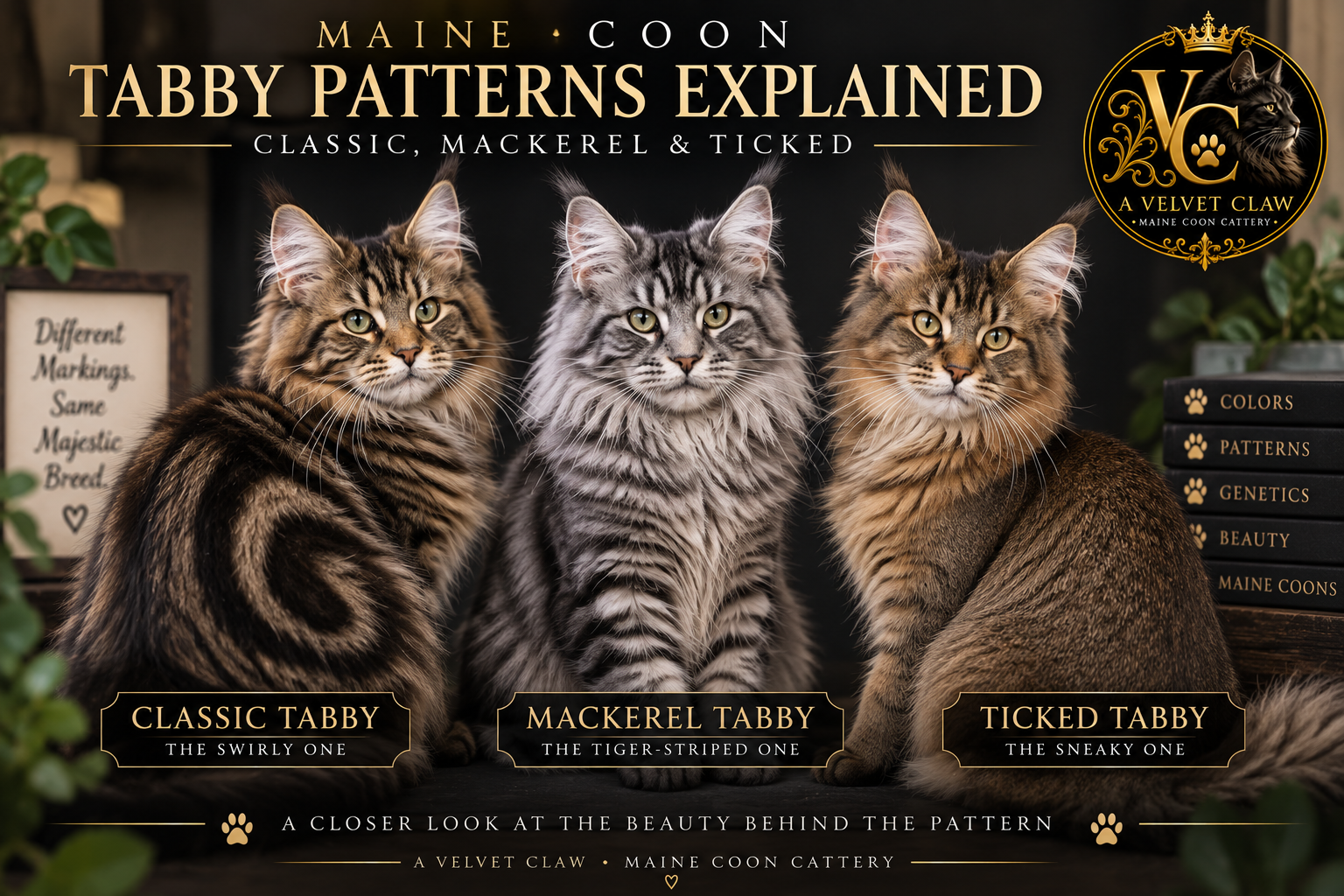
Maine Coon Tabby Patterns Explained: Classic, Mackerel & Ticked 🐾
Learn the differences between classic, mackerel and ticked Maine Coon tabby patterns, including swirls, stripes, markings and how to identify each coat pattern.
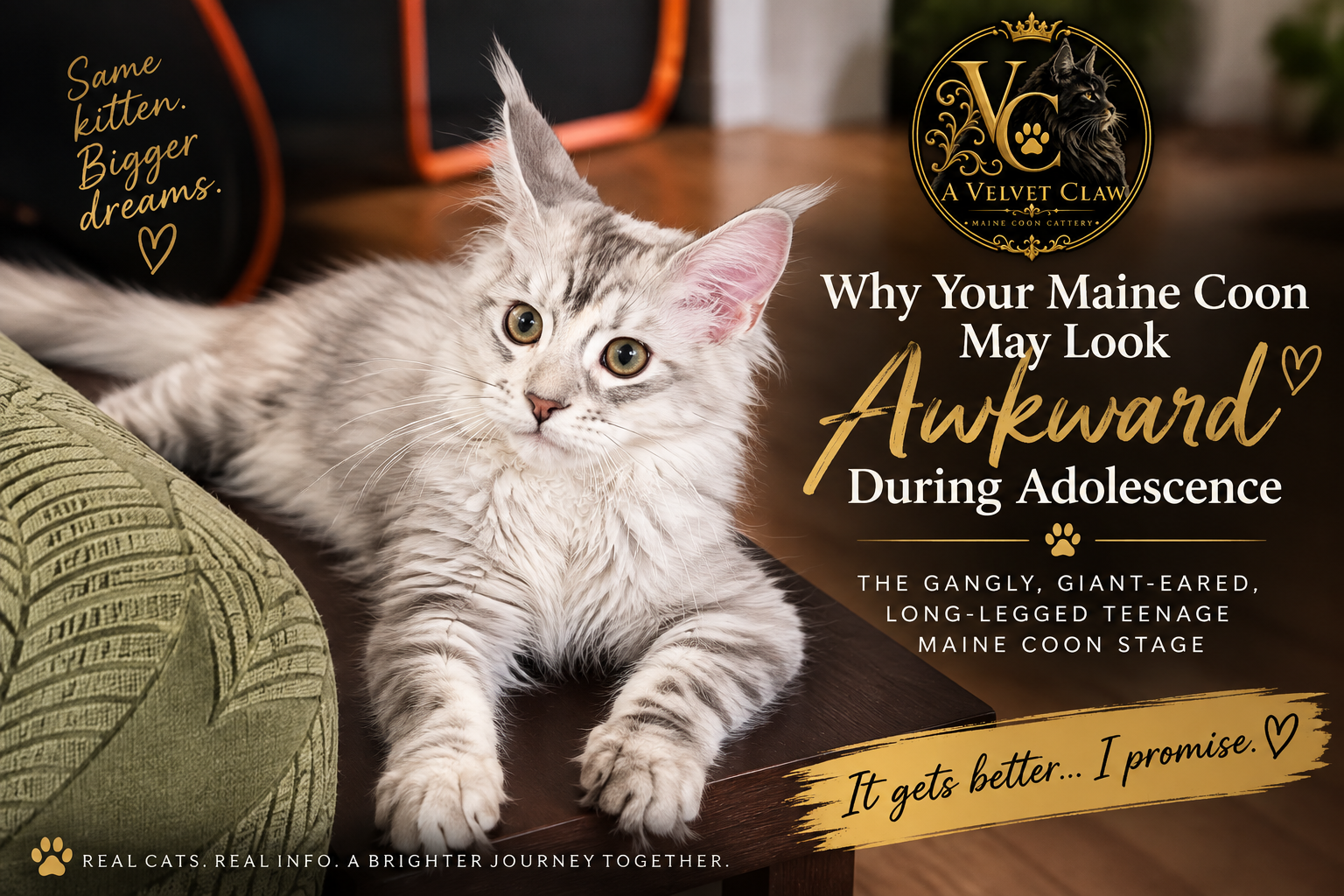
Why Your Maine Coon May Look Awkward During Adolescence
Does your Maine Coon suddenly look lanky, leggy or all ears? Learn why Maine Coons go through an awkward adolescent stage as their body, coat and features mature.
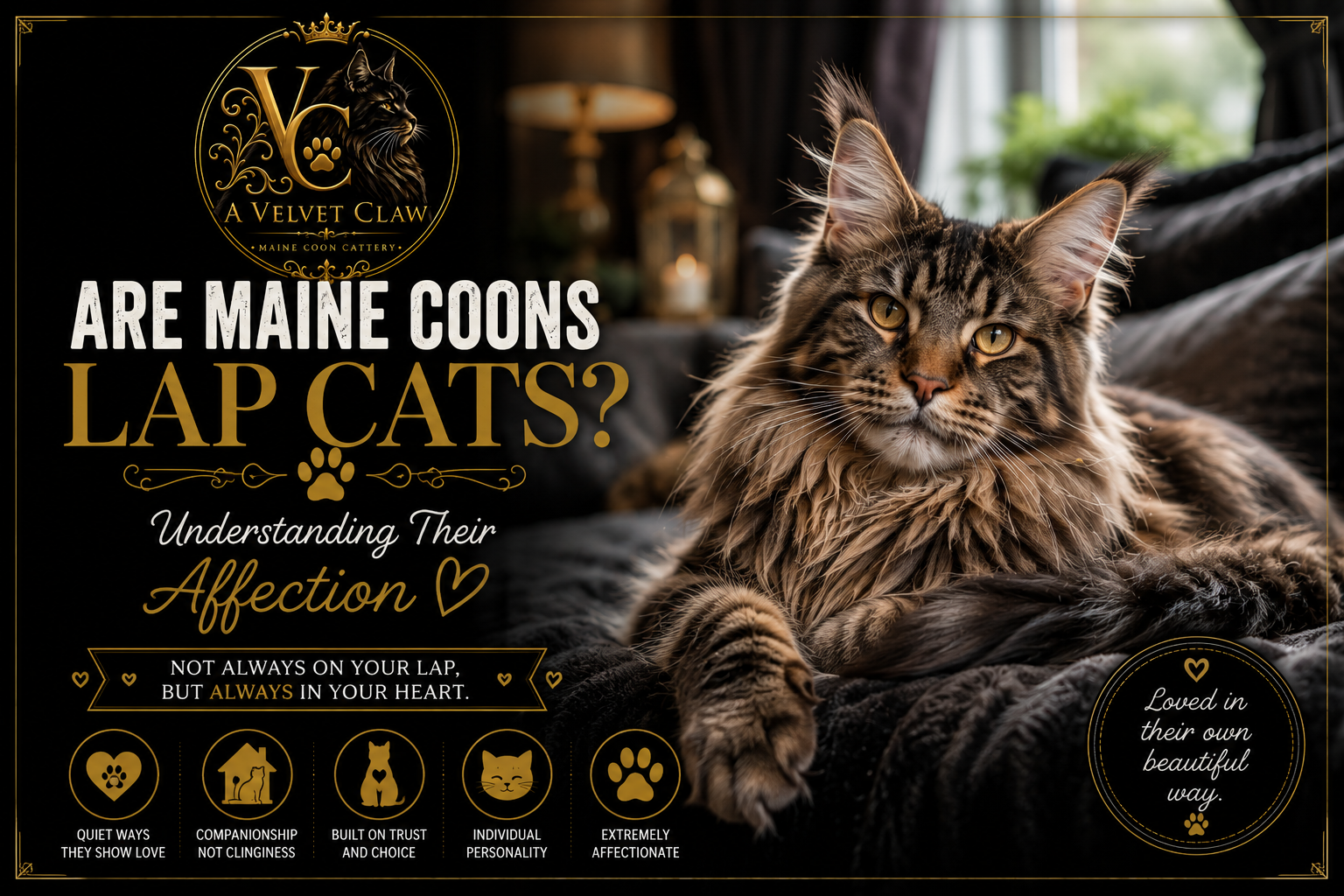
Why Maine Coons Aren’t Always Lap Cats—But Are Still Extremely Affectionate 🖤🐾
Are Maine Coons lap cats? Learn why some prefer sitting beside you instead of on you and discover the many ways Maine Coons show love, trust and affection.
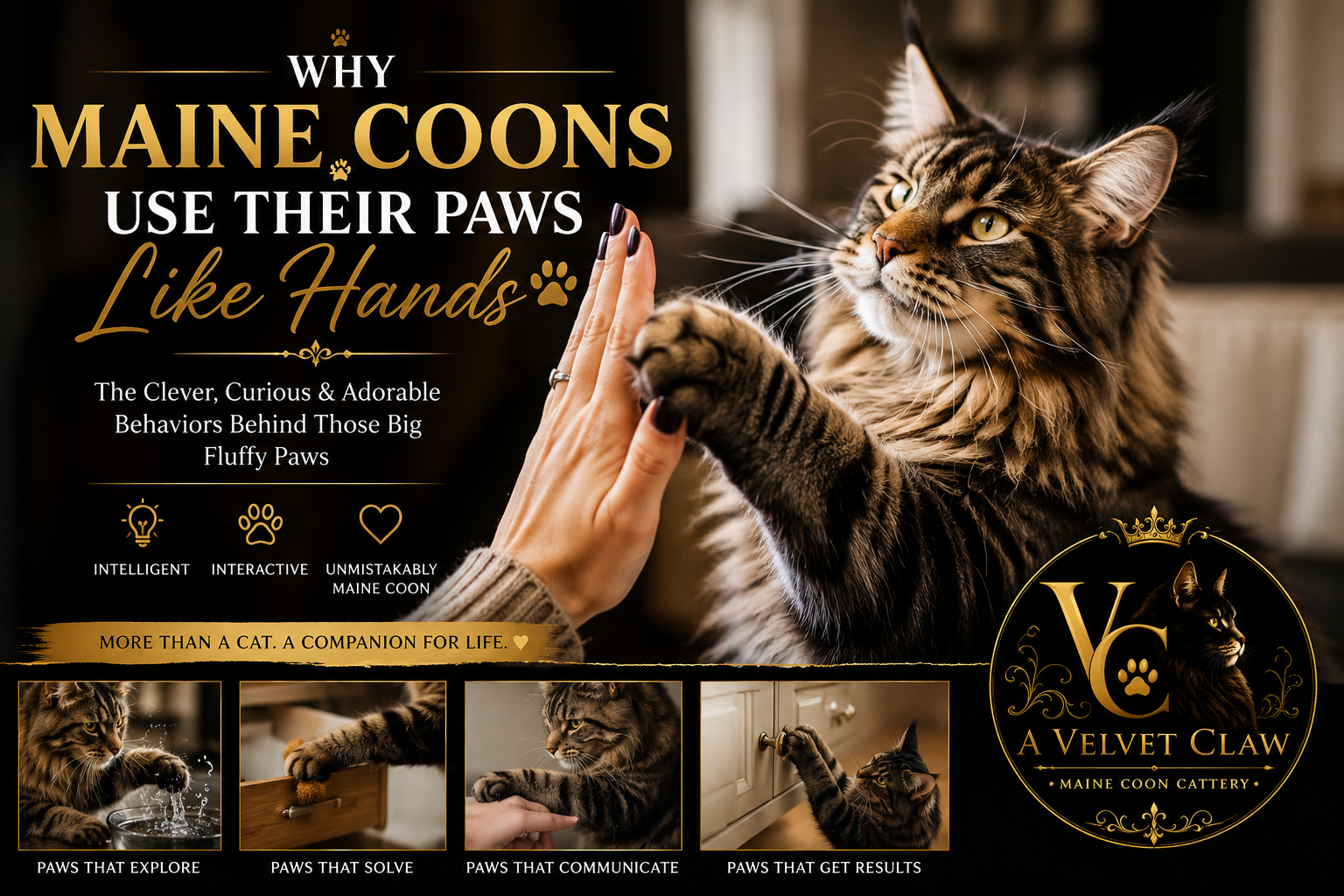
Why Maine Coons Use Their Paws Like Hands 🐾
Why do Maine Coons use their paws like hands? Discover why these clever cats tap, scoop, reach, splash and use their big fluffy paws to communicate and explore.
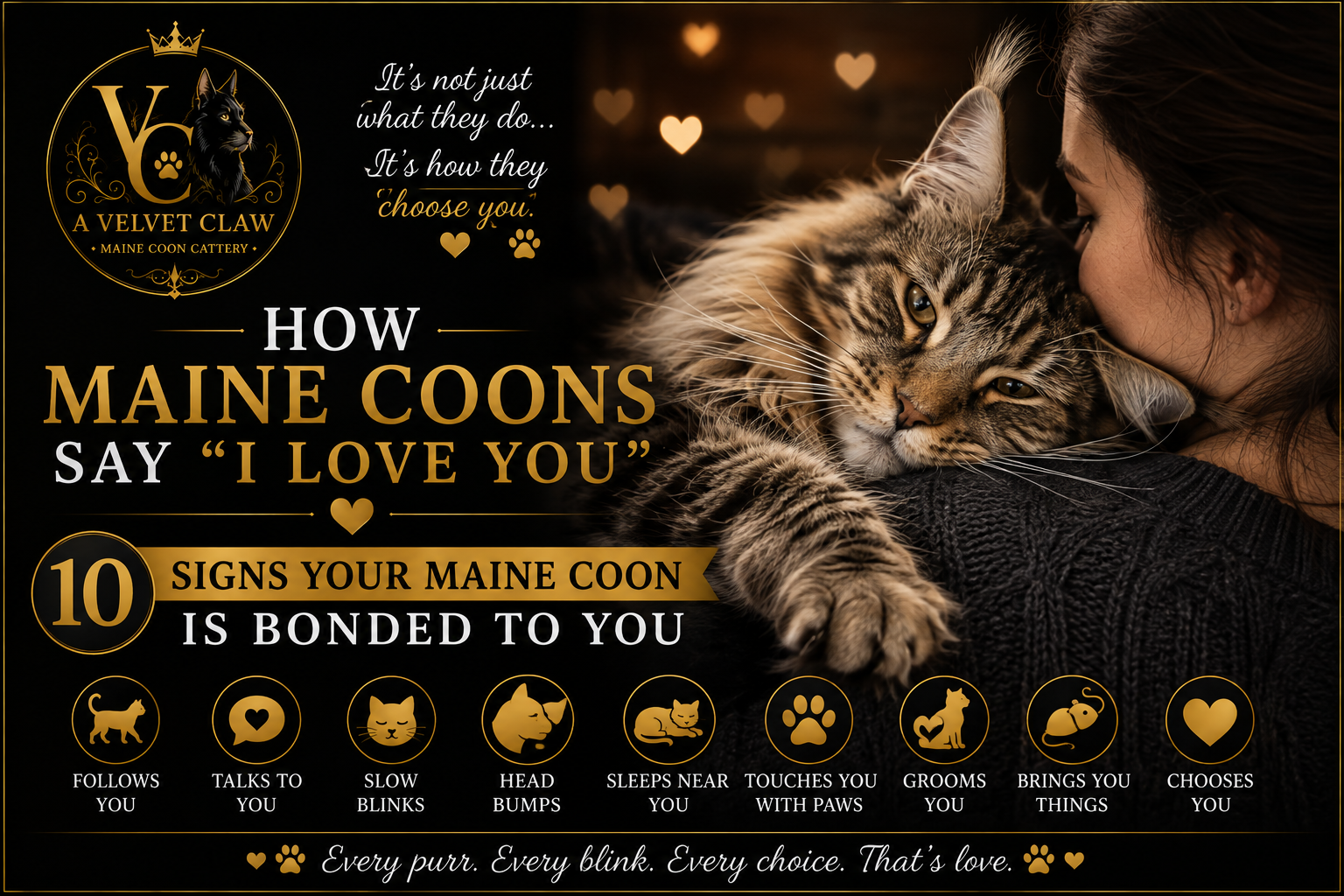
How Maine Coons Say “I Love You”: 10 Signs Your Maine Coon Is Bonded to You 🖤🐾
Does your Maine Coon love you? Discover 10 signs your Maine Coon is bonded to you, from slow blinks and head bumps to following you everywhere.