
Understanding genetics, hidden carriers, and why responsible breeding involves more than choosing two healthy-looking cats.
Imagine two beautiful Maine Coons. Both are energetic, playful, affectionate, and appear to be in excellent health. They've never shown signs of a serious illness, and their veterinary examinations have been normal.
Naturally, you might assume that breeding these two healthy cats would guarantee healthy kittens.
But genetics doesn't always work that way.
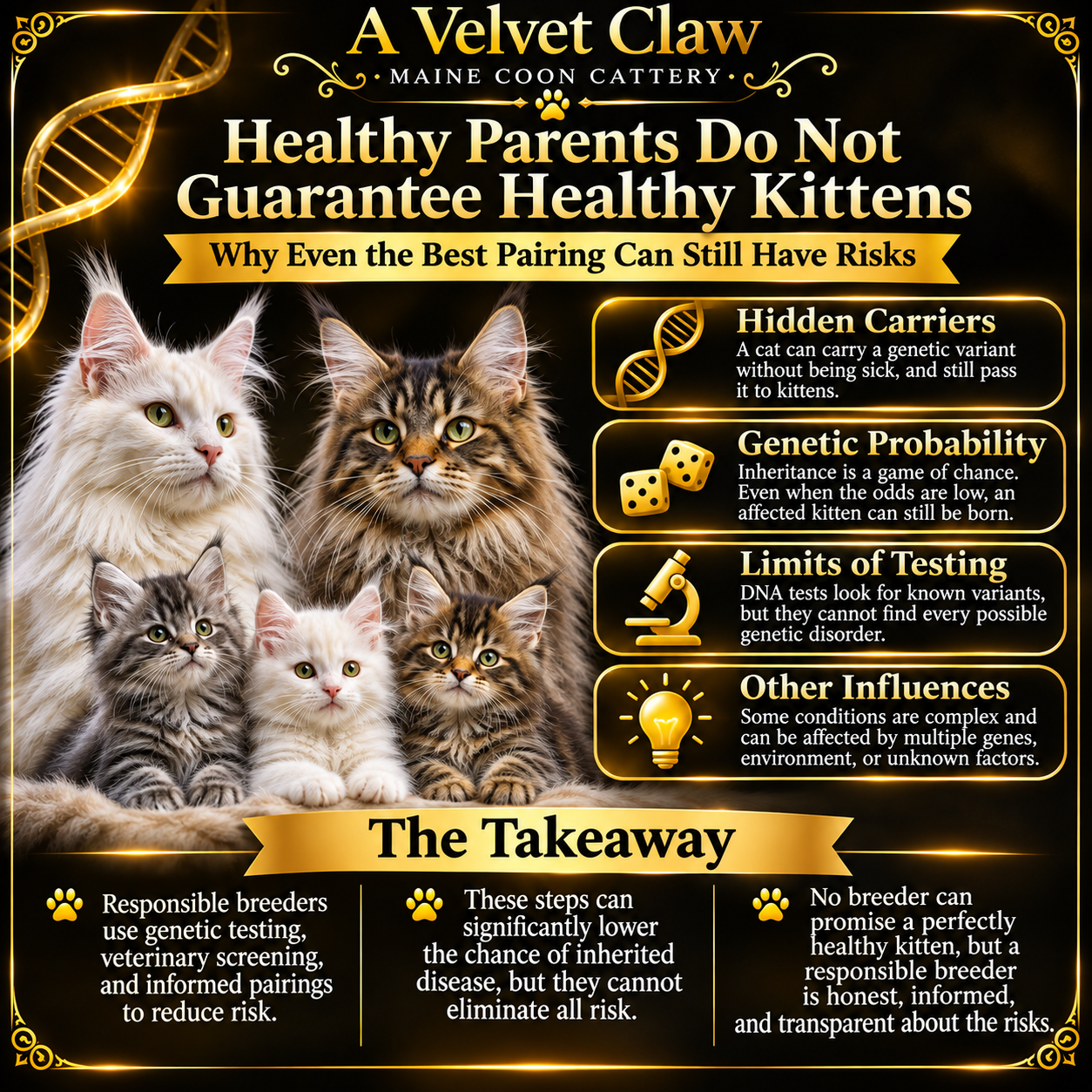
The answer is yes. Two seemingly healthy cats can produce a kitten with a genetic disorder.
Understanding why is an important part of responsible breeding and informed kitten ownership.
1. Being Healthy Doesn't Mean a Cat Isn't a Carrier
One of the biggest misconceptions about inherited diseases is that a cat must have a disease to pass it along.
That simply isn't true.
Some genetic disorders follow an autosomal recessive inheritance pattern. This means a cat can carry one disease-associated variant without developing the disorder itself.
These cats are called carriers.
A carrier may live a completely normal life without ever showing symptoms. However, if two carriers of the same recessive disorder are bred together, their kittens can inherit the disorder.
This is why appearances and routine veterinary examinations alone cannot reveal every inherited genetic risk.
2. What Happens When Two Carriers Are Bred Together?
Let's imagine two healthy Maine Coons that both carry the same autosomal recessive disorder.
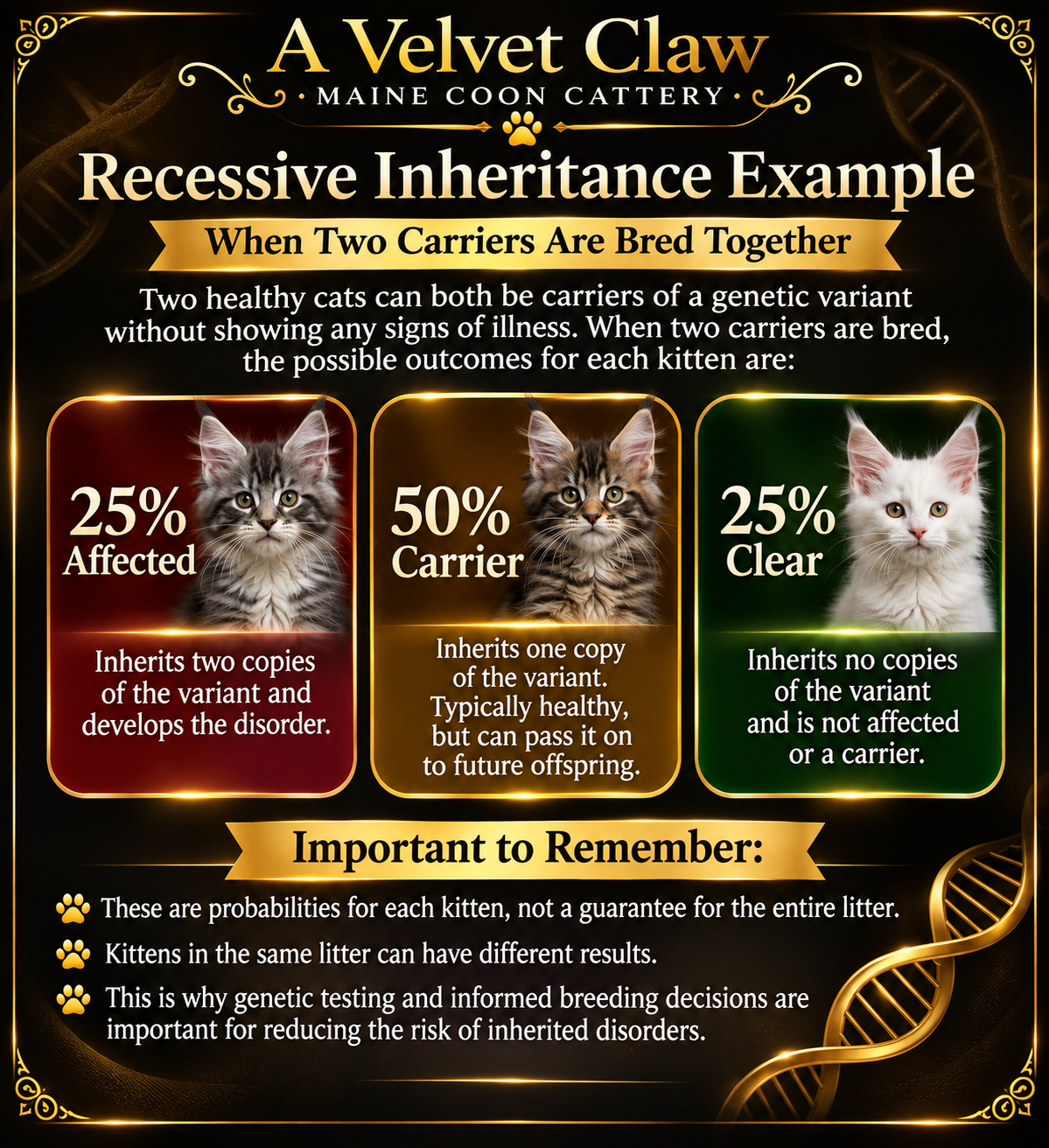
For each kitten conceived, the expected genetic probabilities are:
25% chance: The kitten inherits two disease-associated copies and is genetically affected.
50% chance: The kitten inherits one disease-associated copy and becomes a carrier.
25% chance: The kitten inherits neither disease-associated copy and is clear of that variant.
These percentages apply independently to every kitten, not automatically to the entire litter.
For example, a litter of four kittens does not necessarily mean one will be affected, two will be carriers, and one will be clear.
All four could be unaffected, or multiple kittens could inherit the disorder.
Genetics involves probability, not guarantees.
3. Genetic Disorders That Responsible Maine Coon Breeders Should Understand
Maine Coons are magnificent cats, but like every breed, they have certain inherited health concerns that deserve attention.
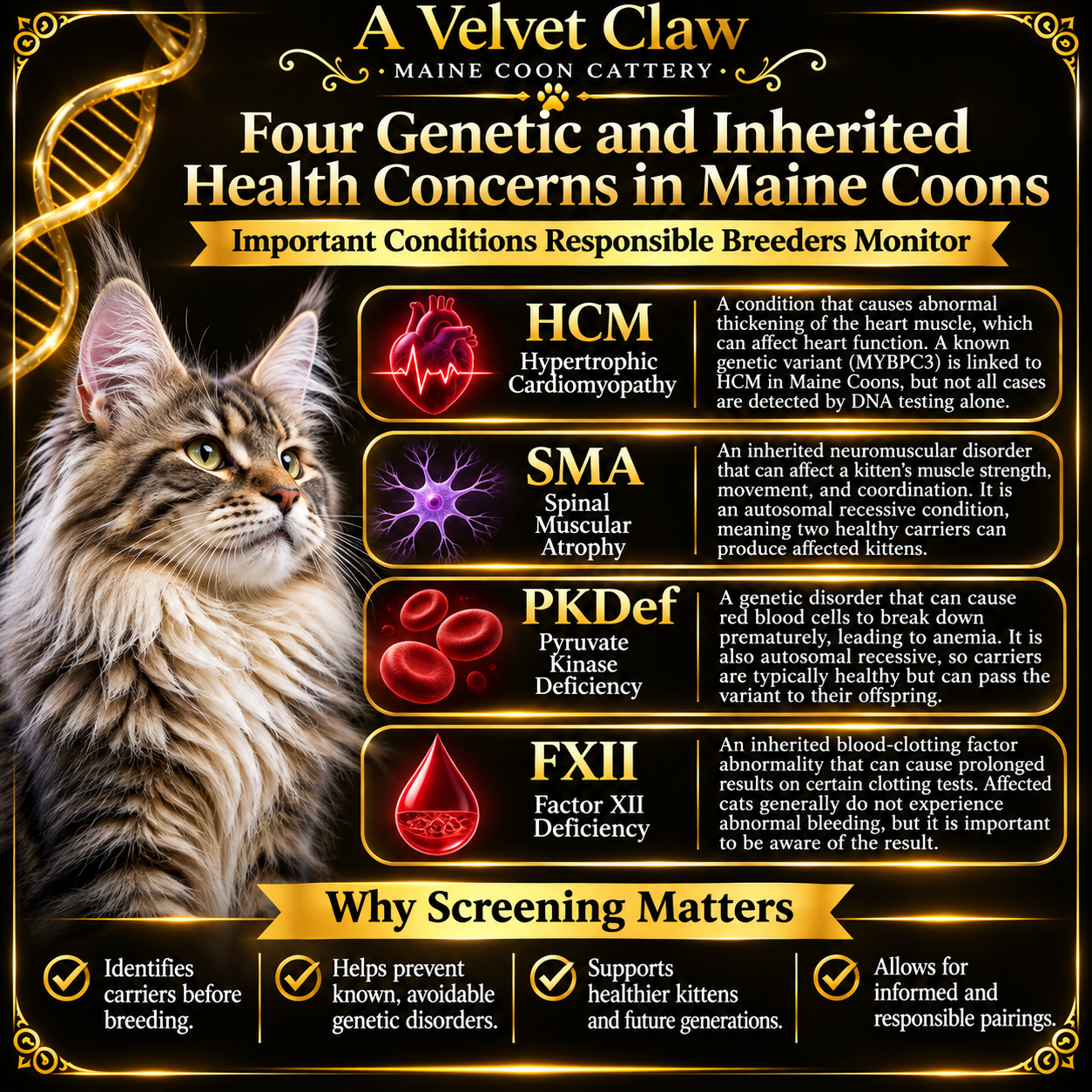
Hypertrophic Cardiomyopathy (HCM)
HCM is a condition that causes abnormal thickening of the heart muscle.
A known MYBPC3 variant is associated with HCM in Maine Coons. However, not every cat carrying the variant develops clinically significant disease, and not every Maine Coon with HCM carries that particular variant.
This is why responsible breeders should consider both genetic testing and ongoing veterinary cardiac screening, including echocardiograms.
Spinal Muscular Atrophy (SMA)
SMA is an inherited neuromuscular disorder that can affect a kitten's movement and muscle strength.
It follows an autosomal recessive inheritance pattern, meaning two healthy carriers can produce affected kittens.
Fortunately, genetic testing can identify carriers of the known Maine Coon-associated variant.
Pyruvate Kinase Deficiency (PKDef)
PKDef is an inherited disorder that can cause red blood cells to break down prematurely, resulting in anemia.
It is another example of a recessive condition in which apparently healthy carriers can pass a disease-associated variant to their offspring.
Factor XII Deficiency
Factor XII deficiency is an inherited blood-clotting factor abnormality found in cats.
It can cause prolonged results on certain laboratory clotting tests, but affected cats generally do not experience abnormal bleeding because of this deficiency.
Understanding the difference between a laboratory abnormality and a disorder that causes clinical illness is an important part of interpreting genetic results.
4. Does a Positive Carrier Result Mean a Cat Should Never Be Bred?
Not necessarily.
This is an important distinction that deserves more attention.
For a well-characterized autosomal recessive disorder, a carrier bred to a genetically clear mate is not expected to produce kittens affected by that particular disorder.
However, some kittens may inherit the carrier variant.
Responsible breeders consider the specific disease, its inheritance pattern, the reliability of available testing, and the overall health and genetic diversity of their breeding program.
Automatically removing every carrier from breeding can unnecessarily reduce genetic diversity.
Responsible breeding is about making informed decisions, not simply eliminating every cat with a carrier result.
5. Why Genetic Testing Cannot Guarantee a Perfectly Healthy Kitten
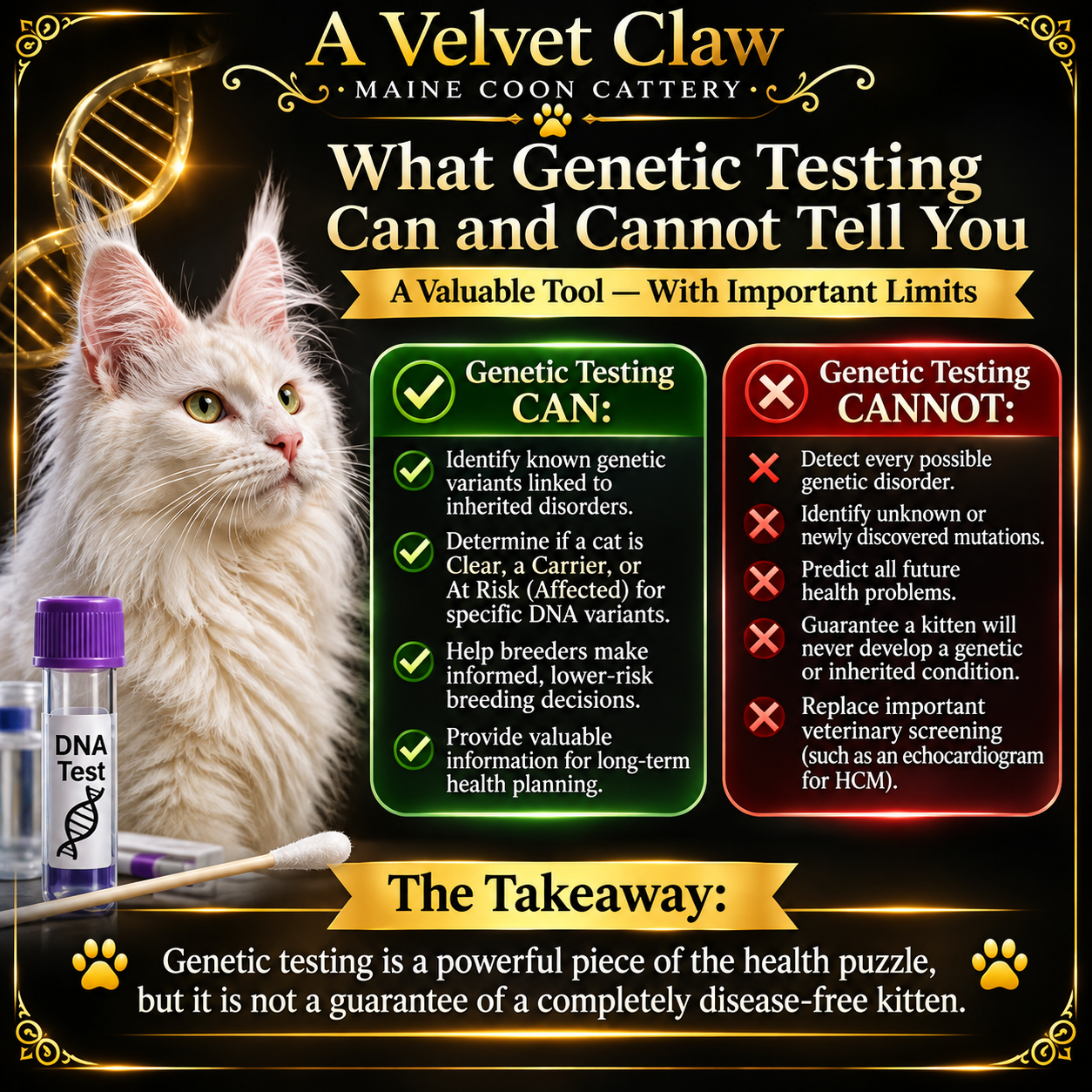
Genetic testing is an incredible tool, but it has limitations.
A genetic panel can identify many known variants associated with inherited conditions. It cannot detect every possible genetic disorder, predict every future illness, or eliminate the possibility of spontaneous genetic changes.
Some diseases have complex inheritance patterns involving multiple genes, environmental influences, or factors researchers do not fully understand.
Others may not become apparent until a cat reaches adulthood.
Even two cats with clear genetic screening results can produce a kitten that develops a medical condition later in life.
That doesn't automatically mean the breeder was careless or dishonest.
It means that biology is complicated and that no living animal comes with an absolute guarantee of lifelong health.
6. What Responsible Breeders Can Do to Reduce Genetic Risks
Although no breeder can eliminate every possibility, there are meaningful steps that can help reduce the risk of inherited disease.
At A Velvet Claw Maine Coon Cattery, we believe responsible breeding begins with education, transparency, and informed decisions.
Important practices include:
Genetic screening for relevant inherited disorders.
Understanding carrier status and inheritance patterns before planning pairings.
Appropriate veterinary examinations and health screening.
Cardiac screening for HCM, recognizing that DNA testing alone is insufficient.
Hip evaluations and other breed-relevant assessments.
Reviewing pedigrees, family history, and genetic diversity.
Making thoughtful breeding decisions based on the health of both parents.
Remaining transparent with kitten families about what testing can and cannot guarantee.
A responsible breeder doesn't simply look at two beautiful cats and decide they would make beautiful kittens.
They consider the genetic and health implications of that pairing.
And even after doing everything reasonably possible, they recognize that some risks cannot be completely eliminated.
7. Does a Kitten with a Genetic Disorder Automatically Mean the Breeder Was Irresponsible?
No.
A diagnosis alone does not establish whether a breeder acted responsibly.
There are inherited conditions that cannot currently be predicted through available testing. New variants can occur, and some disorders have complex or incompletely understood genetic causes.
However, there is an important difference between an unavoidable medical outcome and knowingly ignoring an established, preventable genetic risk.
A breeder who understands that two cats carry the same serious recessive disorder and proceeds without considering the consequences is making a very different decision from someone whose carefully screened breeding pair produces a kitten with an unpredictable condition.
Responsible breeding should be evaluated by the decisions, testing, transparency, and care involved—not by an unrealistic expectation that every kitten will remain perfectly healthy forever.
Final Thoughts: Healthy Parents Are Only Part of the Picture
Two healthy cats can absolutely produce a kitten with an inherited genetic disorder.
That doesn't mean genetics are hopeless or that health testing is pointless.
Quite the opposite.
Genetic testing, veterinary screening, and thoughtful breeding decisions allow responsible breeders to identify many risks before bringing kittens into the world.
But responsible breeding is not about promising perfection.
It is about using the best available knowledge, making informed choices, continuing to learn, and putting the health and welfare of cats first.
At A Velvet Claw Maine Coon Cattery, we believe education is one of the most valuable tools a breeder can offer.
Because understanding what genetics can—and cannot—tell us helps create more informed breeders, better-prepared kitten families, and a healthier future for the Maine Coon breed.
Beautiful cats deserve thoughtful breeding. And kitten families deserve honest information.
With love and dedication to the breed,
A Velvet Claw Maine Coon Cattery - Fur-ever grateful, Melina & Lexie - Owners
Where elegance meets education.