
What do raccoons, a French queen, and Viking explorers have in common? Believe it or not, all three have been connected to the mysterious origins of the Maine Coon cat! With their enormous fluffy tails, magnificent ear tufts, impressive size, and almost mythical appearance, it's no wonder Maine Coons have inspired some extraordinary stories. But how much of what we've heard is actually true?
Were Maine Coons once part raccoon? Did they descend from the beloved cats of Marie Antoinette? Or did their ancestors sail across the Atlantic with Viking warriors?
Today, we're diving into some of the most famous Maine Coon legends, exploring where they came from, and separating entertaining folklore from documented history. And trust us, some of these stories are pretty wild! 🐾
1. The Raccoon Myth: Are Maine Coons Part Raccoon?
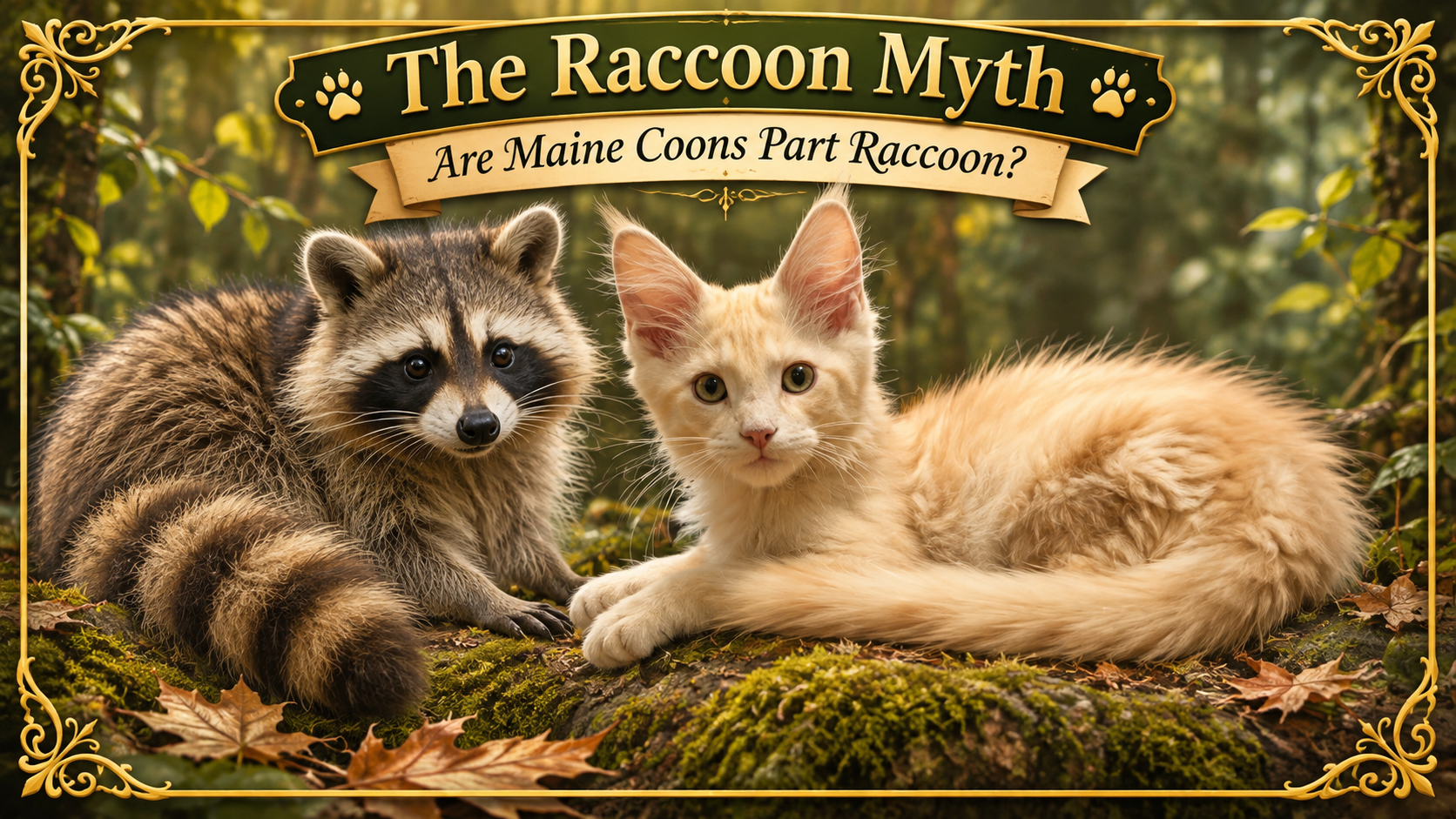
Let's begin with what might be the most famous Maine Coon legend of all. The claim: Maine Coons originated when domestic cats bred with raccoons. Yes, people really believed this!
When you look at a traditional brown tabby Maine Coon, you can understand how someone might have imagined the connection.
Consider the similarities:
Large, incredibly bushy tails
Dark stripes and ringed tail patterns
Thick, weather-resistant fur
A rugged, woodland appearance
A reputation for curiosity and intelligence
Early observers noticed these features and developed a rather imaginative explanation. Perhaps, they thought, domestic cats and raccoons had somehow produced kittens together!
Some versions of the story even suggest this is where the word "Coon" in Maine Coon originated.
What Does Science Say?
Here's where we can confidently separate myth from reality. Domestic cats and raccoons cannot reproduce together. Cats belong to the family Felidae, while raccoons belong to the family Procyonidae. These animals are genetically and evolutionarily too different to produce offspring together. Their physical similarities do not make them compatible breeding partners.
A Maine Coon's fluffy tail, striped markings, and impressive coat are inherited feline characteristics—not evidence of raccoon ancestry. So while your Maine Coon might occasionally behave like a mischievous little woodland creature, we promise they're entirely feline! 😂
Verdict: MYTH — biologically impossible.
2. The Royal Legend: Did Maine Coons Belong to Marie Antoinette?
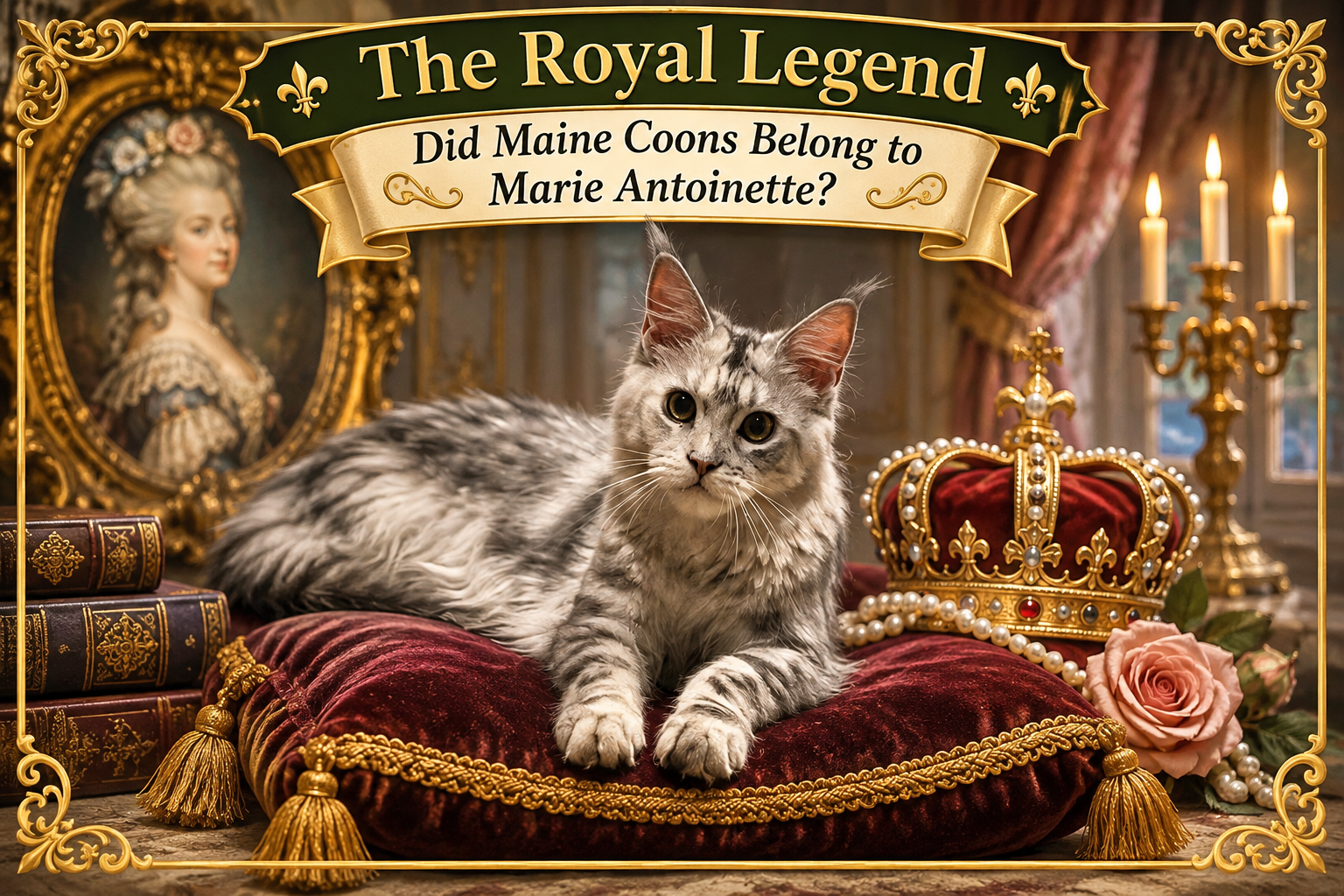
Now let's travel back to eighteenth-century France. This next story sounds like something straight out of a historical movie. The claim: Maine Coons descended from the treasured longhaired cats of Queen Marie Antoinette. According to the legend, Marie Antoinette was preparing to escape France during the French Revolution. A sea captain named Samuel Clough supposedly helped arrange her journey to America. The story says that several of the queen's prized possessions were loaded aboard a ship, including six beautiful longhaired cats.
Although Marie Antoinette never escaped France, the legend claims her cats made the journey to Maine. Once there, they supposedly bred with local domestic cats. And from those kittens, the Maine Coon eventually developed.
Could This Story Be True?
It's certainly romantic! Imagine a magnificent Maine Coon lounging on a velvet cushion, descended from cats once pampered in a French palace. But there's a problem. There is no reliable historical documentation establishing that Marie Antoinette's cats traveled to Maine or became the ancestors of the Maine Coon breed.
The story has been repeated for generations, but repetition doesn't turn a legend into a documented fact. We do know that domestic cats traveled aboard ships and that longhaired cats existed in Europe. It's possible that cats arriving from overseas contributed to the development of Maine's domestic cat population.
However, connecting those cats specifically to Marie Antoinette requires evidence that has not been established.
Verdict: CHARMING LEGEND — not historically verified.
3. The Viking Theory: Did Maine Coons Arrive on Viking Ships?
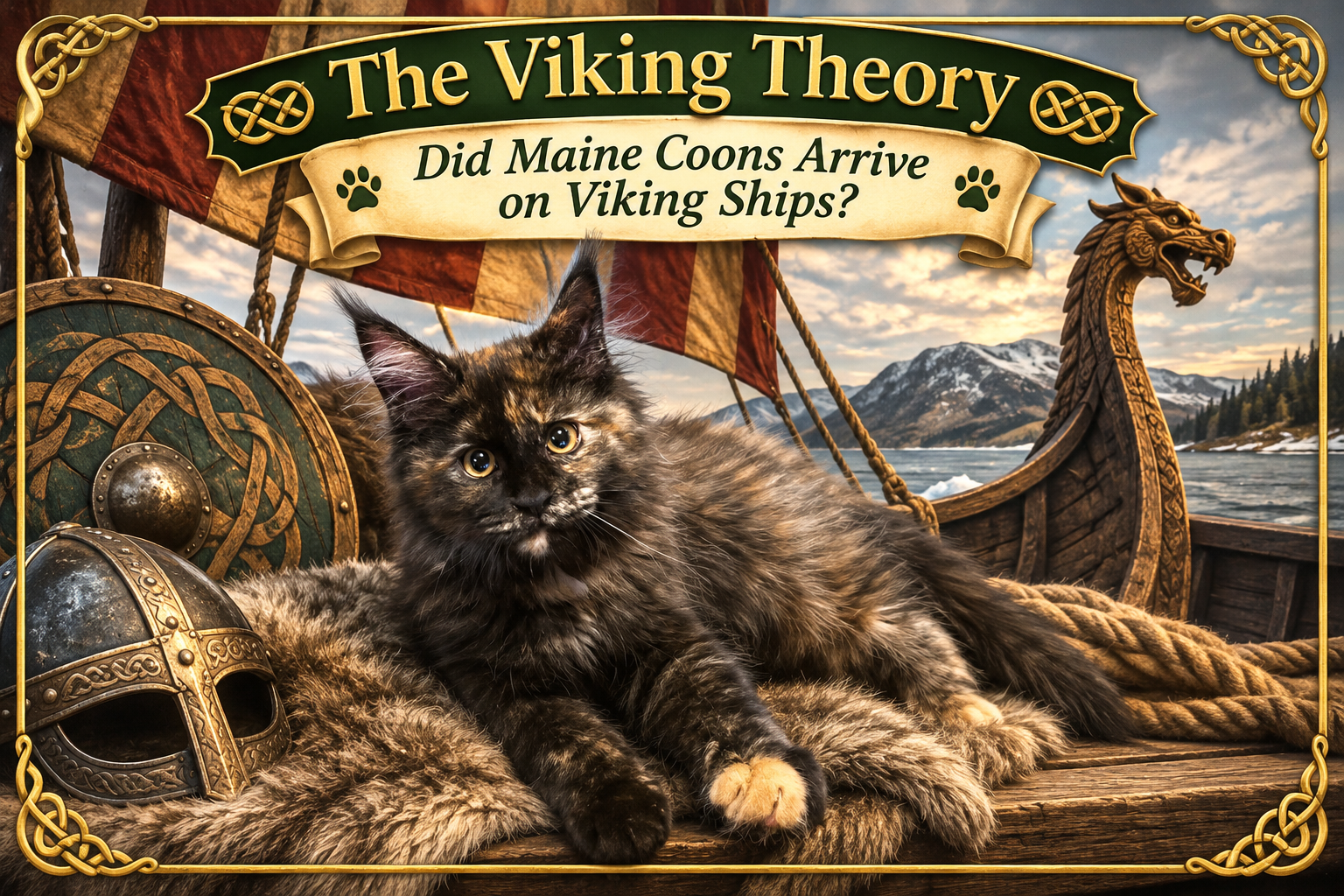
Now we're heading even further back in history! The claim: Maine Coons descended from longhaired cats brought to North America by Viking explorers.
This theory has become especially popular because Maine Coons share several physical characteristics with Norwegian Forest Cats.
Both breeds are known for:
Large, sturdy bodies
Thick coats suited to cold climates
Beautiful, flowing tails
Fur around their paws and ears
A powerful, rugged appearance
The similarities are certainly interesting! And because Norse explorers reached North America centuries before many later European settlers, some people have suggested that longhaired cats accompanied them.
According to the theory, these cats eventually contributed to the ancestors of modern Maine Coons.
What Do Historians Actually Know?
Norse voyages to North America are a real part of history. However, that doesn't automatically establish that Maine Coons descended from cats aboard those ships. There is no conclusive historical or genetic evidence demonstrating that Viking cats founded the Maine Coon breed. The Norwegian Forest Cat and Maine Coon may share physical traits, but similar appearances can develop in different populations.
Thick coats, substantial bodies, and furry tails can be useful characteristics for cats living in cold environments. That means resemblance alone cannot prove a direct ancestral connection. It's a fascinating idea, but it remains a theory rather than an established historical fact.
Verdict: UNPROVEN THEORY — intriguing, but not confirmed.
4. The Sea Captain Named Coon
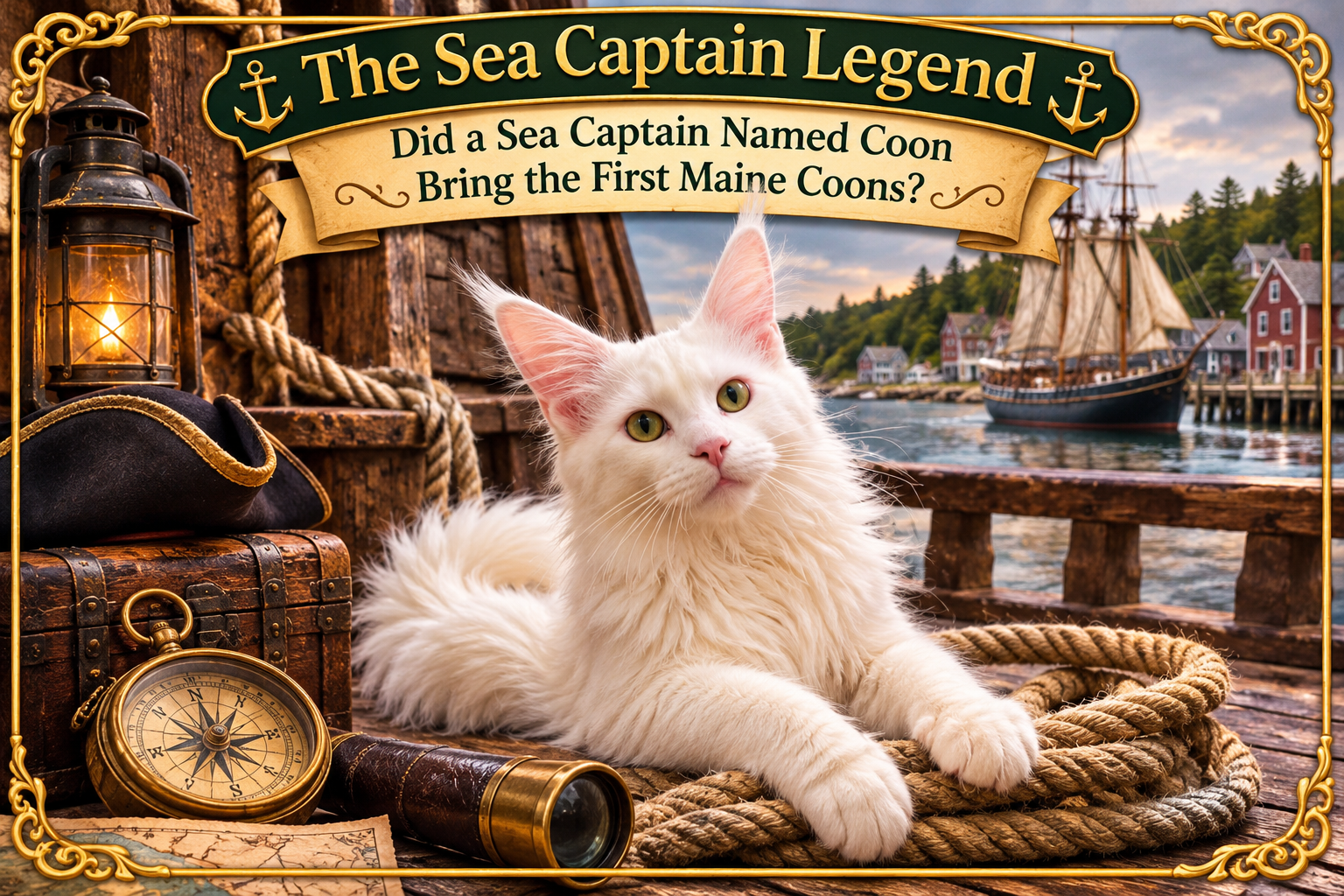
Here's another story you might not have heard! According to this legend, an English sea captain whose surname was Coon traveled along the New England coast with several beloved longhaired cats. Whenever his ship reached port, his cats supposedly went ashore. Eventually, local domestic cats began producing longhaired kittens.
People allegedly started referring to these kittens as "Coon's cats." Over time, the name supposedly became associated with the Maine Coon.
Is There Evidence?
The story fits with what we know about the historical importance of maritime trade in New England. Cats were useful aboard ships because they helped control rodents. But the particular captain and his alleged role in founding the breed have not been reliably established.
Like the Marie Antoinette legend, it's an entertaining explanation for a mysterious origin.
Verdict: UNVERIFIED FOLKLORE.
5. What About Bobcats and Lynx?
Because Maine Coons have prominent ear tufts, large paws, and substantial bodies, another rumor occasionally appears. Some people believe Maine Coons descended from domestic cats breeding with bobcats or lynx. Their wild-looking appearance certainly makes the comparison understandable. But looks can be deceiving!
There is no accepted evidence that bobcat or lynx ancestry explains the origin of the Maine Coon breed. The Maine Coon is a domestic cat, and its distinctive appearance can be explained through domestic feline genetics and generations of development.
Verdict: MYTH — not a supported explanation of the breed's ancestry.
6. So Where Did Maine Coons Actually Come From?
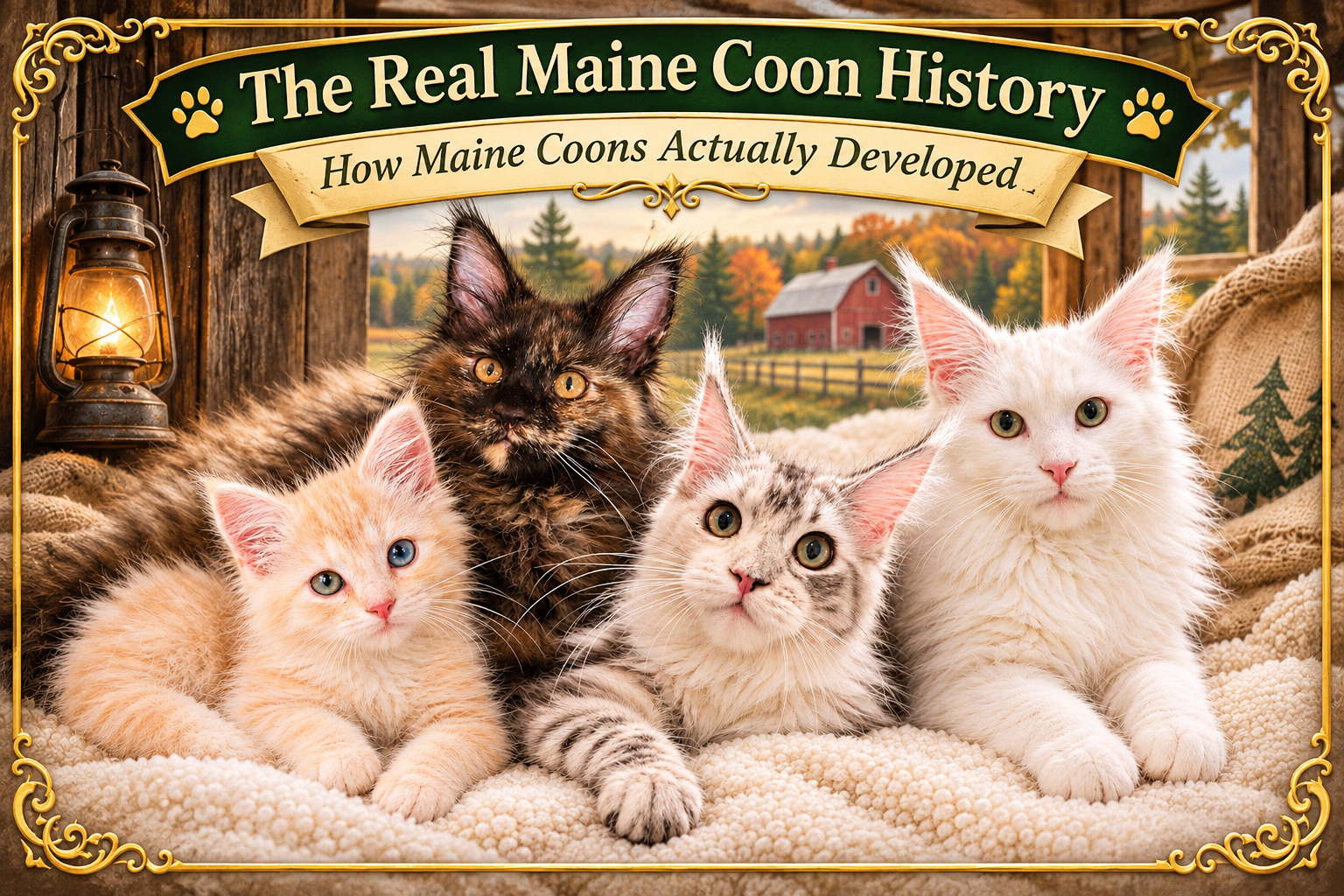
After all those extraordinary legends, the most evidence-supported explanation is surprisingly down-to-earth. Maine Coons developed naturally from domestic cat populations in Maine and the surrounding northeastern United States. Their ancestors likely included cats brought to North America by European settlers and sailors.
Over generations, those cats lived in a challenging environment characterized by cold winters, snow, and rural working conditions. Cats with characteristics suited to the region became part of the local breeding population.
The Maine Coon eventually became recognized for its distinctive combination of:
A substantial, muscular body
A shaggy, protective coat
A long, bushy tail
Large, well-furnished paws
Strong hunting abilities
A generally friendly and adaptable temperament
By the nineteenth century, Maine Coons were already well established as working cats. Farmers valued them for controlling rodents, and their distinctive appearance eventually earned them recognition beyond rural households. The precise ancestry of the earliest cats remains uncertain.
But unlike the raccoon legend, this explanation is consistent with what historians and breed organizations know about domestic cats, migration, and the development of natural breeds.
7. What Can Historical Records Actually Prove?
This is one of the most important parts of studying breed history. There is a difference between a story being possible and a story being documented. We have historical records showing that Maine Coons existed as recognizable cats during the nineteenth century.
For example: 1861: A black-and-white cat named Captain Jenks of the Horse Marines appeared in early cat literature. 1878: Maine Coons were listed among cats exhibited at a Boston cat show. 1895: A brown tabby Maine Coon named Cosey won Best Cat at the Madison Square Garden cat show in New York. These records help establish the breed's early history.
What they do not tell us is the identity of the very first Maine Coon or the precise ancestry of every cat that contributed to the breed. And that's perfectly okay. History doesn't become less interesting simply because some questions remain unanswered.
In fact, those unanswered questions are often what make exploring the past so exciting!
8. Why Do These Legends Continue to Fascinate Us?
There's something special about a breed that inspires so much imagination. Maine Coons look extraordinary. Their magnificent coats, expressive faces, large paws, and flowing tails make them stand out. It's easy to imagine one walking through an ancient forest, sailing across an ocean, or lounging in a royal palace. And these stories have become part of the breed's cultural history. But appreciating folklore doesn't mean we have to present it as fact.
We can enjoy the romance of the Marie Antoinette legend while acknowledging the lack of historical documentation. We can admire the similarities between Maine Coons and Norwegian Forest Cats without assuming a proven Viking connection. And we can laugh at the raccoon myth while explaining why it's biologically impossible.
Responsible breed education means celebrating the stories while respecting the science.
9. Why This Matters at A Velvet Claw Maine Coon Cattery
At A Velvet Claw Maine Coon Cattery, we love everything about these magnificent cats—from their impressive appearance to their fascinating history. But we also believe that responsible breeding and education go hand in hand. Understanding the difference between folklore and established facts helps people appreciate the Maine Coon for what it truly is.
Not a wild-animal hybrid. Not a proven descendant of French royalty. Not a confirmed Viking passenger.
But a remarkable domestic cat breed with deep roots in American history. Their beauty doesn't need an extraordinary legend to make it meaningful.
The real story of a rugged New England working cat becoming one of the world's most recognizable feline companions is extraordinary enough!
Final Thoughts: The Truth Is Just as Fascinating as the Legends
So, are Maine Coons part raccoon? Absolutely not! Did they descend from Marie Antoinette's beloved cats? There's no reliable evidence proving that story. Did Vikings bring their ancestors to North America? It's an intriguing theory, but it hasn't been established.
What we do know is that Maine Coons developed into a distinctive natural breed in New England and were recognized for their strength, hunting abilities, and beautiful appearance long before modern cat breeding became widespread. Their history is filled with mystery, imagination, and remarkable real-world development.
And perhaps that's part of what makes them so special. The Maine Coon doesn't need to be part raccoon, royal, or Viking to be magnificent.
Being a Maine Coon is already extraordinary. 👑🐾
Let's Talk Maine Coon Myths!
Before reading today's blog, which of these stories had you heard?
🦝 The raccoon legend?
👑 Marie Antoinette's royal cats?
⚔️ The Viking connection?
🚢 The mysterious sea captain?
Or was one of these completely new to you?
Tell us in the comments which legend surprised you the most! We'd love to hear your thoughts as we continue exploring Maine Coon history throughout the week.
A Velvet Claw Maine Coon Cattery
Fur - ever grateful: Lexie & Melina