
Why Maine Coon Kittens Shouldn't Go Home Too Young
Bringing home a new Maine Coon kitten is exciting. Once you've chosen your kitten, it's completely understandable to start counting the days until you can finally bring that fluffy little face home. But when it comes to Maine Coon kittens, sooner isn't necessarily better.
Those extra weeks with their mother, littermates, and breeder aren't simply waiting time. They're an important part of a kitten's physical, emotional, and social development—and they can help prepare that kitten for the rest of their life.
Eight Weeks Old Doesn't Mean Ready
A kitten may be eating solid food, using the litter box, and playing independently at eight weeks old. That can make them look ready to leave their mother. Developmentally, however, there's still a lot happening. During the following weeks, kittens continue learning how to interact appropriately with other cats and people, adjust to new experiences, control their play, and become more confident in their surroundings.
For Maine Coons, which mature more slowly than many other breeds, allowing adequate time for this development is especially valuable.
Mom Is Still Teaching Them
A mother cat does much more than feed her kittens. As they grow, she helps teach them boundaries and appropriate feline behavior. Kittens learn when they've played too rough, when another cat wants to be left alone, and how to communicate with other cats. Some of these lessons can't be recreated by humans.
Even after kittens are eating on their own, their mother can still have an important role in their development.
Littermates Are Teachers, Too
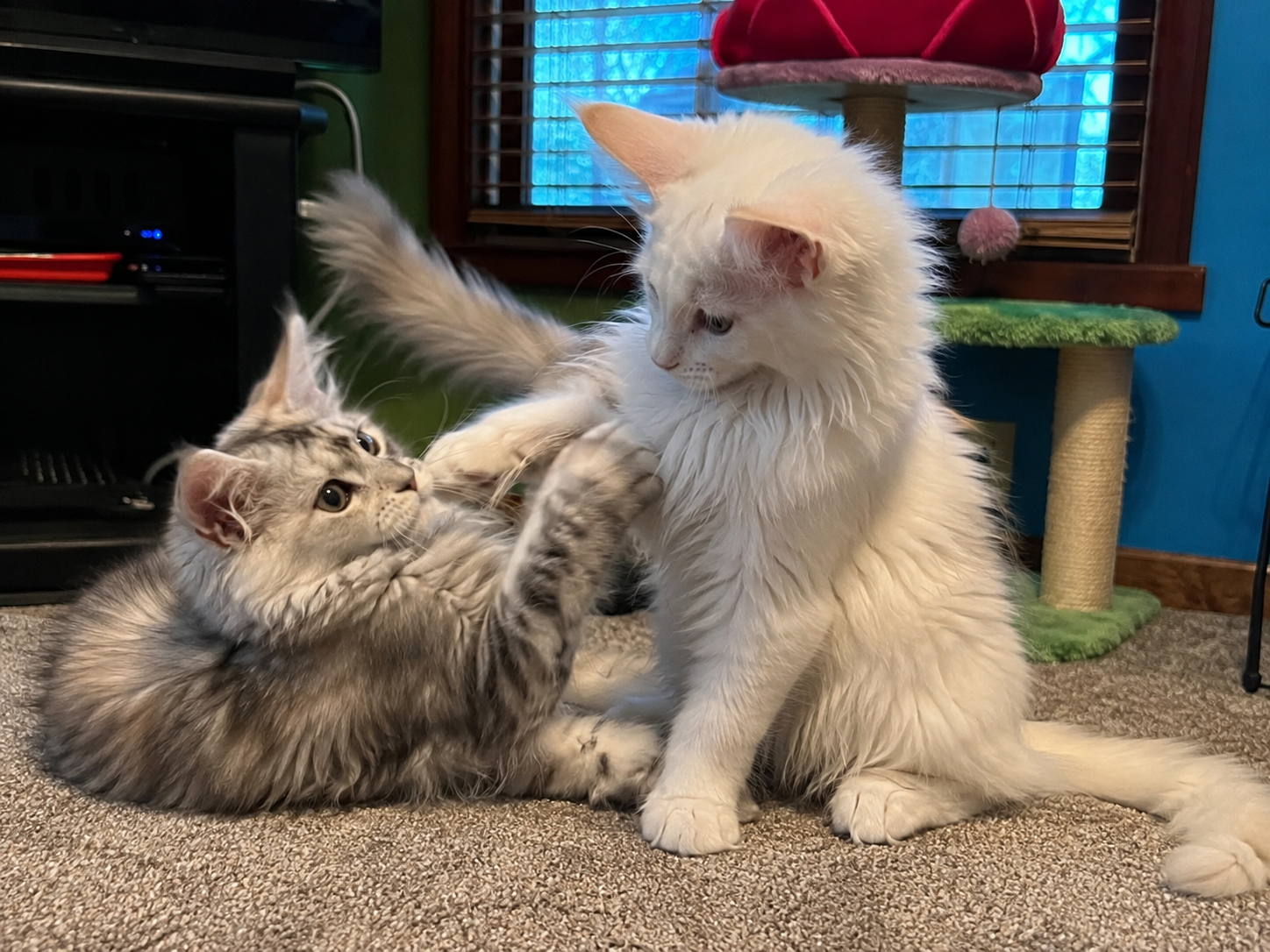
Wren and Rembrandt wrestling, learning from each other
Anyone who has watched a litter of kittens play knows that things can get wild! The wrestling, chasing, pouncing, biting, and tackling aren't just adorable entertainment. They're also opportunities to practice social skills. If one kitten bites too hard, their sibling reacts. If play becomes too rough, another kitten may walk away. Little by little, they're learning something incredibly important: How to be a cat.
Those lessons can contribute to better play manners and social skills later in life.
Their Bodies Need Time Too
Emotional development isn't the only reason not to rush a kitten home. Those additional weeks also give breeders time to monitor growth and development, complete age-appropriate veterinary care, follow vaccination schedules, and watch for concerns that might become noticeable as a kitten gets older.
A responsible breeder wants to send home a kitten who isn't simply old enough to leave—but one who has been given the best possible start.
Confidence Is Built Through Experience
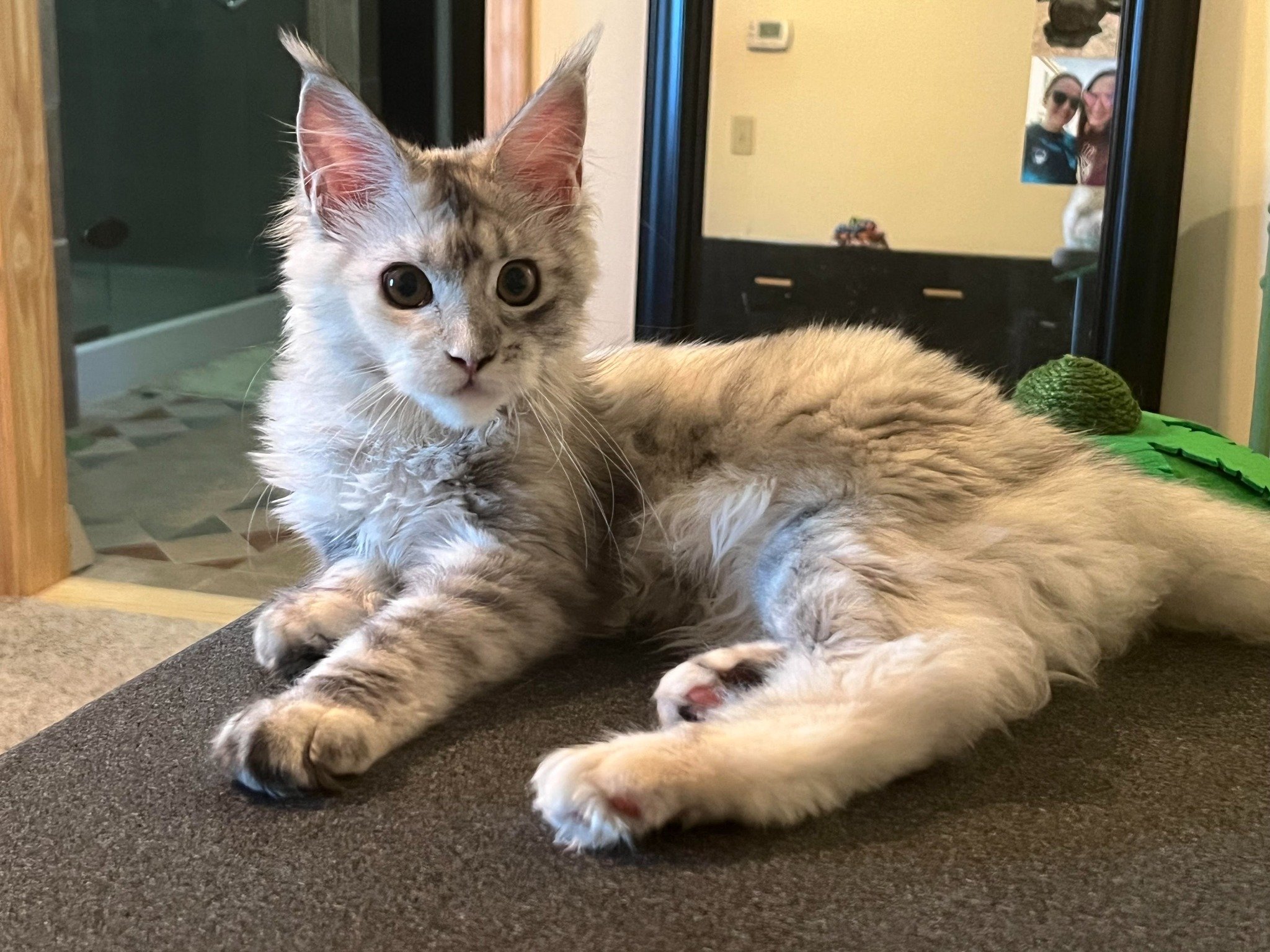
Queen Wren building Confidence Through Experience
A kitten's early weeks provide an important opportunity for positive socialization. Depending on the breeder and household, kittens may gradually experience everyday sounds and activities such as vacuum cleaners, televisions, doors opening and closing, grooming, nail trims, carriers, different surfaces, household activity, and interaction with people. The goal isn't to overwhelm a kitten.
It's to gently introduce normal life so that new experiences don't automatically feel frightening. By the time a kitten joins their new family, we want them to approach their new world with curiosity and confidence.
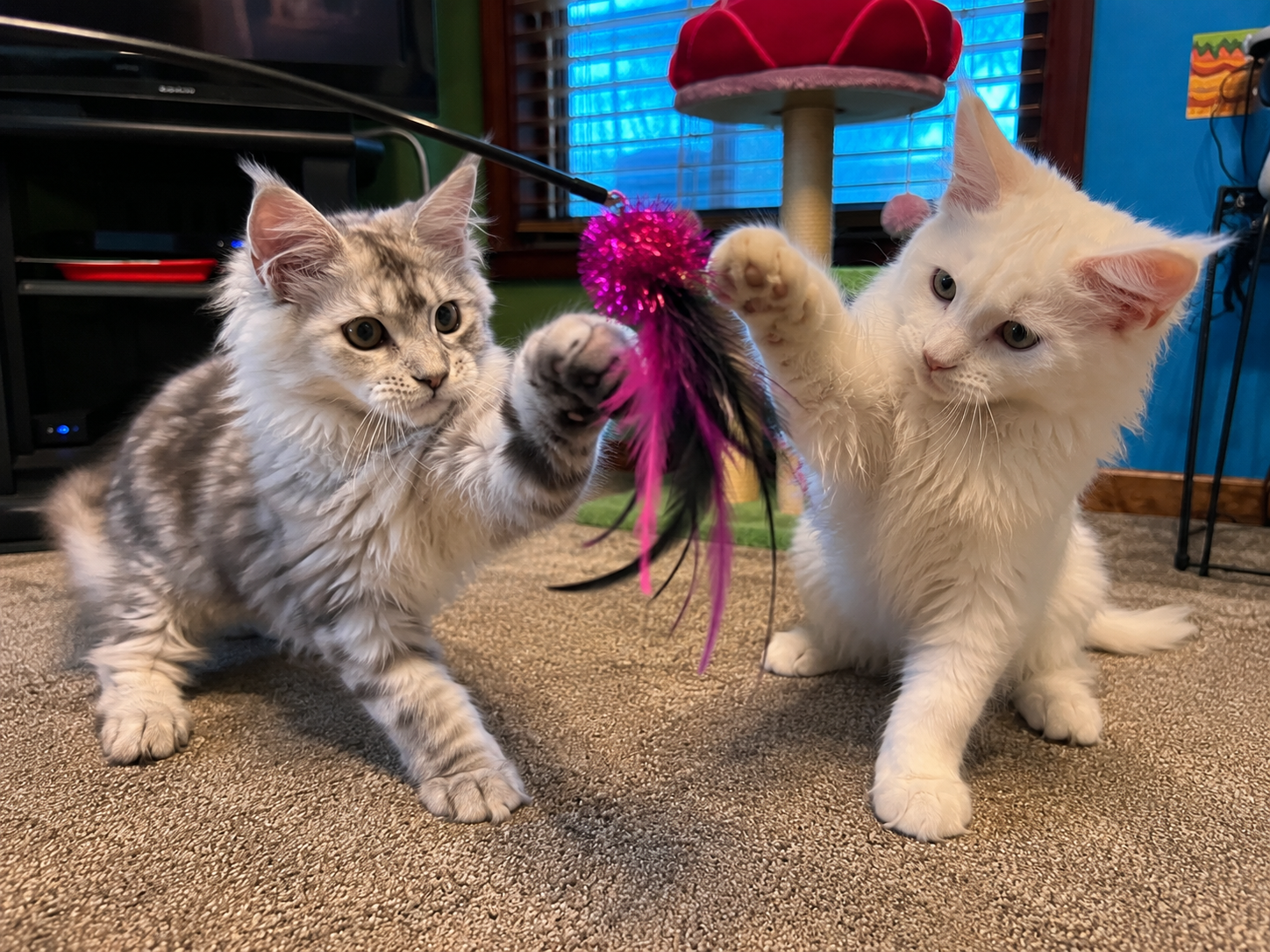
Don’t forget about Toys!
Maine Coons Have Plenty of Growing Left to Do
Maine Coons are famous for being one of the largest domestic cat breeds, but they don't become those magnificent adults overnight. They are slow-maturing cats and can continue developing for several years. That doesn't necessarily mean every developmental stage happens later than it does in other cats, but it does mean there's no reason to rush one of the most important stages of their life.
They'll have years to spend with their new family. Giving them a few extra weeks at the beginning is a small investment in what we hope will be a long, happy life.
Waiting Can Be Hard—But It's Worth It
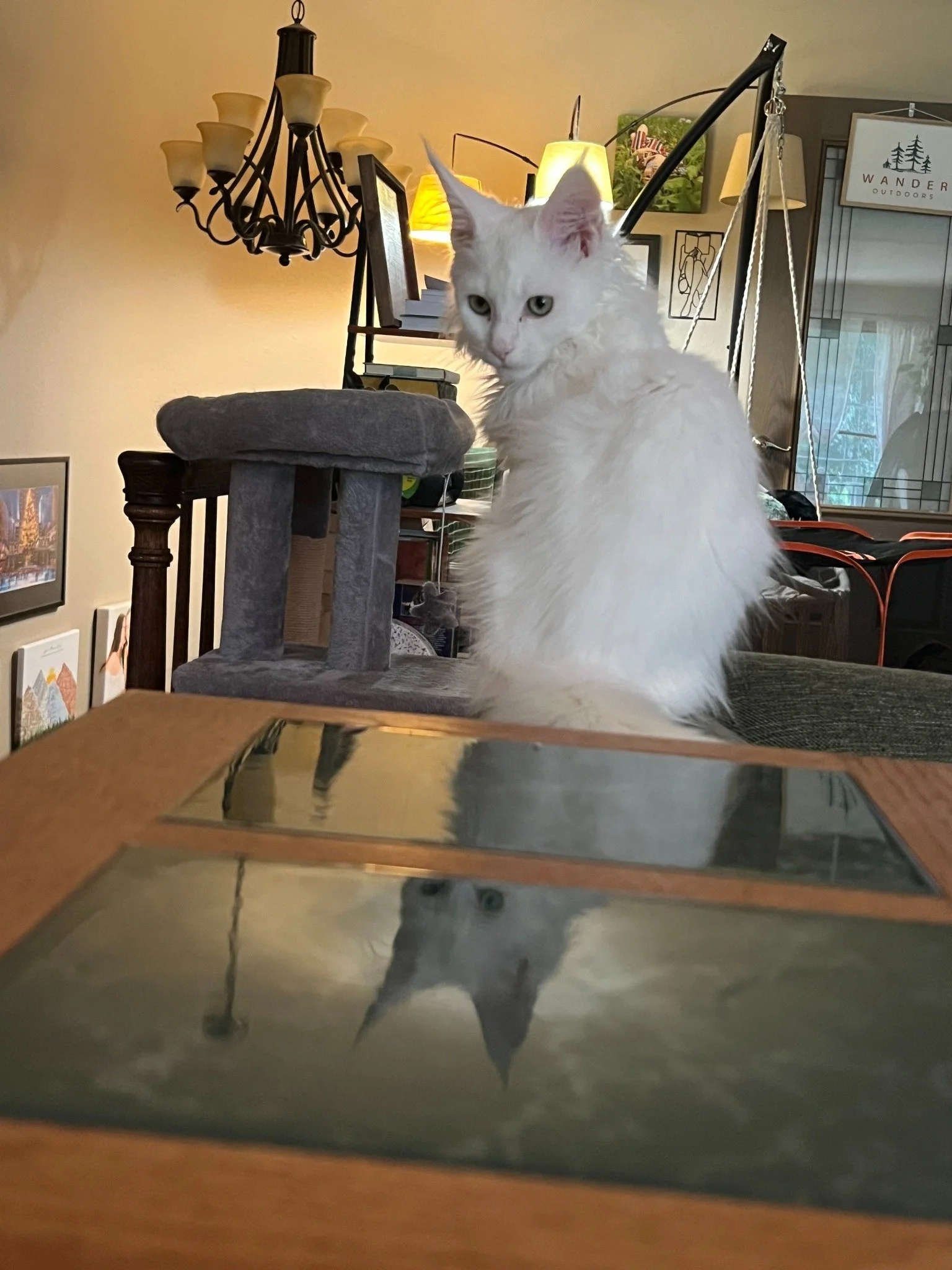
A Few Extra Weeks for a Lifetime Together
We understand why families are eager. You've seen the pictures. You've fallen in love. You've probably already bought toys, beds, bowls, scratching posts—and maybe enough supplies for a kitten who hasn't even arrived yet! Waiting those last few weeks can feel like forever. But a responsible breeder's job isn't to send a kitten home at the earliest possible moment. It's to decide when that individual kitten is truly ready.
Age is part of that decision, but so are health, development, confidence, veterinary care, and the kitten's individual needs.
A Few Extra Weeks for a Lifetime Together
There will be plenty of time for cuddles on the couch, midnight zoomies, chirps from across the room, enormous fluffy tails in your face, and discovering all the wonderfully strange things that come with loving a Maine Coon. Those first weeks only happen once. We believe kittens deserve the time to experience them fully.
At A Velvet Claw, our goal isn't simply to raise beautiful Maine Coons. We want to raise healthy, confident, well-socialized kittens who are prepared for the next chapter of their lives. And sometimes, one of the best things we can do for them is simply give them time to be kittens.
Fur - ever grateful: Lexie & Melina
Maine Coon kitten - Maine Coon kitten go-home age - when can Maine Coon kittens leave their mother
Maine Coon kitten development - Maine Coon kitten socialization - Maine Coon breeder