
🐾 Why Do Maine Coons Sit in Doorways?
The Funny—and Surprisingly Logical—Reasons Your Maine Coon Always Seems to Be in the Way
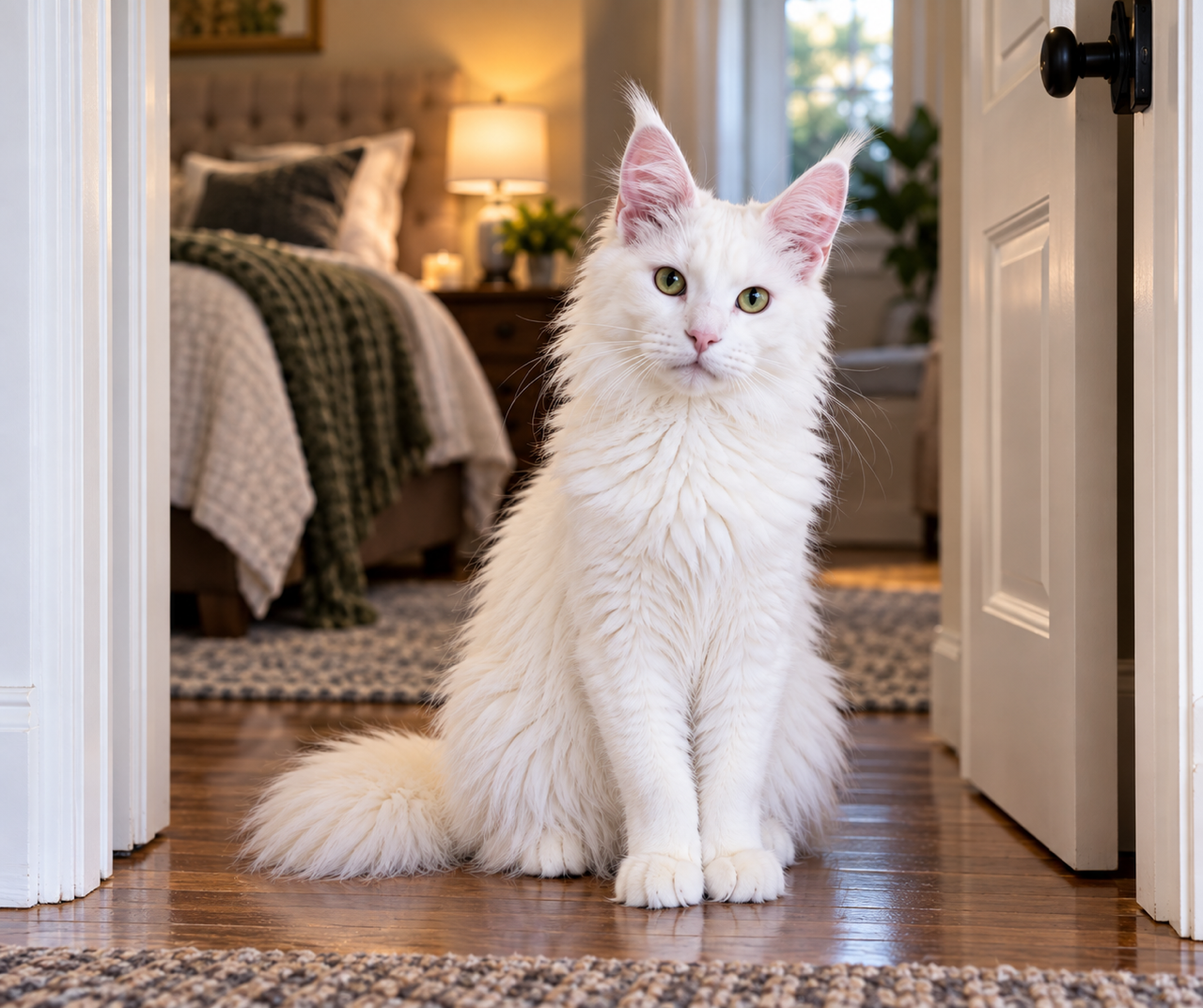
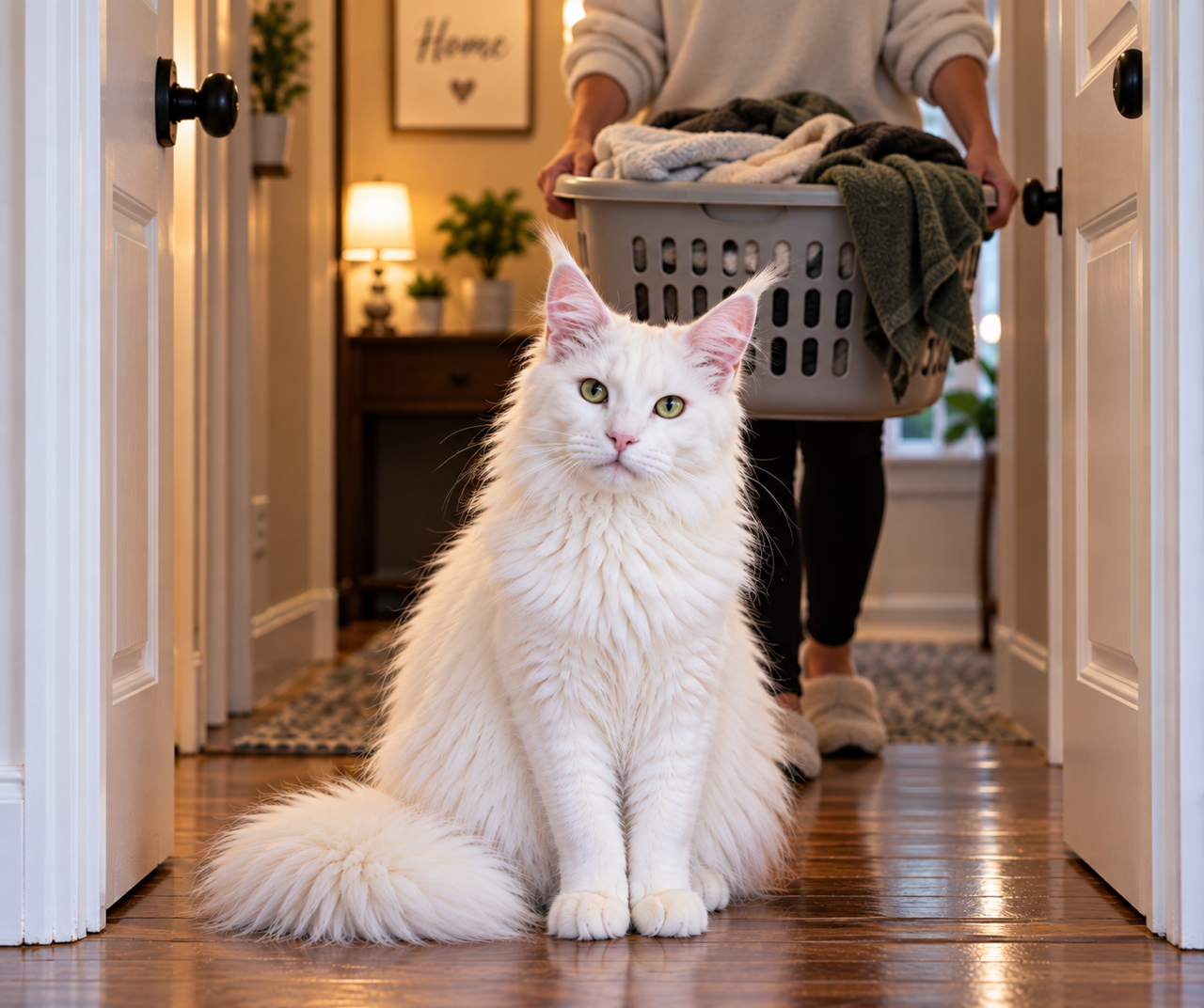
You’re carrying a basket of laundry. Your hands are full. You walk toward the doorway and there they are. Your Maine Coon. Sitting directly in the middle of it. Not entering the room. Not leaving the room. Just… occupying the doorway. You step left. They look at you. You step right. They somehow move right.
Eventually you find yourself negotiating passage through your own home with a cat who appears to have appointed themselves Director of Hallway Operations. 😂 If this sounds familiar, you’re definitely not alone. Maine Coons, like other cats, may choose doorways, hallways, stairs, and other high-traffic areas for several reasons. Sometimes the location gives them a great view of household activity. Sometimes they're waiting for something. Sometimes it provides access to multiple areas at once.
And sometimes? It may simply be a comfortable place to sit. So let's talk about why the doorway seems to be one of the most valuable pieces of real estate in the entire house.
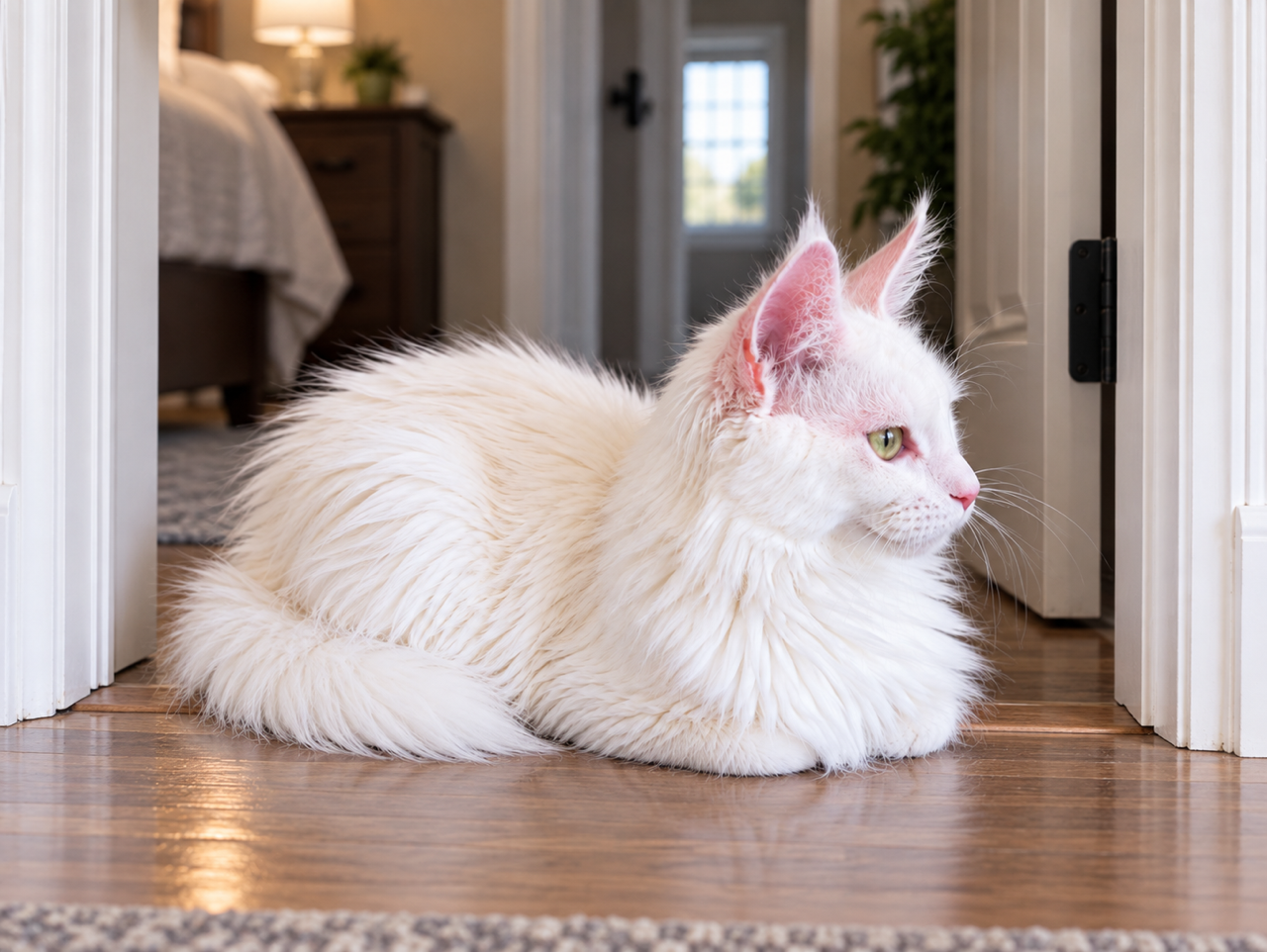
🚪 A Doorway Is More Than Just a Doorway
Humans usually think of a doorway as something we walk through. A cat may experience that same location very differently. A doorway connects two spaces. From one spot, your Maine Coon may be able to see into one room while also monitoring what's happening in another. Think about it.
From the right doorway, a cat might be able to keep track of:
You in the kitchen
Someone else in the living room
Another pet coming down the hallway
Activity near the front door
The mysterious opening of the refrigerator
That's a lot of information from one very convenient location. To us, they're blocking traffic. To them, they may have simply chosen an excellent observation point.
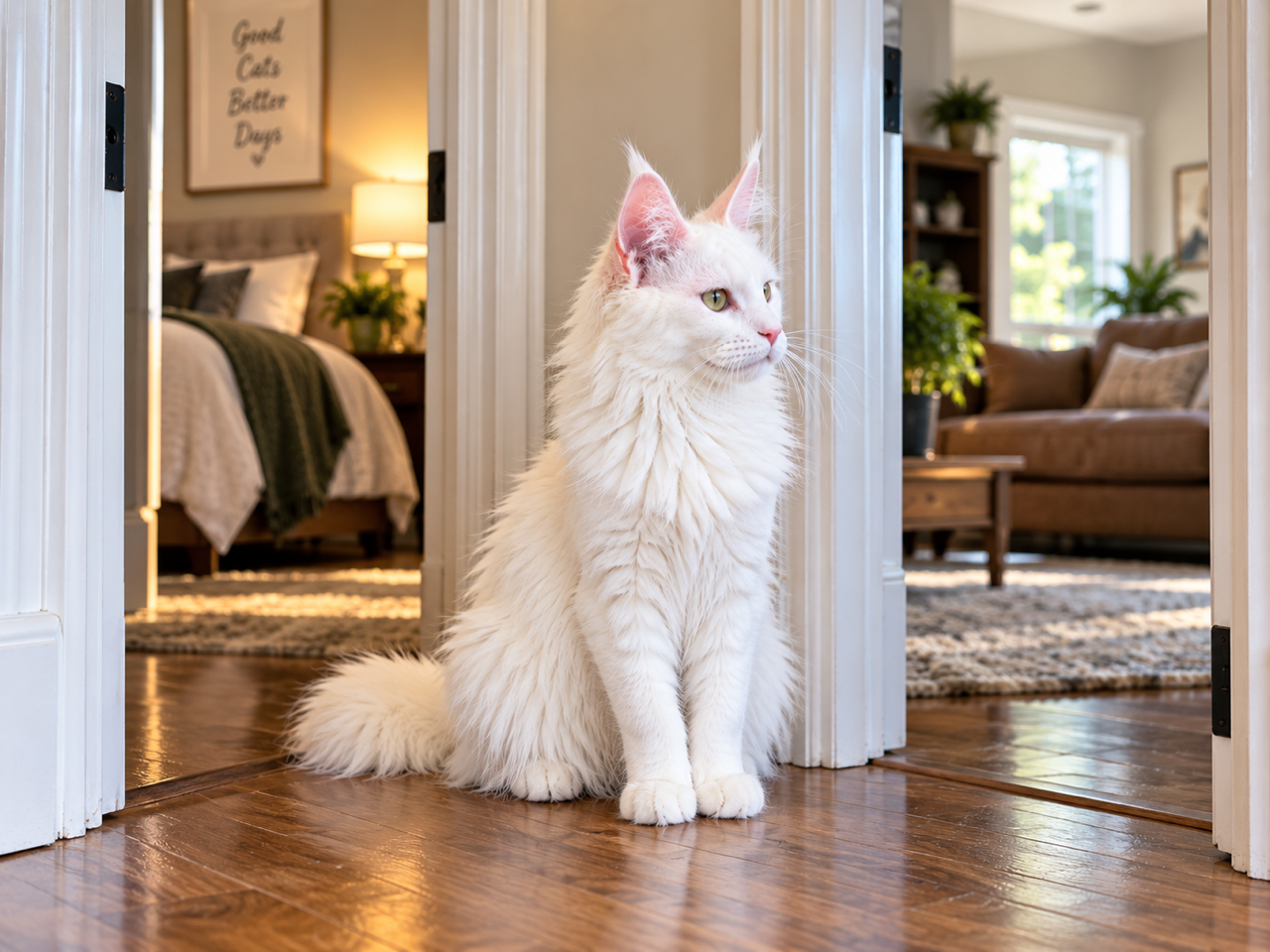
👀 The Perfect Place to Watch Everything
Maine Coons have a reputation for being involved in household activity. Cooking? They're nearby. Cleaning? Supervised. Going to the bathroom? Apparently a team activity. Opening a package? Quality control has arrived.
A doorway can provide a great place to observe all of this without necessarily being directly involved. Your Maine Coon can sit comfortably and watch the household move around them.
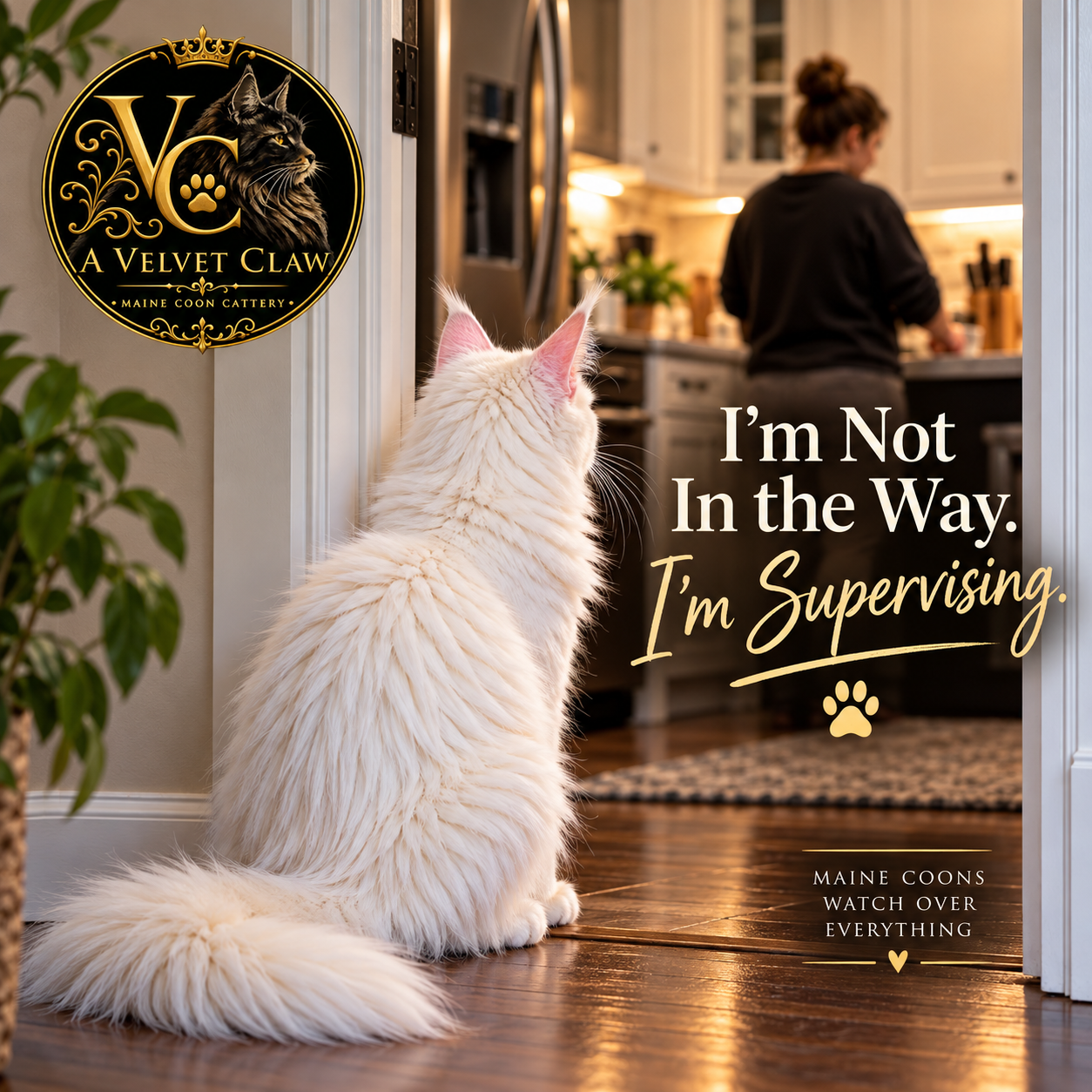
In other words: They're not in the way.
You're simply interfering with their surveillance operation. 😂
🗺️ Doorways Are Little Traffic Intersections
Think about the layout of your house. Certain locations naturally receive more traffic than others. Hallways. Stair landings. Kitchen entrances. Bedroom doors. Doorways between major living areas. These spots act almost like intersections.
If your Maine Coon enjoys knowing where everyone is, sitting at one of these intersections gives them an opportunity to observe people and animals moving between different parts of the home. They don't have to follow you everywhere. They can simply wait for everyone to pass by.
Efficient. Strategic. Very cat.
❤️ Sometimes They're Waiting for You
Have you ever walked toward a room and discovered your Maine Coon sitting right outside the doorway? Maybe they're not supervising the house. Maybe they're supervising you. Cats can learn our daily routines remarkably well.
Your Maine Coon may recognize patterns associated with:
Waking up
Getting ready for work
Feeding time
Treat time
Playtime
Bedtime
Returning home
If you normally emerge from the bedroom around the same time every morning, waiting outside the doorway may be a pretty effective strategy. Why search the house for the human when you already know where the human is going to appear?
🚿 And Then There's the Bathroom Door
Few things seem to offend some cats quite like a closed bathroom door. You walk inside. You close the door. Suddenly: Paw under door.
Scratch. Meow. Another paw. Perhaps an entire fluffy arm. 😂 Why? There isn't necessarily one universal explanation.
Your Maine Coon may simply want access to you, be curious about the closed-off space, dislike being separated from household activity, or have learned that hanging around the door eventually results in it opening. And once something works? Cats are perfectly capable of trying it again. And again. And again.
🧠 “Where Did My Human Go?”
Cats can form expectations about where familiar people are based on environmental cues. If your Maine Coon watches you walk into a room and the door closes, they know you didn't simply disappear from existence. You're in there. Without them. Unacceptable. 😂
Sitting outside the doorway allows them to wait for the situation to correct itself. Which, eventually, it usually does. You open the door. The cat wins.
🐈 Sometimes They're Controlling Their Own Space
Doorways can also matter because they are transition points between different areas. In a multi-cat or multi-pet household, pay attention to how a cat is using the doorway. A relaxed Maine Coon lounging near a doorway while everyone comfortably moves around them is very different from a tense cat repeatedly preventing another animal from passing. Watch the entire interaction.
Signs that deserve closer attention might include:
Stiff posture
Prolonged tense staring
Growling or hissing
Swatting
Chasing
Another pet repeatedly avoiding the area
One animal consistently being prevented from accessing food, water, litter boxes, resting spaces, or people
The important distinction is: Sitting in a doorway isn't automatically “dominance.” Context matters. A doorway sitter may simply be resting. But if access to important resources is being affected, the broader household setup deserves attention.
🍗 Strategic Positioning: Kitchen Edition
There is one doorway that deserves its own category. The kitchen.= Your Maine Coon may have performed extensive research on this area.
They know:
The refrigerator opens here.
The treats live somewhere nearby.
Food preparation happens regularly.
Humans frequently drop things.
The odds are good.
Why sit somewhere else? Your Maine Coon isn't blocking the kitchen entrance. They're simply maintaining a high-probability snack acquisition position. Very scientific.
🌬️ Sometimes the Doorway Just Feels Good
Not every behavior needs a complicated psychological explanation. Sometimes a doorway may simply be comfortable.
Depending on your home, doorway areas may offer:
Cooler flooring
Warmer flooring
Air movement
Sunlight
Shade
A quiet resting location
A good view
Cats often choose resting places based on physical comfort. So before assuming your Maine Coon has developed an elaborate security strategy for protecting the hallway… Check for an air vent. 😂
🐾 Why Do They Move Directly Into Your Path?
Here's another classic. Your Maine Coon isn't sitting in the doorway. They're nearby. You begin walking toward the doorway. Suddenly they stand up and walk directly in front of you. Why?! Cats don't necessarily understand human walking patterns the same way humans do.
They may be approaching you, anticipating where you're going, trying to get your attention, heading toward the same destination, or expecting something associated with your movement.
Unfortunately, Maine Coons also come with: A lot of cat. A tiny kitten walking in front of you is one thing. A fully grown Maine Coon suddenly becoming a furry speed bump is another.
Be especially careful on stairs and when carrying things.
👑 The Hallway Supervisor
Some Maine Coons seem happiest when they're positioned exactly where they can monitor the maximum amount of household activity. Doorway? Excellent. Hallway intersection? Even better. Top of the stairs? Executive office.
From there, they can observe. Evaluate. Judge. And intervene when necessary. Your home may belong to you legally. Operationally? Management has concerns.
💤 Sometimes They're Just Resting
This may be the least exciting explanation, but it's important. Sometimes your Maine Coon sits in the doorway because… they sat in the doorway. That's it. Cats don't necessarily assign a deeper meaning to every location they choose.
Maybe they stopped walking. Maybe they were comfortable. Maybe they liked the view. Maybe that's simply where they decided to loaf.
Behavior becomes more meaningful when we look at patterns and context, rather than assigning a specific emotion or intention to one isolated action.
🔎 Become a Maine Coon Detective
If your Maine Coon repeatedly chooses the same doorway, pay attention. Ask yourself: What's visible from this spot? Can they see several rooms? What's nearby? Food? A window? Their favorite person? Another pet? When do they sit there? Before meals? When you're cooking? At bedtime? When someone leaves? What happens afterward?
Do they follow you? Ask for food? Go to sleep? Lead you somewhere?
Once you start looking at the context, seemingly random behavior often becomes much more understandable.
🏠 Make Sure Important Resources Aren't Easy to Block
In multi-cat homes especially, cats should have practical access to important resources without repeatedly having to pass another animal in a narrow area.
Think about access to:
Food
Water
Litter boxes
Resting areas
Scratching surfaces
Elevated spaces
Hiding areas
Providing resources in multiple appropriate locations can help reduce competition and give cats more choices about how they move through their environment. This is one reason vertical territory can be so valuable, too. Your floor isn't the only usable space in your cat's world.
🩺 What If the Doorway Behavior Suddenly Changes?
As with many cat behaviors, change matters.
If your Maine Coon has always been your resident hallway supervisor, that's one thing.
But if they suddenly begin spending unusual amounts of time isolated in a doorway or hallway while also showing changes in appetite, activity, mobility, grooming, litter-box habits, vocalization, social behavior, or general demeanor, pay attention.
One new resting location alone doesn't necessarily mean something is wrong. But significant behavioral changes—especially when accompanied by other changes—are worth discussing with your veterinarian. You know your cat's normal.
That's valuable information.
😂 Let's Be Honest…
There is also a possibility that your Maine Coon has carefully calculated the exact location that will inconvenience the largest possible number of humans. We cannot scientifically confirm this. But the evidence in many Maine Coon households is compelling. Laundry basket? Doorway. Groceries? Doorway. Running late for work? Doorway. Middle of the night with the lights off? Naturally. Doorway.
🖤 The Bottom Line
So why does your Maine Coon sit in doorways? There isn't one universal answer.
They may be:
👀 Watching household activity
❤️ Waiting for their person
🗺️ Monitoring multiple rooms
🍗 Positioning themselves near food activity
🌬️ Enjoying the temperature or airflow
🐈 Watching another pet
💤 Simply resting
👑 Conducting extremely important Maine Coon business
The key is to look beyond the doorway itself.
Watch your cat's body language. Notice what happens before and after. Pay attention to patterns. Because the more we understand why our cats choose certain behaviors and locations, the better we become at understanding the world from their perspective. And the next time you're carrying a full laundry basket toward a doorway occupied by 18 pounds of Maine Coon?
Remember: You're not being blocked. You've simply encountered management. 😂🐾
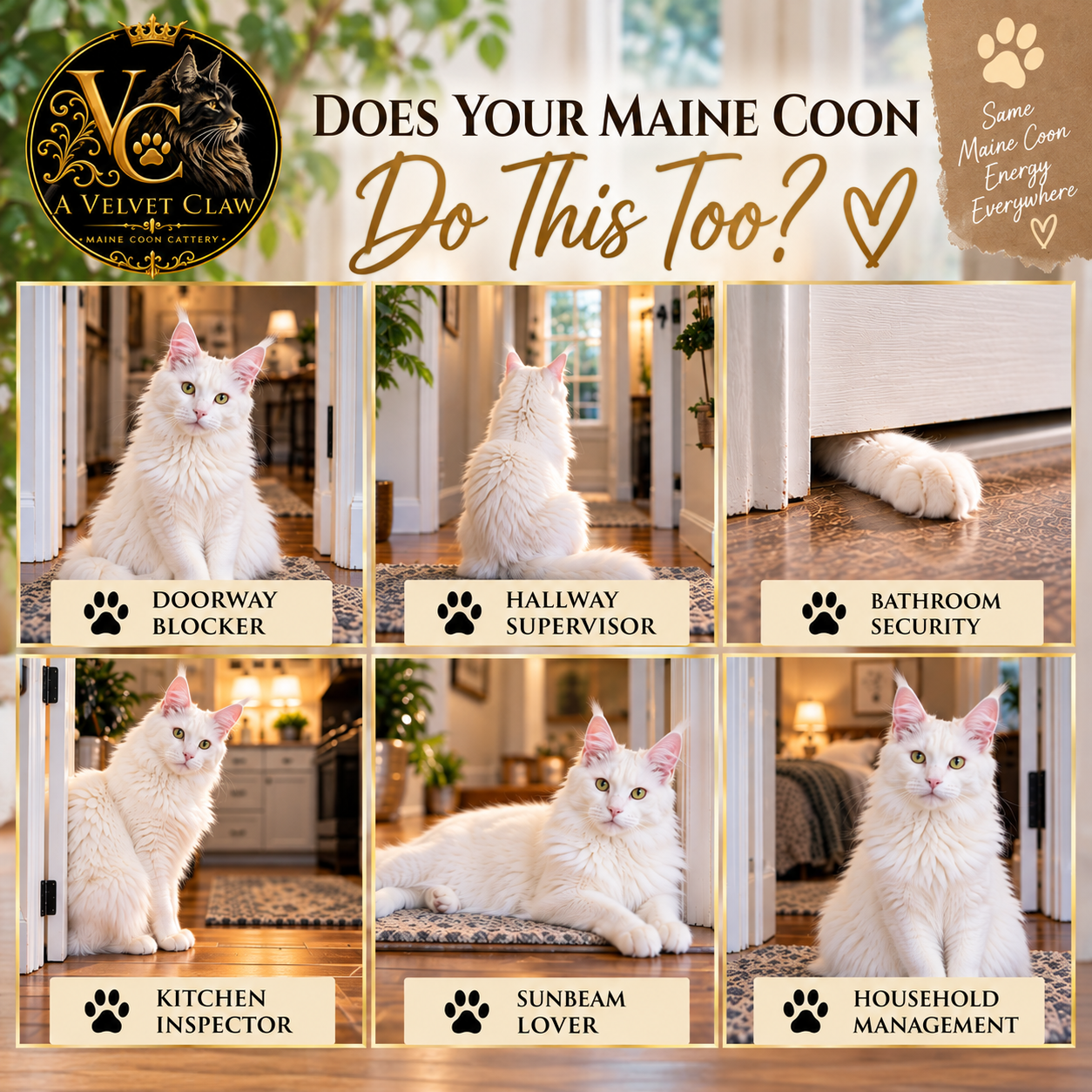
🐾 Keep Learning With A Velvet Claw
At A Velvet Claw Maine Coon Cattery, we believe understanding Maine Coons goes beyond admiring how beautiful they are. Learning about their behavior, communication, health, genetics and everyday habits helps us better understand the cats sharing our homes. Even when they're sharing those homes from the exact middle of the doorway.
🖤 HEALTH • PEDIGREE • TEMPERAMENT
Fur - ever grateful: Lexie & Melina
Why do Maine Coons sit in doorways • Maine Coon behavior • Maine Coon body language
Maine Coon habits • Maine Coon personality • Maine Coon sitting in doorway