
😴 Why Do Maine Coons Sleep in Such Weird Positions?
What Those Twisted, Upside-Down & Completely Ridiculous Sleeping Positions May Mean
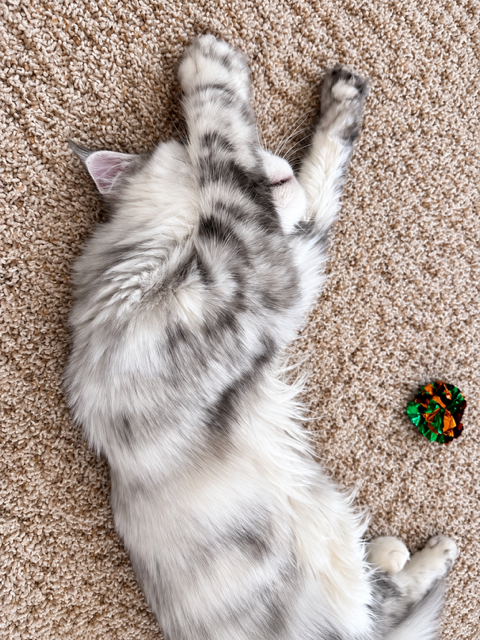
You bought the comfortable cat bed. You added the soft blanket. You carefully placed it in the perfect little corner of the house. And your Maine Coon? They’re asleep upside down with one leg against the wall, their head hanging off the couch, and approximately half of their body on the floor. Perfectly comfortable. Apparently. 😂
If you live with a Maine Coon, you’ve probably discovered that these large, fluffy cats can sleep in some truly impressive positions. Belly up. Legs everywhere. Twisted like a pretzel. Face smashed into a blanket. Draped over furniture. Flat on their back in the middle of the floor. Sometimes you look at them and wonder: How is that possibly comfortable?
The answer is that a cat’s sleeping position can be influenced by everything from comfort and temperature to security, flexibility, and simply where they happened to fall asleep. So let’s decode some of those wonderfully weird Maine Coon sleeping positions. 🐾
💤 First: Cats Sleep—a LOT
Before we discuss how Maine Coons sleep, it helps to understand why you seem to catch them doing it so often. Cats naturally spend a significant portion of their day sleeping or resting. Their sleep isn't necessarily one long, uninterrupted stretch like ours. Instead, cats frequently alternate between periods of activity, light resting, and deeper sleep. That’s one reason you may see your Maine Coon change sleeping locations and positions throughout the day.
One minute they're curled into a fluffy ball. An hour later they're upside down on the couch. By afternoon they're stretched across the kitchen floor. And somehow, every location was apparently the perfect choice.
🙃 The Belly-Up Sleeper
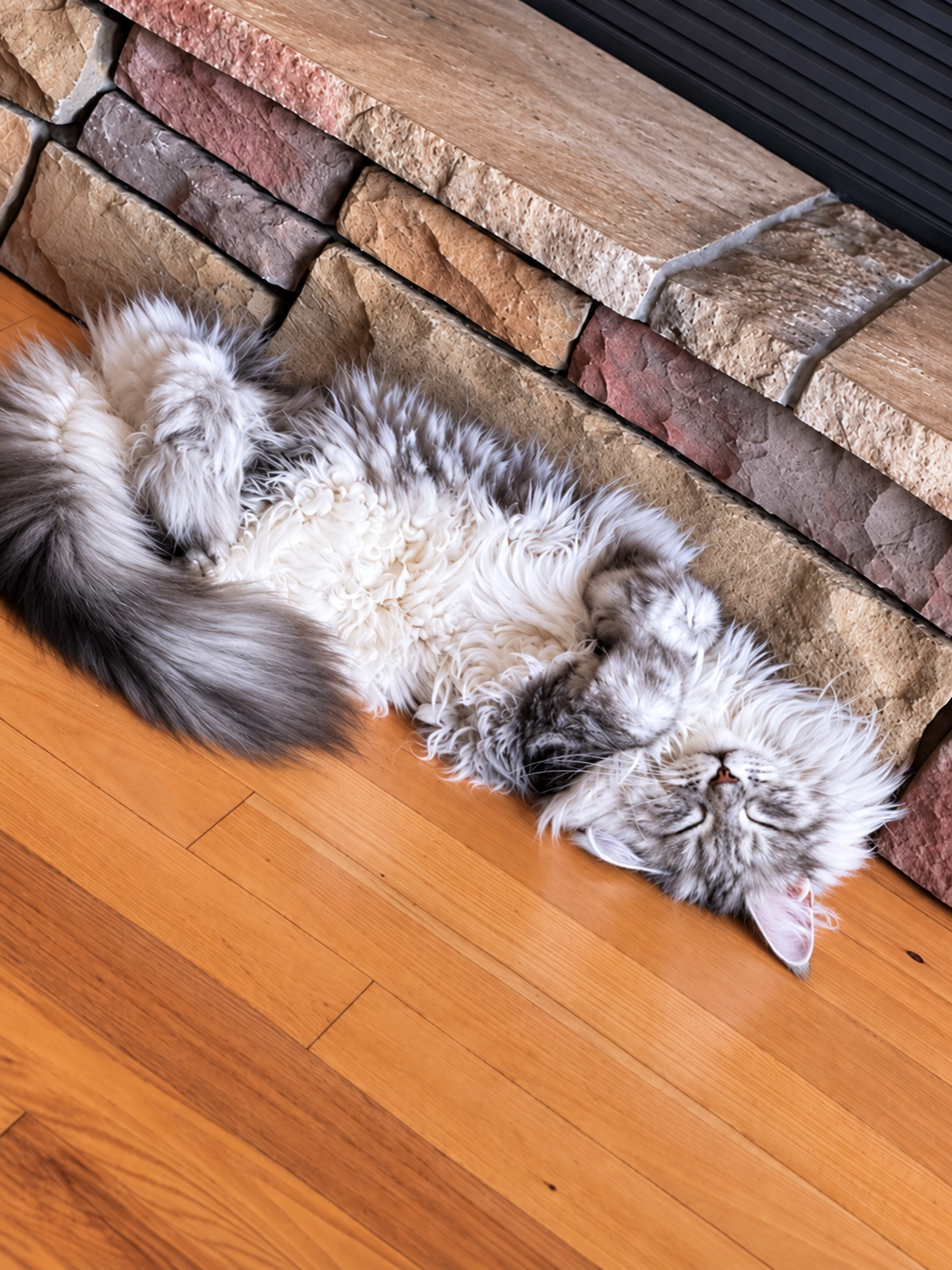
There may be no Maine Coon sleeping position more adorable than this one. Your cat is completely on their back. Belly exposed. Front paws curled. Back legs going in directions that don't seem anatomically reasonable.
When a cat sleeps with their belly exposed, their body posture may indicate that they're feeling relaxed in their surroundings. The abdomen is a relatively vulnerable area, so choosing to rest openly can be consistent with feeling comfortable and secure.
But there is one important distinction: Belly exposed does NOT automatically mean “please rub my belly.” Some Maine Coons love belly rubs. Others will enthusiastically demonstrate why touching the belly was a terrible decision. 😂
Always pay attention to your individual cat's preferences and body language.
🥨 The Maine Coon Pretzel
Head turned one direction. Back legs another. One paw underneath the body. Another stretched over the face. Tail wrapped around something that doesn't seem related to the rest of the sleeping position.
Welcome to the Maine Coon Pretzel. Cats have highly flexible spines and bodies, allowing them to rest comfortably in positions that would send most humans directly to a chiropractor. What looks completely ridiculous to us may simply feel comfortable to them. So while you may be wondering whether your Maine Coon accidentally assembled themselves incorrectly…
They're probably fine.
🐾 The Superman
Front legs stretched forward. Back legs stretched behind. Belly flat against the surface. Your Maine Coon has officially entered flight mode. ✈️😂
Some cats simply enjoy stretching out while resting, especially when they have plenty of room. A fully stretched sleeping position may also expose more of the body to the surrounding air compared with curling tightly into a ball.
Which brings us to another important factor…
🌡️ Sleeping Positions Can Help Cats Manage Comfort
Pay attention to your Maine Coon's sleeping positions throughout the year and you might notice some changes. When cats want to conserve body heat, they may curl their bodies more tightly and tuck their paws closer to themselves. When they're warm, they may stretch out and expose more surface area.
And Maine Coons come equipped with a substantial coat. So that beautiful fluffy cat stretched dramatically across the coolest floor in the house may have chosen that location for a very practical reason: It feels good.
This is also why some cats choose tile, hardwood, sinks, bathtubs, or other cooler surfaces even though you've provided a ridiculously expensive plush bed three feet away.
You purchased the bed for yourself, apparently.
🌀 The Upside-Down Head
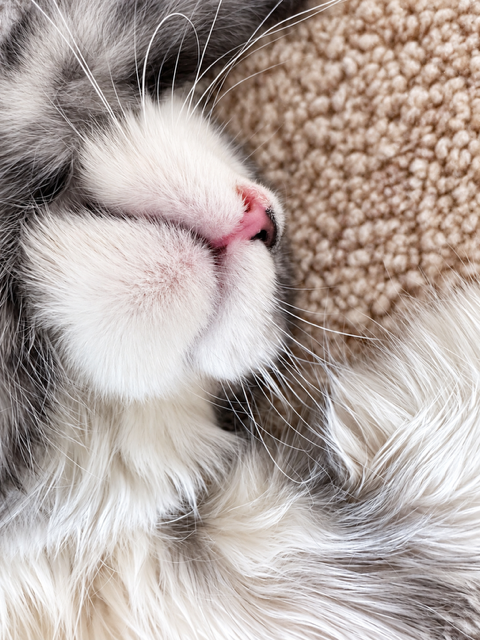
The body is facing one direction. The head is upside down. The ears are flattened against the couch. The eyes occasionally open just enough to check whether you're still there. This position can look hilarious, but sometimes your Maine Coon simply found a comfortable angle and stayed there.
And because Maine Coons often have those enormous ears, upside-down sleeping somehow manages to make them look even more ridiculous.
Which is precisely when you'll reach for your phone.
🙈 The “Do Not Disturb” Face Cover
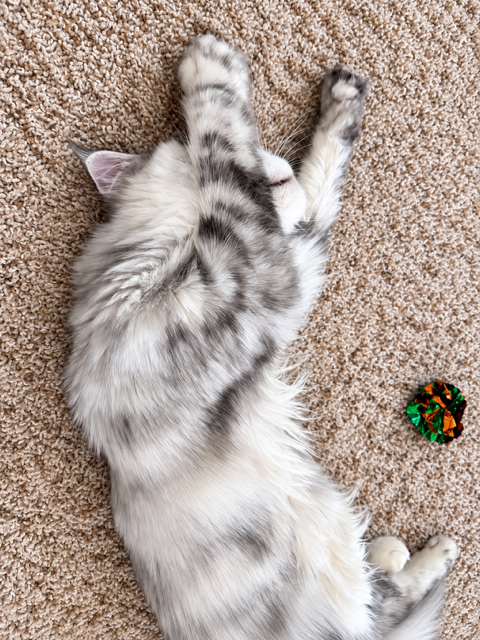
Have you ever found your Maine Coon asleep with a paw covering their face? It's unbearably cute. Cats may place a paw over their face simply because it's comfortable. The position can also help shield their eyes from light while resting.
In other words, your Maine Coon may essentially be wearing their own tiny sleep mask. And yes, you are absolutely going to take a picture.
🍞 The Loaf
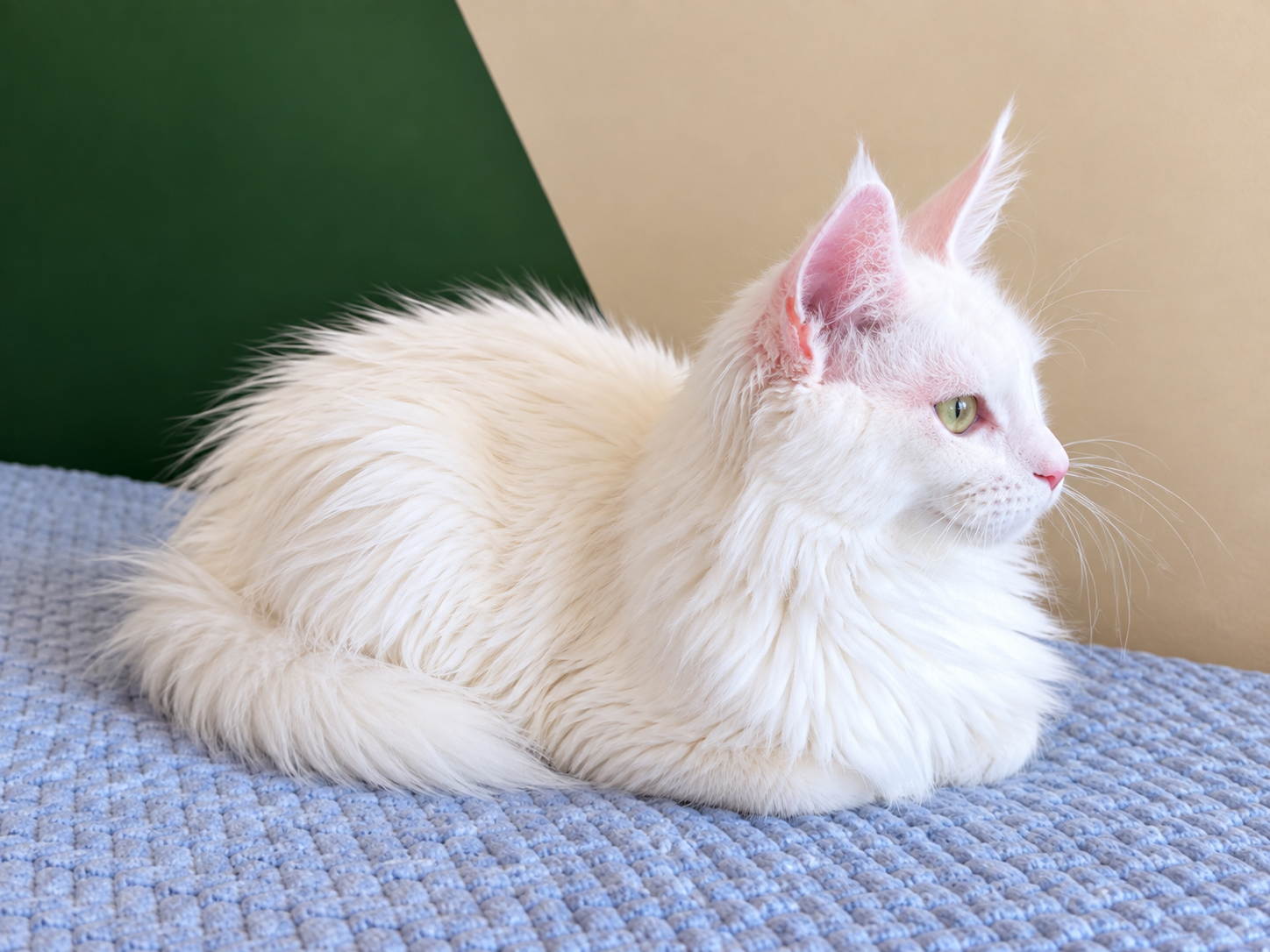
The classic cat loaf. Paws tucked underneath. Tail tucked close. Body neatly assembled into one fluffy package. A relaxed loaf can simply be a comfortable resting posture. But this is where understanding context becomes important.
A cat sitting tucked up because they're comfortably resting isn't necessarily the same as a cat who is hunched, tense, reluctant to move, hiding, or showing other changes in behavior. As with the staring behavior we discussed in our previous blog: Don't interpret one body position in isolation.
Look at the whole cat.
📦 The “There Is No Way You Fit in That” Sleeper
You bought a Maine Coon. A very large cat. Naturally, they chose the smallest box in the house. Cats often enjoy enclosed spaces because they can provide a sheltered resting location.
The fact that only 82% of your Maine Coon actually fits inside the box is apparently irrelevant. If the head fits… The rest is just details.
🛋️ The Half-On, Half-Off Sleeper
Half the body is on the couch. The other half is slowly sliding toward the floor. One paw is dangling. The head is hanging over the edge. And somehow they're still asleep. This is one of those positions that reminds us that cats don't necessarily evaluate furniture the way humans do.
We see: “You're about to fall.” They apparently see: “Excellent sleeping arrangement.”
👑 The Elevated Sleeper
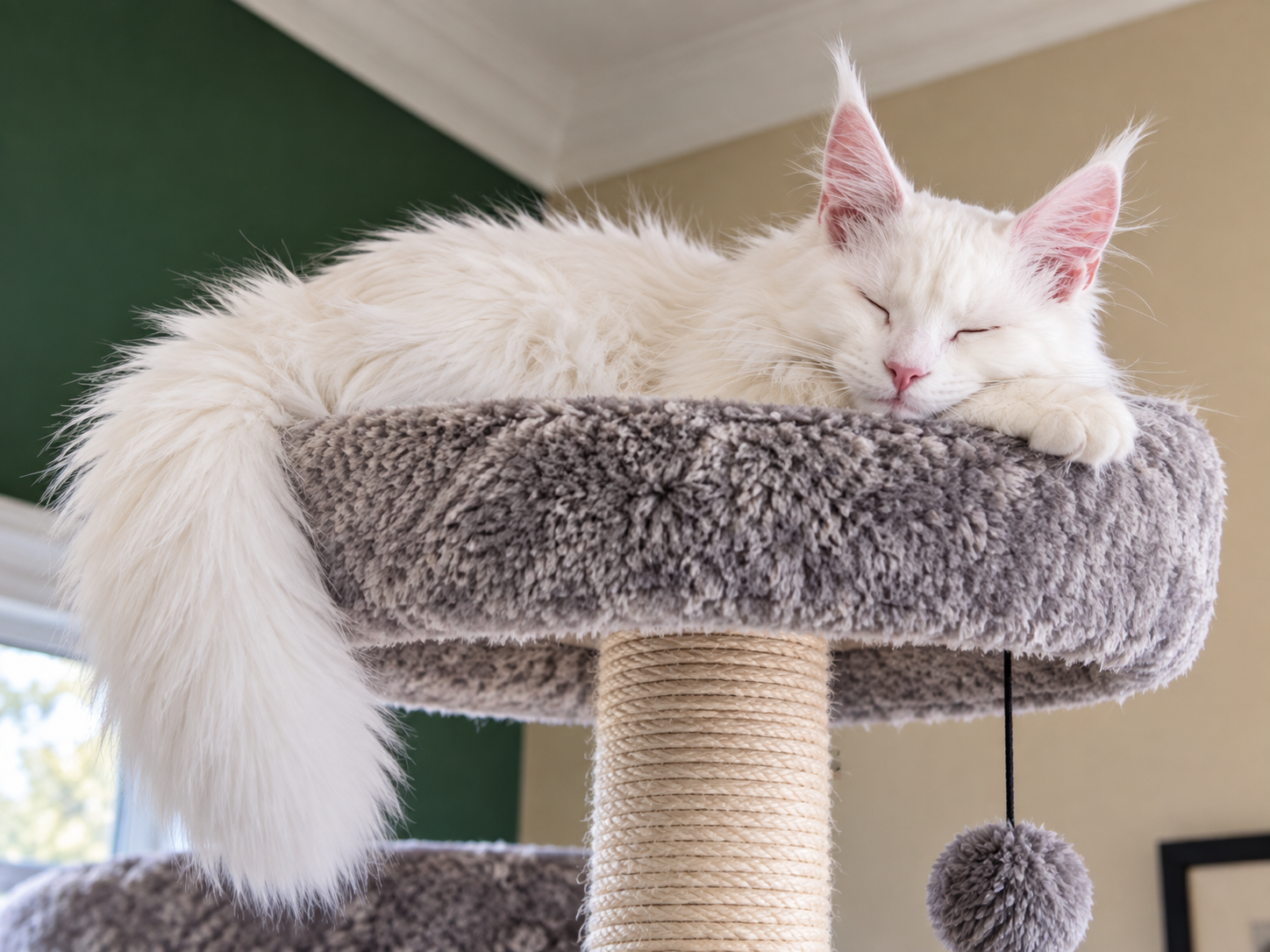
Maine Coons, like other cats, often enjoy resting in elevated locations. Cat trees. Shelves. Window perches. The back of the couch. And occasionally somewhere you absolutely did not intend for a cat to be.
Higher resting locations can provide cats with a combination of visibility, security, and distance from activity happening below. We covered this behavior more deeply in our blog about why Maine Coons love high places, but sleeping and vertical territory often overlap.
Sometimes the best bedroom in the house is apparently six feet off the ground.
❤️ The “Must Be Touching My Human” Sleeper
Some Maine Coons don't necessarily sleep on you. They just need one paw touching you. Or their back against your leg. Or their tail across your arm. Or approximately 19 pounds of Maine Coon positioned directly on your feet.
Physical proximity can be part of a cat's social behavior, especially when they're relaxed around familiar people.
For some cats, sleeping close to you may simply mean: This is where I feel comfortable.
And that's pretty special. 🖤
🐈 The “I Need My Own ZIP Code” Sleeper
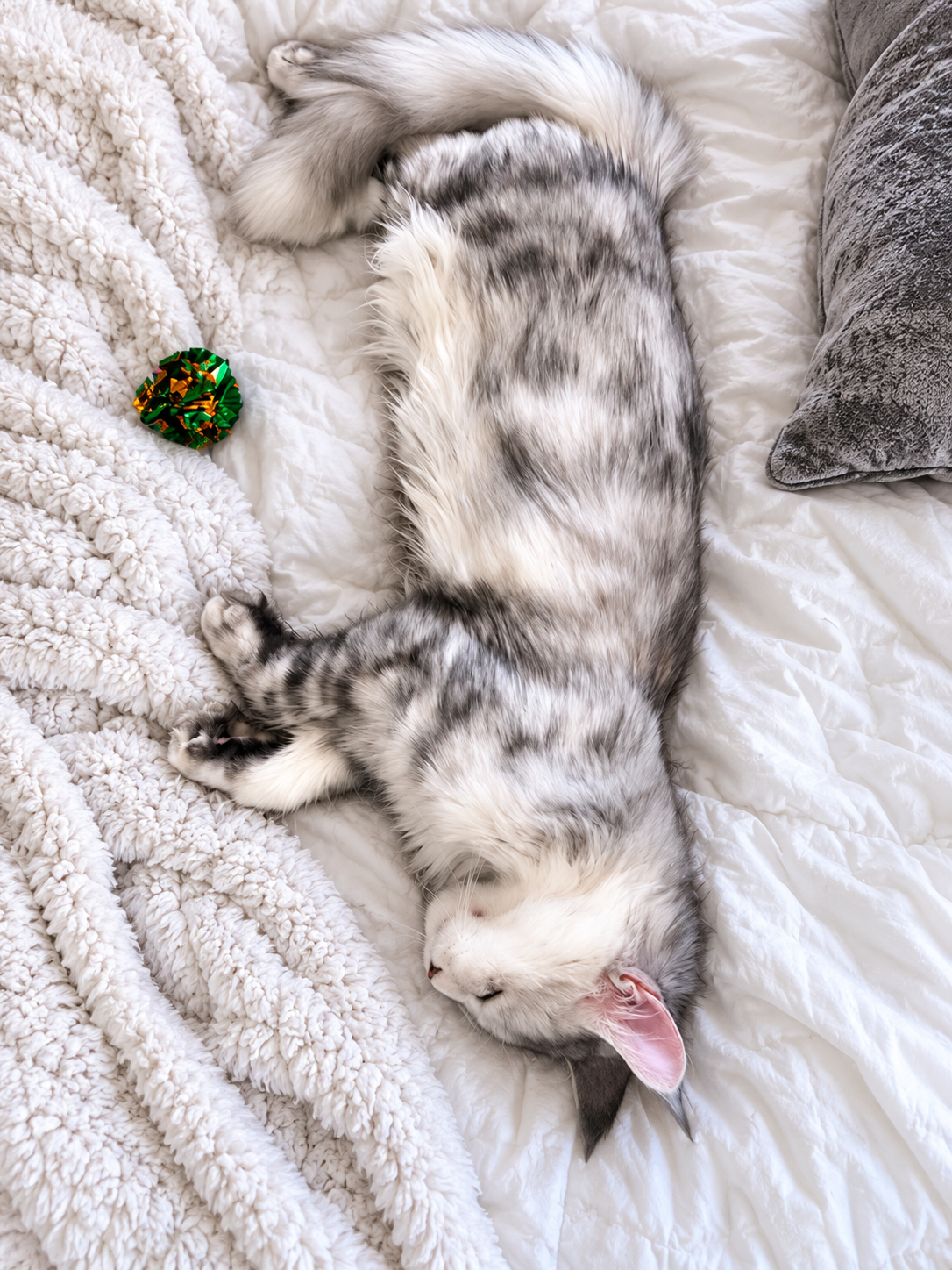
Then there are Maine Coons who require approximately one queen-size mattress per cat. They stretch. And stretch. And somehow continue stretching. You move over. They stretch farther. Eventually you are sleeping on six inches of mattress while your Maine Coon occupies the remaining 94%.
This arrangement is legally binding. There will be no negotiations.
👀 What Does Your Maine Coon's Sleeping Position Actually Tell You?
This is where we need to be careful.
It's tempting to create a dictionary that says:
This position = happy.
That position = anxious.
This position = your cat loves you.
Cat behavior isn't quite that simple.
A sleeping position can be influenced by:
Temperature
Comfort
Environment
Noise
Other pets
Activity in the home
Preferred sleeping surface
Individual personality
Physical comfort
How deeply the cat is resting
Instead of asking only: “What does this sleeping position mean?” Ask: “What else is my cat's body and behavior telling me?”
That's usually much more informative.
🩺 When a Change in Sleeping Behavior Is Worth Paying Attention To
A ridiculous sleeping position by itself is usually just that: Ridiculous. 😂 But changes in your cat's normal habits can sometimes matter.
Pay attention if your Maine Coon suddenly begins sleeping much more or less than usual, consistently isolates themselves, becomes reluctant to jump or move, seems stiff when getting up, repeatedly chooses an unusual posture while appearing uncomfortable, or shows other changes in appetite, grooming, litter-box habits, breathing, activity, or behavior.
The important word here is: CHANGE.
You know what is normal for your cat. If something about their sleeping behavior changes significantly—especially alongside other physical or behavioral changes—talk with your veterinarian.
📸 Your Camera Roll Already Knows
Here's the best part about living with a Maine Coon: You probably didn't need this article to tell you they sleep strangely. You have evidence. Lots of evidence.
Your phone probably contains:
47 pictures of your Maine Coon sleeping.
12 pictures of your Maine Coon sleeping upside down.
8 pictures where you weren't sure where their head was.
And at least one photograph you immediately sent to someone with the message: “HOW IS THIS COMFORTABLE?!” 😂
🖤 The Bottom Line
Maine Coons can sleep in some spectacularly strange positions. Sometimes they're curled tightly into a fluffy ball. Sometimes they're stretched across the floor. Sometimes they're upside down. Sometimes they're hanging halfway off the furniture. And sometimes they're twisted into a shape that shouldn't be physically possible. Their sleeping position can be influenced by comfort, temperature, environment, security, flexibility, and simple personal preference.
Rather than assigning one specific meaning to every pose, look at your cat's whole body, environment, normal habits, and overall behavior. Because sometimes a strange sleeping position has a complicated explanation. And sometimes… your Maine Coon is just weird.
And we wouldn't have them any other way. 🖤🐾
🐾 Keep Learning With A Velvet Claw
At A Velvet Claw Maine Coon Cattery, we believe understanding our cats means learning to notice the little things—from their genetics and health to their body language and everyday behavior. And apparently… their complete disregard for normal sleeping positions. 😂
HEALTH • PEDIGREE • TEMPERAMENT
Fur - ever grateful: Lexie & Melina
Why do Maine Coons sleep in weird positions • Maine Coon sleeping positions • Maine Coon sleeping habits
Maine Coon behavior • Maine Coon sleep • Maine Coon sleeping on back