
Choosing the Right Maine Coon Breeder: 10 Signs of an Ethical, Responsible Cattery
Bringing a Maine Coon into your home is one of the most exciting decisions you'll ever make—but choosing the right breeder is even more important than choosing the kitten itself. A beautiful kitten can grow into a wonderful companion, but only if it comes from a breeder who prioritizes health, temperament, ethics, and the future of the breed. Unfortunately, the popularity of Maine Coons has led to an increase in backyard breeders, kitten mills, and online scams.
At A Velvet Claw, we believe an informed buyer is the best advocate for the breed. Here's everything you should look for before placing a deposit.
1. Health Testing Should Never Be Optional
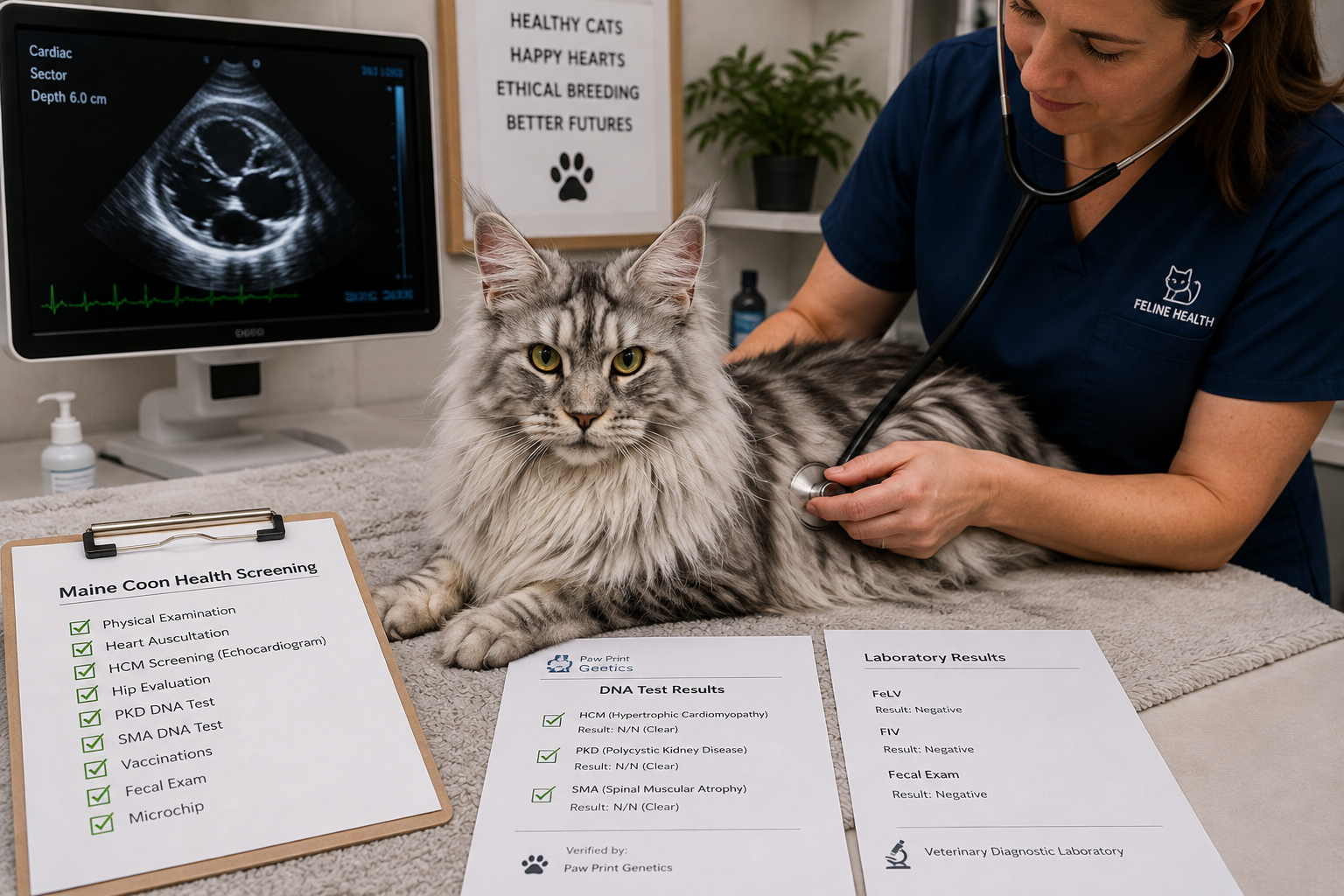
A responsible breeder doesn't simply say their cats are "healthy." They prove it. Maine Coons are predisposed to several inherited conditions that ethical breeders actively screen for before breeding.
Look for breeders who perform:
HCM (Hypertrophic Cardiomyopathy) DNA testing
Regular echocardiograms performed by a board-certified veterinary cardiologist
Hip dysplasia evaluations
SMA (Spinal Muscular Atrophy) testing
PKD (Polycystic Kidney Disease) testing when appropriate
Routine veterinary care and health records
Remember that DNA testing alone is not enough. Many responsible breeders also perform periodic heart ultrasounds because not every HCM mutation can be detected genetically.
2. Registration Isn't Everything
Registration is a good starting point—but it isn't a guarantee of quality. Many excellent breeders are registered with organizations such as:
TICA (The International Cat Association)
CFA (Cat Fanciers' Association)
Instead, ask:
Do they actively show their cats?
Have their breeding cats earned titles?
Are they involved in preserving the breed?
Can they explain why they paired specific parents?
The best breeders are passionate about improving the breed—not simply producing kittens.
3. Visit the Cattery (Or Schedule a Video Tour)
You should know where your future kitten is being raised. A breeder should gladly answer questions and proudly show how their kittens are raised.
Look for:
Clean living spaces
Healthy adult cats
Curious, confident kittens
Plenty of toys and enrichment
Indoor family environment
Cats that appear comfortable around people
4. Socialization Matters
The first three months of a kitten's life shape its personality. Well-socialized kittens transition into their new homes much more confidently.
Ask if kittens are exposed to:
Household noises
Vacuum cleaners
Different people
Gentle handling
Nail trimming
Grooming
Carriers
Veterinary visits
5. Kittens Should Stay With Mom Long Enough
One of the biggest red flags is a breeder willing to send kittens home too early. Responsible breeders typically keep kittens until they are at least 12–14 weeks old, allowing them to develop important social skills, confidence, and immune protection before leaving their mother and littermates.
6. Ask Lots of Questions
A great breeder welcomes curious buyers. A breeder who becomes defensive when asked these questions may not be someone you want to work with.
Some questions to ask include:
What health testing have the parents completed?
Can I see the pedigree?
Have previous kittens developed any inherited conditions?
What food do you feed?
What litter do they use?
What vaccinations have they received?
Are they microchipped?
What happens if I can no longer keep my kitten?
7. Read the Contract Carefully
Professional breeders provide written contracts. The contract protects both you and the kitten.
These often include:
Health guarantees
Spay/neuter agreements
Breeding rights (if applicable)
Return-to-breeder clause
Veterinary requirements
Registration paperwork
8. Beware of Prices That Seem Too Good
If a kitten is dramatically cheaper than others in your area, ask yourself why. Saving money upfront can become far more expensive if health issues arise later.
Purebred Maine Coons require:
Extensive health testing
Premium nutrition
Veterinary care
Genetic screening
Registration fees
Quality breeding programs
9. Look Beyond Beautiful Photos
Anyone can post stunning pictures online. A trustworthy breeder is proud to share their knowledge.
Instead, look for evidence of:
Health testing
Repeat buyers
Long-term customer relationships
Cat show participation
Positive veterinary relationships
Educational content
Transparency
10. The Breeder Should Care About You
A responsible breeder doesn't just sell kittens. They interview potential owners. Good breeders care where every kitten goes because they are committed to the lifelong well-being of the cats they produce.
Expect questions like:
Do you have other pets?
Do you work from home?
Will the cat be indoors?
Have you owned long-haired cats?
What are your expectations?
Red Flags to Watch For 🚩
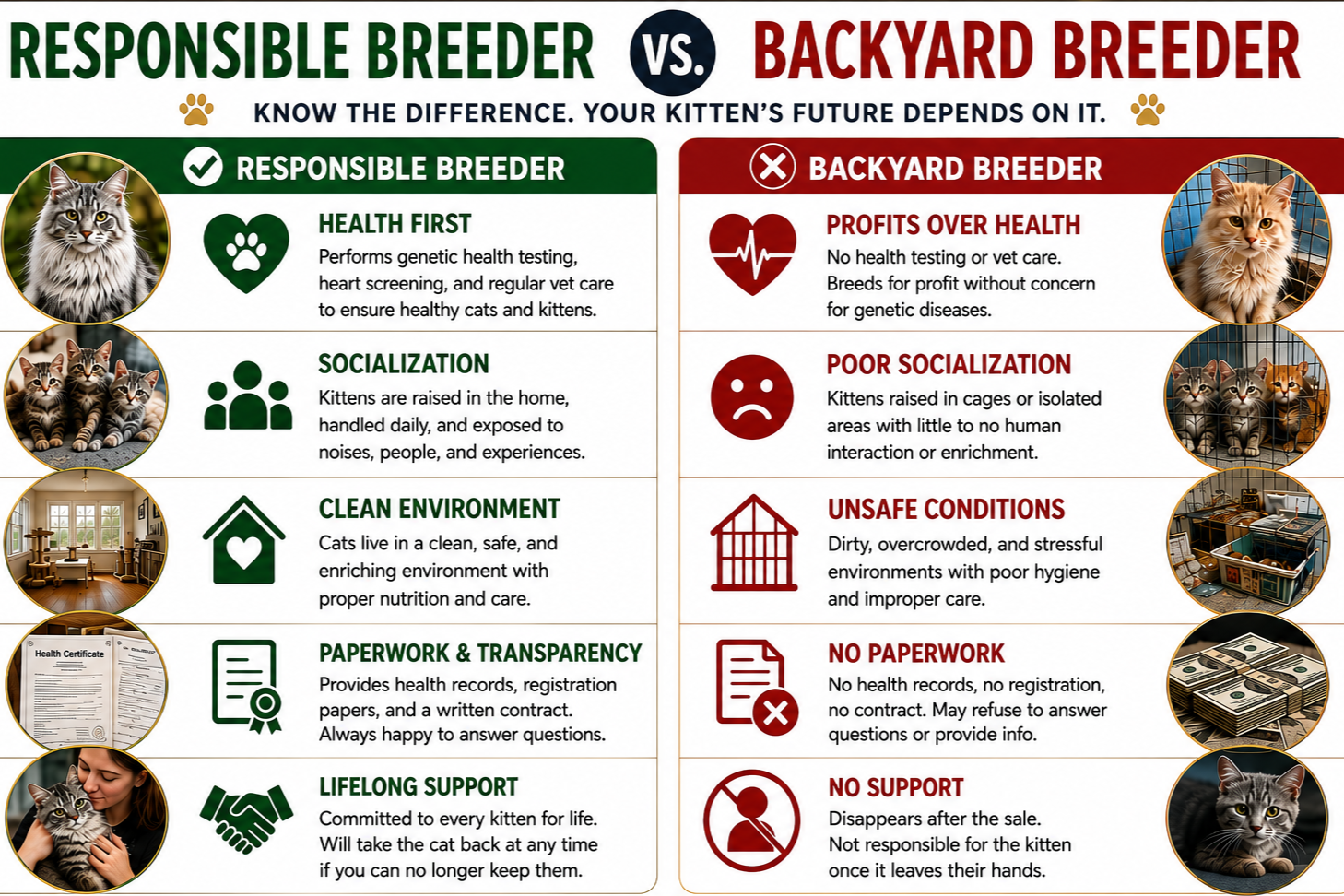
If something feels wrong, trust your instincts.
Avoid breeders who:
❌ Won't show health testing
❌ Always have kittens available
❌ Allow kittens to leave before 12 weeks
❌ Refuse video calls or visits
❌ Pressure you to send money immediately
❌ Won't answer questions
❌ Have no contract
❌ Sell through multiple classified websites only
❌ Cannot provide veterinary references
Final Thoughts
Choosing a Maine Coon breeder isn't about finding the first available kitten—it's about finding someone who loves the breed as much as you do. The right breeder becomes more than the person you buy your kitten from. They become a lifelong resource, celebrating milestones, answering questions, and helping ensure your Maine Coon enjoys a long, healthy, and happy life.
At A Velvet Claw, our goal is simple: to raise healthy, confident, well-socialized Maine Coons that become cherished members of their families. We believe transparency, ethical breeding, and lifelong support should be the standard—not the exception. Because when you choose the right breeder, you're not just bringing home a kitten—you’re welcoming a lifelong companion.
Fur-ever grateful: Lexie & Melina
#KittenTips - #CatCare - #PetEducation - #ChoosingABreeder
#KittenGuide - #ResponsiblePetOwnership