
Transport Preparation: Traveling With Your Pets
Everything You Need to Know Before the Journey Begins
Whether you're bringing home a new Maine Coon kitten, relocating across the country, or sending your beloved companion to their forever family, traveling can be one of the most stressful experiences for both pets and owners. The good news? With proper preparation, transportation can be safe, comfortable, and surprisingly easy.
At A Velvet Claw, we believe that every mile should be as stress-free as possible. A little planning goes a long way toward ensuring your pet arrives healthy, happy, and ready to settle into their new adventure.
Why Preparation Matters
Cats and dogs thrive on routine. New sights, unfamiliar sounds, changing temperatures, and long periods in a vehicle can create anxiety if they're unprepared. The goal isn't simply getting from Point A to Point B—it's making sure your pet feels secure throughout the journey.
Proper preparation helps reduce:
Motion sickness
Anxiety and stress
Dehydration
Escape risks
Bathroom accidents
Overheating or becoming too cold
Health emergencies
Before Travel: Schedule a Health Check
If your pet hasn't been seen recently, schedule a veterinary appointment before a long trip.
Your veterinarian can:
Confirm your pet is healthy enough to travel.
Ensure vaccinations are current.
Refill any medications.
Discuss motion sickness or anxiety if your pet has experienced travel problems before.
Provide any required health certificates if needed for your destination. Requirements vary depending on where you're traveling, especially for interstate or international travel.
Make Sure Identification Is Current
No matter how careful we are, accidents happen.
Every traveling pet should have:
A properly fitted collar
Identification tags
Updated contact information
A registered microchip
Microchips dramatically increase the chances of being reunited with a lost pet.
Choose the Right Carrier
A quality carrier is one of the most important investments you'll make. For cats, hard-sided carriers are often the safest choice during long-distance vehicle transportation. Before travel day, leave the carrier open at home with blankets and treats inside so it becomes a familiar, comfortable place instead of something scary.
Look for one that:
Allows your pet to stand comfortably
Lets them turn around easily
Has plenty of ventilation
Has secure latches
Is sturdy enough that it won't collapse during travel
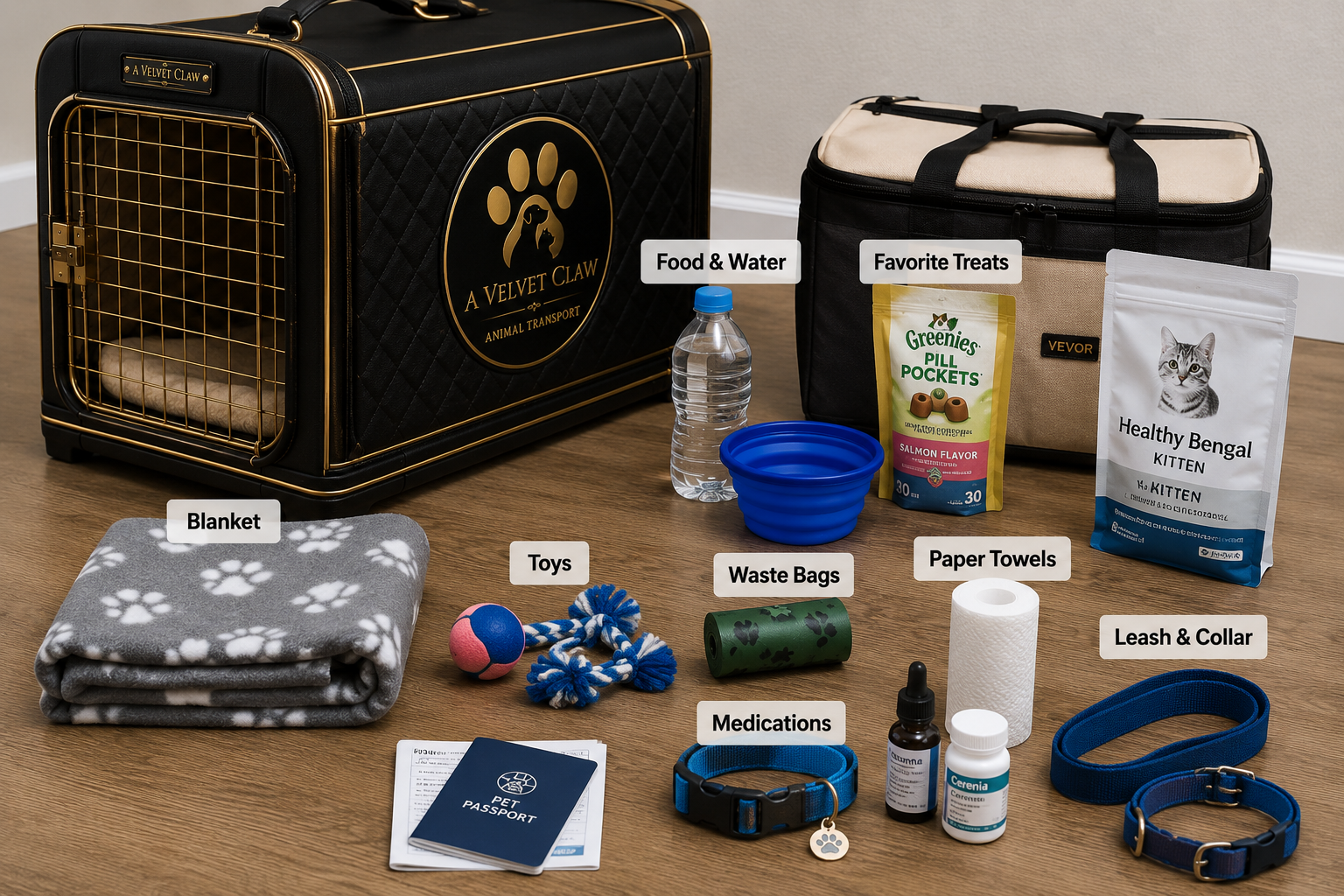
Pack a Pet Travel Bag
Just like people pack luggage, your pet needs their own essentials. Having everything within reach makes unexpected situations much easier.
Bring:
Food
Bottled water
Food and water bowls
Favorite treats
Blanket with familiar scent
Favorite toy
Leash or harness
Waste bags or litter supplies
Paper towels
Cleaning wipes
Medications
Medical records
Vaccination records
Emergency contact numbers
Feed at the Right Time
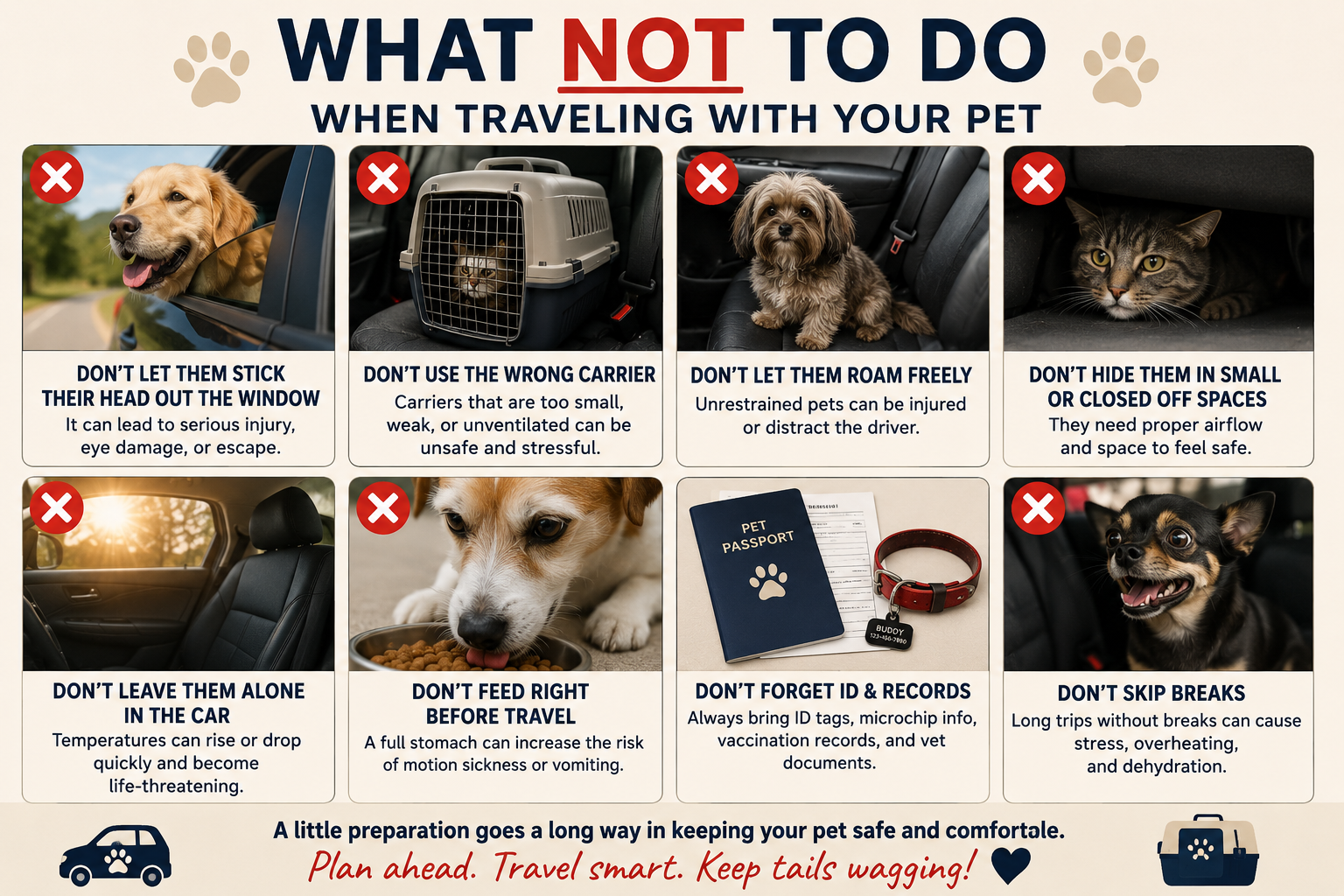
Many pets experience motion sickness on a full stomach. A light meal several hours before departure is often recommended for long trips unless your veterinarian advises otherwise. Keep fresh water available throughout the trip.
During the Trip
Secure the Carrier
Never allow pets to roam freely inside a moving vehicle. Secure carriers using seat belts or other restraints so they cannot slide during sudden stops. This protects both your pet and everyone inside the vehicle.
Maintain Comfortable Temperatures
Cats can overheat surprisingly quickly. Never leave a pet unattended inside a parked vehicle, even for a few minutes. Interior temperatures can become dangerous very quickly.
Keep the vehicle:
Well ventilated
Comfortable
Out of direct sunlight whenever possible
Keep the Environment Calm
Your pet doesn't need loud music or constant excitement. Many cats relax considerably when visual stimulation is reduced.
Instead:
Speak calmly.
Drive smoothly.
Avoid sudden braking.
Minimize unnecessary stops.
Keep the carrier covered partially if your cat seems nervous.
Take Breaks During Long Trips
Even calm cats can panic in unfamiliar environments.
For extended road trips:
Offer water regularly.
Check on your pet.
Replace litter if necessary.
Allow dogs supervised bathroom breaks.
Never remove a cat from its carrier in an unsecured area.
When You Arrive
Don't rush. Give your pet time to adjust. If bringing home a new kitten, introduce them to one quiet room first before allowing them to explore the rest of the home. This helps reduce stress and builds confidence.
Set up:
Food
Water
Litter box
Bed
Toys
For Airline Travel
Flying requires additional preparation. If flying internationally, planning often needs to begin weeks—or even months—in advance because some countries require specific vaccinations, microchips, testing, and veterinary paperwork. Always verify your destination's requirements well before departure.
Many airlines have:
Carrier size requirements
Breed restrictions
Seasonal travel limitations
Reservation limits for pets
Health documentation requirements
How A Velvet Claw Helps
When transporting pets, our goal isn't simply to deliver them. We strive to make every journey feel calm, safe, and personalized. Every pet deserves to be treated like family from pickup to drop-off.
Our transport philosophy includes:
Climate-controlled travel
Clean, sanitized carriers
Frequent wellness checks
Regular updates for owners
Comfortable rest breaks when appropriate
Plenty of patience and gentle handling
Final Thoughts
Traveling with your pet doesn't have to be overwhelming. With thoughtful preparation, proper equipment, and a little patience, the journey can be just as enjoyable as the destination. Whether you're welcoming a new Maine Coon kitten into your family or moving across the country with your lifelong companion, planning ahead is the greatest gift you can give your pet.
After all, home isn't just a place—it's wherever you're together.
Fur-ever grateful: Lexie & Melina
Pet Transport - Traveling with Pets - avelvetclaw
Pet Travel Tips - Pet Safety