
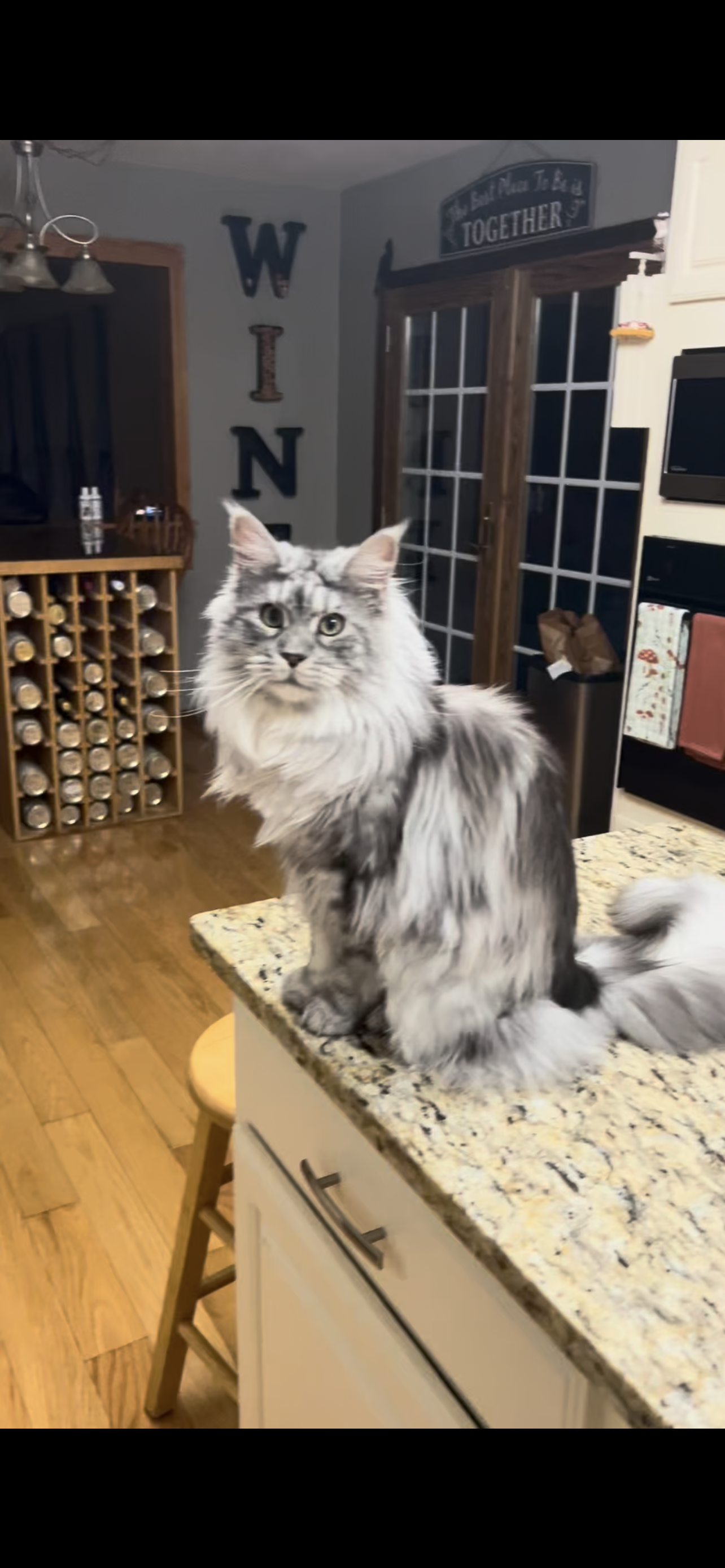
Duchess Pickle showing off her Beautiful coat, Ear Tufts, lynx Tips & Toe Floof
One look at a Maine Coon and it's easy to see why this breed has such a wild, unmistakable appearance. From those impressive ears topped with wispy hairs to the fluffy little feet that look like they're wearing slippers, Maine Coons have several features that set them apart from the average house cat.
Three of the most recognizable are ear tufts, lynx tips, and toe floof. They're adorable—but are they just for looks? Not entirely! Let's take a closer look at these classic Maine Coon features and what they're actually for.
Ear Tufts vs. Lynx Tips: Are They the Same Thing?
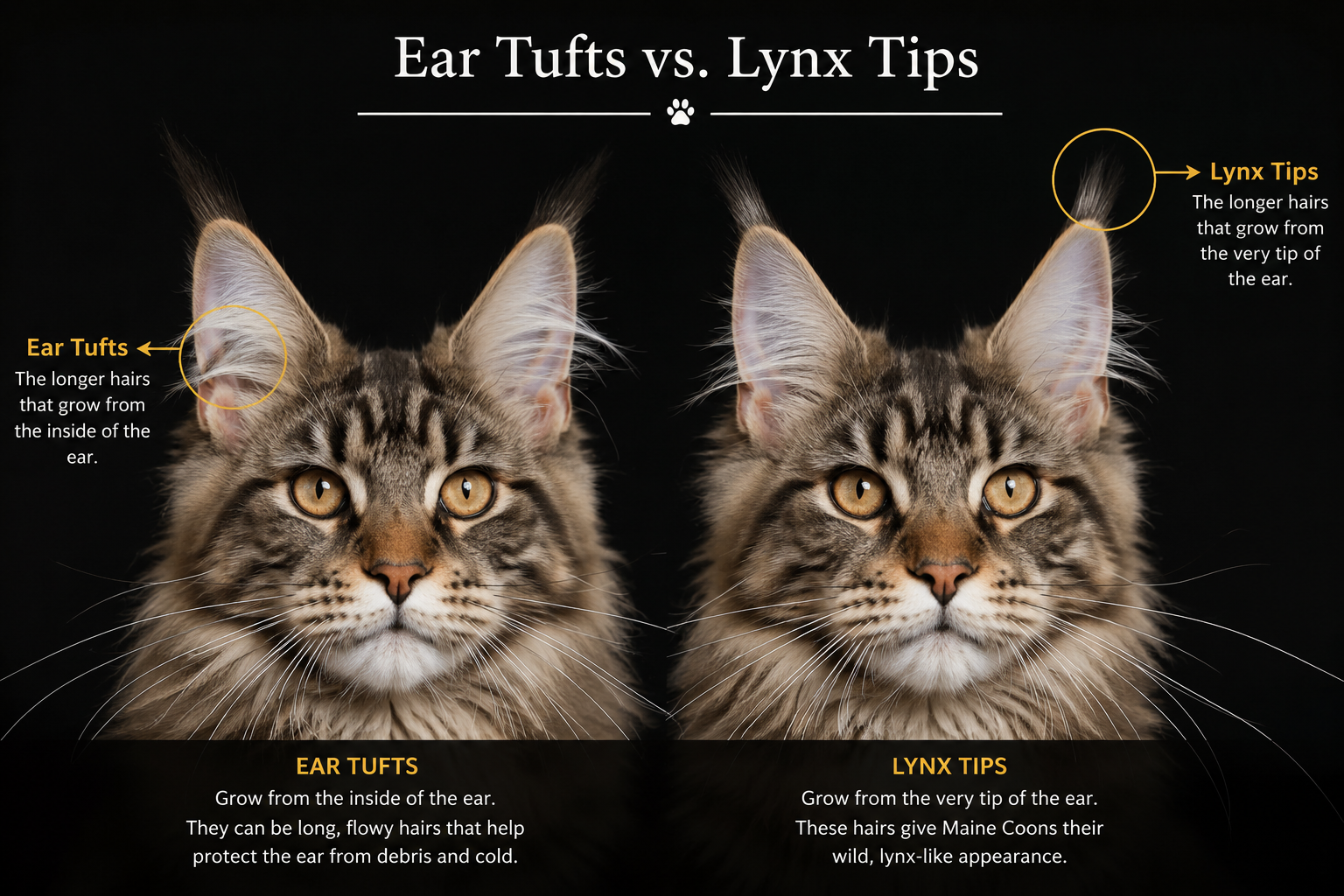
Ear Tufts vs lynx Tips
These terms are often used interchangeably, but they actually describe two different things.
Ear tufts are the longer hairs that grow from the inside of a cat's ears, sometimes extending outward beyond the edge of the ear.
Lynx tips are the wispy hairs that grow straight up from the very top of the ear.
Those dramatic lynx tips help give some Maine Coons their famous wildcat appearance. Not every Maine Coon will have equally dramatic lynx tips. Some kittens develop enormous, noticeable tips, while others have much more subtle ones. Genetics, coat type, age, and the individual cat all play a role. And having longer lynx tips doesn't make one Maine Coon "more Maine Coon" than another!
What Are Maine Coon Ear Tufts For?
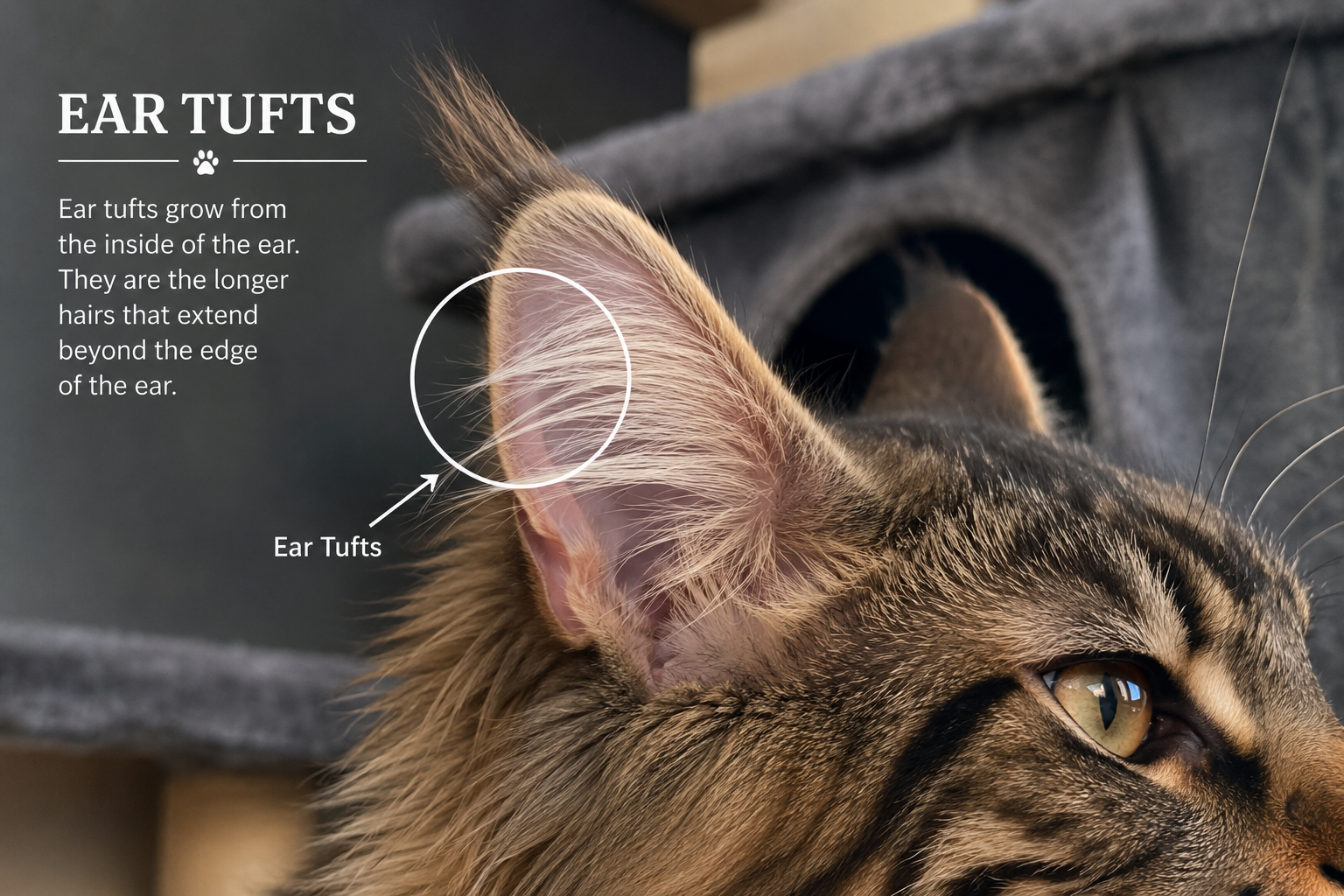
Ear tufts
Maine Coons developed into hardy cats well suited to the cold climate of the northeastern United States. Their dense coats and furry features helped protect them from harsh weather. The hair inside and around the ears can provide an additional layer of protection from the environment.
Those fluffy ear furnishings may help:
Keep debris from easily entering the ear
Provide some protection from wind and cold
Add insulation around the ears
Of course, today's pampered Maine Coon probably spends more time stretched across a couch than navigating a snowy forest—but those characteristic features remain.
What About Those Gorgeous Lynx Tips?
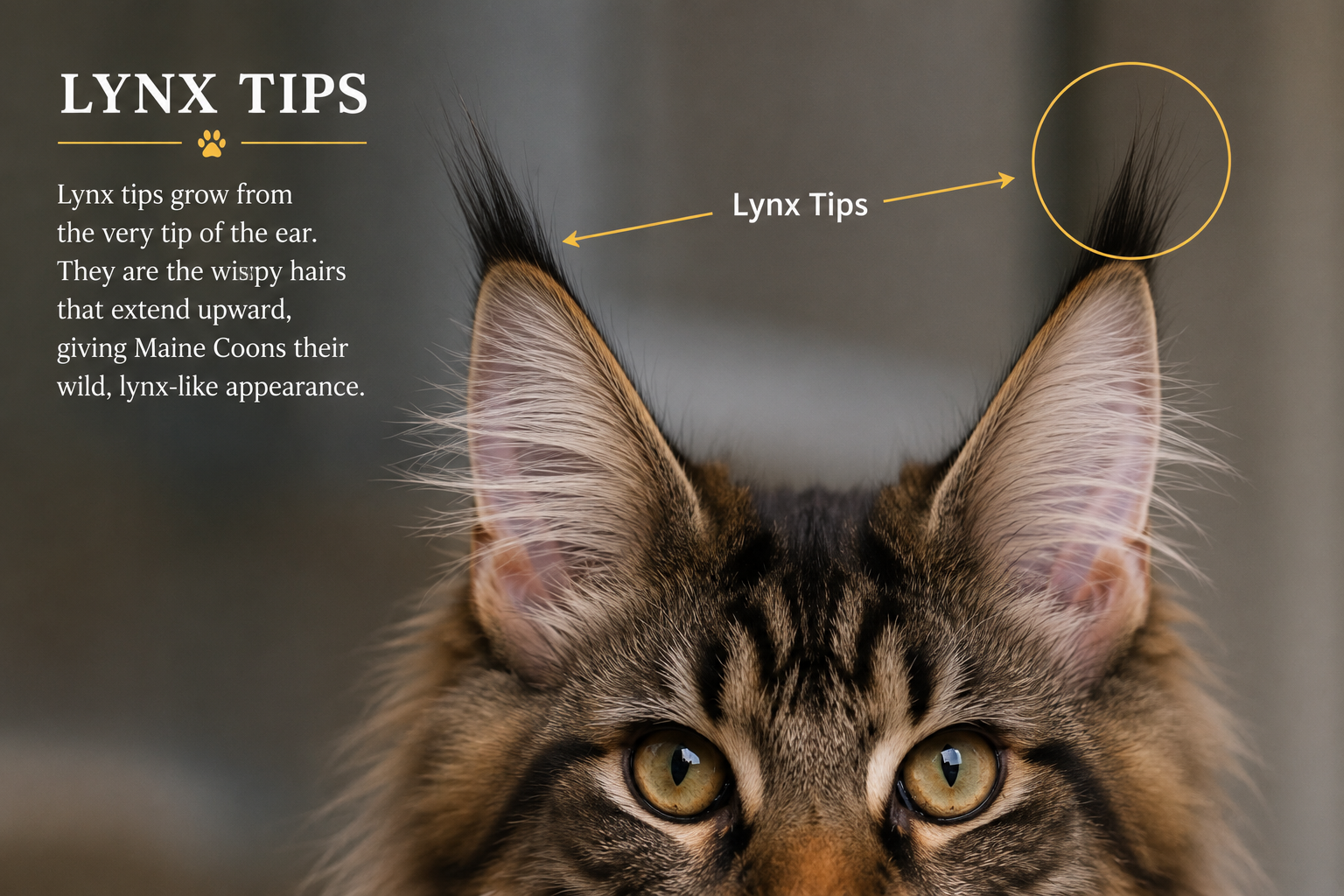
Lynx Tips
The little peaks of fur at the tops of Maine Coon ears are usually called lynx tips because they resemble the dramatic ear tips seen on wild lynxes. Despite the name, Maine Coons aren't part lynx! That's one of the many myths surrounding the breed.
Lynx tips are primarily a physical coat characteristic rather than something your Maine Coon needs for everyday life. Their length can vary tremendously from cat to cat. Some Maine Coon kittens have enormous ears with spectacular tips that make them look almost comically oversized while they're growing. As their head and body catch up, everything begins looking a little more proportional—although Maine Coon ears usually remain one of their most striking features.
And Then There's the Toe Floof
If you've ever looked underneath a Maine Coon's paws, you've probably noticed something else: Fur. Lots of it.
Long strands of hair often grow between and around their toes. You'll hear Maine Coon owners affectionately call this toe floof, toe feathers, furry feet, or snowshoe paws.
Whatever you call it, it's one of the cutest Maine Coon features. But it also has a practical history.
Why Do Maine Coons Have Fur Between Their Toes?
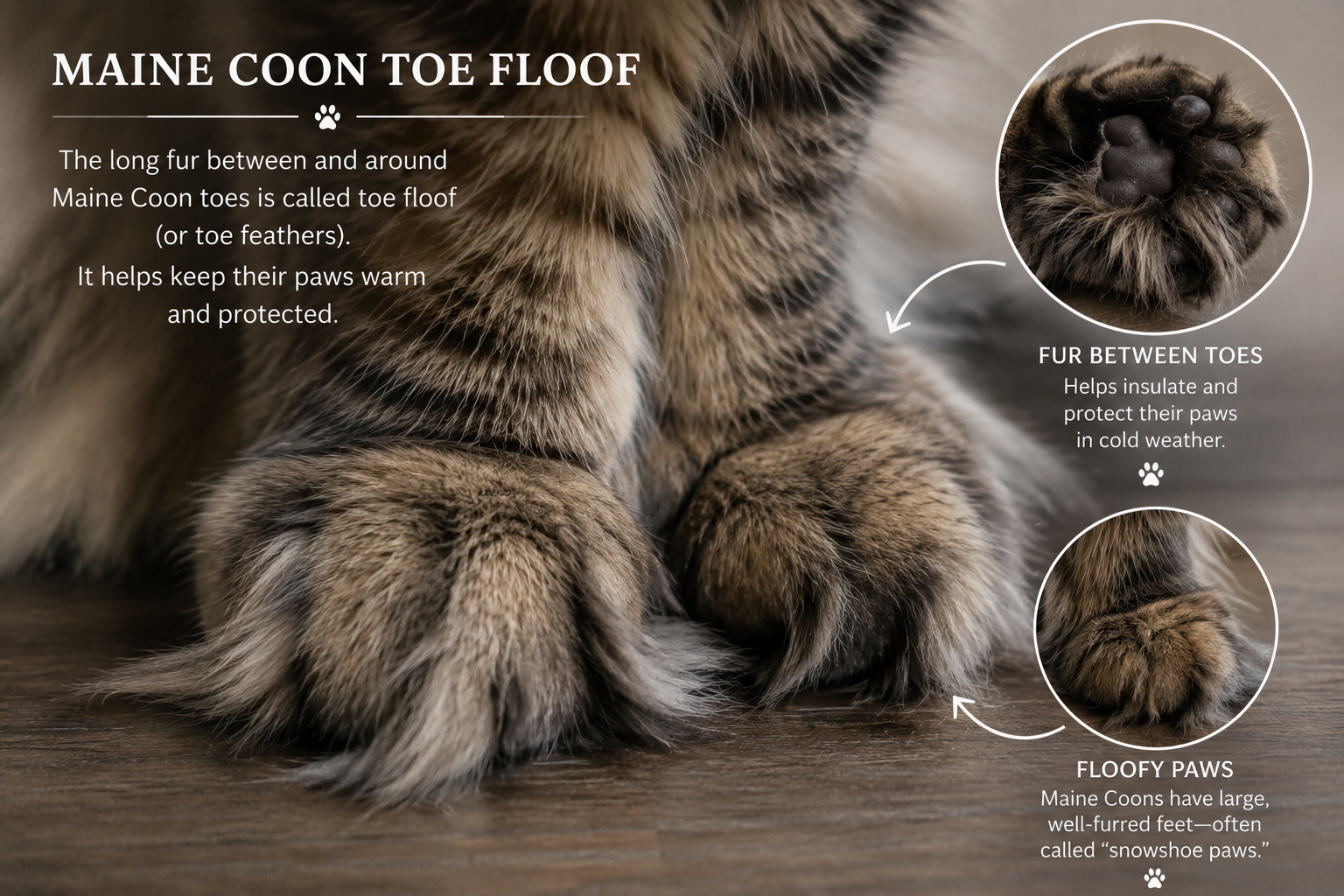
Toe Floof
Maine Coons developed in an environment where cold temperatures and snow were common. The thick fur surrounding their paws likely provided extra protection against cold surfaces and helped insulate the feet.
Combine those furry toes with the Maine Coon's naturally large paws, and you can understand where the famous description of Maine Coons having "snowshoe-like" paws comes from. Their feet were well suited for navigating a colder environment.
Today, those furry paws are more likely to be walking across hardwood floors, countertops they definitely weren't invited onto, and your bed at 3 a.m. But the floof remains!
Should You Trim Maine Coon Toe Floof?
Usually, you don't need to trim it simply because it's there. That fur is a normal part of your Maine Coon's coat. However, there are situations where a little trimming may be helpful. Very long paw fur can sometimes reduce traction on slippery floors, collect litter or debris, or become dirty.
If you decide to trim it, there's no need to shave the feet. A small amount of careful grooming can tidy excessively long fur while leaving those beautiful fluffy paws intact.
Regularly checking your Maine Coon's paws is also a good habit. Look between the toes and around the paw pads for mats, litter, debris, or anything else that shouldn't be there.
Do All Maine Coons Have Huge Ear Tips and Fluffy Feet?
Maine Coons share many breed characteristics, but there's still plenty of variation between individual cats. One Maine Coon might have spectacular lynx tips while another has shorter ones. One may have enormous amounts of toe floof while another's paw furnishings are more moderate. Their coats can also change significantly as they mature.
Maine Coons are famously slow-growing cats, often taking several years to fully mature. A kitten's appearance at four or five months old isn't necessarily what you'll see when that cat is three or four years old. That's part of the fun of watching a Maine Coon grow.
More Than Just a Pretty Face
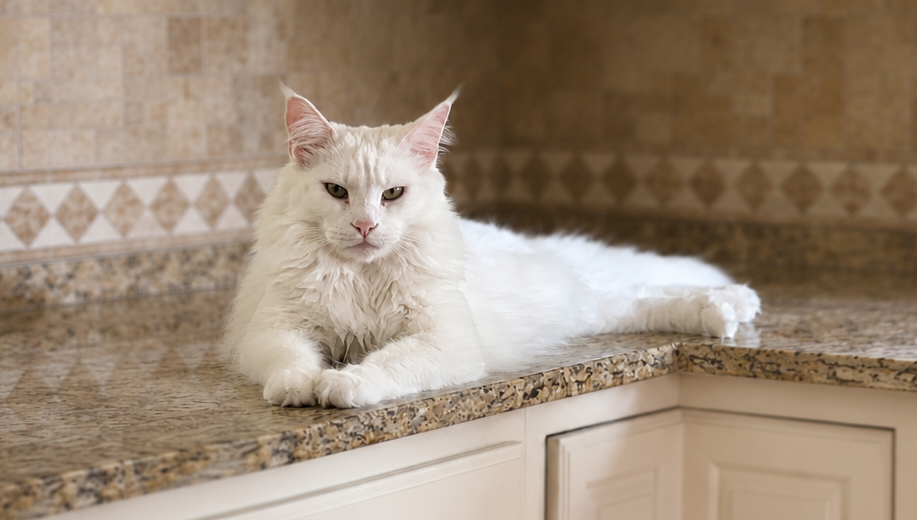
Empurrer Falkor
The Maine Coon's appearance wasn't created simply to make them beautiful. Their shaggy coats, large paws, furry ears, and fluffy feet are all part of a breed that developed to handle a challenging northern climate. Today, those same characteristics give Maine Coons the incredible appearance so many of us fall in love with. The lynx tips give them a little bit of wildcat. The ear tufts give them those wonderfully expressive ears. And the toe floof?
Well, the toe floof might just be one of nature's greatest contributions to the Maine Coon. ❤️🐾
Fur - ever grateful: Lexie & Melina
Maine Coon ear tufts - Maine Coon lynx tips - Maine Coon toe floof -
Maine Coon furry paws - Maine Coon ear hair