
If you're considering bringing a Maine Coon into your family, you may find yourself wondering: Should I get a male or a female?
Maine Coons are known for their impressive size, beautiful coats, intelligence, and affectionate personalities—but are male and female Maine Coons actually different? There are some general differences in size, build, maturity, and sometimes personality, but there's an important thing to remember from the beginning:
Every Maine Coon is an individual.
Sex can give you an idea of what you might expect, but genetics, upbringing, socialization, and the individual cat's personality often matter much more. Let's take a look at some of the differences commonly seen between male and female Maine Coons.
Size: Are Male Maine Coons Bigger?
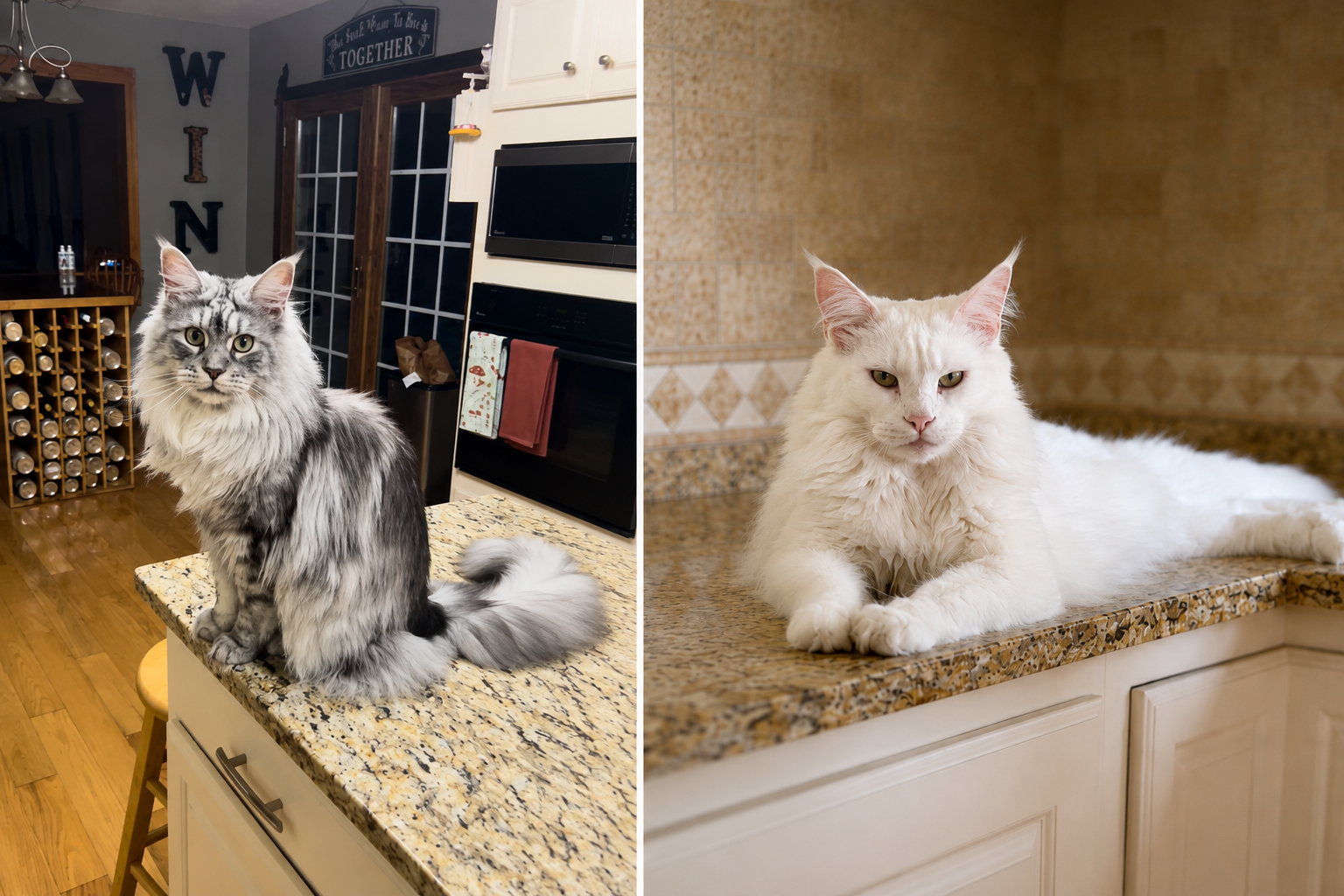
Duchess Pickle and Empurrer Falkor
Generally, yes. Male Maine Coons tend to be larger and more heavily built than females. Mature males often develop broad chests, substantial frames, muscular bodies, and impressive heads. Females are still large cats compared with the average domestic cat, but they often have a somewhat more refined build.
Typical adult weights are often described as approximately:
Males: 13–18+ pounds
Females: 8–12+ pounds
These are only general ranges—not rules.
There are plenty of females who grow larger and males who remain smaller. Genetics, body structure, nutrition, activity level, and overall health all influence adult size. And because Maine Coons mature slowly, you shouldn't judge their eventual size too early.
They can continue developing and filling out for several years.
Bigger Doesn't Automatically Mean Better
Maine Coons are famous for being one of the largest domestic cat breeds, and their size is certainly part of their appeal. But when choosing a Maine Coon, healthy structure should always matter more than a number on the scale. An overweight 22-pound Maine Coon isn't necessarily more impressive—or healthier—than a lean, well-proportioned 15-pound Maine Coon.
The goal should never be to make a Maine Coon as heavy as possible. Healthy growth, appropriate nutrition, strong structure, and good body condition are much more important.
Do Male and Female Maine Coons Look Different?
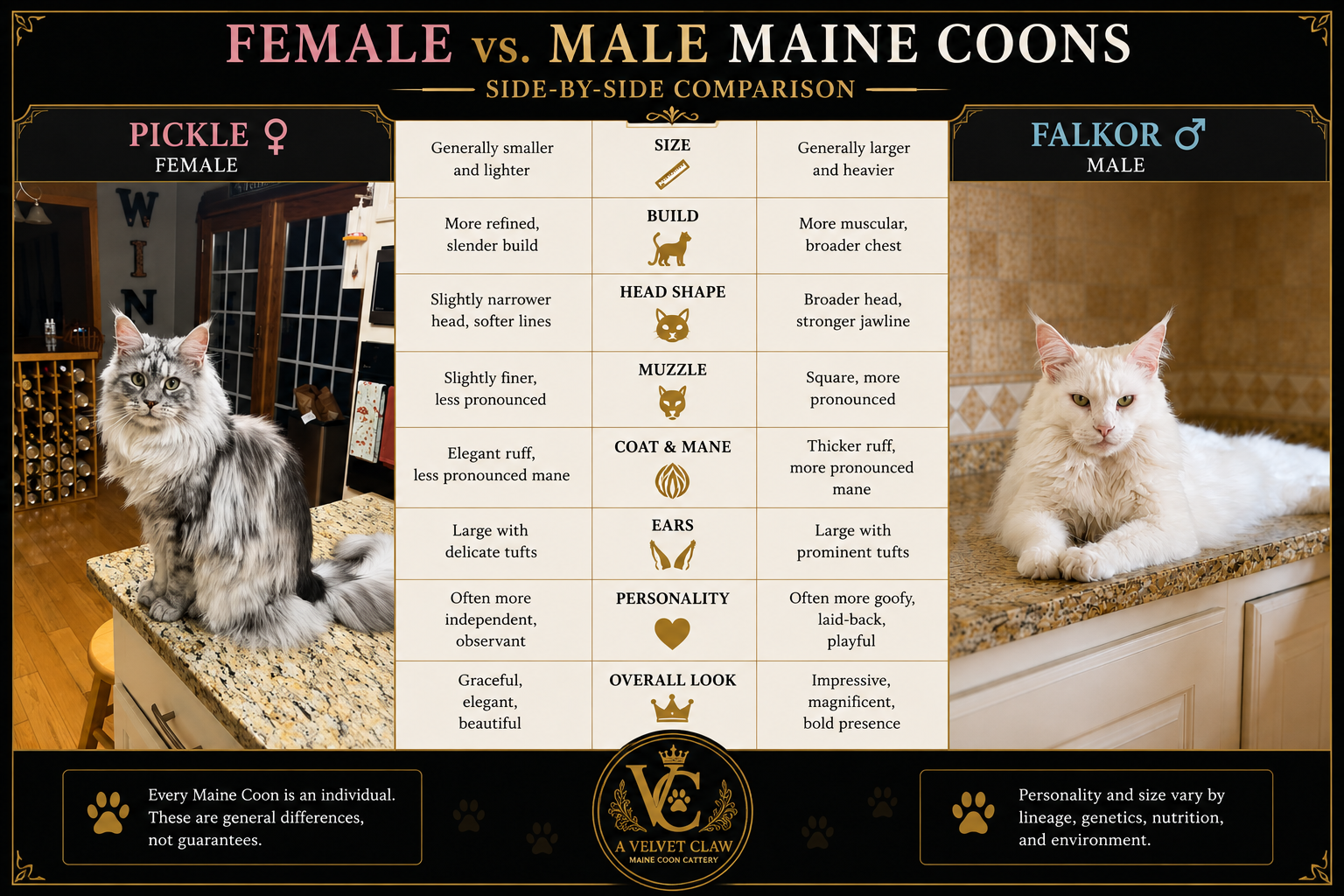
Duchess Pickle is 2 years old and Empurrer Falkor is 3 years old
Sometimes!
As they mature, males may develop a heavier, broader appearance, particularly through the head, neck, shoulders, and chest. Females may retain a slightly more refined appearance.
However, both males and females can have the classic Maine Coon features we love:
Large, expressive ears
Lynx tips and ear furnishings
Long, rectangular bodies
Large paws
Long, flowing tails
Shaggy coats
Beautiful neck ruffs
That unmistakable Maine Coon expression
A gorgeous coat and dramatic Maine Coon appearance aren't reserved for males. Females can be every bit as striking.
What About Personality?
This is where things get interesting.
You'll hear plenty of Maine Coon owners describe males as goofy, outgoing, affectionate, and attention-seeking, while females are sometimes described as independent, intelligent, observant, and a little more selective with their affection.
And sometimes that's exactly what you get. Other times? The female is glued to your lap while the male is perfectly content sleeping by himself across the room. There simply isn't a personality rule that applies to every Maine Coon.
Male Maine Coon Personality
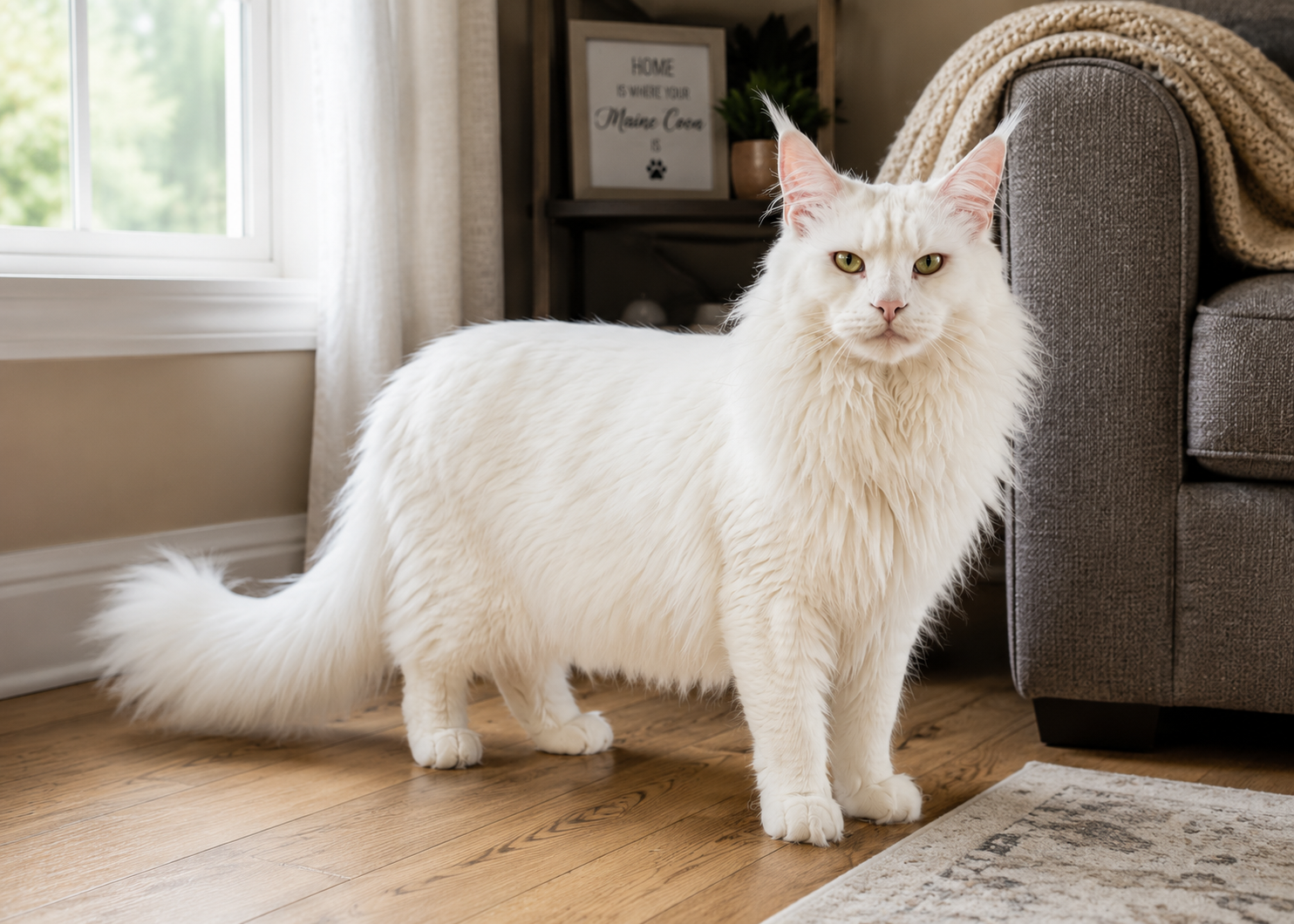
Empurrer Falkor our very calm and quiet gentle giant
Male Maine Coons are often described as the comedians of the breed. Some males love being involved in absolutely everything their people are doing.
Going to the bathroom? You have supervision. Cooking dinner? You have an assistant. Trying to make the bed? Apparently, that's now a group activity.
Many males are playful, social, curious, and very interested in their families. Some remain wonderfully kitten-like and goofy well into adulthood.
But not every male is a social butterfly. Some are quieter, more independent, or more reserved.
Female Maine Coon Personality
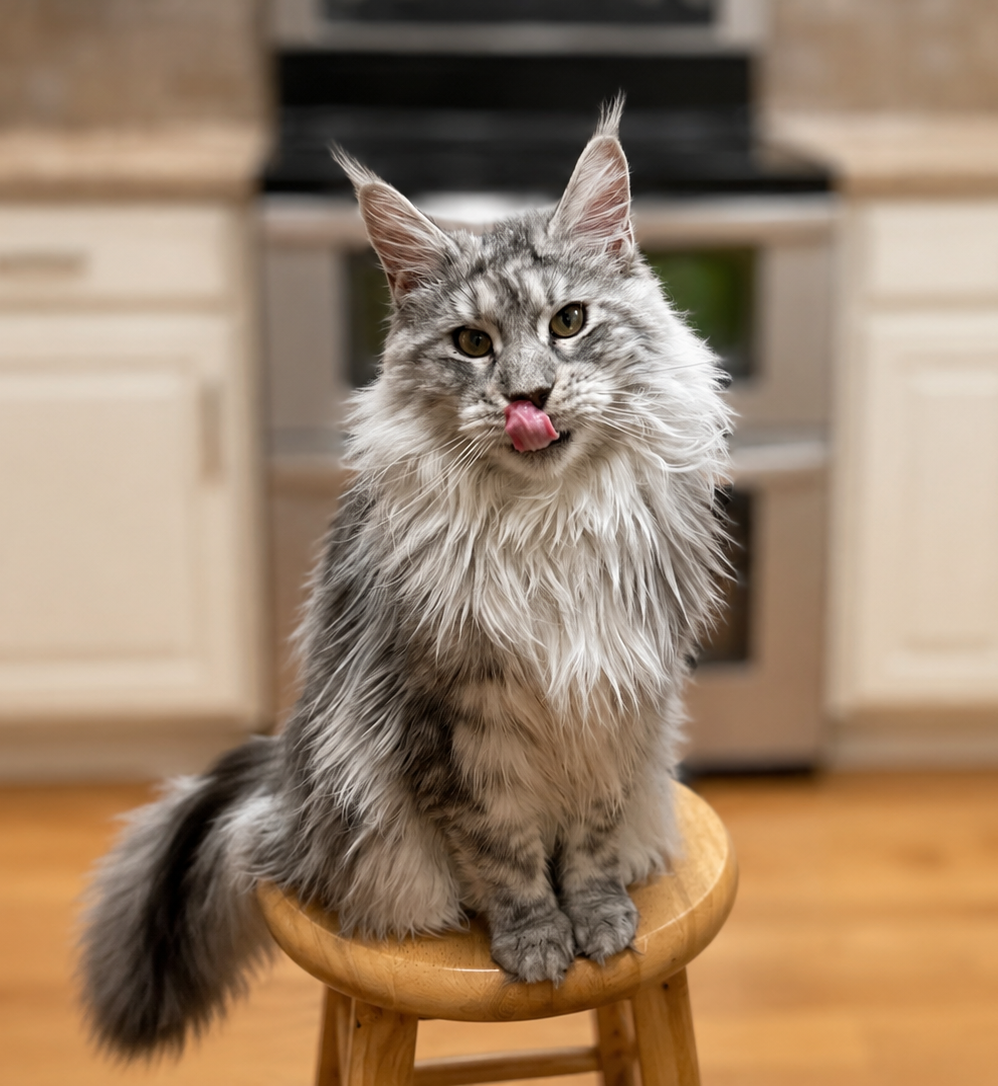
Duchess Pickle our sassy but sweet when she wants to be gentle giant
Females are sometimes described as being a little more independent. They may want affection—but occasionally on their terms. Some owners describe their females as incredibly intelligent and observant, almost as if they're quietly running the household from the background.
Of course, plenty of female Maine Coons are also affectionate little shadows who follow their people from room to room. A female can be every bit as playful, silly, social, and cuddly as a male.
That's why choosing based entirely on sex can sometimes lead to unrealistic expectations.
Are Male Maine Coons More Affectionate?
Not necessarily. This is probably one of the biggest misconceptions when comparing males and females.
You'll frequently hear: "Get a male if you want a cuddly Maine Coon." But affection isn't determined by sex alone.
A cat's genetics, early experiences, socialization, environment, and individual temperament all contribute to how affectionate that cat becomes. A well-socialized female may be incredibly people-oriented. A male may prefer sitting beside you instead of on you.
And some Maine Coons—male or female—will happily climb directly onto your chest and make themselves comfortable whether you agreed to it or not.
Are Males More Playful?
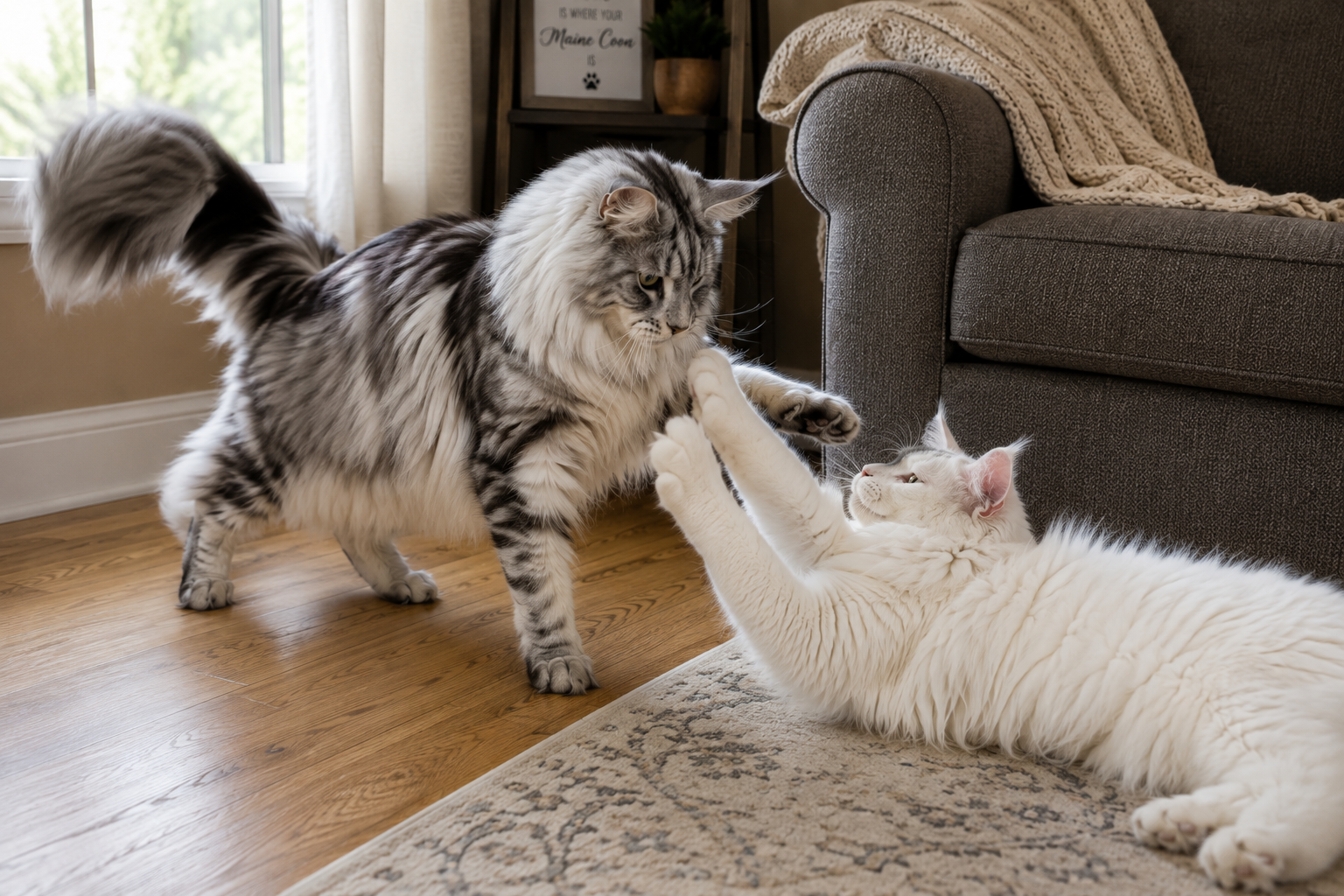
Play time anyone?!
Both sexes can be extremely playful. Maine Coons are known for retaining kitten-like behaviors well into adulthood, and many continue playing throughout their lives. Males sometimes earn a reputation for being especially goofy and energetic, but females certainly aren't excluded from the chaos.
Expect chasing. Climbing. Wrestling. Toy stealing. Zoomies.
And occasionally staring directly at you while doing something they absolutely know they shouldn't be doing. That's not necessarily male or female behavior.
That's just living with a Maine Coon.
Male vs. Female Maine Coon Maturity
Both male and female Maine Coons mature slowly compared with many other domestic cats. Their bodies can continue developing for several years. Males may take longer to achieve that broad, heavy adult appearance, while females may reach their mature proportions somewhat earlier. Coats can also continue changing as the cat develops.
That lanky adolescent with giant ears and oversized paws may look very different by the time they're a mature adult. With Maine Coons, patience is part of the experience.
What About Intact Males and Females?
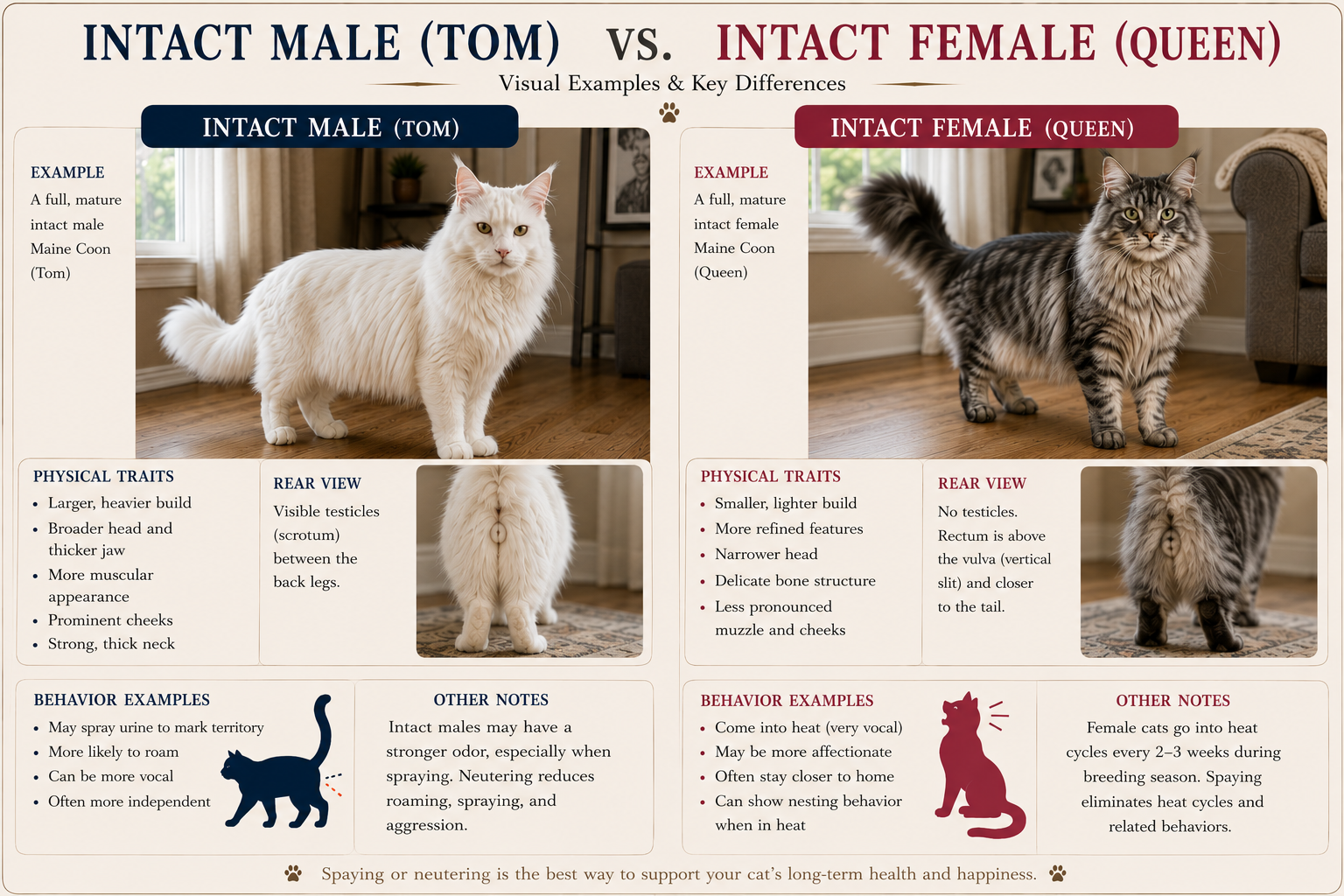
Male Vs Female
When discussing male and female Maine Coons, it's also important to separate sex-related reproductive behaviors from personality. An intact male may display behaviors such as spraying, territorial behavior, or increased interest in finding females. An intact female will experience heat cycles and may become more vocal, restless, affectionate, or determined to find a mate. These behaviors are driven largely by hormones and shouldn't automatically be interpreted as the cat's normal personality.
For pet homes, spaying or neutering at an age discussed with your veterinarian eliminates the possibility of pregnancy and can reduce or eliminate many hormone-driven behaviors. Breeding cats require very different management and should be part of a carefully planned, health-tested breeding program.
Which Is Better With Other Cats?
There isn't a universal winner. A male can happily live with another male. A female can adore another female. A male and female can become inseparable.
Compatibility depends heavily on temperament, introductions, age, socialization, available space, and the personalities of the cats involved.
A thoughtful introduction is much more important than simply choosing the opposite sex.
Which Is Better for Families?
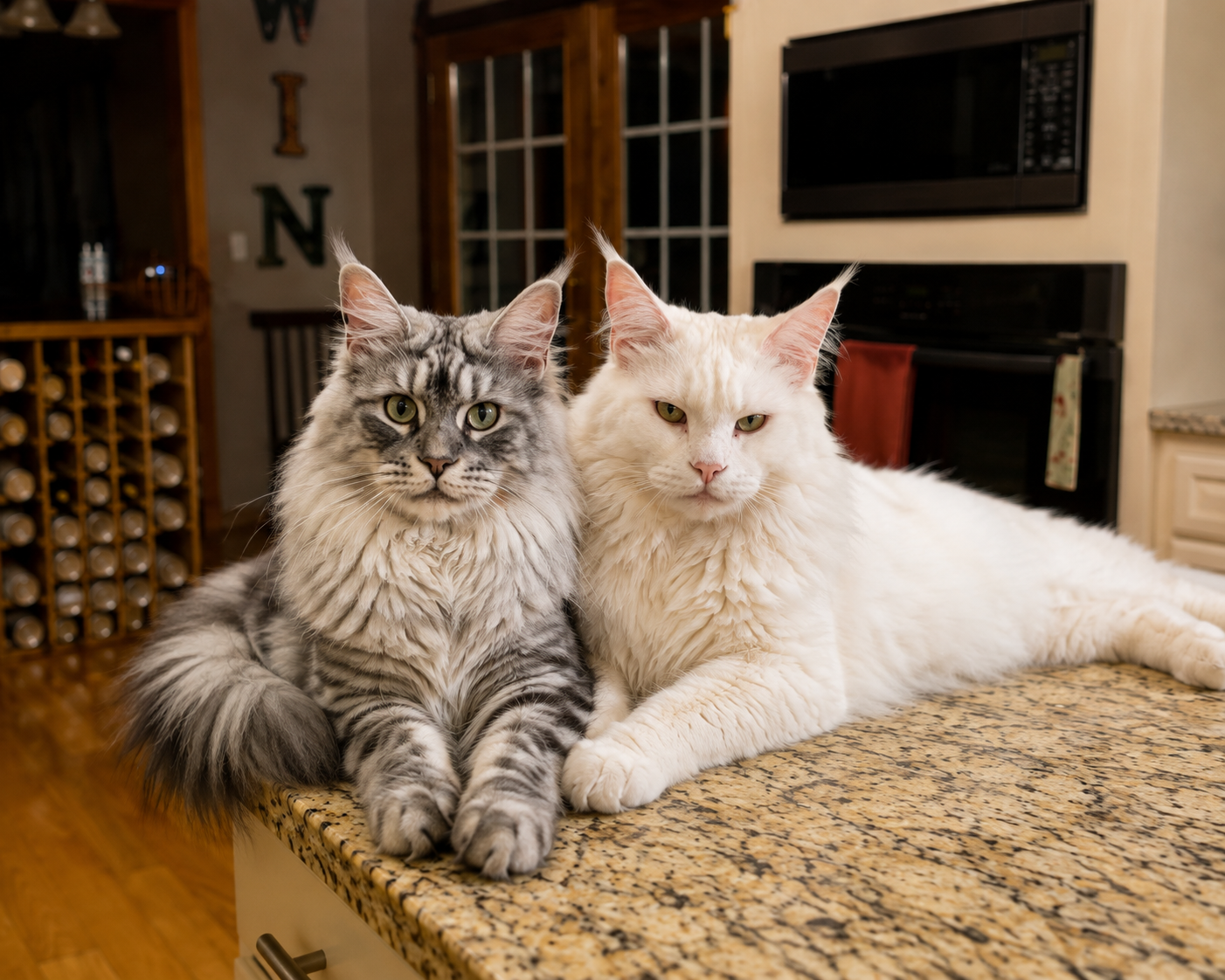
Empurrer Falkor and Duchess Pickle
Either one!
A properly socialized Maine Coon can make a wonderful family companion regardless of sex. Maine Coons are often loved for their social, curious nature and their desire to be involved with their people.
Instead of asking only:
"Should we get a boy or a girl?"
It may be more helpful to ask:
"Which kitten's personality fits our household best?"
A confident, outgoing kitten might thrive in an active household. A quieter kitten may prefer a calmer environment. The right match is about much more than male versus female.
So... Male or Female?
If your heart is set on an enormous, broad, substantial Maine Coon, a male may give you a greater chance of getting that look—but there are never guarantees. If you prefer a somewhat smaller or more refined Maine Coon, a female may be a good fit.
But if personality is your biggest priority? Choose the cat, not the stereotype.
Spend time learning about the kitten's temperament, parents, socialization, and breeder's observations. A responsible breeder who spends every day with a litter can often tell you far more about which kitten may fit your family than simply looking at whether the kitten is male or female.
Different—but Equally Maine Coon
Male and female Maine Coons may differ somewhat in size, build, maturity, and sometimes behavior, but both share the characteristics that have made this breed so loved.
They're intelligent.
They're curious.
They're playful.
They're beautiful.
They're frequently hilarious.
And they have an incredible way of becoming involved in practically everything happening in their homes.
Whether you fall in love with a big goofy boy, a confident little queen, or a personality that completely ignores every stereotype...
The best Maine Coon is the one that's right for you. 🐾👑
Fur - ever grateful: Lexie & Melina
Maine Coon male vs female - Male vs Female Maine Coon - Male Maine Coon
Female Maine Coon - Maine Coon differences - Maine Coon personality