
Bringing a Maine Coon into your home is a little different from bringing home the average cat. They’re big, curious, intelligent, athletic, and surprisingly good at getting into places you were absolutely certain they couldn’t reach. 😂 A shelf that seems high enough? Maybe not. A cabinet you thought was securely closed? Challenge accepted. A glass of water sitting near the edge of the counter? Apparently, that was placed there specifically for scientific experimentation.
Whether you're preparing for a Maine Coon kitten or already have an adult running your household, Maine Coon-proofing your home can help keep your cat safe—and possibly save a few of your belongings along the way.
Here’s what to look for in every room.
Why Maine Coon-Proofing Is a Little Different
All cats benefit from a safe home, but Maine Coons bring a few extra considerations. Their large size and long bodies mean they can reach things smaller cats may not. Their intelligence and curiosity can also make them excellent problem-solvers. And then there are those paws.
Big Maine Coon paws are surprisingly good at opening, pulling, grabbing, and knocking things over. Maine Coon-proofing isn't about removing everything fun from your home. It's about creating an environment where your cat can safely climb, explore, play, and satisfy those natural instincts.
1. Start With the Floors
It sounds simple, but one of the first things we recommend is getting down and looking at your home from your cat's perspective. What can they reach? What can they crawl underneath? What could they chew?
Small objects that don't seem important to us can become extremely interesting to a curious kitten.
Watch for things like:
Hair ties
Rubber bands
String and ribbon
Small children's toys
Twist ties
Plastic pieces
Sewing supplies
Coins
Earplugs
Dental floss
Anything small enough to swallow should be stored safely away. String-like objects are especially important to keep out of reach, because swallowing them can cause serious intestinal problems.
2. Secure Your Windows and Screens
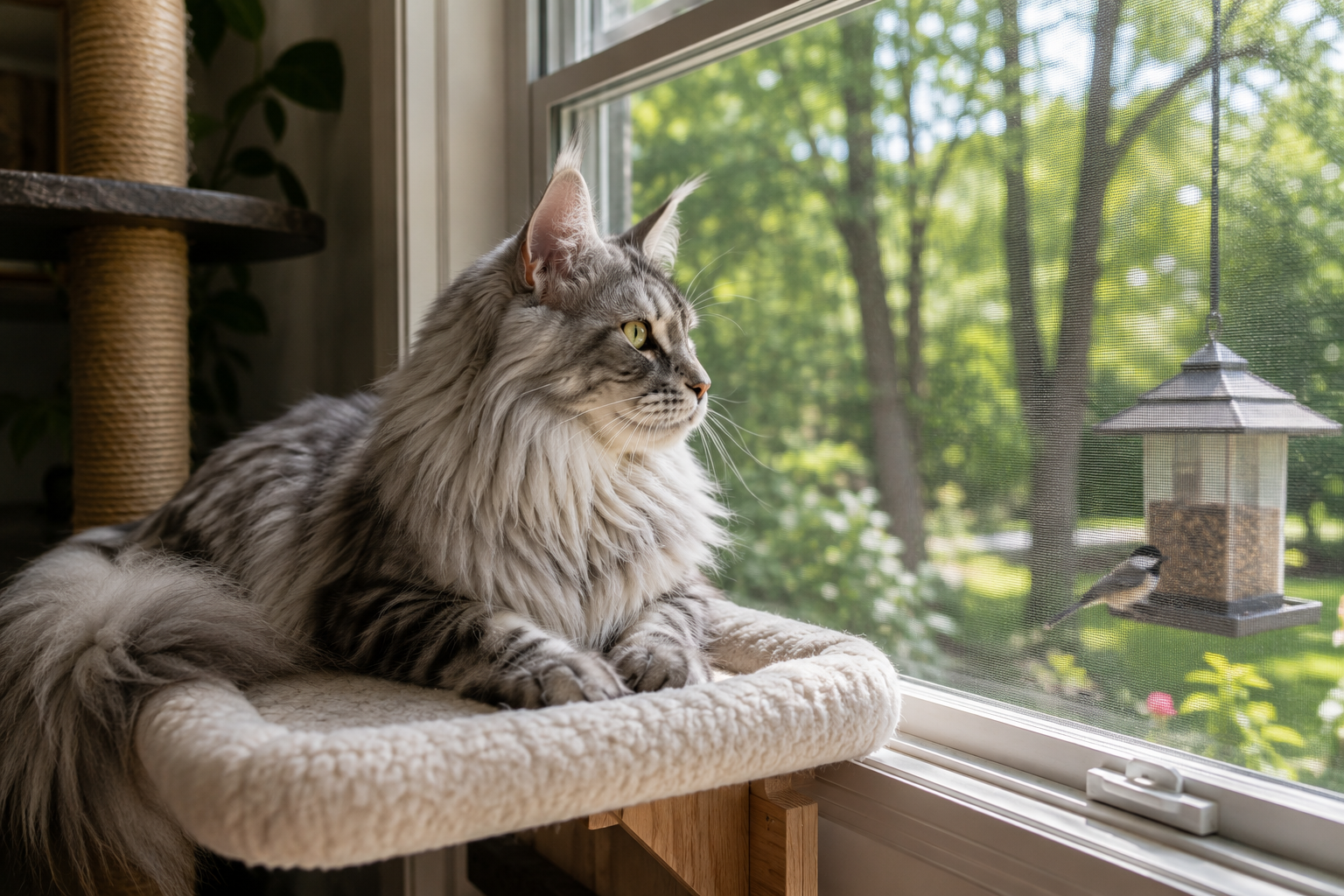
Duchess Pickle loves to watch the birds
Maine Coons LOVE watching the world through a window. Birds, squirrels, leaves, bugs—it's basically cat television. But make sure screens are securely installed and strong enough to withstand a large cat leaning or pushing against them. Remember that an adult Maine Coon can put significantly more weight against a screen than a tiny kitten.
Check screens regularly for:
Loose corners
Tears
Weak frames
Gaps
Screens that easily pop outward
An open window should never become an accidental escape route.
3. Don't Underestimate Their Ability to Climb
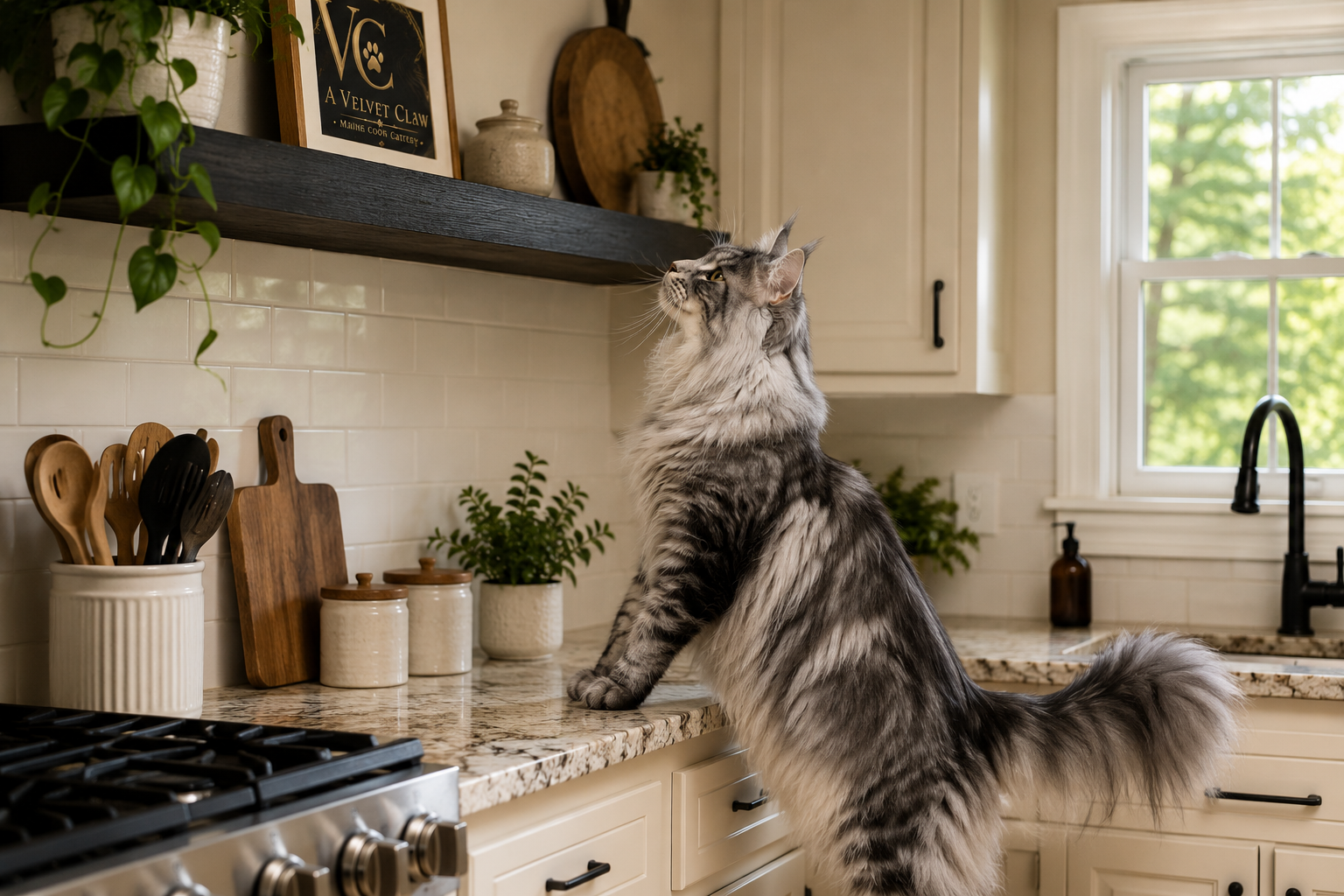
Maine coons love to test the limits in climbing high places
If you look at something and think: "There's no way my cat can get up there." Your Maine Coon may take that personally. 😂
They can climb onto counters, refrigerators, shelves, cabinets, furniture, and other surprisingly high places. Secure heavy or breakable objects that could fall if bumped.
Pay special attention to:
Televisions
Large decorations
Lamps
Picture frames
Vases
Freestanding shelves
Tall furniture
Large furniture that could tip should be anchored securely to the wall.
4. Upgrade the Cat Tree
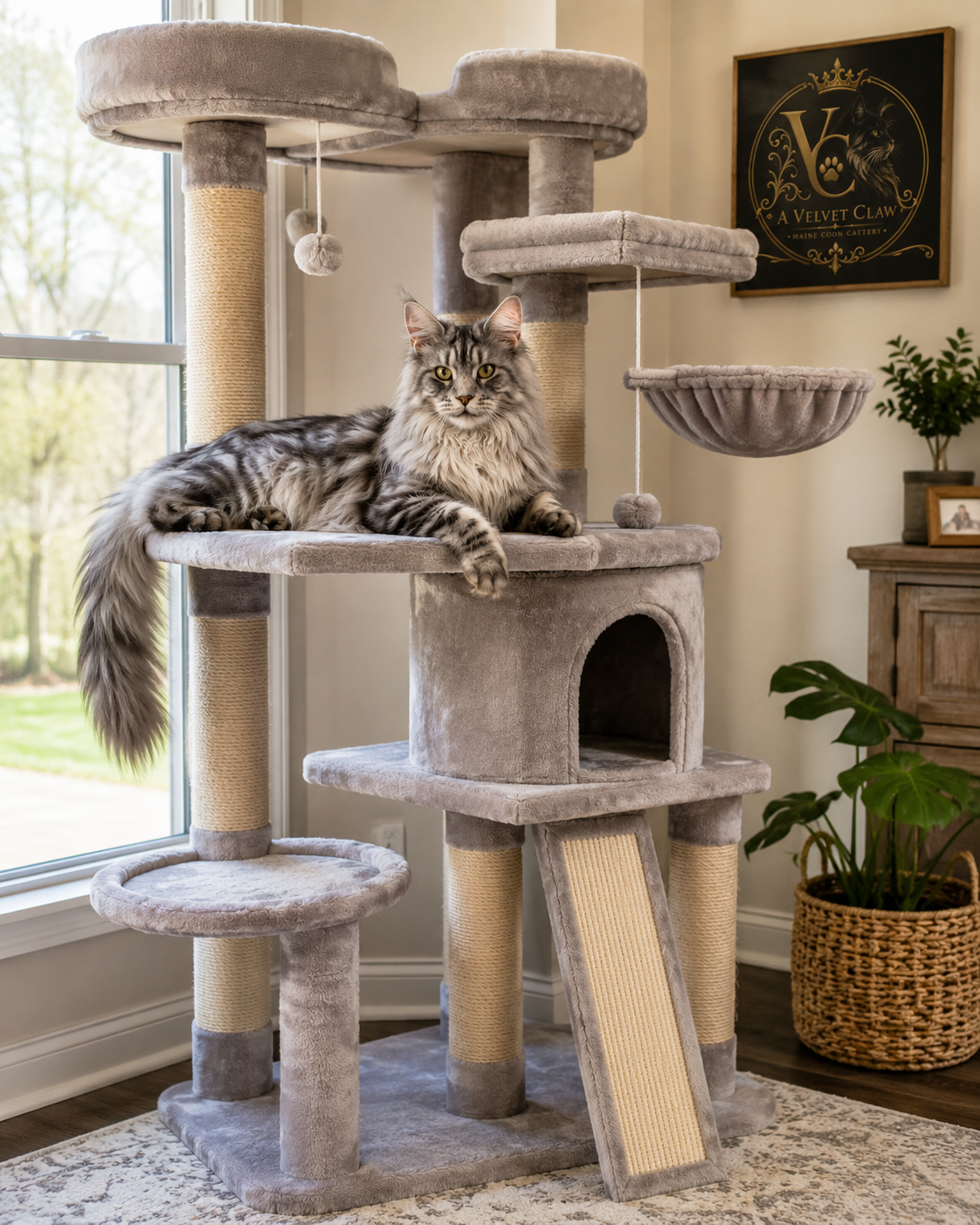
Cat trees that are bigger and sturdier will work best for your maine coon
That adorable little cat tree made for a 7-pound cat may not survive a full-grown Maine Coon launching onto it at full speed. Maine Coons need large, sturdy climbing furniture.
Look for cat trees with:
Wide bases: A wider base helps prevent tipping.
Thick support posts: Larger posts provide better stability.
Large platforms: Your Maine Coon should actually fit on the platform.
Strong construction: It should handle jumping, climbing, scratching, and the occasional Maine Coon wrestling match.
Wall-mounted cat shelves can also be wonderful, but they need to be securely anchored and rated for your cat's weight.
5. Maine Coon-Proof the Kitchen
The kitchen contains plenty of temptations. Keep food that may be harmful to cats securely stored and don't assume something is safe simply because your cat seems interested in eating it.
Also watch for:
Hot stovetops
Sharp knives
Plastic food packaging
Cleaning products
Trash cans
Open cabinets
Hot pans
Food scraps
A locking or heavy-lidded trash can can be especially helpful with a determined cat. And before turning on the dishwasher? Check inside.
Curious kittens love exploring strange little caves.
6. Check the Washer and Dryer—Every Time
This deserves its own section. Cats may climb into washers and dryers because they're dark, enclosed, and sometimes warm. Always check the machine before closing the door or starting it. It's a simple habit that can prevent a tragedy.
Keep laundry-room doors closed when possible, especially with kittens.
7. Secure Cords and Chargers
Electrical cords can be tempting to kittens who are going through a chewing phase. Use cord covers or safely route cables where your cat can't easily access them.
Pay attention to:
Phone chargers
Computer cables
Lamp cords
Extension cords
Blind cords
Holiday lights
Dangling blind cords should also be secured so a cat can't become tangled in them.
8. Check Your Houseplants
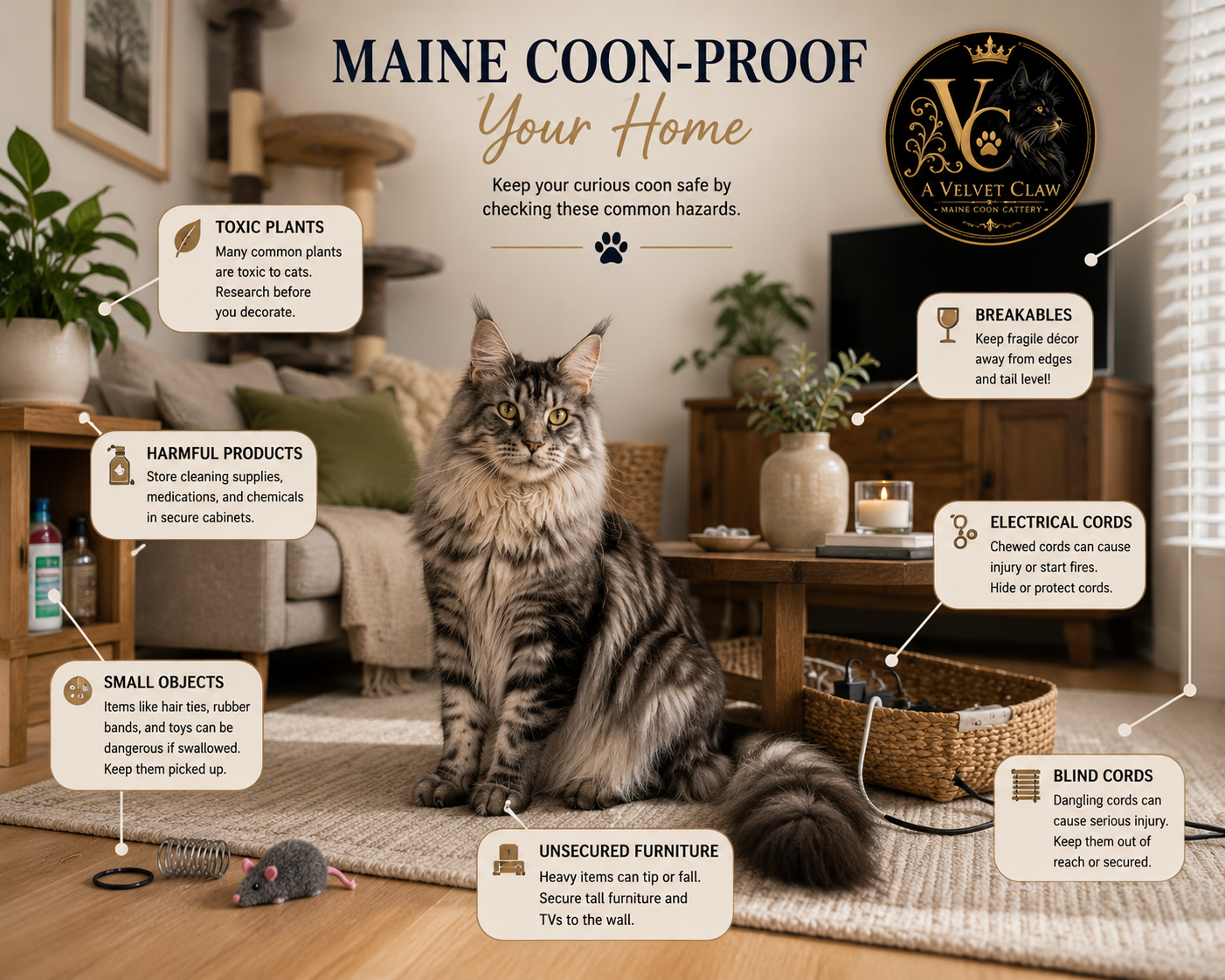
Some item can be harmful to your pet
Some common houseplants are toxic to cats. Before bringing a Maine Coon home, check every plant in the house and make sure it's cat-safe. One particularly important example is lilies. True lilies and daylilies can be extremely dangerous to cats, and even small exposures can cause severe poisoning.
If you're unsure whether a plant is safe, don't leave it somewhere your cat can access until you've verified it. And remember:
"I'll just put it somewhere high" isn't always a reliable Maine Coon-proofing strategy. 😆
9. Secure Cabinets With Dangerous Products
Some Maine Coons become surprisingly talented at opening cabinet doors. Cleaning products, medications, chemicals, pest-control products, and anything else potentially dangerous should be stored somewhere truly secure. Childproof cabinet locks can be useful if you have an especially determined cat.
The same applies to medications. Never leave pills sitting on counters or nightstands where a curious paw can knock them onto the floor.
10. Watch Recliners and Moving Furniture
Recliners can pose a hidden danger to cats. A cat or kitten may crawl underneath or inside the mechanism without you realizing it. Before closing or moving a recliner, make sure you know where your cat is.
The same caution applies to:
Sofa beds
Adjustable beds
Rocking chairs
Motorized furniture
With kittens especially, knowing where they are before moving furniture is a great habit to develop.
11. Bathroom Safety Matters Too
Bathrooms can contain plenty of things cats shouldn't have access to. Keep medications, razors, cleaning supplies, dental floss, cotton swabs, and other small items put away. Keep the toilet lid closed, particularly when using cleaning products in the bowl.
And yes...
Some Maine Coons are absolutely fascinated by running water. Don't be surprised if you eventually acquire a bathroom supervisor. 😂
12. Be Careful With Doors
Maine Coons can be extremely curious about what's on the other side of a door. Before opening an exterior door, know where your cat is. This becomes especially important if your Maine Coon is indoor-only. You may want to create an extra barrier near frequently used entrances, especially while raising kittens.
Also check closets, pantries, garages, and storage rooms before closing the door. Cats are remarkably good at slipping inside unnoticed.
13. Remove Breakables From Tail Level
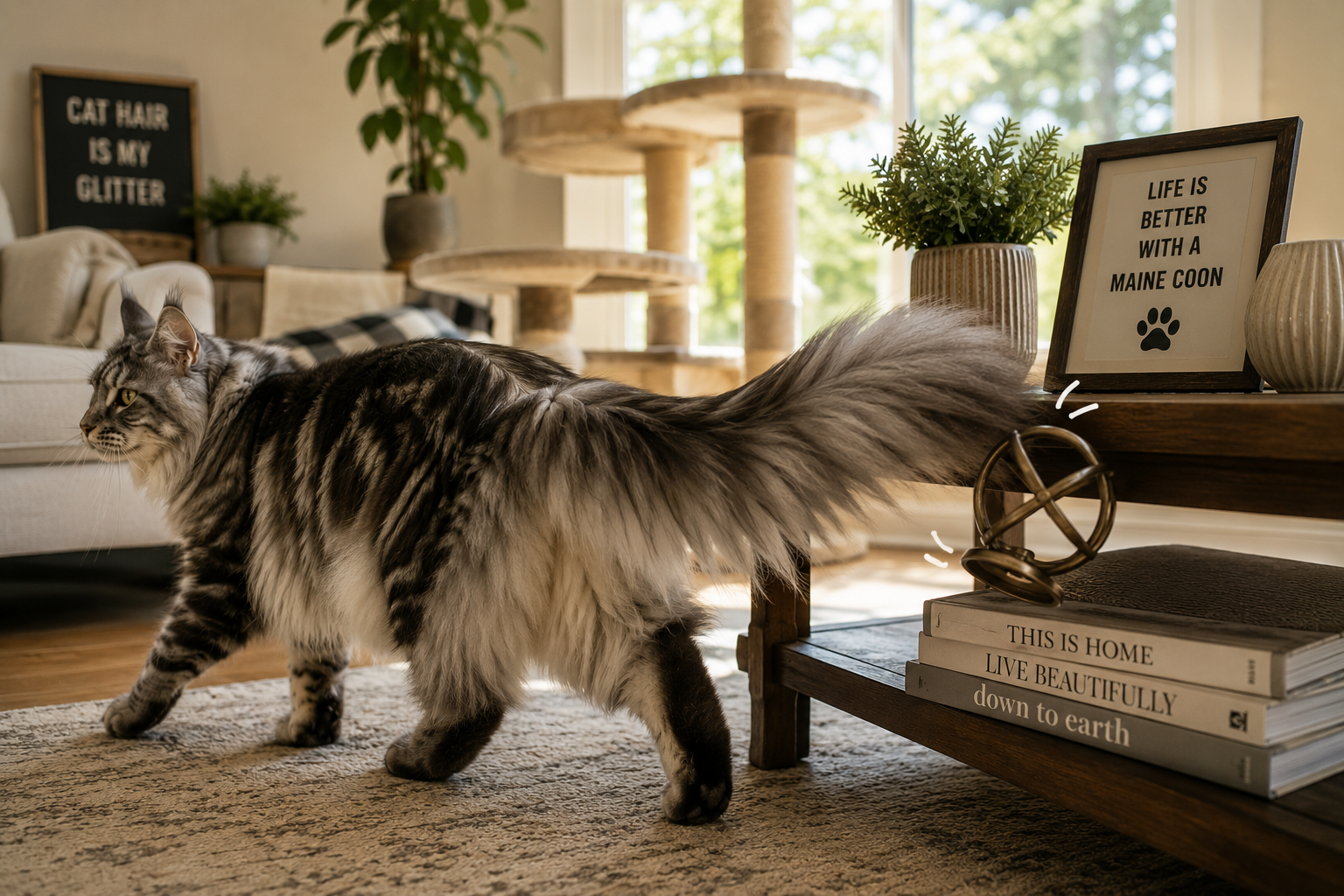
Pickles big floof of a tail can knock things over. So its important to make sure all breakables are not at this level
Nobody warns you about the tail. A Maine Coon's long, fluffy tail can sweep across a table like a feather duster with absolutely no concern for your decorations. 😂 Move fragile items away from edges and reconsider placing delicate decorations on surfaces your cat regularly walks past.
Sometimes the cat doesn't even have to touch the item. The tail handles it.
14. Provide Appropriate Scratching Areas
Instead of simply trying to stop scratching, give your Maine Coon somewhere appropriate to do it. Large cats benefit from tall scratching posts that allow them to fully stretch their bodies.
Look for posts that are:
Tall
Stable
Thick
Difficult to tip
Covered in a satisfying scratching material
Horizontal scratchers are also great because different cats have different preferences. Providing several scratching areas throughout the home can make your furniture much less interesting.
15. Create Safe Places to Explore
Maine Coon-proofing shouldn't mean saying "no" to everything. Give them things they're allowed to investigate.
Consider adding:
Large cat trees
Window perches
Cat tunnels
Puzzle toys
Scratching posts
Interactive toys
Cat shelves
Cozy hiding spaces
Toy baskets
A cat who has plenty of appropriate ways to climb, scratch, explore, and play may be less interested in creating their own entertainment.
And trust us... You probably don't want a Maine Coon designing the entertainment schedule. 😂
Kitten-Proofing Requires Extra Attention
Maine Coon kittens are particularly talented at finding trouble. They're small enough to squeeze into tiny spaces but brave enough to investigate practically everything. As your kitten grows, you'll need to reevaluate your home.
The place they couldn't reach last month? They may reach it today. The tiny kitten who once fit comfortably on a small cat tree may eventually become a very large adult launching their entire body onto the top platform. Maine Coon-proofing changes as your cat grows.
A Safe Home Can Still Be a Fun Home
The goal isn't to create an empty house where your Maine Coon can't touch anything. It's to create a home where they can safely be themselves.
Let them climb. Let them explore. Let them watch birds from the window. Give them places to scratch, play, nap, hide, and investigate. Then secure the things that could actually hurt them.
Because sharing your home with a Maine Coon means accepting one simple truth: It's their house now.
You're just responsible for Maine Coon-proofing it. 😂🐾
Fur - ever grateful: Lexie & Melina
Maine Coon proof your home - Maine Coon proofing - Maine Coon home safety
Maine Coon safety - Maine Coon kitten proofing