
When searching for a Maine Coon kitten, you've probably heard responsible breeders talk about health testing—and for good reason. Genetic testing, heart screenings, hip evaluations, and other health checks are incredibly important tools in a responsible breeding program. They help breeders make educated decisions and reduce the risk of passing certain health problems to future generations. But there is an important distinction every future kitten owner should understand:
Health testing reduces risk. It does not eliminate it.
No breeder—regardless of how experienced, ethical, or thorough—can guarantee that a kitten will never develop a health problem during its lifetime. Understanding what health testing can and cannot tell us helps families have realistic expectations when choosing a breeder and bringing home their new Maine Coon.
What Is Health Testing?
Health testing is a broad term that can include several different types of screening.
For Maine Coons, breeders may use a combination of:
DNA/genetic testing
HCM screening
Cardiac echocardiograms
Hip evaluations
SMA testing
PKDef testing
Blood typing
FeLV/FIV testing
Veterinary examinations
Parasite screening
Different tests answer different questions. Some look for specific genetic variants. Others evaluate what is physically happening with a cat at that particular point in time. Together, these tests give breeders valuable information when making breeding decisions.
But they aren't a crystal ball.
1. Genetic Testing Only Tests for What We Know to Look For
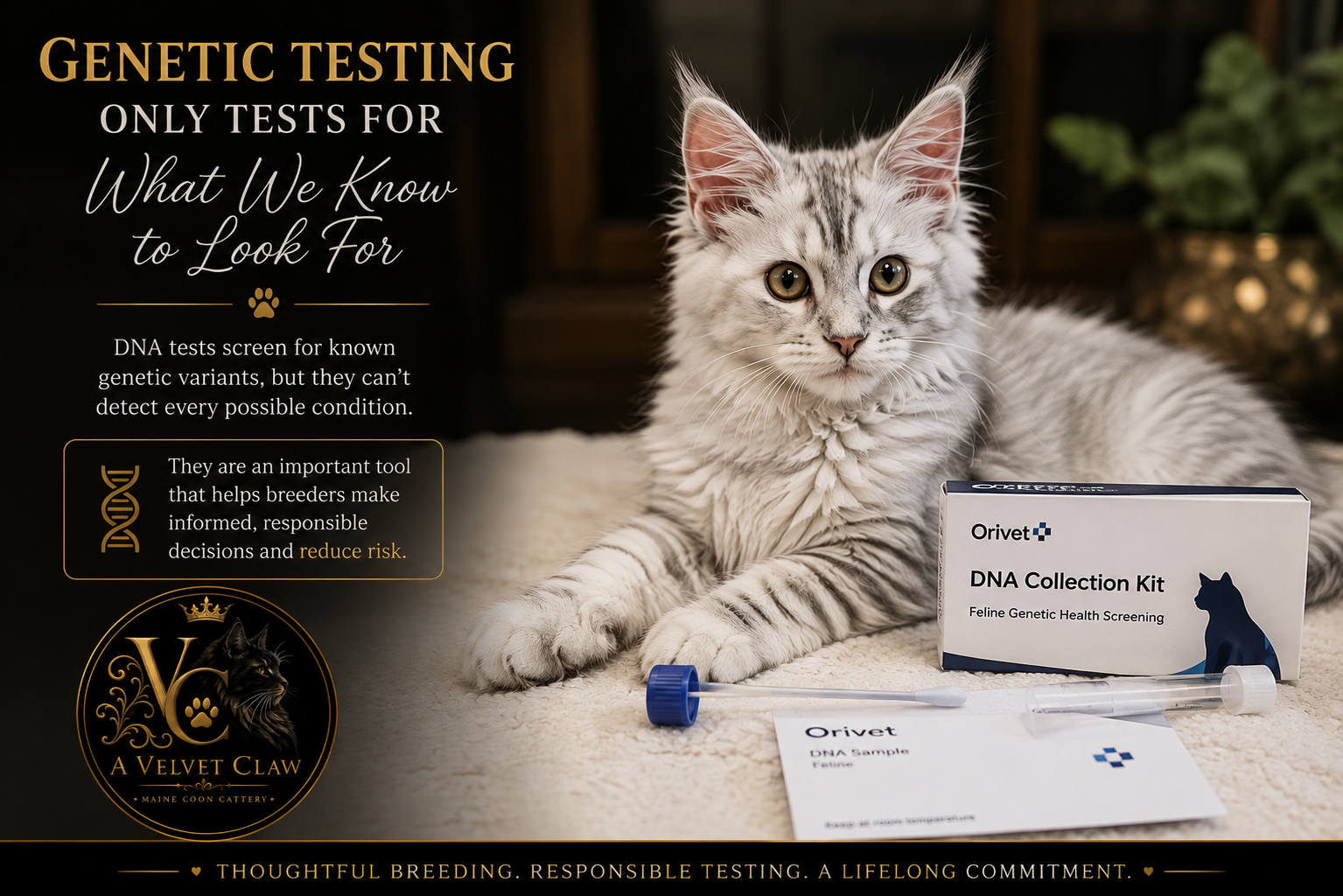
This is one of the biggest misconceptions surrounding health testing. A DNA panel can test for many known genetic variants—but it cannot screen for every disease a cat could possibly develop.
For example, a Maine Coon may test negative for a known disease-associated mutation. That's wonderful information. But it doesn't mean:
“This cat can never develop that disease or any other health condition.”
Genetics are incredibly complicated. Some conditions can involve multiple genes, environmental influences, spontaneous mutations, or genetic factors researchers haven't even identified yet. Science continues to evolve, and responsible breeding evolves with it.
2. A Negative HCM DNA Test Does NOT Mean a Cat Can Never Develop HCM
This deserves special attention because hypertrophic cardiomyopathy—HCM—is an important health concern in Maine Coons. There is a known MYBPC3 mutation associated with HCM in Maine Coons, and DNA testing can identify whether a cat carries that particular mutation. That's useful information. But a negative DNA result does not guarantee that a Maine Coon will never develop HCM.
Why?
Because HCM can occur in cats that do not carry the specific mutation included in the genetic test. That's why cardiac screening such as an echocardiogram performed by a veterinary cardiologist can be another important part of a thoughtful breeding program. DNA testing and echocardiograms provide different pieces of information.
Neither can predict the future with absolute certainty.
3. An Echocardiogram Is a Snapshot in Time
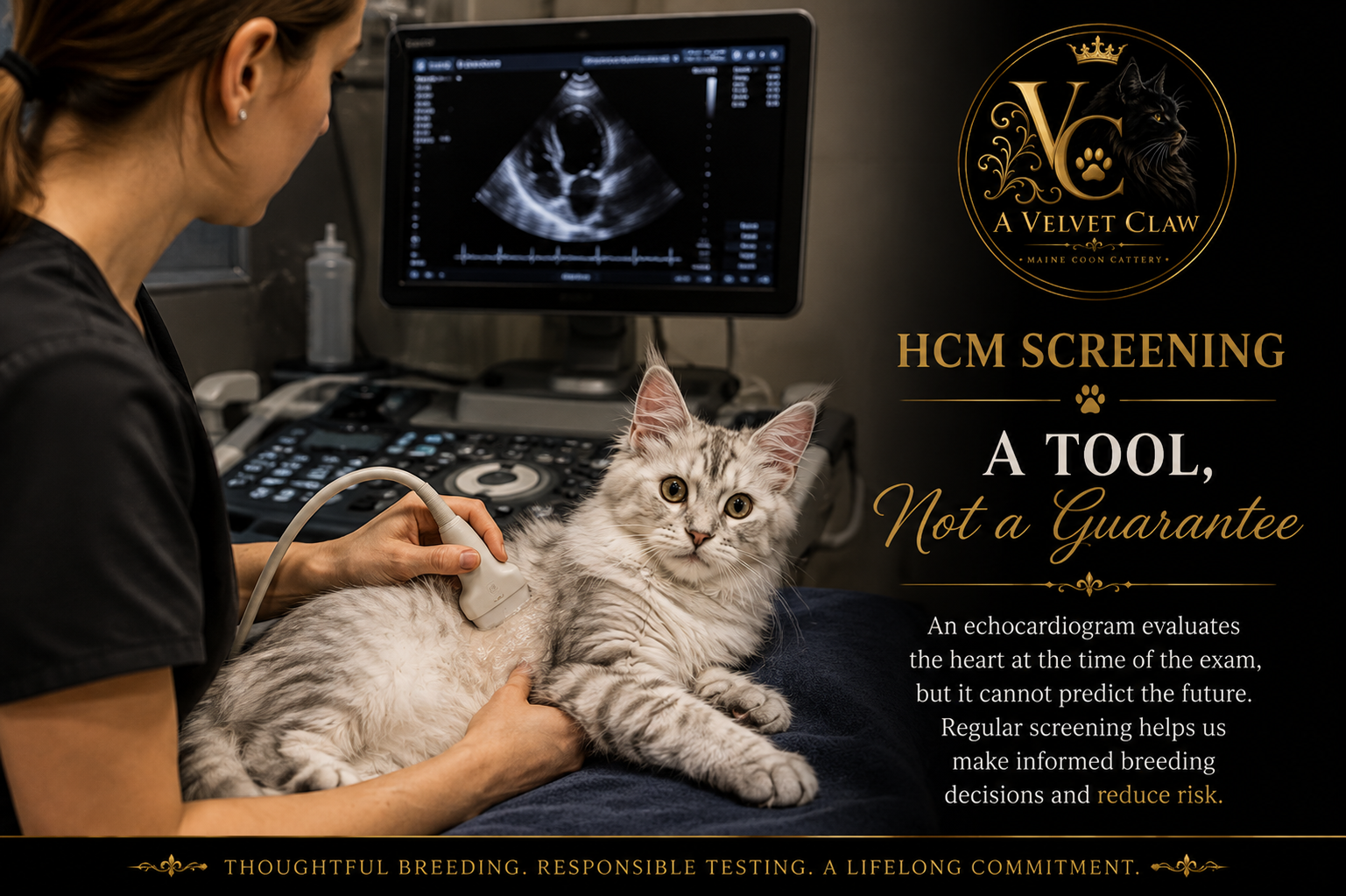
Imagine a breeding cat receives an echocardiogram and everything looks beautiful. That's excellent news. But what does that result actually mean? It means the cat showed no detectable evidence of the condition at the time of that examination. It doesn't necessarily tell us what that cat's heart will look like several years later.
Some heart conditions can develop or become detectable as a cat ages. That's why breeders may repeat cardiac screenings rather than assuming one normal examination provides a lifetime guarantee.
4. Hip Testing Reduces Risk—It Doesn't Create Perfect Hips
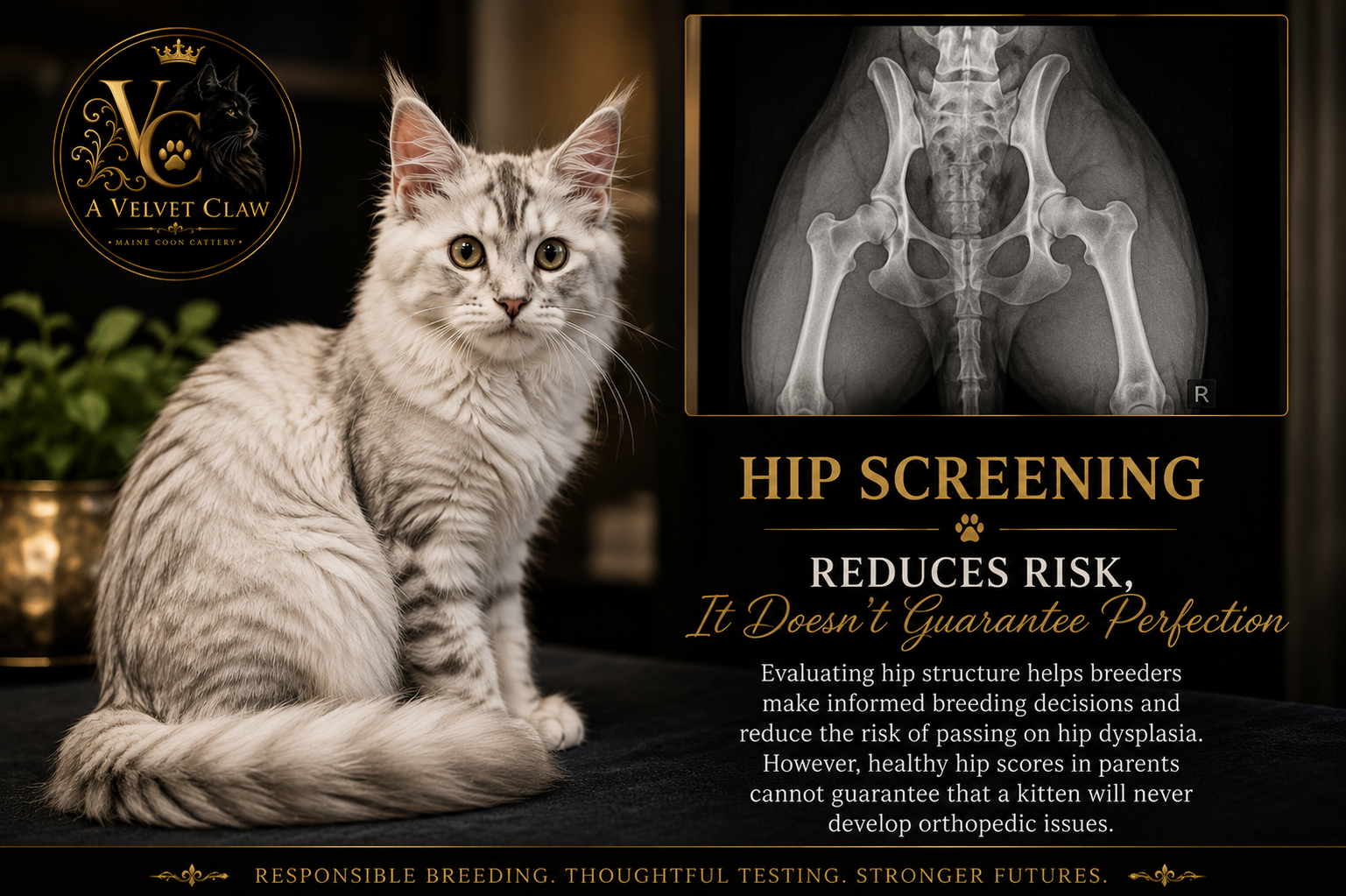
Hip dysplasia can occur in Maine Coons, which is why some breeders evaluate the hips of their breeding cats. Selecting breeding cats with healthy hip structure can help breeders make better decisions. But once again, biology doesn't give us guarantees.
Two cats with good hip evaluations can still produce a kitten that eventually develops an orthopedic problem. Genetics can be complicated, and factors such as growth, body condition, injury, nutrition, and environment can also influence orthopedic health.
The goal is risk reduction, not perfection.
5. Two Healthy Parents Can Still Produce a Kitten With a Health Problem
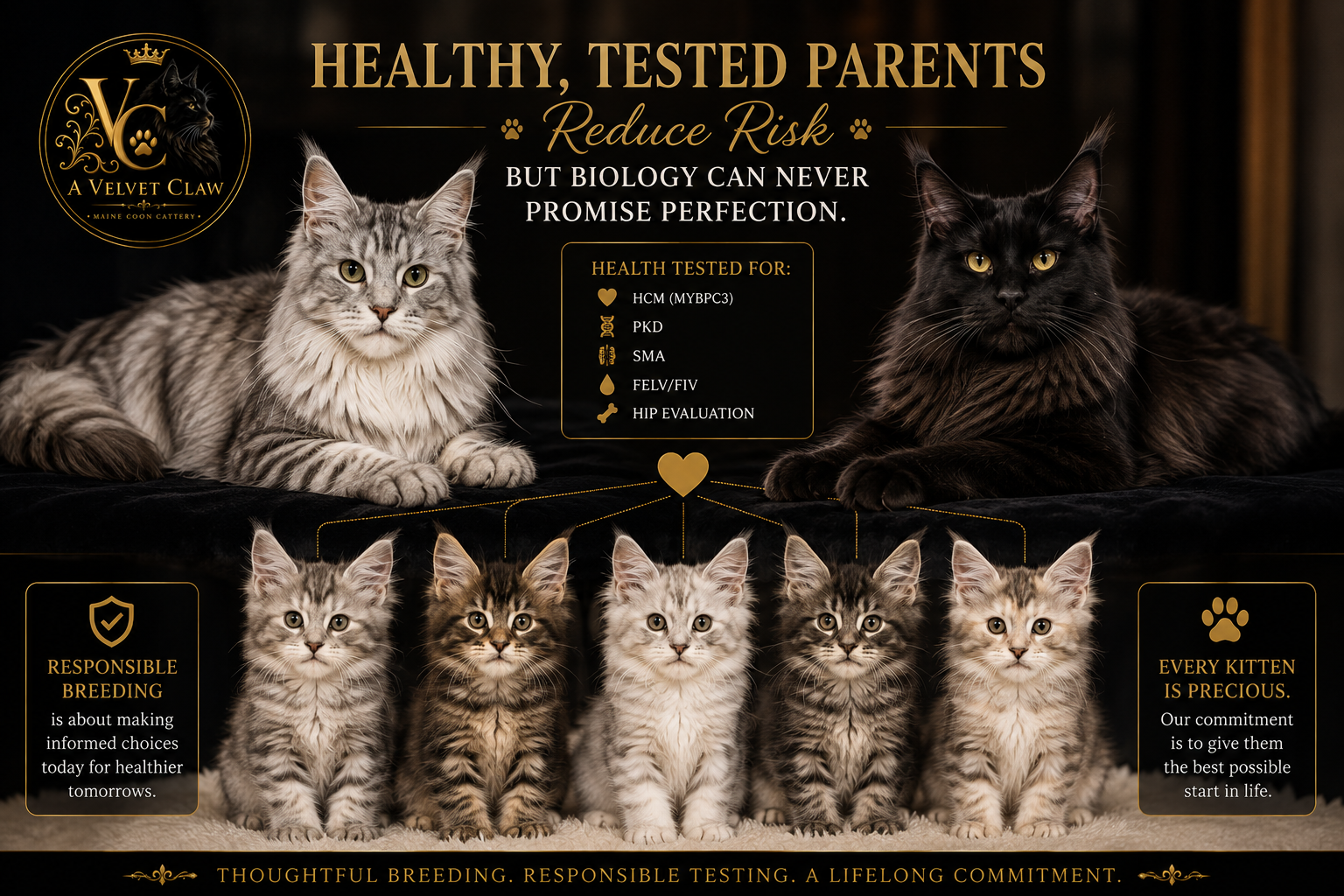
This can be difficult for families to understand. If Mom is healthy... Dad is healthy... Both have been tested... How could their kitten possibly become sick? Because living creatures aren't manufactured products.
A kitten receives a unique combination of genes from both parents. New genetic changes can occur, recessive traits can behave in complicated ways, and illnesses unrelated to inherited disease can happen.
A kitten can also experience:
Infections
Injuries
Congenital abnormalities
Gastrointestinal problems
Allergies
Dental problems
Urinary issues
Autoimmune or inflammatory conditions
Other illnesses unrelated to the breeder's genetic screening
Health testing can't prevent every possible medical problem.
6. Environment Matters Too
Genetics are only part of a cat's lifelong health. After a kitten goes home, many other factors can influence its health and development.
These can include:
Nutrition
Body weight
Exercise
Exposure to infectious disease
Veterinary care
Dental care
Stress
Injuries
Toxins
Parasite prevention
Lifestyle
This is one reason responsible breeding and responsible ownership work together. A breeder can give a kitten a strong beginning, but the new family becomes responsible for continuing that care throughout the cat's life.
7. Then Why Does Health Testing Matter So Much?
If testing doesn't guarantee perfect health, you might wonder: Why bother doing it? Because reducing risk matters. Imagine a breeder knows a breeding cat carries a genetic variant associated with a serious disease. Without testing, that breeder might unknowingly pair that cat in a way that significantly increases the risk to the kittens.
Testing provides information. And information allows breeders to make better decisions. Responsible breeding isn't about promising that nothing will ever go wrong. It's about using the tools available to stack the odds in favor of healthier kittens.
8. Health Testing Is About Generations, Not Just One Litter
A thoughtful breeding program looks beyond the kittens currently in the nursery. Breeders can use health information from parents, grandparents, siblings, previous litters, and other relatives to better understand their lines. Over time, this information becomes incredibly valuable.
If a health concern appears repeatedly within a particular line, breeders can reconsider future pairings or remove certain cats from their breeding program. That's why communication between breeders and kitten families is important.
When owners keep their breeder informed about significant health developments, that information can potentially influence breeding decisions for generations to come.
9. “Health Tested” and “Vet Checked” Aren't the Same Thing
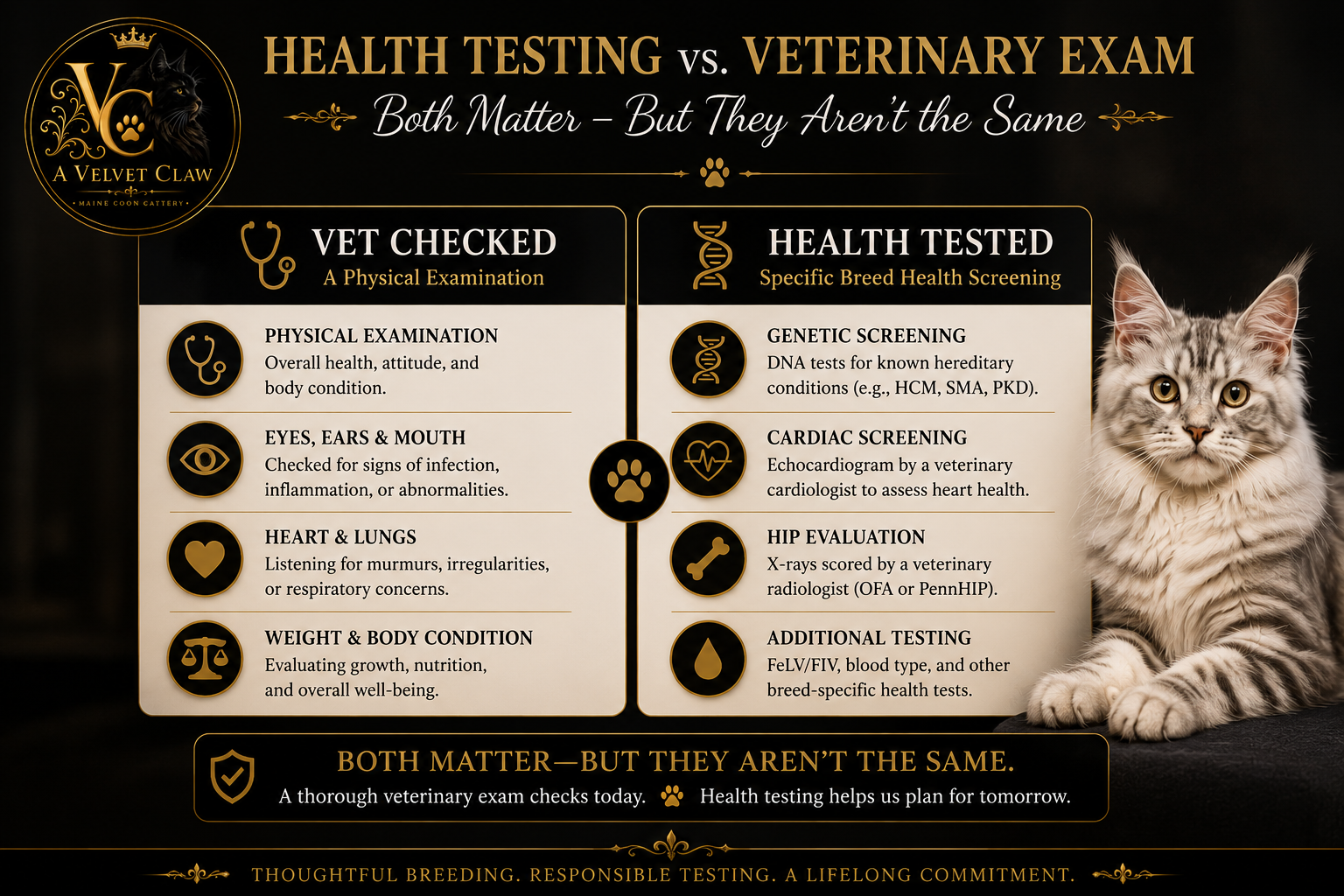
This distinction is important when researching breeders. A kitten receiving a normal veterinary examination is wonderful—but that's different from health screening breeding cats for conditions associated with the breed.
Similarly, saying: “My cats have never been sick.” isn't the same as performing appropriate health testing.
When evaluating a breeder, ask what testing is actually performed.
A responsible breeder should be comfortable explaining:
Which tests they perform
Why they perform them
Which cats are tested
What the results mean
What limitations those tests have
Transparency matters.
10. Be Cautious of Absolute Health Guarantees
A breeder may offer a written health guarantee covering certain conditions for a specified period. That's different from promising that a kitten will never become sick. No ethical breeder can control every gene, environmental exposure, accident, infection, or disease a cat may encounter throughout a 12-, 15-, or even 20-year life.
Statements such as: “Our kittens can never develop HCM because the parents tested negative.” should prompt additional questions.
Health testing is valuable precisely because responsible breeders understand risk. It shouldn't be used as a marketing tool to create impossible promises.
What Responsible Health Testing Really Says
When a breeder health tests their cats, the message shouldn't be: “Nothing can ever happen to one of our kittens.”
It should be: “We understand the health concerns within our breed, and we're using the best information and tools available to make thoughtful breeding decisions.”
That's a much more meaningful promise.
Responsible Breeding Is About Reducing Risk
There are no perfectly predictable genetics. There are no perfectly predictable kittens. And unfortunately, there is no breeding program capable of guaranteeing perfect lifelong health. What responsible breeders can do is:
Test. Learn. Screen. Research. Document. Make thoughtful pairings. Follow their lines. Communicate honestly. And continue improving.
Health testing doesn't eliminate every possibility of disease. It gives breeders information they wouldn't otherwise have—and allows them to make better decisions with that information.
That distinction matters. Because responsible breeding isn't about claiming perfection.
It's about doing everything reasonably possible to give each generation the strongest start we can. 🐾
Fur - ever grateful: Lexie & Melina
Maine Coon health testing - Maine Coon genetic testing - Maine Coon HCM testing
Maine Coon kitten health - responsible Maine Coon breeder - Maine Coon health screening