
If you've spent any time searching for a Maine Coon kitten, you've probably seen the phrase “responsibly bred.” But what does that actually mean? Is a kitten responsibly bred because it's registered? Because its parents have pedigrees? Because the breeder performs DNA testing? Because the kittens are raised inside the home?
Those things can certainly be part of responsible breeding—but responsible breeding is much bigger than any single test, certificate, or piece of paperwork.
At its core, responsible breeding means making decisions based on the health, temperament, welfare, and future of the cats—not simply producing kittens. And that responsibility begins long before a litter is born.
1. Responsible Breeding Starts With the Parents
A responsible breeding program doesn't begin when kittens arrive. It begins with selecting the cats who may someday become parents. A beautiful Maine Coon isn't automatically a good breeding candidate.
Breeders should consider things such as:
Overall health
Temperament
Pedigree
Genetic diversity
Breed type and structure
Health testing results
Family health history
Strengths and weaknesses of both cats
The goal isn't simply: “These are two beautiful Maine Coons. Let's breed them.”
The question should be: “Does this pairing make sense, and could it contribute positively to the next generation?”
That's a very different mindset.
2. Health Testing Is Part of the Responsibility
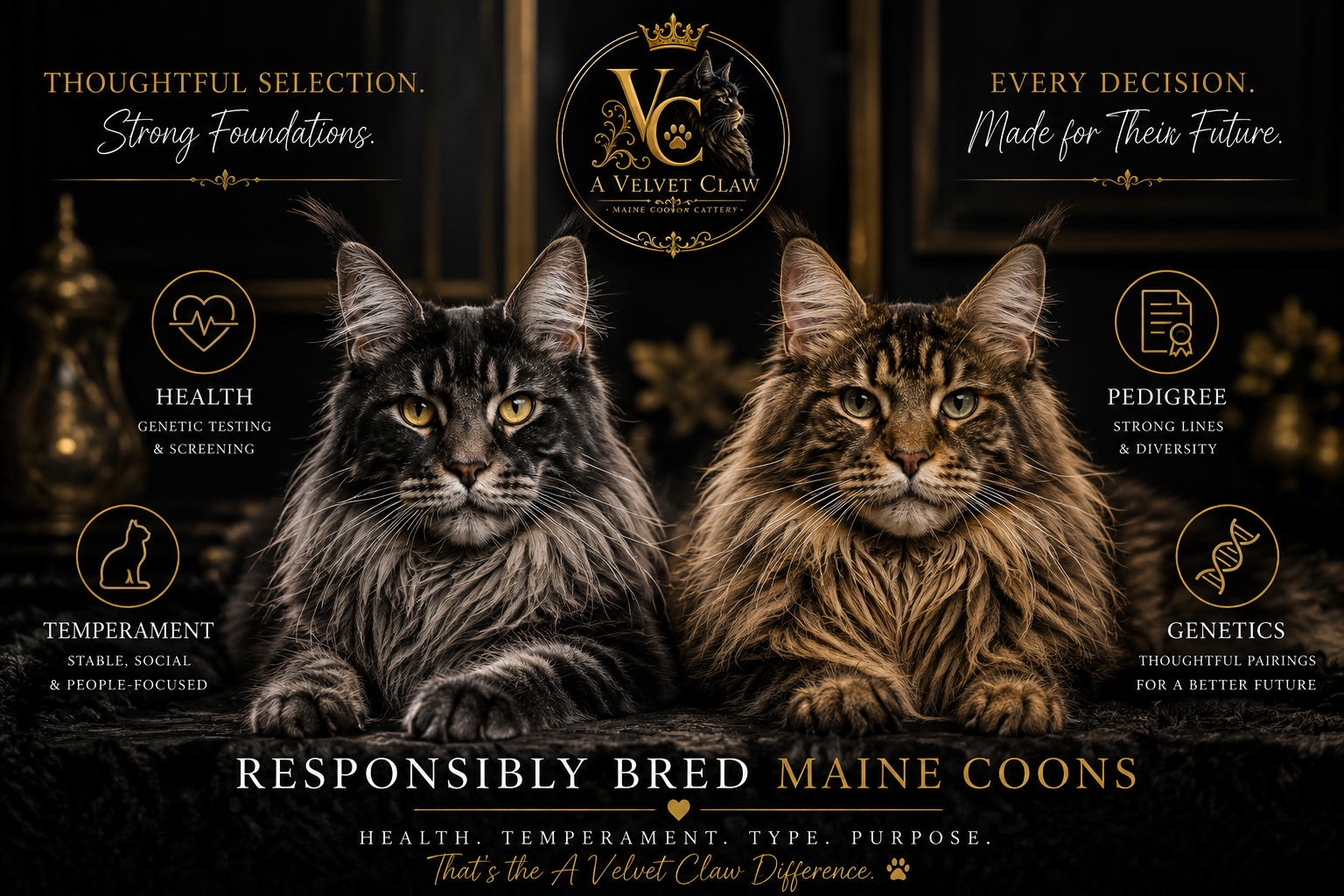
As we discussed in our previous blog, health testing cannot guarantee that every kitten will remain perfectly healthy throughout its life. But that doesn't make testing any less important. Responsible breeders use the health screening tools available to them to make more informed breeding decisions and reduce known risks.
For Maine Coons, this may include genetic screening for breed-associated conditions, cardiac screening, hip evaluations, blood typing, infectious disease testing, and other veterinary testing appropriate for the breeding program. But responsible health testing isn't about collecting certificates to advertise on a website.
It's about actually using the results when making breeding decisions. Testing gives us information. Responsible breeding is what we do with that information.
3. A Pedigree Is More Than a Fancy Family Tree
Pedigrees aren't simply pieces of paper showing that a kitten is “purebred.” For a breeder, a pedigree can be a valuable tool. It allows us to study generations behind a cat and better understand the lines we're combining.
A thoughtful breeder may consider:
Which cats appear repeatedly
How closely related two cats are
Health information within the lines
Longevity
Temperament
Physical traits
Previous offspring
Genetic diversity
Responsible breeding means thinking beyond the two cats standing in front of you. Sometimes you're making decisions based on generations of cats you'll never personally meet.
4. Temperament Matters Too
It's easy to focus on appearance when breeding Maine Coons. After all, they're spectacular cats. Those enormous paws, beautiful coats, tufted ears, long tails and impressive size are part of what makes people fall in love with the breed. But temperament matters just as much.
Most kittens aren't going to spend their lives in show halls or breeding programs. They're going to become someone's family. They'll sleep in beds, meet children, interact with other pets, visit veterinarians, get groomed and become deeply loved members of households.
A responsible breeder considers temperament when choosing breeding cats—not just appearance. A gorgeous Maine Coon with a consistently poor temperament shouldn't automatically be bred simply because it's beautiful.
5. Responsible Breeders Don't Breed Every Cat They Own
This is an important one. Purchasing a cat with breeding rights doesn't mean that cat must eventually reproduce. As a cat grows and develops, new information becomes available. Maybe health testing reveals something unexpected. Maybe structure develops differently than anticipated. Maybe temperament isn't what the breeder hoped for. Maybe another concern appears.
Responsible breeding sometimes means making the disappointing decision not to breed a cat you originally hoped would become part of your program. That isn't failure. That's responsible breeding. The welfare of future kittens has to matter more than the breeder's original plans.
6. Pairings Should Have a Purpose
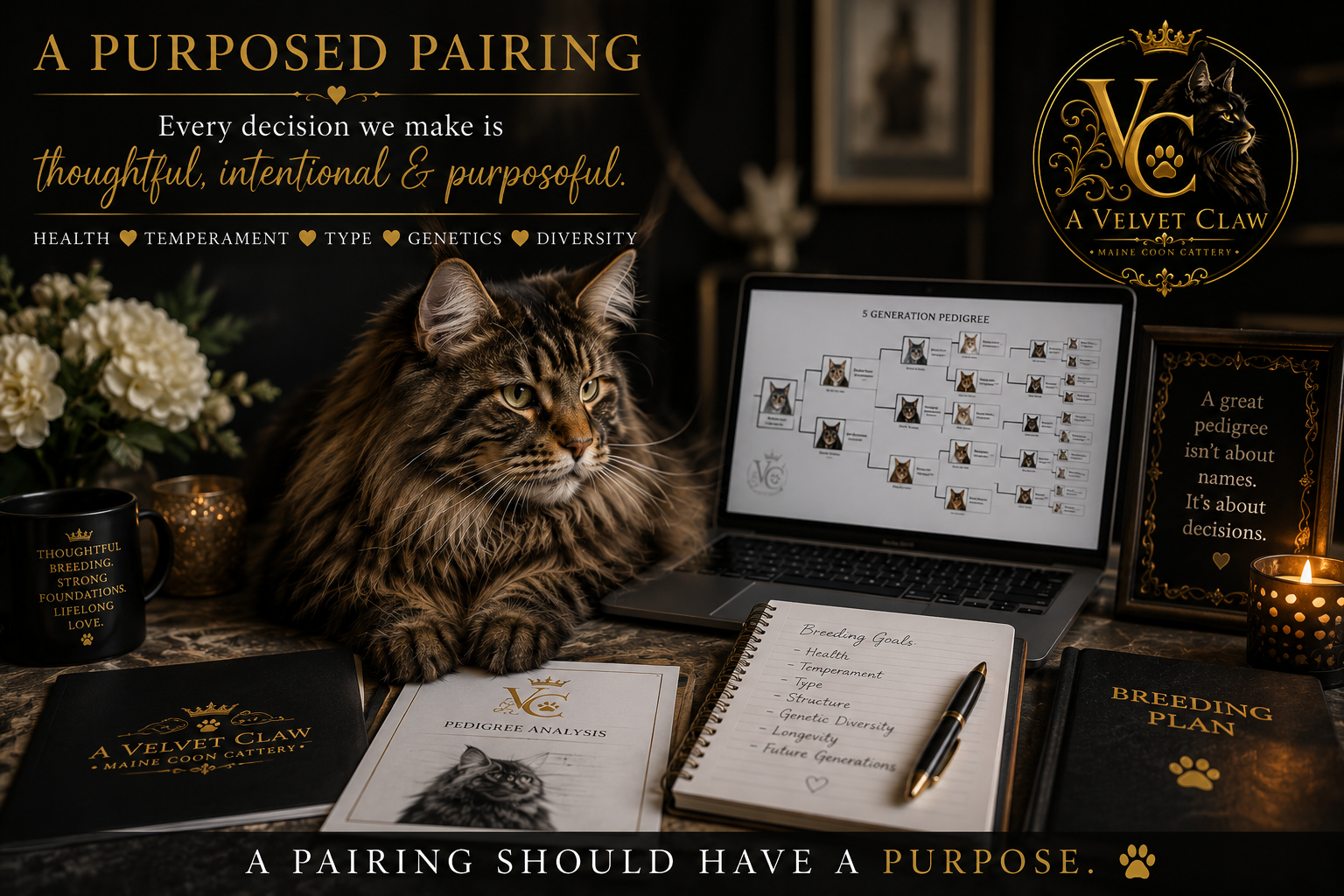
Responsible breeding isn't simply: Male + female = kittens.
There should be thought behind why two particular cats are paired. One cat may have strengths that complement areas where another could improve. A breeder may be considering health history, genetic diversity, temperament, structure, breed characteristics and many other factors.
And sometimes the responsible decision is: These two cats shouldn't be bred together.
Even if both are individually wonderful cats. Good breeding decisions aren't just about choosing good cats. They're about choosing appropriate combinations of cats.
7. Responsible Breeding Includes Pregnancy and Birth
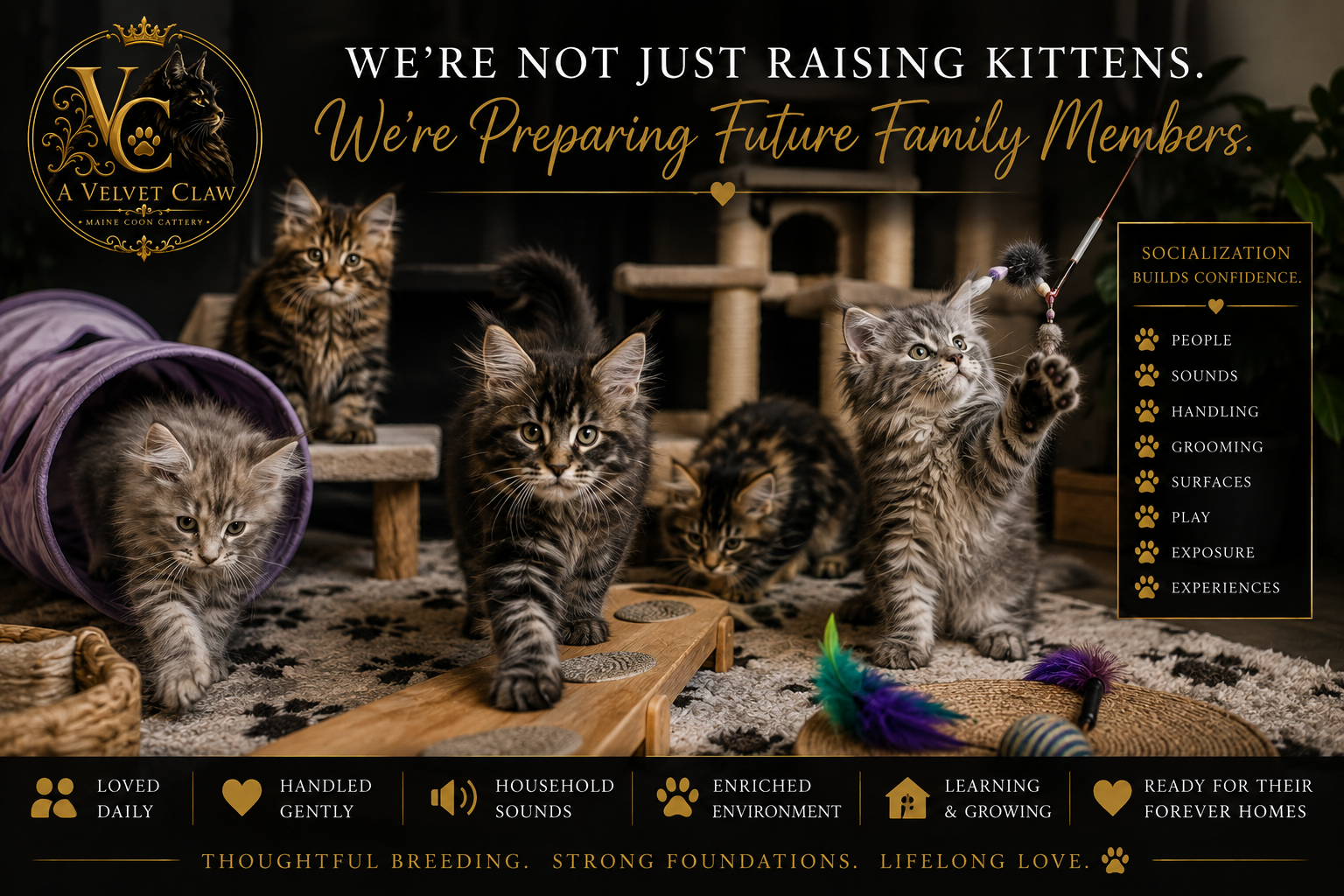
Once a queen becomes pregnant, the breeder's responsibility increases dramatically. She should receive appropriate nutrition, veterinary care when needed, a safe environment and close observation throughout pregnancy. The breeder should also be prepared for things not to go according to plan. Birth can involve emergencies.
A queen may require veterinary assistance or even an emergency C-section. Kittens may need supplemental feeding or round-the-clock care. A responsible breeder doesn't simply hope everything goes smoothly. They prepare for the possibility that it won't.
Breeding means accepting responsibility for Mom and every kitten she brings into the world.
8. Raising Kittens Is About Much More Than Feeding Them
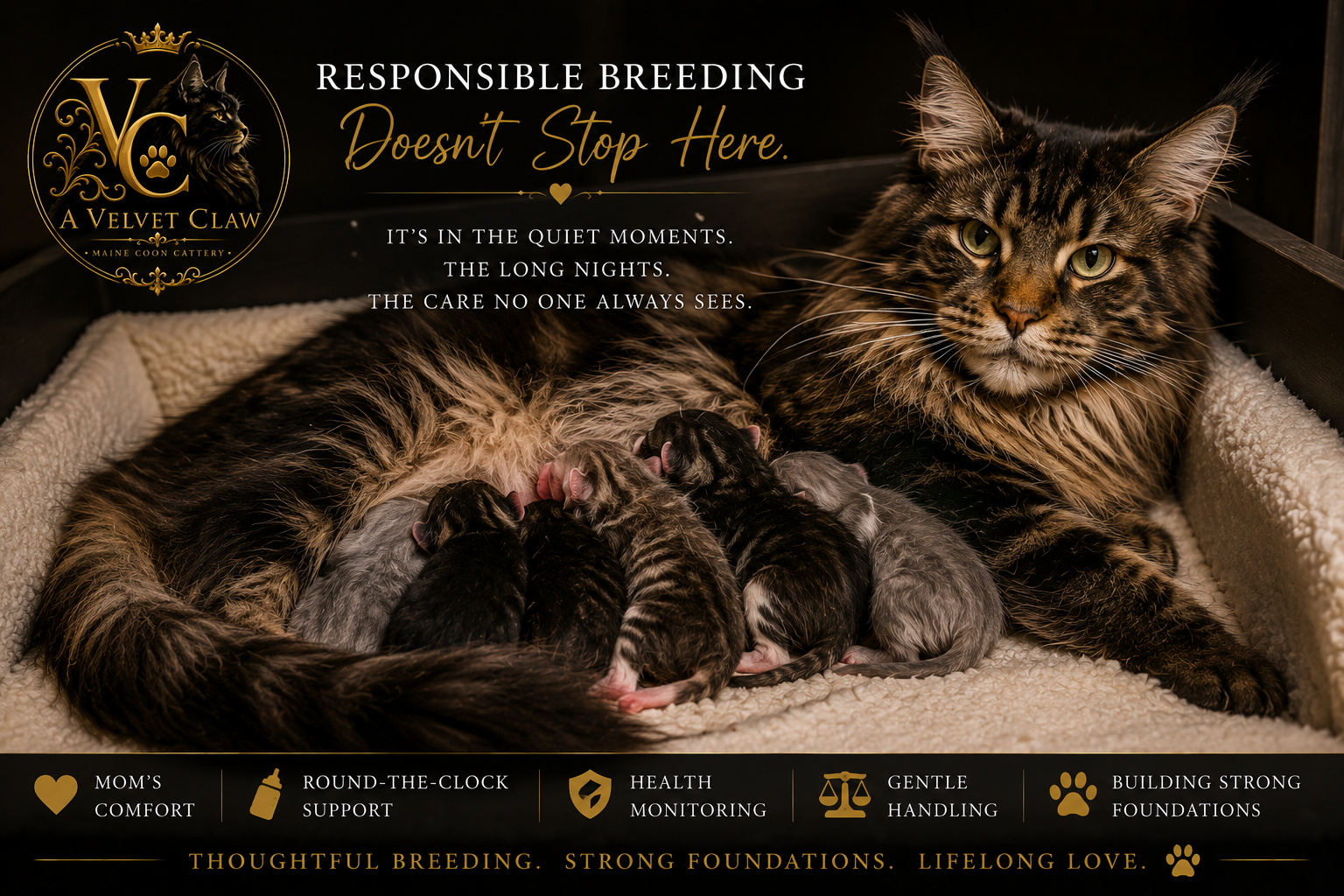
The first weeks of a kitten's life are incredibly important. Yes, kittens need food, clean bedding and veterinary care. But they also need experiences.
Responsible kitten raising may include gradual exposure to:
People
Household sounds
Grooming
Nail trims
Being handled
Different surfaces
Toys
Scratching posts
Carriers
Normal household activity
Appropriate interaction with other cats
These experiences help prepare kittens for life outside the breeder's home. A breeder isn't simply raising kittens until they're old enough to leave. We're helping prepare them to become confident family companions.
9. Responsible Breeders Don't Rush Kittens Out the Door
There's a reason reputable Maine Coon breeders don't send very young kittens home. A kitten may be eating solid food and using the litter box long before it's truly ready to leave its mother and littermates. Those additional weeks provide important opportunities for physical development, social learning and emotional maturity. Kittens continue learning boundaries and appropriate feline behavior from their mother and siblings.
Sending kittens home early might be more convenient. Responsible breeding isn't always about what's convenient. It's about what's best for the kitten.
10. Veterinary Care Doesn't Stop at “They Look Healthy”
Responsible breeders don't simply look at a playful kitten and decide everything must be fine. Depending on age and the breeder's protocols, kittens may receive veterinary examinations, vaccinations, parasite screening or treatment, microchipping and other preventative care before leaving.
Health records should go home with the kitten's family. And families should understand what veterinary care comes next. The breeder's job isn't simply to hand over a kitten. Part of the job is helping create a smooth transition into lifelong responsible ownership.
11. Choosing Families Is Part of Responsible Breeding
Not every home is right for every kitten. And that's okay. Responsible breeders aren't simply looking for the first person willing to send a deposit. They want to know where their kittens are going.
That may mean asking questions about:
Other pets
Children
Lifestyle
Indoor living
Veterinary care
Expectations about the breed
Plans for the kitten
Understanding of grooming and maintenance
This isn't about judging whether someone has a “perfect” home. It's about making sure expectations match reality and trying to create successful lifelong placements.
12. A Contract Protects More Than the Breeder
Some people hear “breeder contract” and immediately assume it's designed only to protect the breeder. A thoughtful contract should also protect the kitten and the buyer.
It can clearly explain expectations regarding health, veterinary care, breeding rights, spay/neuter requirements when applicable, registration, returns and other responsibilities. Most importantly, everyone knows what they're agreeing to before the kitten goes home.
Clear expectations prevent misunderstandings later.
13. Responsible Breeding Doesn't End at Pickup Day
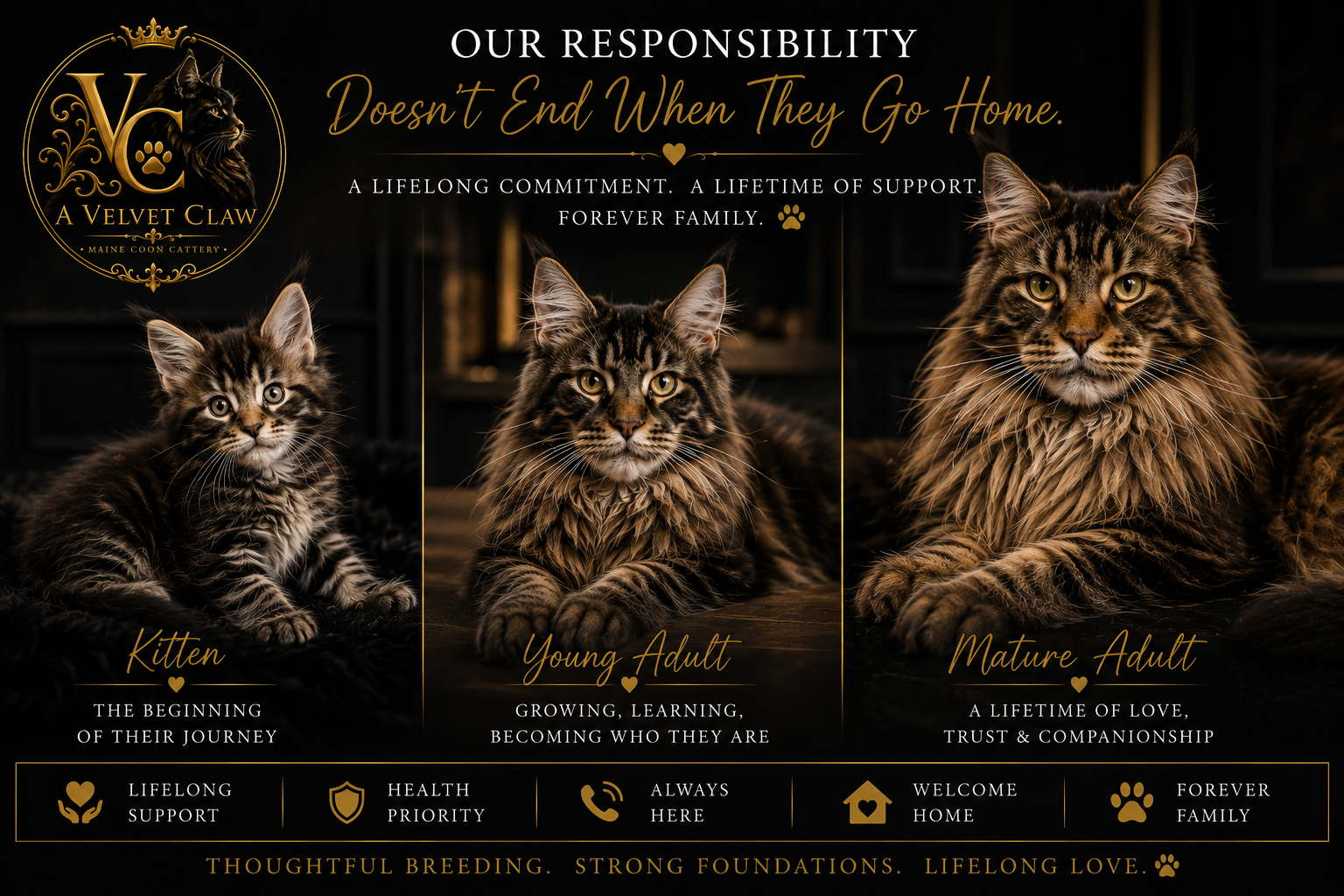
This may be one of the biggest differences between simply producing kittens and responsibly breeding them. When one of our kittens leaves for its new home, our interest in that kitten doesn't disappear. Responsible breeders want updates. We want to know how they're growing. We want families to contact us when they have questions.
And importantly, we want to know if significant health concerns develop later in life. Why? Because that information may help us make future breeding decisions. Every kitten teaches us something about the lines we're working with.
14. Responsible Breeders Take Responsibility When Something Goes Wrong
Breeding living animals means eventually facing situations you wish had never happened. A kitten may develop a health condition. A placement may not work out. A family may experience circumstances that make keeping their cat impossible. A breeding cat may produce something unexpected.
Responsible breeding isn't defined by never having a problem. That's impossible. It's defined partly by how a breeder responds when a problem happens. Do they communicate? Do they listen? Do they document what happened? Do they consider whether it changes future breeding decisions? Do they stand behind the responsibilities outlined in their contract?
Problems aren't always preventable. How they're handled matters.
15. Responsible Breeders Continue Learning
There is no point where a breeder knows everything. Veterinary medicine changes. Genetic research advances. New health information becomes available. Breeding lines evolve. Recommendations change. And sometimes experience teaches lessons no textbook ever could.
Responsible breeders continue learning, asking questions, working with veterinarians, communicating with other breeders and adjusting their programs when better information becomes available. Being responsible doesn't mean knowing everything. It means being willing to keep learning.
Responsible Breeding Is About the Cats First
Beautiful kittens are certainly one of the joys of breeding Maine Coons. But responsible breeding is about much more than producing adorable kittens. It's about the queen before she's pregnant. It's about the sire chosen for her. It's about generations represented in their pedigrees. It's about health testing and veterinary care. It's about sitting beside a queen during labor. It's about sleepless nights when a kitten needs extra help.
It's about socialization, nutrition, cleaning, paperwork, records and difficult decisions. It's about carefully choosing homes. And it's about still caring what happens to that kitten years after it leaves.
So, What Does “Responsibly Bred” Actually Mean?
It doesn't mean perfectly bred. It doesn't mean nothing will ever go wrong. And it certainly doesn't mean a breeder can guarantee the future.
It means making thoughtful, informed decisions with the information available—and putting the welfare of the cats ahead of convenience, money or pride.
At A Velvet Claw, that's what responsible breeding means to us:
Health. Temperament. Transparency. Education. Accountability. And a lifelong commitment to the cats we bring into this world. 🖤💛🐾
Fur - ever grateful: Lexie & Melina
Responsible Maine Coon breeding • responsibly bred Maine Coon • ethical Maine Coon breeding •
Maine Coon breeding program • Maine Coon health testing • Maine Coon pedigrees