
A Velvet Claw Maine Coon Cattery | Extraordinary Cats. Brighter Tomorrows. | FELINE DENTAL HEALTH WEEK 🧷
🦷 Common Dental Problems in Maine Coons: What Every Owner Should Know
Your Maine Coon may look perfectly healthy, eat normally, and still be experiencing dental discomfort.
Cats are remarkably good at hiding pain.
In the wild, showing weakness can make an animal vulnerable. While our beloved house cats live much safer lives, they may still display surprisingly subtle signs of illness or discomfort.
This is especially important when it comes to dental health.
At A Velvet Claw Maine Coon Cattery, we believe understanding common feline dental problems is an important part of responsible cat ownership.
Today, we’re discussing five oral health conditions every Maine Coon owner should recognize, the warning signs to watch for, and when veterinary attention is necessary.
Because sometimes the most important health problems are the ones we cannot easily see.
🐾 1. Gingivitis: When the Gums Become Inflamed
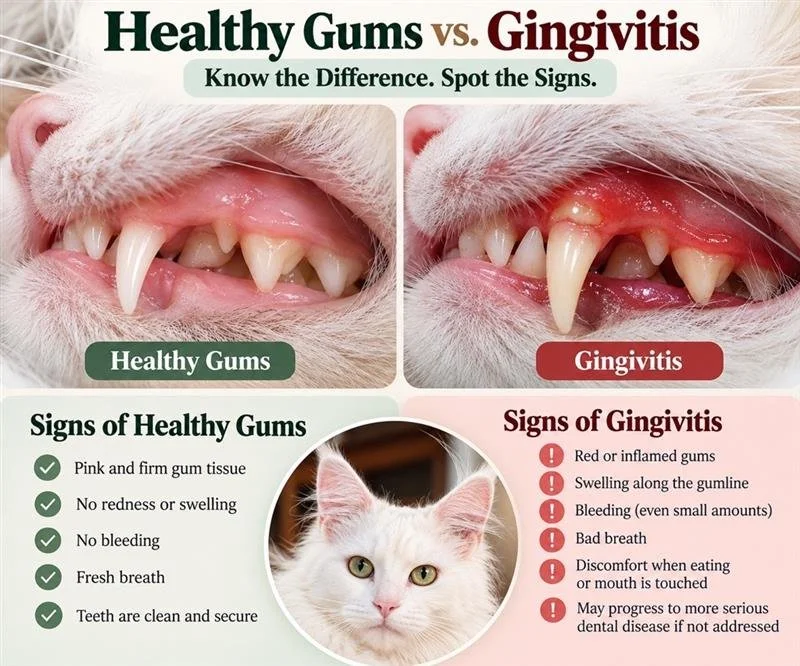
Gingivitis is inflammation of the gums surrounding the teeth.
It is one of the most common oral health problems in cats.
What causes gingivitis?
In many cases, gingivitis develops when plaque accumulates along the gumline.
Plaque contains bacteria that can trigger inflammation in the surrounding gum tissue.
As inflammation progresses, the gums may become red, swollen, or sensitive.
Signs to watch for
Redness along the gumline
Swollen or tender gums
Bad breath
Bleeding around the gums
Reluctance to have the mouth touched
Can gingivitis be treated?
Yes!
When gingivitis is caused by plaque accumulation and is identified early, it may improve with appropriate veterinary dental treatment and ongoing plaque control.
However, gingivitis can also occur alongside more complicated conditions, so a veterinary examination is important.
Our takeaway: Healthy gums should not appear persistently red, swollen, or painful.
🦷 2. Periodontal Disease: More Than Just Bad Breath
Periodontal disease affects the structures supporting the teeth, including the gums, periodontal ligament, and surrounding bone.
It often begins with plaque-associated gingivitis.
When inflammation progresses and damages the tissues supporting the teeth, periodontal disease can become irreversible.
Why is it serious?
Advanced periodontal disease may lead to:
Chronic oral pain
Gum recession
Loss of supporting bone
Loose teeth
Tooth loss
Oral infection
One of the challenges with periodontal disease is that much of the damage may occur beneath the gumline.
A cat’s teeth can appear relatively normal from the outside while problems are developing underneath.
Veterinarians may recommend dental X-rays under anesthesia to evaluate the roots and supporting structures.
Can brushing prevent periodontal disease?
Regular brushing can help reduce plaque accumulation and lower the risk of plaque-associated dental disease.
However, brushing cannot reverse advanced periodontal destruction or remove hardened tartar beneath the gumline.
Professional veterinary treatment may be necessary.
Our takeaway: Persistent bad breath is not something cat owners should automatically dismiss as normal.
🐱 3. Tooth Resorption: A Painful Condition That Can Be Difficult to Spot
Tooth resorption is an important dental condition that every cat owner should know about.
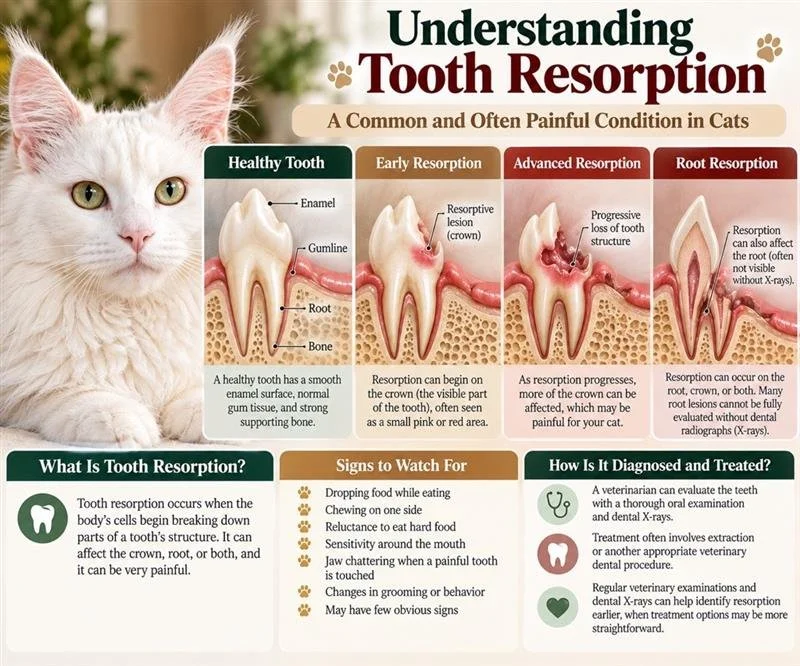
It occurs when the body’s cells begin breaking down parts of a tooth’s structure.
The process can affect the crown, root, or both.
And unfortunately, it can be extremely painful.
What causes tooth resorption?
The exact causes are not fully understood.
It is a common condition in domestic cats and is not limited to Maine Coons.
What might you notice?
Some cats show signs such as:
Dropping food while eating
Chewing on one side
Reluctance to eat hard food
Jaw chattering when a painful tooth is touched
Sensitivity around the mouth
Changes in grooming or behavior
Other cats show few obvious symptoms.
In some cases, a small area of red tissue may appear where part of the tooth crown has been damaged.
However, many lesions cannot be fully evaluated without dental radiographs.
How is tooth resorption treated?
Treatment depends on the type and extent of the resorption, as determined by a veterinarian using an oral examination and dental X-rays.
Affected teeth frequently require extraction or another appropriate veterinary dental procedure.
Toothbrushing and dental treats cannot repair a tooth damaged by resorption.
Our takeaway: A cat that continues eating can still have painful tooth resorption.
❤️ 4. Feline Chronic Gingivostomatitis: When Inflammation Becomes Severe
Feline chronic gingivostomatitis, sometimes shortened to FCGS, is a serious inflammatory condition affecting tissues inside the mouth.
Unlike uncomplicated gingivitis, which primarily affects the gums near the teeth, gingivostomatitis can involve widespread, painful inflammation of the oral tissues.
What does it look like?
Cats with this condition may experience:
Severe redness and inflammation
Significant mouth pain
Difficulty eating
Excessive drooling
Bad breath
Weight loss
Reduced grooming
Withdrawal or behavioral changes
Some cats may approach their food because they’re hungry but then hesitate to eat because their mouth hurts.
Are Maine Coons more likely to develop it?
Gingivostomatitis has been reported in Maine Coons, and some veterinary literature has discussed possible breed predispositions.
However, it can affect cats of many breeds, and an individual Maine Coon should not be assumed to have the condition simply because of its breed.
The causes are complex and may involve an abnormal immune response to oral plaque and associations with certain viral infections.
How is it treated?
Treatment requires veterinary care.
Depending on the individual cat, treatment may involve pain management, evaluation for underlying conditions, and dental extractions.
Some cats improve significantly after extraction of affected teeth, although additional medical management may be necessary.
Our takeaway: Severe mouth inflammation is not something to manage with home remedies.
👑 5. Fractured Teeth: An Injury You Might Not Notice
Cats can fracture teeth through trauma, falls, chewing hard objects, or other accidents.
A fractured tooth may expose sensitive internal structures.
Some fractures are obvious, while others are difficult to identify without a close examination.
Warning signs include
A visibly chipped or broken tooth
A dark or pink spot on a fractured tooth
Sensitivity when eating
Changes in chewing behavior
Swelling near the mouth
Reluctance to have the face touched
If the inner pulp is exposed, bacteria may enter the tooth and contribute to infection.
Treatment may include extraction or other veterinary dental procedures, depending on the damage.
Our takeaway: Even a seemingly small tooth fracture deserves veterinary attention.
🐈 Why Dental Problems Can Be Hard to Recognize
One of the biggest misconceptions about feline dental disease is that a cat will simply stop eating if something hurts.
Unfortunately, that isn’t always true.
Cats may continue eating despite significant oral pain.
Instead of refusing food completely, they may make small adjustments that are easy to miss.
For example, your Maine Coon might:
Begin chewing more slowly
Swallow kibble without chewing much
Prefer softer foods
Drop pieces of food
Groom less frequently
Become quieter or less playful
Pull away when you touch their face
Some cats show almost no outward signs at all.
That’s why routine veterinary oral examinations are so valuable.
🩺 When Should You Call Your Veterinarian?
Schedule a veterinary appointment if you notice persistent bad breath, red gums, drooling, changes in eating habits, visible tooth damage, or discomfort around your cat’s mouth.
Seek prompt veterinary care if your cat appears to be in significant pain, has facial swelling, or is struggling to eat.
If your cat stops eating entirely, contact your veterinarian the same day. Cats can develop serious complications when they go without adequate food.
Do not attempt to scrape tartar from your cat’s teeth, pull a loose tooth, or treat a suspected dental infection at home.
Never give human pain medication unless specifically directed by your veterinarian. Many common human pain relievers are toxic to cats.
🪥 Can Dental Problems Be Prevented?
Not every dental condition is preventable.
For example, the causes of tooth resorption and feline chronic gingivostomatitis are complex, and brushing cannot guarantee that these conditions will never develop.
However, good preventive care can help reduce plaque-associated dental disease and identify problems earlier.
A strong dental care routine includes:
1. Daily toothbrushing when tolerated. Use cat-safe toothpaste and a gentle, appropriate brushing tool.
2. Regular veterinary examinations. Your veterinarian can recommend an examination schedule based on your cat’s age and individual risk factors.
3. Professional dental care when indicated. Dental procedures under anesthesia allow for thorough examination, cleaning, and dental radiographs when appropriate.
4. Evidence-supported dental products. Look for products accepted by the Veterinary Oral Health Council (VOHC) for cats.
5. Paying attention to behavioral changes. Small changes in eating, grooming, and temperament can be important clues.
💛 What We Want Every Maine Coon Owner to Remember
Our Maine Coons depend on us to recognize when something isn’t right.
They cannot tell us that a tooth aches or that their gums hurt.
But by understanding common dental conditions, watching for subtle warning signs, and maintaining regular veterinary care, we can help protect their comfort and quality of life.
At A Velvet Claw Maine Coon Cattery, we believe responsible breeding and ownership extend far beyond appearance, size, or pedigree.
They involve lifelong education, thoughtful care, and a commitment to the well-being of every cat.
Because a healthy Maine Coon isn’t just a beautiful cat. It’s a cat whose comfort and well-being come first.
🐾 Coming Up Tomorrow!
Does dental care change as cats get older?
Absolutely!
Tomorrow, we’re exploring Dental Care for Kittens vs. Senior Cats: What Changes With Age?
We’ll discuss kitten teething, introducing brushing early, adult dental maintenance, and the special considerations that come with caring for senior cats.
💬 We’d Love to Hear From You!
Has your cat ever experienced a dental problem that was difficult to recognize?
What warning signs did you notice?
Share your experience with our community. Your story might help another cat owner recognize a problem sooner.
Extraordinary Cats. Brighter Tomorrows.
A Velvet Claw Maine Coon Cattery
www.avelvetclaw.com
Educational Disclaimer: This article provides general feline health information and is not a substitute for professional veterinary diagnosis or treatment. Contact your veterinarian if you suspect your cat has dental disease or oral pain.
A Velvet Claw | Trust, Care, Delivery - Book Now
Premium Maine Coon breeding and first-class pet transportation services across the USA. Trust our expert team for safe, comfortable kitten delivery and travel care.