
A Velvet Claw Maine Coon Cattery | Extraordinary Cats. Brighter Tomorrows. | FELINE DENTAL HEALTH WEEK 🧷
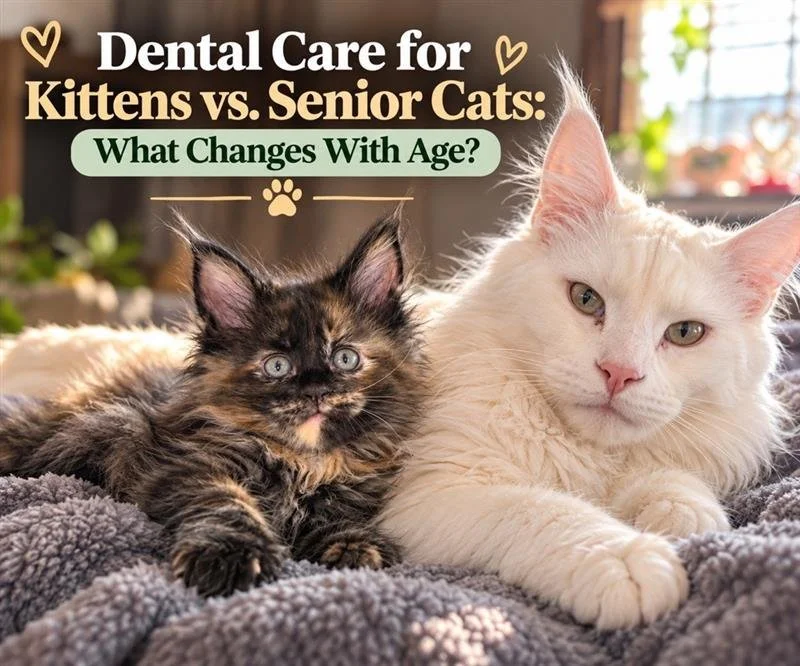
🦷 Dental Care for Kittens vs. Senior Cats: What Changes With Age?
From tiny kitten teeth to the dental needs of our beloved senior companions, every stage of a cat’s life deserves special attention.
Have you ever wondered whether your kitten needs dental care before their adult teeth come in?
Or whether an older cat can still benefit from having their teeth brushed?
The answer to both questions is yes!
But the approach may look a little different depending on your cat’s age, comfort level, and overall oral health.
At A Velvet Claw Maine Coon Cattery, we believe that responsible cat ownership means preparing for every stage of our feline companions’ lives—not just the adorable kitten months.
Today, we’re exploring how dental care changes as cats grow and age, what to watch for along the way, and how to build healthy habits that can last a lifetime.

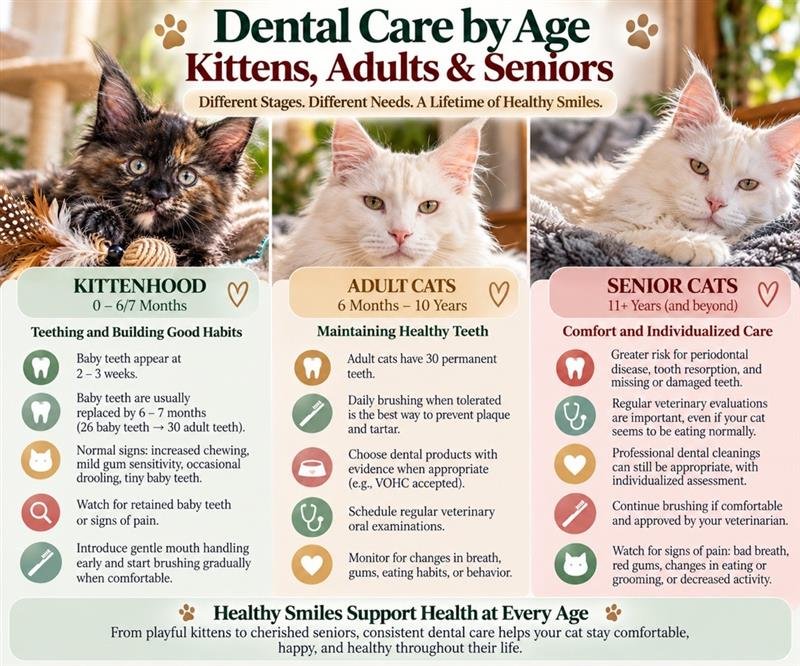
🐾 Stage 1: Kittenhood — Building the Foundation for Healthy Teeth
Kittens are born without visible teeth.
Their baby teeth, also called deciduous teeth, typically begin appearing around two to three weeks of age.
By approximately six to eight weeks, most kittens have their complete set of 26 baby teeth.
And just like human children, kittens eventually lose those baby teeth as their permanent teeth develop.
When do kittens start teething?
Most kittens begin losing their baby teeth around three to four months of age.
Their adult teeth generally finish coming in by approximately six to seven months.
Adult cats normally have 30 permanent teeth.
During this transition, you might notice:
Increased interest in chewing
Mild gum sensitivity
Occasional temporary changes in eating habits
A tiny baby tooth on the floor or in a toy
Slightly increased drooling
Many kittens swallow their baby teeth without any problems, so don’t be surprised if you never find one!
What should you watch for?
Although mild discomfort can accompany teething, significant pain, persistent bleeding, facial swelling, or refusal to eat is not something to dismiss as normal.
Another issue to watch for is a retained baby tooth.
This happens when a permanent tooth erupts while the corresponding baby tooth remains in place.
Retained teeth can contribute to crowding and plaque accumulation.
If you notice two teeth occupying the same position, have your veterinarian examine your kitten’s mouth.
🪥 When Should You Start Brushing a Kitten’s Teeth?
One of the best things you can do during kittenhood is introduce positive experiences with gentle mouth handling.
You don’t need to immediately begin brushing every tooth.
Instead, start by helping your kitten become comfortable with the process.
Step 1: Gently touch your kitten’s cheeks and reward calm behavior.
Step 2: Practice briefly lifting the lip to look at the teeth.
Step 3: Introduce a tiny amount of cat-safe toothpaste.
Step 4: When your kitten is comfortable and their mouth isn’t sore from teething, gradually introduce a soft, appropriately sized brushing tool.
Step 5: Slowly work toward a consistent daily routine.
Soft silicone finger brushes may be an option for some cats, while small, soft-bristled feline toothbrushes can be more effective at reaching certain tooth surfaces. Choose a tool that fits comfortably and that your kitten tolerates.
Never force brushing or continue if your kitten shows pain or distress.
Our recommendation: Think of kittenhood as the time to establish trust and familiarity. Positive experiences now can make future dental care much easier.
🐈 Stage 2: Young Adult Cats — Establishing Consistency
Once your cat has their permanent teeth, dental care becomes an important part of their everyday routine.
For Maine Coons, this stage is particularly interesting because the breed continues developing physically for several years.
However, even though Maine Coons mature slowly in overall body size, their permanent teeth generally emerge on a timeline similar to that of other domestic cats.
What should dental care look like?
A healthy adult dental routine should include:
Daily brushing when tolerated
Cat-safe toothpaste
Routine veterinary oral examinations
Evidence-supported dental products when appropriate
Monitoring for changes in breath, gums, and eating habits
Plaque forms continuously on teeth.
Without effective removal, it can contribute to tartar accumulation, gingivitis, and periodontal disease.
That’s why consistency matters.
Does ordinary dry food clean a cat’s teeth?
Not reliably.
While some specially formulated dental diets have demonstrated oral health benefits, ordinary dry kibble should not be considered a substitute for brushing or veterinary dental care.
If you’re interested in dental diets or treats, look for products accepted by the Veterinary Oral Health Council (VOHC) for cats.
You can explore accepted products at www.vohc.org.
❤️ Stage 3: Mature Adult Cats — Paying Attention to Subtle Changes
As cats reach middle age, dental problems may become more noticeable.
Years of plaque accumulation, gum inflammation, or other dental conditions can begin affecting comfort.
But remember: Dental disease is not an inevitable or acceptable part of aging.
A cat should not have to live with chronic mouth pain simply because they’re getting older.
Signs to watch for
Persistent bad breath
Redness along the gumline
Visible tartar
Changes in chewing
Dropping food
Increased sensitivity around the face
Reduced grooming
Changes in behavior or appetite
Some cats continue eating normally despite significant dental disease.
This makes regular veterinary examinations especially valuable.
Your veterinarian may recommend professional dental cleaning, dental radiographs, or other treatment based on your cat’s individual findings.
👑 Stage 4: Senior Cats — Comfort Becomes Especially Important
Senior cats deserve the same commitment to dental health as younger cats.
In fact, oral health can become even more important as cats age because untreated dental problems may interfere with eating, grooming, and overall comfort.
Cats are often considered seniors beginning around 11 years of age, although individual aging varies.
What changes with senior dental care?
Older cats may have:
Long-standing periodontal disease
Missing or damaged teeth
Tooth resorption
Sensitive or inflamed gums
Medical conditions that affect dental treatment planning
These concerns make individualized veterinary care especially important.
Can senior cats still have their teeth brushed?
Absolutely—provided their mouths are healthy enough for brushing and they tolerate the process.
However, if your senior cat has never had a dental examination or shows signs of oral pain, schedule a veterinary assessment before introducing brushing.
Trying to brush painful teeth can make the experience uncomfortable and may discourage future cooperation.
Are professional dental cleanings safe for older cats?
Age alone does not automatically make anesthesia inappropriate.
Veterinarians evaluate each cat’s overall health, medical history, and individual risks before recommending anesthetized dental procedures.
Senior cats may need additional pre-anesthetic testing or individualized monitoring.
If you’re concerned about anesthesia, discuss the risks and benefits with your veterinarian rather than assuming your older cat cannot receive dental treatment.
Our recommendation: Focus on maintaining comfort, identifying problems early, and developing a dental care plan appropriate for your senior cat’s health.
🦷 Dental Care at Every Age: What’s Different?
Life Stage
Main Dental Focus
What Owners Should Do
Kitten
Teething and positive introduction
Gentle mouth handling, monitor tooth eruption, introduce brushing gradually
Young Adult
Plaque prevention
Establish consistent brushing and routine veterinary examinations
Mature Adult
Early detection
Watch for gum inflammation, tartar, and subtle behavior changes
Senior
Comfort and individualized care
Address painful conditions, continue tolerated home care, and follow veterinary recommendations
🐱 What If Your Cat Has Already Lost Teeth?
Some cats lose teeth because of dental disease, injury, or necessary veterinary extractions.
Fortunately, many cats adapt remarkably well after painful teeth are treated or removed.
Some can even continue eating dry food comfortably after multiple extractions.
However, their feeding needs and oral care routine should be guided by their veterinarian.
Missing teeth do not automatically mean a cat has a poor quality of life.
In many cases, removing painful or diseased teeth can significantly improve comfort.
The goal is not simply to keep every tooth. The goal is to maintain a healthy, comfortable mouth.

💛 Five Lifelong Dental Care Habits Every Cat Owner Should Know
1. Start positive dental handling early.
Kittens can learn that having their mouth gently examined is a normal, safe experience.
2. Make dental care consistent.
Daily brushing, when appropriate and tolerated, is one of the most effective ways to reduce plaque at home.
3. Never ignore persistent bad breath.
Ongoing unpleasant breath may be a sign of dental disease or another health concern.
4. Don’t assume older cats are supposed to have bad teeth.
Dental pain deserves attention at every age.
5. Work with your veterinarian.
Professional examinations and treatment are essential parts of lifelong dental care.
🐾 Why This Matters to Us at A Velvet Claw
When someone welcomes a Maine Coon kitten into their family, they’re beginning a relationship that will hopefully last many wonderful years.
That kitten will grow.
Their personality will develop.
Their beautiful coat will change.
And eventually, the playful kitten who once chased everything in sight may become a mature companion who prefers quiet afternoons and comfortable places to nap.
Through every stage, their health matters.
At A Velvet Claw Maine Coon Cattery, our goal is to help families feel informed and prepared for the lifelong responsibilities of cat ownership.
Because bringing home a kitten isn’t just about those first exciting months.
It’s about providing thoughtful care for all the years that follow.
Extraordinary care should last an extraordinary lifetime.
🐈 Coming Up Tomorrow: Our Final Day of Dental Health Week!
We’ve learned why dental health matters, how to brush teeth, which dental products have evidence behind them, how to recognize dental problems, and how care changes with age.
Tomorrow, we’re bringing everything together!
Join us for Building a Stress-Free Dental Care Routine: A Simple Plan for Every Cat Owner.
We’ll share an easy routine you can adapt to your own cat, plus a practical checklist to help you stay consistent.
💬 We’d Love to Hear From You!
How old is your cat?
Are you raising a teething kitten, caring for a playful adult, or enjoying life with a beloved senior?
Tell us about your feline companion and what you’ve learned about dental care along the way!
Extraordinary Cats. Brighter Tomorrows.
A Velvet Claw Maine Coon Cattery - Melina & Lexie
Educational Disclaimer: This article provides general feline health education and is not a substitute for professional veterinary advice. Consult your veterinarian about your cat’s individual dental care needs.