
🐾 Why Do Maine Coons Have Such Long Whiskers?
The Fascinating Job Behind Those Magnificent Maine Coon Whiskers
Maine Coons aren't exactly known for doing anything small. Big paws. Big tails. Big ears. Big personalities. And then there are the whiskers.
Those ridiculously long hairs extending from your Maine Coon's face aren't simply there to make them look extra distinguished—although they certainly accomplish that. 😂
Whiskers are specialized sensory hairs that provide cats with valuable information about the world immediately around them. And once you understand what those magnificent whiskers actually do, you may never look at them the same way again.
So let's get up close and personal with one of our favorite Maine Coon features. 🖤🐾
🐱 Whiskers Aren't Just Regular Hair
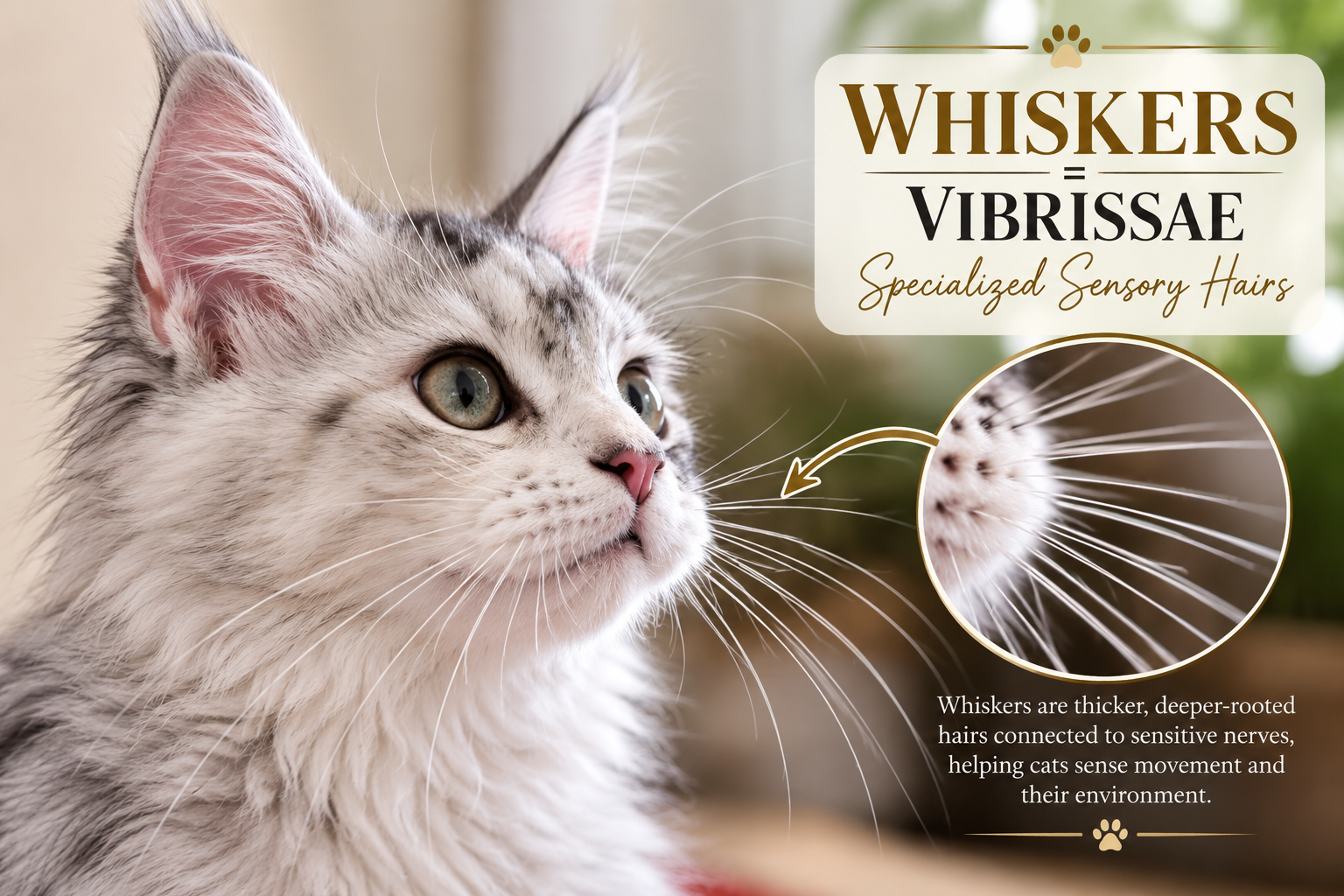
A cat's whiskers are called vibrissae. Although they're made of keratin like ordinary hair, whiskers are thicker and more deeply rooted than the surrounding coat. The follicles are associated with an abundant supply of nerves and blood vessels, making the whisker system highly sensitive.
The whisker itself doesn't contain nerves. Instead, movement of the whisker stimulates sensory structures around the follicle. In other words: The whisker moves—and your cat receives information.
That's a pretty impressive piece of feline equipment.
📏 Why Are Maine Coon Whiskers So Long?
Look closely at a Maine Coon and those whiskers can appear enormous. But Maine Coons are also enormous compared with many domestic cats. Whisker length varies among individual cats, and body size can influence the overall proportions we see. Maine Coons' large heads, broad muzzles and substantial bodies can make their prominent whiskers particularly striking.
However, there isn't a universal rule stating that every Maine Coon will have longer whiskers than every other cat. Just like coats, ears and tails, individual cats vary.
Some simply seem to have won the whisker lottery. 😂
🌬️ Whiskers Help Cats Sense Their Immediate Environment
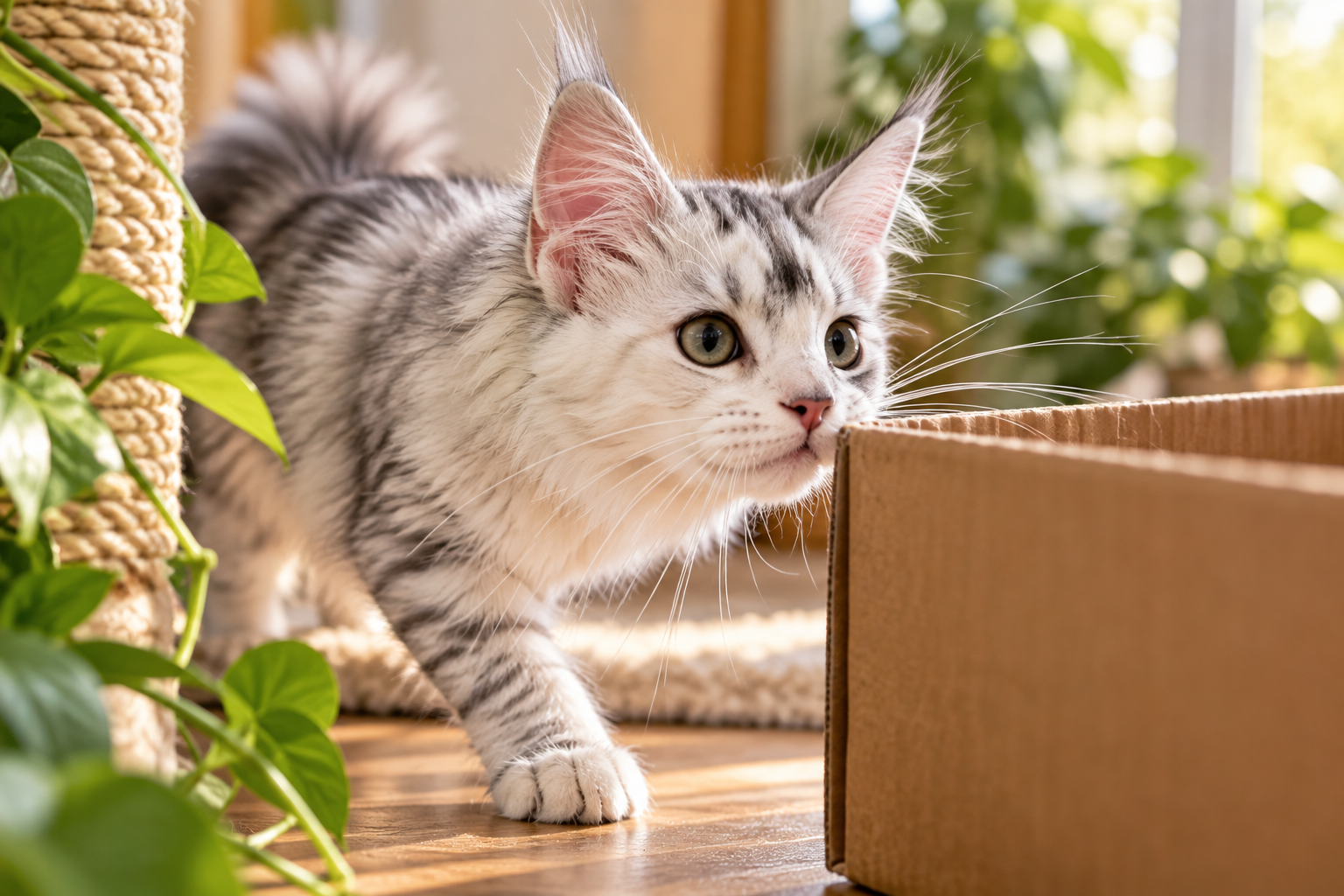
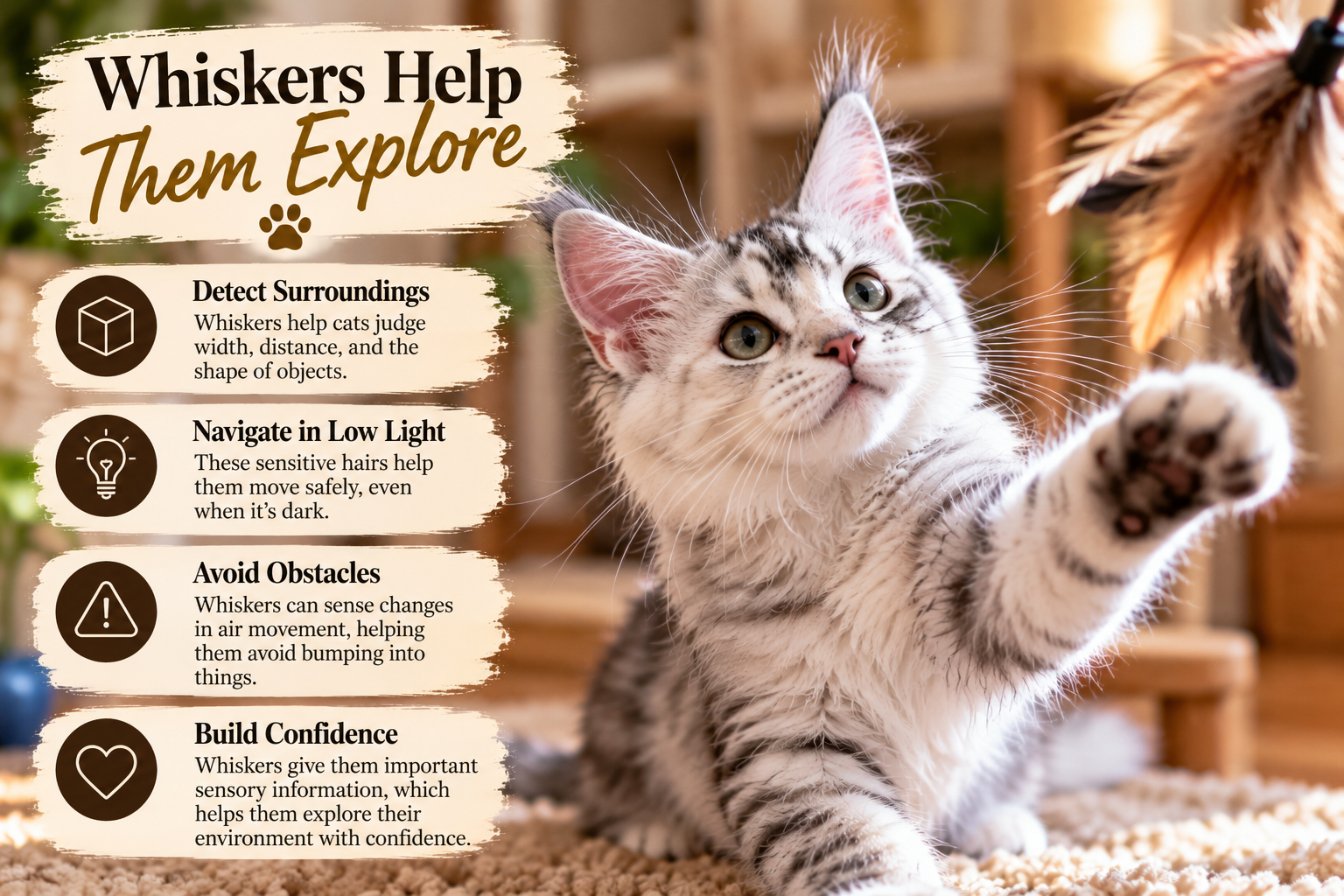
Your Maine Coon doesn't need to physically press their face against something for their whiskers to provide information. Whiskers are extremely sensitive to movement.
When nearby objects disturb the air, whisker movement can contribute sensory information that helps a cat understand what's happening close to its face.
This is particularly useful when navigating spaces where vision alone may not provide all the information they need. Think of whiskers as part of a sophisticated sensory system constantly gathering information about the cat's surroundings.
🌙 Whiskers Can Be Especially Helpful in Low Light
Cats are well adapted to functioning in low-light conditions, but even feline vision has limitations. That's where other senses become incredibly useful. As a cat moves through an environment, whiskers can help provide information about nearby surfaces and obstacles.
So when your Maine Coon confidently strolls through a dim hallway at night while you're trying not to walk into the furniture… They have a few advantages. 😂
Their vision, hearing, smell, memory and whisker-based touch information all work together to help them navigate.
📦 Do Whiskers Tell Cats Whether They'll Fit Through a Space?
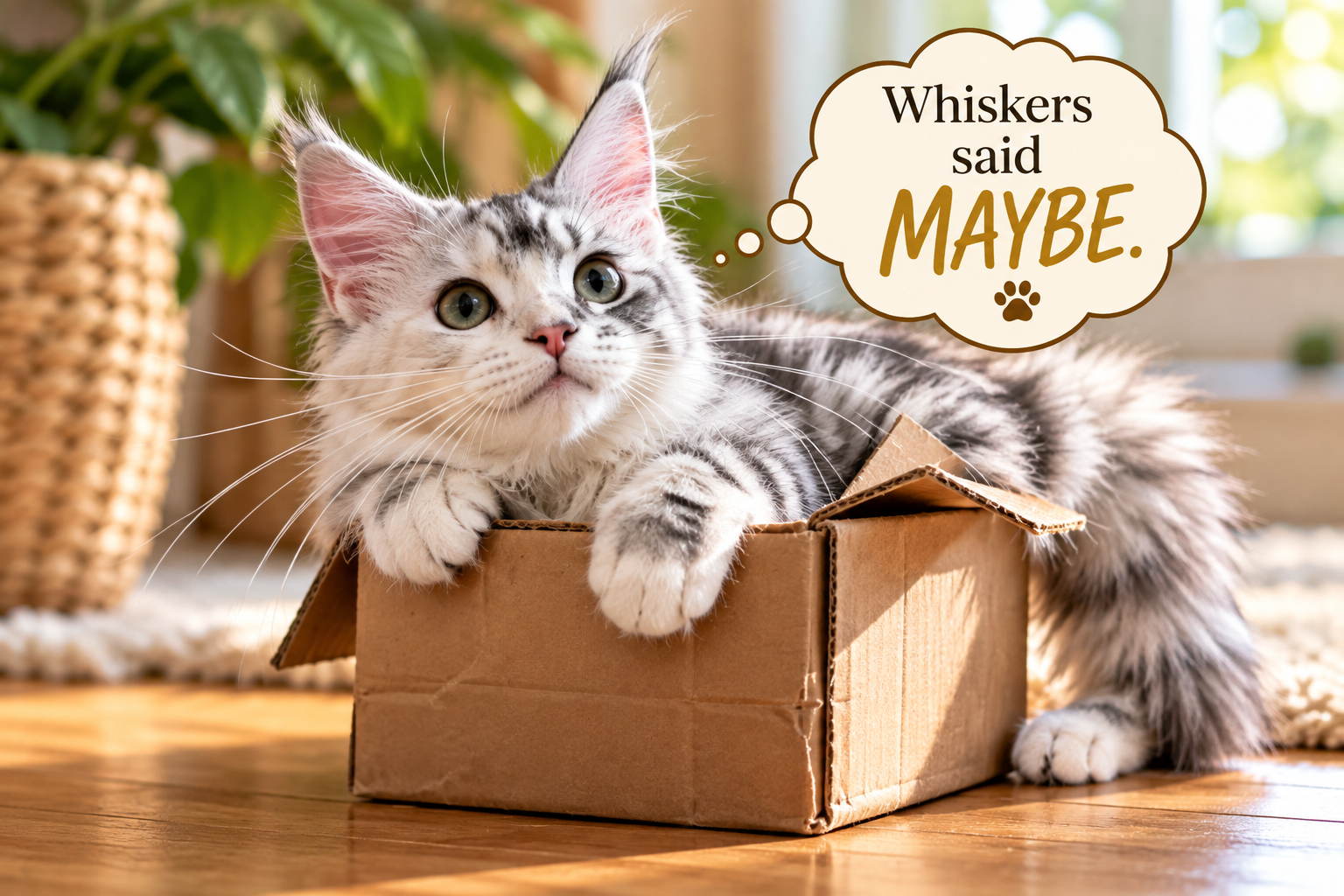
You've probably heard this one: “If a cat's whiskers fit through the opening, the whole cat will fit.” It sounds wonderfully logical. But it's an oversimplification.
Whiskers can certainly help cats gather information about nearby objects and openings, but they aren't a perfect built-in measuring tape for body width. Cats also change body condition. A cat can gain weight without its whiskers suddenly becoming longer to match.
And anyone who has watched a determined cat attempt to squeeze into a cardboard box clearly designed for a hamster knows that feline spatial decision-making can occasionally be… optimistic. 😂
So yes, whiskers provide useful spatial information. But: Whisker width ≠ guaranteed body-width measurement.
👀 Your Maine Coon Has Whiskers in More Places Than You Think
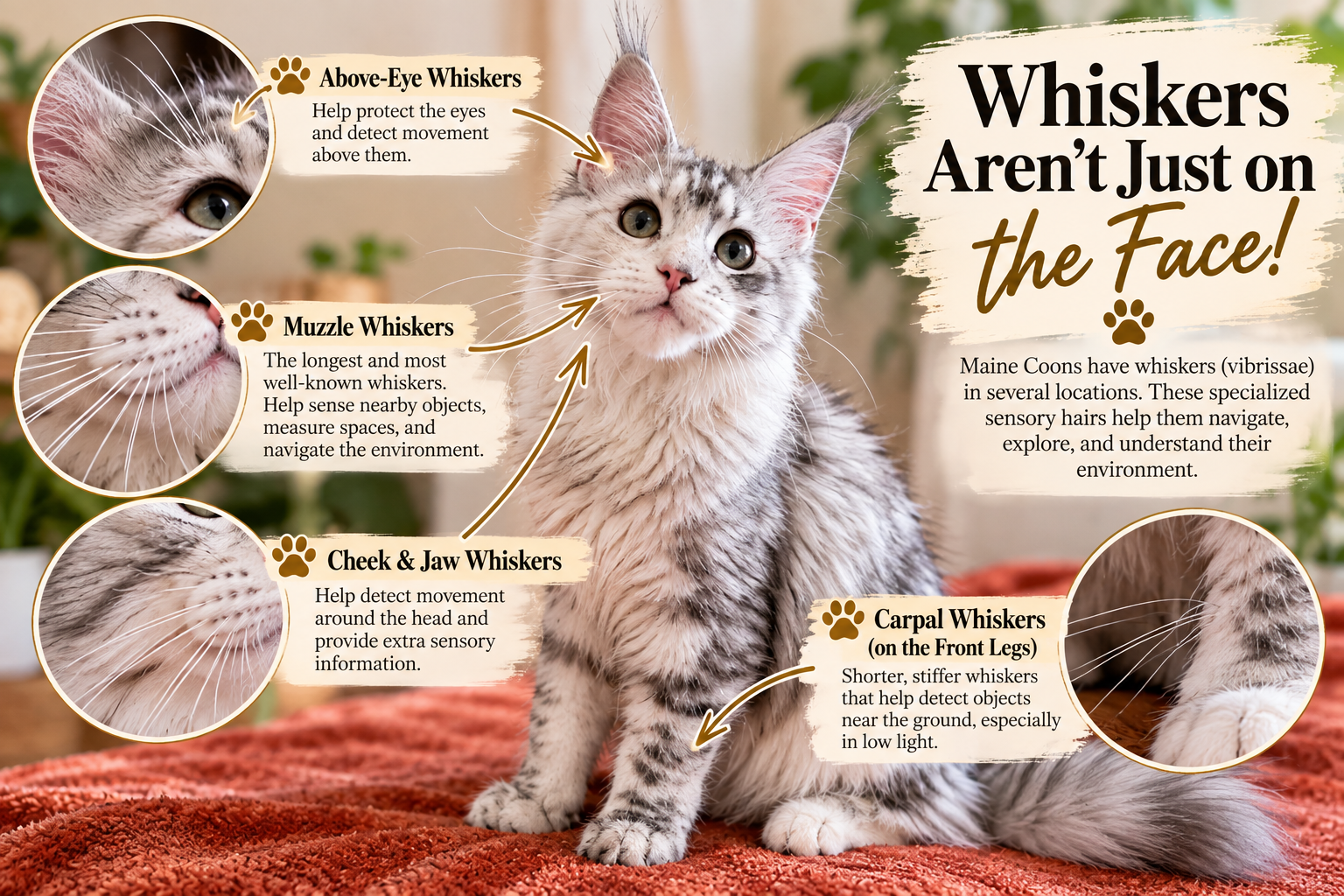
When we say “whiskers,” most people immediately picture the long hairs extending from either side of a cat's muzzle. Those are the most obvious ones. But take a closer look.
Cats have specialized whiskers in several locations around the face, including areas:
🐾 Beside the nose and muzzle
🐾 Above the eyes
🐾 Around the cheeks and jaw
And here's one that surprises a lot of people: Cats also have whiskers on the backs of their front legs.
These are called carpal vibrissae. They can provide sensory information when a cat is interacting with objects or prey close to the front paws. Your Maine Coon basically comes equipped with sensory equipment in places you probably never noticed.
🐭 Whiskers Can Help During Hunting and Play
Imagine a cat catching something. Once prey is extremely close to the face, vision becomes less useful for monitoring every tiny movement. Whisker information can help cats detect and respond to objects close to the muzzle. Your indoor Maine Coon may not be stalking dinner across the wilderness…
…but those instincts haven't disappeared.
You'll sometimes see similar behavior while they're:
🧸 Grabbing toys
🐭 Pouncing on toy mice
🪶 Chasing wand toys
🐾 Wrestling
📦 Investigating mysterious objects
The hunting system is still there. The “prey” just happens to be a stuffed mouse that cost $4.99.
😸 Whiskers Can Also Give Us Clues About Mood
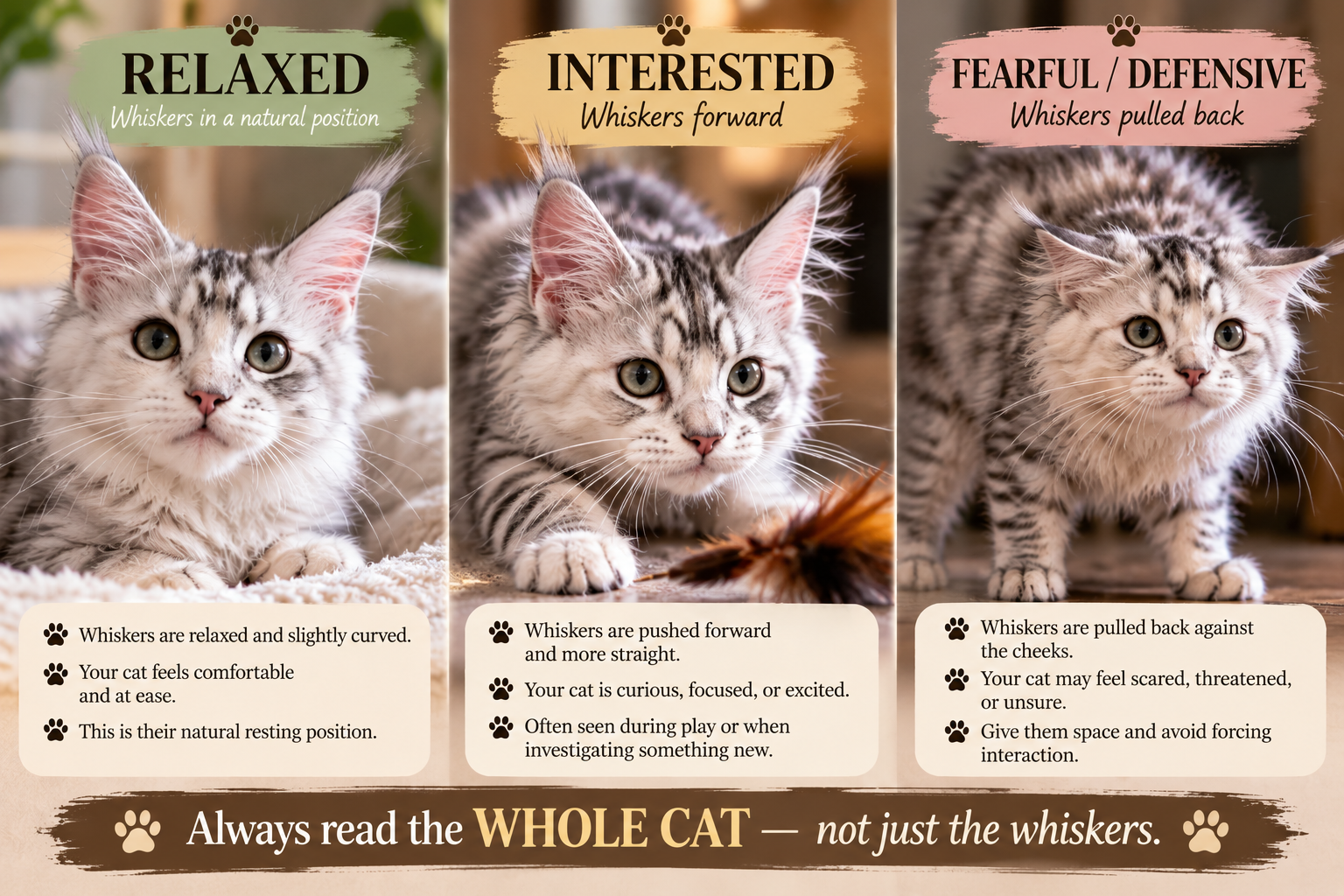
Whisker position can be one piece of feline body language. For example, relaxed whiskers may sit naturally out to the sides. During intense interest or investigation, whiskers may appear directed more forward.
A frightened, defensive or uncomfortable cat may pull the whiskers closer toward the face. But this is important: Never interpret whiskers by themselves.
Just like we discussed with staring and other Maine Coon behaviors, you want to look at the whole cat.
Ask:
What are the ears doing?
What is the tail doing?
Is the body loose or tense?
Are the pupils changing?
What happened immediately before this?
Context matters. A single whisker position doesn't translate into one guaranteed emotion.
✂️ Never Cut a Cat's Whiskers
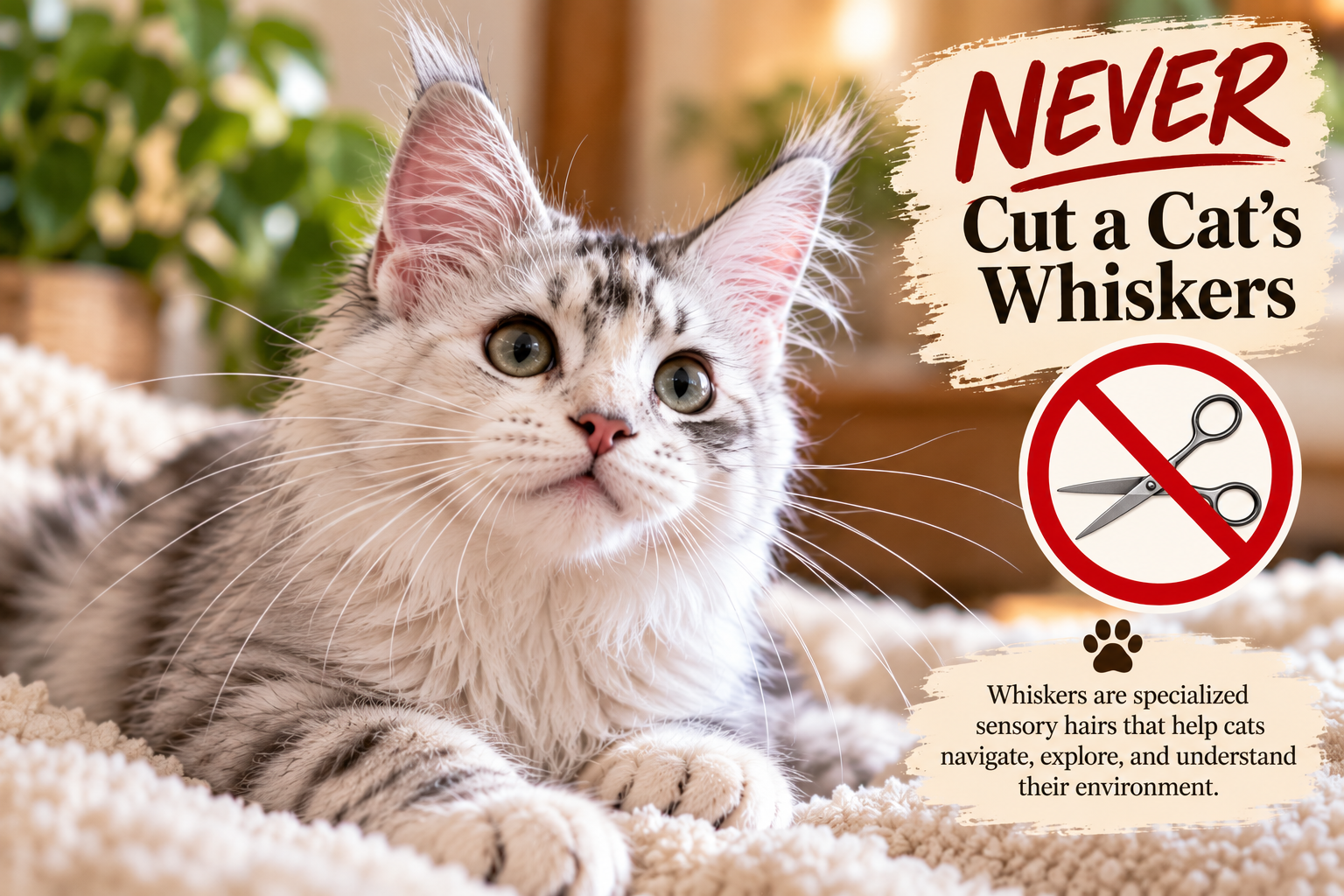
This deserves its own section. A cat's whiskers should not be trimmed for cosmetic reasons. They're functional sensory structures. Cutting the exposed whisker shaft isn't the same as cutting into living tissue, so trimming the hair itself isn't generally described as painful in the way cutting skin would be.
But removing that sensory input can interfere with the information the cat normally receives from its whiskers. There's simply no cosmetic reason to trim them. Even when one whisker seems outrageously long. Even when they're uneven. Even when your Maine Coon looks like they've been growing one whisker since 1997.
Leave the whiskers alone. 😂
😳 What If a Whisker Falls Out?
Finding a whisker on the floor doesn't automatically mean something is wrong. Cats naturally shed and replace individual whiskers. You may occasionally find one on a blanket, cat tree or floor. And yes…
Maine Coon people sometimes save them. No judgment here. 😂 A little collection of shed whiskers somewhere in the house appears to be an unofficial membership requirement for dedicated cat people.
However, sudden or excessive whisker loss, particularly if accompanied by skin changes, itching, hair loss, wounds or other symptoms, deserves veterinary attention.
Again, the key word is: CHANGE.
🌱 Do Whiskers Grow Back?
Generally, yes. If a whisker is naturally shed or the shaft is accidentally damaged, another can grow as part of the normal hair cycle, provided the follicle itself remains healthy.
But whiskers grow slowly. That isn't an invitation to test the theory with scissors. 😂
Let them do what nature designed them to do.
🥣 What About “Whisker Fatigue”?
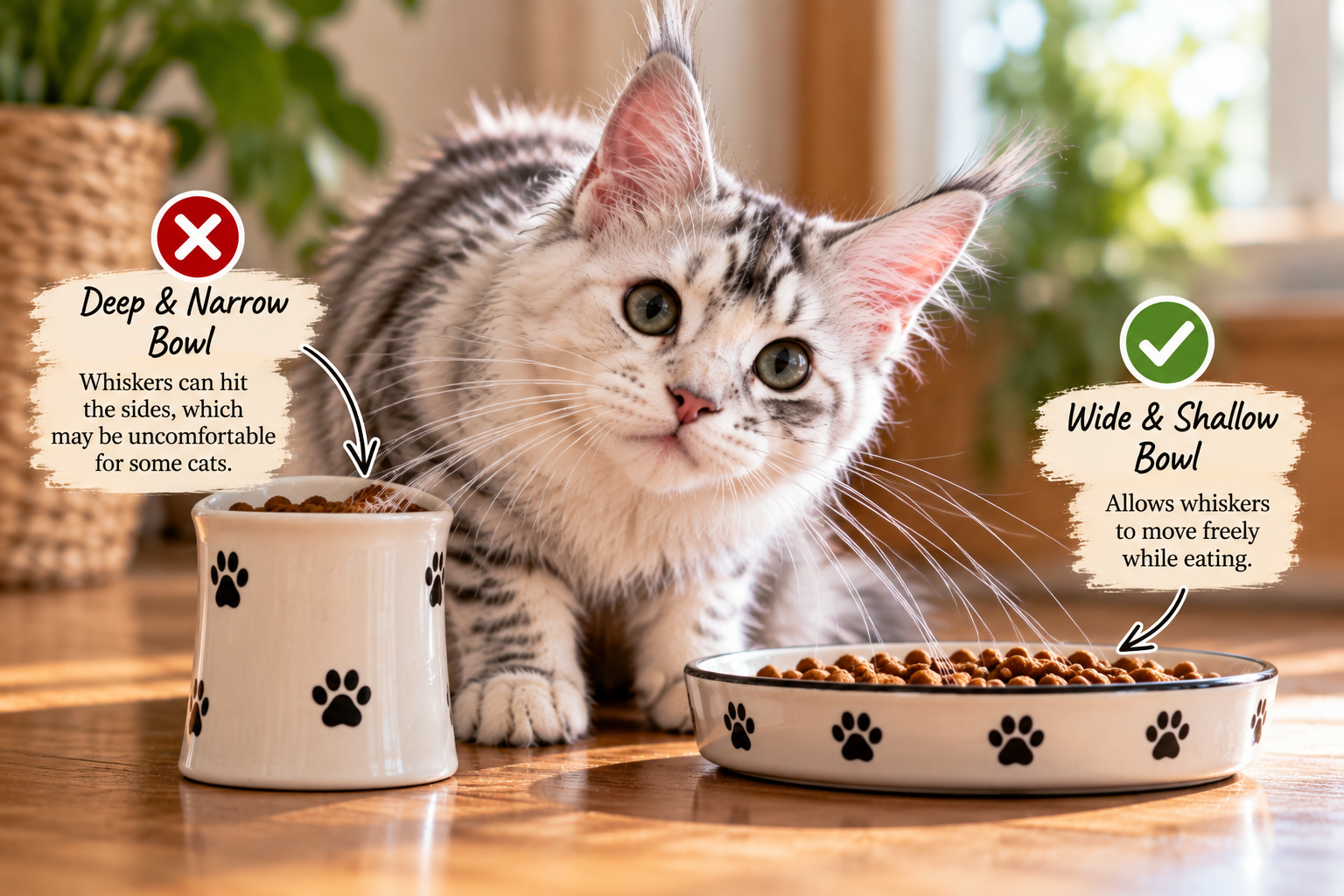
You may have heard people say that cats refuse deep food bowls because their whiskers touch the sides, a phenomenon often called “whisker fatigue” or “whisker stress.” The idea is plausible because whiskers are sensitive sensory structures. Some cats certainly appear to prefer wide, shallow dishes.
However, the popular concept of “whisker fatigue” as a clearly defined medical condition isn't as firmly established as internet discussions sometimes make it sound.
Cats can also dislike bowls for many other reasons, including:
Food placement.
Bowl cleanliness.
Material.
Smell.
Location.
Other animals nearby.
Food preference.
Or simply because they're cats and yesterday's perfectly acceptable bowl has apparently become offensive overnight. 😂 If your Maine Coon seems uncomfortable eating from a deep or narrow bowl, trying a wide, shallow dish is a simple option. But don't assume whiskers are automatically responsible for every unusual eating behavior.
And if eating habits suddenly change, talk with your veterinarian.
🧬 Are Long Whiskers Genetic?
Like many physical characteristics, whisker traits are influenced by biology and genetics. Individual cats can differ in whisker length, thickness, color and appearance. But responsible Maine Coon breeding shouldn't revolve around trying to produce the longest possible whiskers.
They're a functional characteristic—not a competition. Beautiful breed traits should always come behind the priorities that matter most: HEALTH • PEDIGREE • TEMPERAMENT
A spectacular set of whiskers is simply a very impressive bonus.
🎨 Why Are Some Whiskers Different Colors?
Take a close look at different cats and you may notice white whiskers, dark whiskers or even a mixture. Whisker pigmentation can vary just like pigmentation elsewhere in the coat. Some cats may even have whiskers that appear to change as they grow or age.
Against the dramatic coat colors and patterns found in Maine Coons, those whiskers can be especially noticeable.
A black Maine Coon with bright white whiskers?
Stunning.
A silver Maine Coon with enormous pale whiskers?
Also stunning.
A white Maine Coon whose whiskers practically disappear against their coat?
Still stunning.
We're beginning to see a pattern here. 😂
🔎 Become a Maine Coon Whisker Detective
Next time your Maine Coon is sitting quietly beside you, take a closer look. Don't pull them. Don't bend them. Don't cut them. Just observe.
Can you find the whiskers above the eyes? What direction are the muzzle whiskers pointing? Can you spot the carpal whiskers on the front legs? Are some longer than others? Are they all the same color?
You may discover details you've looked at every day without ever really noticing.
🖤 Those Whiskers Are Beautiful—But They're Also Working
It's easy to appreciate Maine Coon whiskers simply because they're gorgeous. They frame that enormous muzzle. They make photographs incredible. They somehow make an already majestic cat look even more dramatic. But they're much more than decoration.
Whiskers are part of a sophisticated sensory system that helps cats gather information about objects, movement and the environment immediately around them. So the next time your Maine Coon walks past with those magnificent whiskers stretched halfway across the room…
Remember: Those aren't accessories. That's sensory equipment. 🐾
🐾 The Bottom Line
Your Maine Coon's whiskers may help them:
🌬️ Detect nearby movement and objects
🌙 Navigate their surroundings, including in low light
🐭 Gather information during hunting and play
📦 Investigate tight spaces and openings
😸 Communicate clues about their current emotional state
🐾 Sense objects close to their face and front paws
And although Maine Coons can have spectacularly prominent whiskers, there isn't one “correct” whisker length. Every cat is different. So admire them. Photograph them. Save the naturally shed ones if you're one of those cat people. 😂
But most importantly… Let those magnificent whiskers do their job.
🐾 Keep Learning With A Velvet Claw
At A Velvet Claw Maine Coon Cattery, we believe understanding the little details helps us better appreciate and care for the whole cat. Sometimes the features we admire simply because they're beautiful have fascinating purposes hiding right in front of us. Follow us on our journey to learn more about this amazing breed.
🖤 HEALTH • PEDIGREE • TEMPERAMENT
Fur - ever Grateful: Lexie & Melina
Maine Coon whiskers • Maine Coon long whiskers • Why do Maine Coons have long whiskers
Cat whiskers • Purpose of cat whiskers • Maine Coon characteristics