
What Should I Feed My Maine Coon?
A practical guide to dry, wet, raw, and mixed feeding
One of the first questions new Maine Coon owners ask is also one of the most confusing: “What should I feed my Maine Coon?”
Walk into a pet store—or spend five minutes searching online—and you'll find hundreds of answers. Grain-free. High-protein. Wet only. Dry only. Raw. Fresh. Freeze-dried. Kitten formulas. Indoor formulas.
So which one is right?
The truth is, there isn't one feeding method that's perfect for every Maine Coon. What matters most is providing a complete and balanced diet appropriate for your cat's life stage, while considering their individual health, body condition, preferences, and your veterinarian's recommendations.
🥩 Start With Complete & Balanced Nutrition
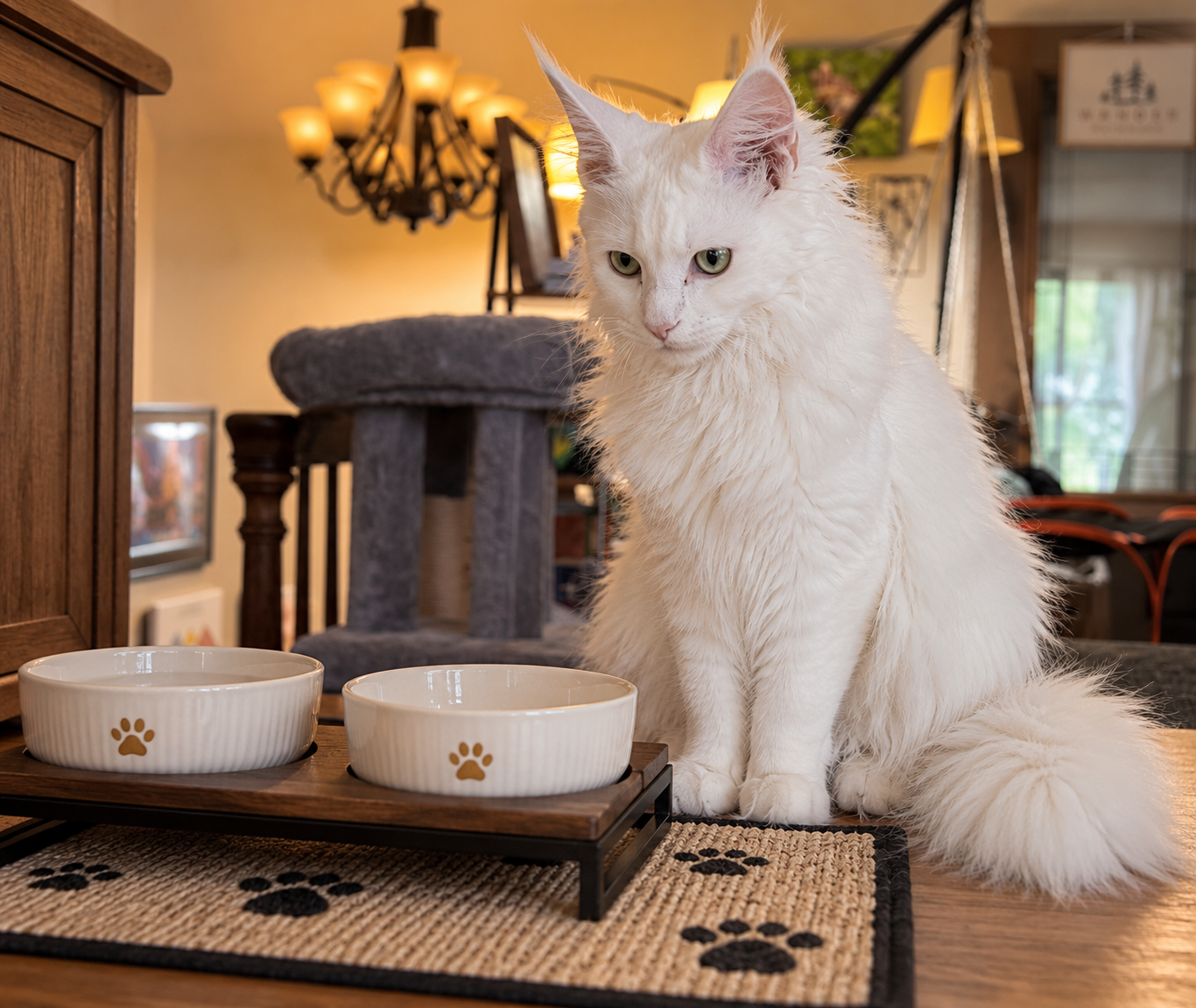
Rembrandt loves his food
Whether you choose wet food, dry food, or another type of diet, one of the most important things to look for is whether the food is formulated to provide complete and balanced nutrition for your cat's appropriate life stage. Cats are obligate carnivores, which means they have specific nutritional requirements that differ from ours—and even from dogs.
Protein is important, but cats also require appropriate amounts and balances of nutrients such as taurine, essential fatty acids, vitamins, minerals, and amino acids. That's why feeding a cat isn't simply about choosing the food with the most meat or the highest protein percentage on the package.
🥣 What About Dry Food?
One brand of Dry Food
Dry food can absolutely be part of a Maine Coon's diet. It's convenient, easy to store, and makes portioning meals simple. Some families choose a quality dry food as the primary diet, while others combine it with wet food.
One thing to keep in mind is hydration. Cats naturally tend to obtain some of their water through food, and dry food contains considerably less moisture than wet food. If dry food is part of the diet, make sure fresh water is readily available. Some cats also enjoy drinking more from a water fountain.
🥫 What About Wet Food?
One brand of Wet Food
Wet food has a much higher moisture content, which can help contribute to a cat's overall water intake. It also comes in numerous textures—pâté, shredded, minced, chunks, gravy—and Maine Coons can have surprisingly strong opinions about which one is acceptable. 😂
But here's something important: Not every canned or pouch food is intended to be a complete diet.
Some products are labeled for supplemental or intermittent feeding. Those can be perfectly fine as treats or additions, but they shouldn't necessarily make up the majority of the diet.
Always check the label.
🥩 What About Raw Food?
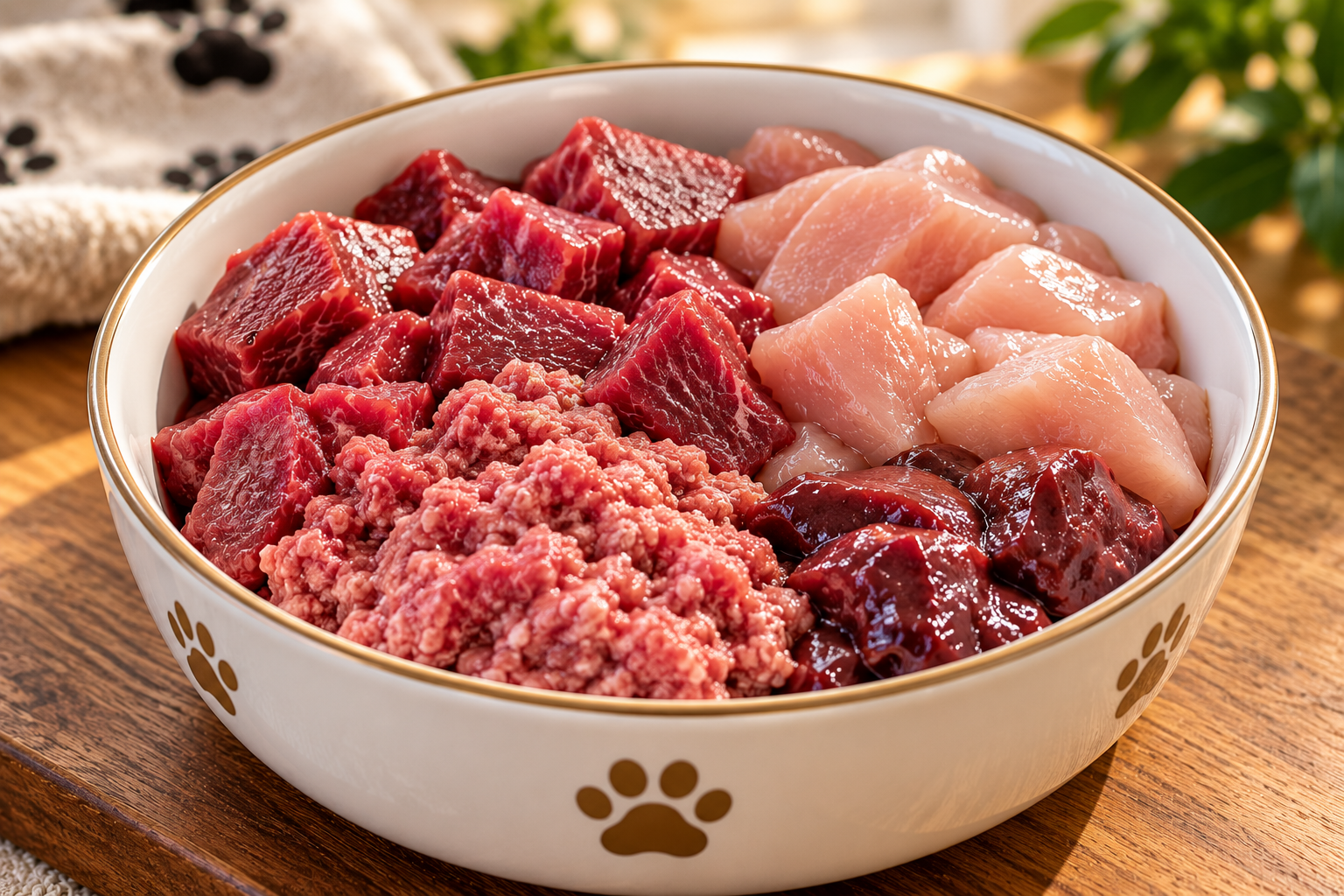
Raw diet for Maine Coon
Raw feeding gets a lot of attention in the cat world. A properly formulated diet must provide the correct balance of nutrients—not simply raw meat. Feeding meat alone can result in serious nutritional deficiencies or imbalances.
Raw diets can also introduce food-safety concerns from pathogens that can affect the cat and potentially the humans living in the household. If someone chooses to explore raw or homemade feeding, this is an area where working with a board-certified veterinary nutritionist can be especially valuable.
🥣🥫 Can I Feed Both Wet AND Dry?
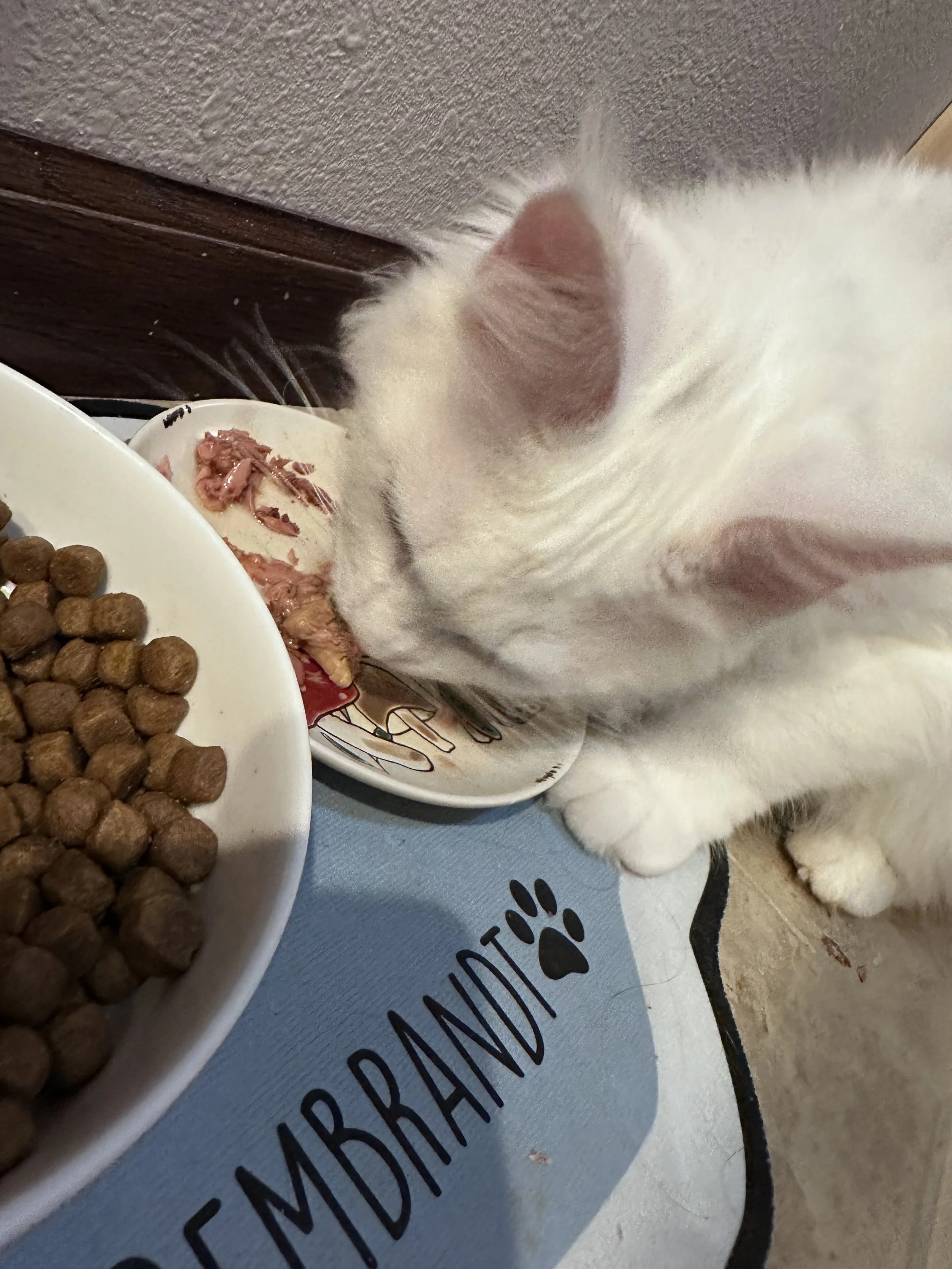
Dry food and Wet food
Absolutely. Many families choose mixed feeding—using both wet and dry foods. For some households, this provides the convenience of dry food while incorporating the additional moisture of wet food.
The important part is remembering that everything counts toward the cat's total daily calories. A bowl of dry food plus two cans of wet food plus treats plus a Churu can add up faster than we realize. 😂
🐱 Maine Coon Kittens Have Different Needs
Maine Coons are famous for taking several years to reach their full adult size, but that doesn't mean they should remain on kitten food for several years. Growing kittens need nutrition formulated for growth, and when to transition to adult food should be based on the individual cat, the particular diet, body condition, and veterinary guidance.
More food doesn't necessarily create a larger Maine Coon. Genetics determine much of a Maine Coon's eventual size. Overfeeding creates an overweight cat—not a genetically larger one.
That's an important distinction with a breed that's already known for being large.
⚖️ Watch the Cat, Not Just the Food Bowl
The “best” diet on paper isn't necessarily the best diet for every individual cat. Pay attention to your Maine Coon's: body condition, weight trend, muscle condition, stool quality, appetite, coat, activity level, and overall health.
A cat's nutritional needs can also change throughout life. A growing kitten, active young adult, pregnant or nursing queen, neutered house cat, and senior Maine Coon may not need the same calorie intake or diet.
🖤 So… What Should You Feed Your Maine Coon?
There isn't one universal answer. Choose a nutritionally complete and balanced diet appropriate for your cat's life stage, feed an appropriate amount, provide plenty of fresh water, monitor body condition, and adjust the feeding plan with your veterinarian when necessary.
Wet food can work. Dry food can work. Mixed feeding can work. And some carefully formulated alternative diets may work for individual cats.
The goal isn't to win the “best cat food” debate. The goal is to feed the individual Maine Coon in front of you well.
🐾 A Velvet Claw Maine Coon Cattery
At A Velvet Claw, feeding our cats isn't about following the latest trend or searching for one “perfect” food. It's about understanding nutrition, paying attention to the individual cat in front of us, and making thoughtful choices as their needs change throughout life.
Because what goes into the bowl is only part of the story. Knowing why we put it there matters too.
Better knowledge. Better care. Happier cats.
Fur - ever grateful: Lexie & Melina
Maine Coon food, Maine Coon diet - Maine Coon nutrition - Feeding a Maine Coon
Best food for Maine Coons - Maine Coon feeding guide