
Wet vs. Dry Cat Food: Which Is Better for a Maine Coon?
Understanding the benefits of both—and why there may not be one “best” answer.
If you ask a group of cat owners what they feed their cats, you're likely to get very different answers. Some swear by wet food. Others have fed dry food for years. Many use a combination of both. And somewhere along the way, you may have heard statements like: “Cats should never eat dry food.” or “Wet food is always better.”
But when it comes to feeding a Maine Coon, nutrition isn't quite that simple. The better question may not be “Which one is best?”
It may be: “Which feeding approach best meets the needs of the individual cat?”
Let's look at both.
🥣 Dry Food: What Are the Benefits?
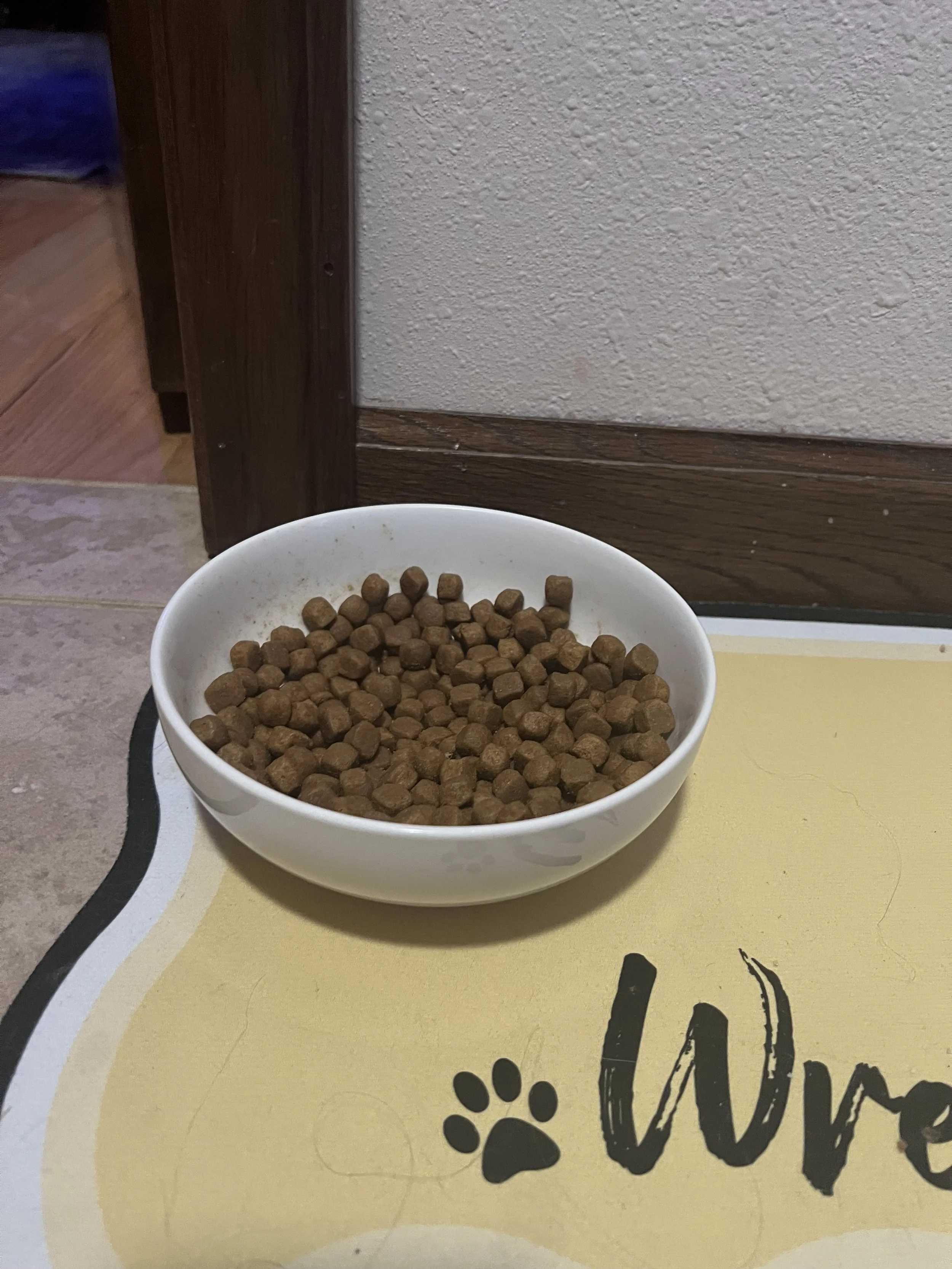
Royal Canine Kitten Maine Coon is in the bowl
Dry food—often called kibble—is one of the most common ways people feed their cats. And there are some practical reasons why.
Dry food is generally:
Convenient to store and serve
Easy to portion
Less messy than wet food
Suitable for certain automatic or puzzle feeders
Able to remain out longer than opened wet food
Most importantly, a dry food labeled complete and balanced for your cat's appropriate life stage is formulated to provide the nutrients a cat needs when fed according to its directions. But What About Hydration? This is one of the biggest differences between wet and dry food.
Dry food contains considerably less moisture than wet food. Cats naturally obtain some of their water from food, so a cat eating primarily dry food needs reliable access to fresh drinking water. Water fountains, multiple water bowls throughout the home, and monitoring your cat's drinking habits can all help encourage water intake.
For some cats with particular medical conditions, a veterinarian may recommend increasing dietary moisture.
🥫 Wet Food: What Are the Benefits?
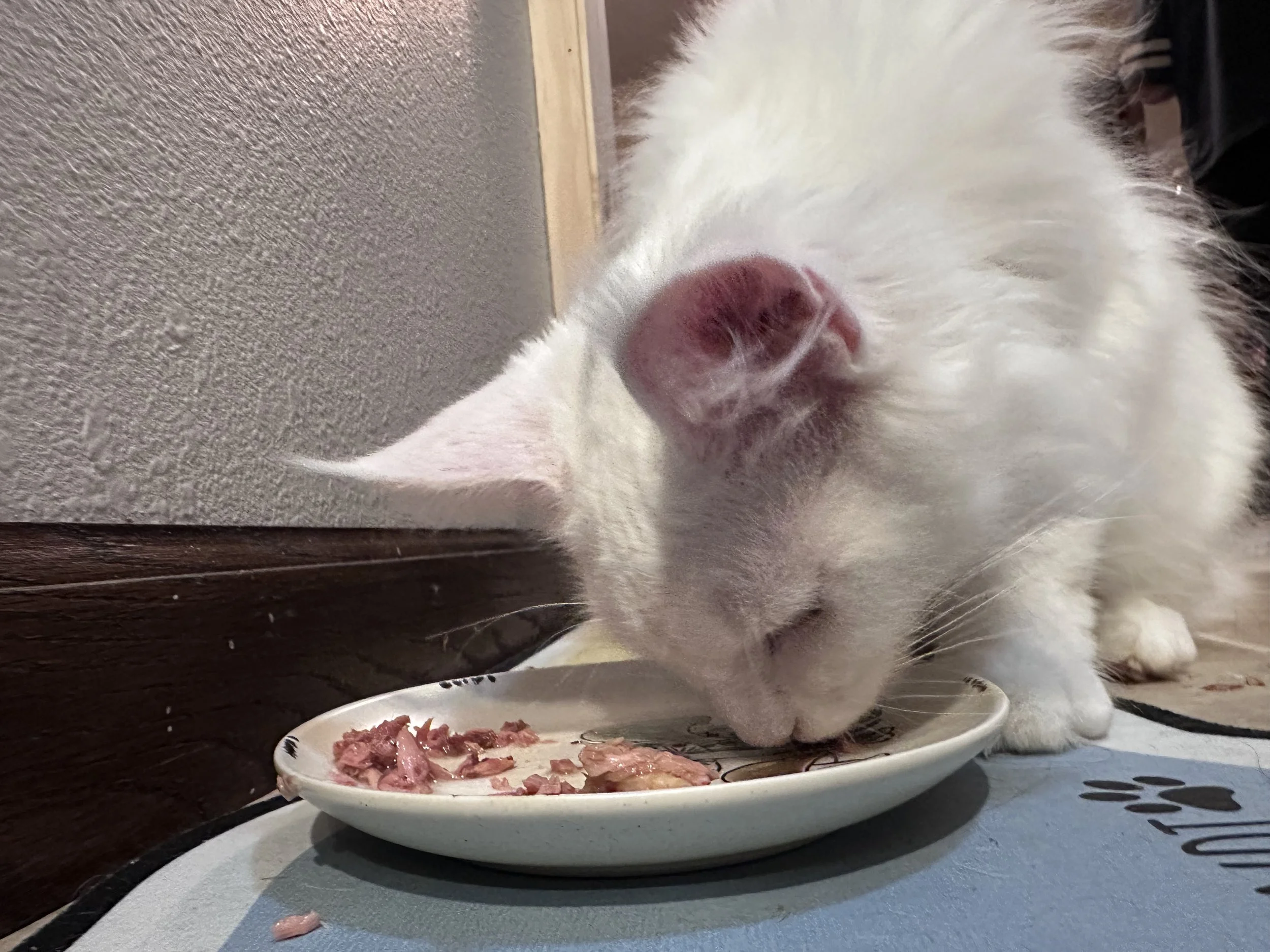
Rembrandt eating his shrimp appetizers from fancy feast
Wet food contains much more moisture than dry food, making hydration one of its biggest advantages.
It also comes in a huge variety of textures:
Pâté
Shreds
Chunks
Morsels
Gravy
Broth-style foods
That variety can make wet food appealing to cats with strong texture or flavor preferences. Wet food can also be helpful when owners need to incorporate more moisture into a cat's diet. But there's an important detail that is sometimes overlooked: Not Every Can or Pouch Is a Complete Diet
Some products that look like cat food are actually intended for supplemental or intermittent feeding rather than as a cat's sole source of nutrition. That's why reading the label matters. Look for a nutritional adequacy statement indicating whether the food is complete and balanced for the appropriate life stage.
A food can contain beautiful-looking pieces of meat or fish and still not provide everything a cat needs as its only diet.
🥣 vs. 🥫 Is Wet Food Healthier Than Dry Food?
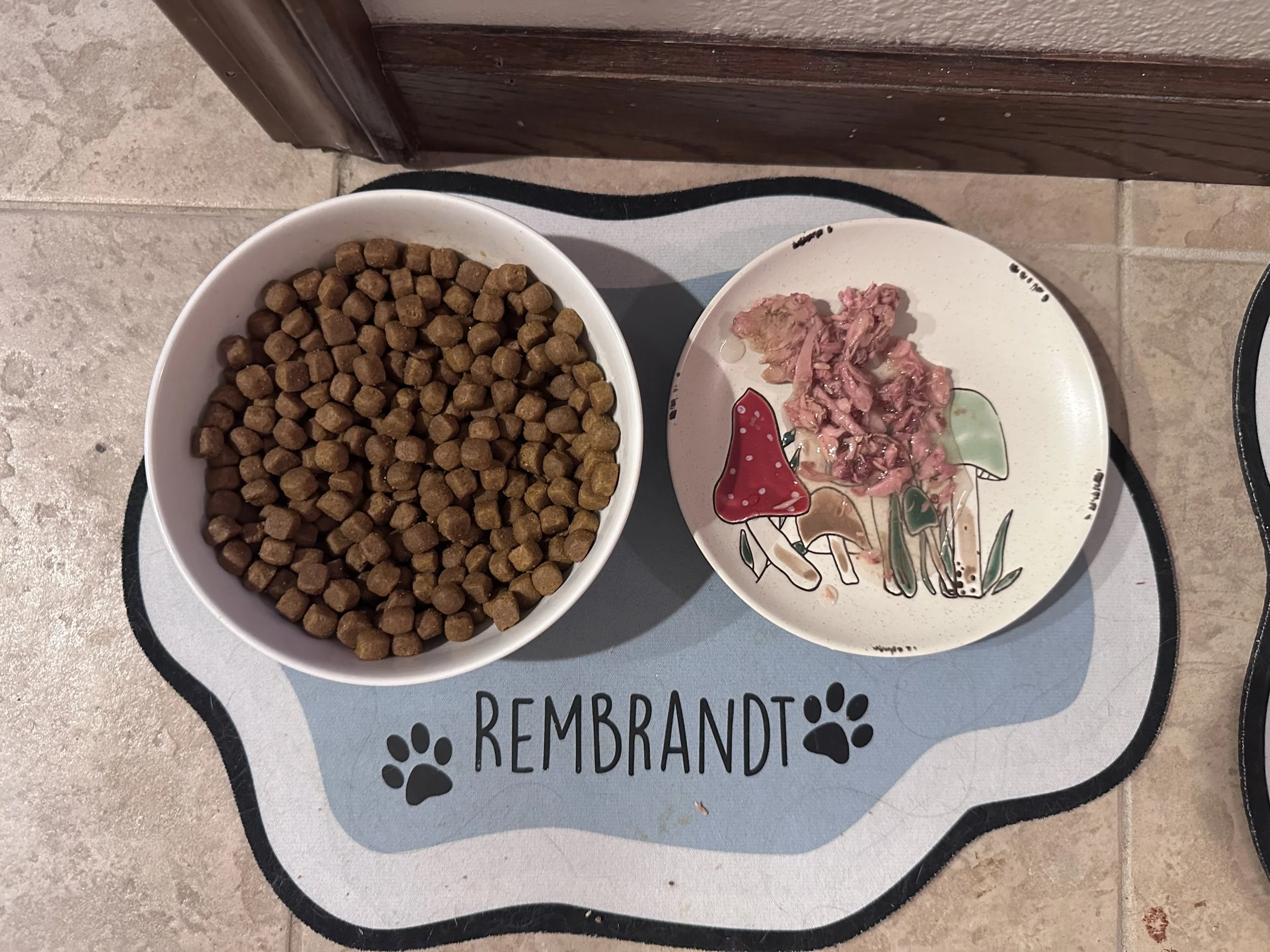
Royal Canine Maine Coon Kitten food and Shrimp Fancy Feast appetizers
This is where things get interesting. Wet food has a clear advantage when it comes to moisture content. But that doesn't automatically mean every wet food is nutritionally superior to every dry food. Likewise, the fact that a food is dry doesn't automatically make it unhealthy.
Two foods can differ significantly in:
Nutrient composition
Calorie density
Ingredients
Digestibility
Life-stage suitability
Quality control
Intended use
That's why simply comparing wet versus dry doesn't tell us everything we need to know.
🐾 Do Maine Coons Need a Special Diet Because They're Big?
Maine Coons are certainly large cats, but bigger doesn't automatically mean they should simply receive bigger portions.
Nutrition should still be based on the individual cat's:
Age
Weight
Body condition
Activity level
Reproductive status
Overall health
Calorie needs
This is especially important with Maine Coons because their naturally substantial build can sometimes make it harder to recognize excess weight. A large Maine Coon and an overweight Maine Coon are not the same thing. More food does not create a genetically larger Maine Coon. Overfeeding can simply create an overweight cat.
🐱 What About Maine Coon Kittens?
Growing kittens have different nutritional requirements than adults. They should receive food formulated to support growth until it's appropriate to transition them to an adult diet. Maine Coons mature slowly compared with many cats, but that doesn't automatically mean they should remain on kitten food for several years.
The appropriate transition depends on the individual kitten, the food being fed, body condition, growth, and veterinary recommendations.
This is another reason blanket feeding rules don't always work well.
🥣 + 🥫 Can You Feed Both Wet AND Dry Food?
Absolutely. This is commonly called mixed or combination feeding. For example, someone might feed: Dry food in the morning + wet food in the evening.
Another household might offer measured dry food along with wet meals throughout the day. Combination feeding can provide some of the convenience of dry food while incorporating the additional moisture of wet food.
But there's one important thing to remember: All of those calories count.
If you're feeding the full recommended amount of dry food plus several servings of wet food plus treats, it's easy to unintentionally overfeed. The entire day's intake needs to be considered together. And yes... Those Churus count too. 😂
👀 Watch the Cat, Not Just the Bowl
The food label provides important information, but your cat provides information too.
Pay attention to things such as:
Body condition
Weight trends
Muscle condition
Appetite
Stool quality
Coat condition
Energy and activity
Drinking and urination habits
Overall health
A feeding routine that works beautifully for one Maine Coon may not be ideal for another. And a diet that works for the same cat today may need to change as that cat ages.
🖤 So...Which Is Better for a Maine Coon?
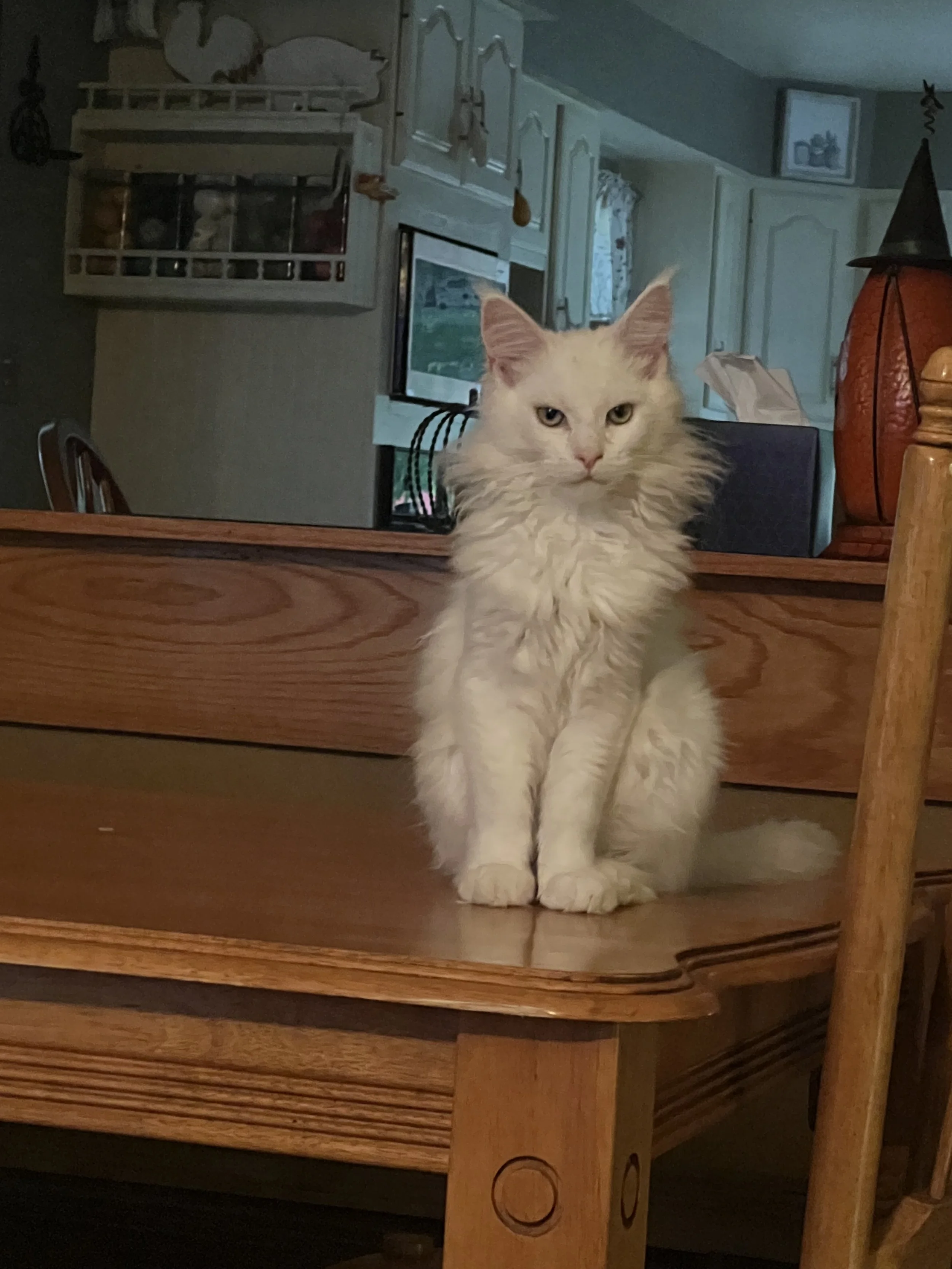
Rembrandt waiting for his dinner time
Wet or dry? There isn't one universal winner. Wet food provides considerably more dietary moisture. Dry food offers convenience and can provide complete nutrition when appropriately formulated and fed. And combination feeding can allow families to incorporate aspects of both.
What matters most is that the cat's overall diet is complete and balanced for the appropriate life stage, provides suitable calories and nutrition, and works for that individual cat. Certain health conditions can also change nutritional needs, which is where your veterinarian becomes especially important.
So perhaps the better question isn't: “Is wet or dry food better?”
It's: “What does the cat in front of me need?”
A Velvet Claw Maine Coon Cattery 🐾
At A Velvet Claw Cattery, we don't believe good nutrition comes from simply choosing a side in the wet-versus-dry debate. It comes from learning what our cats need, understanding what we're putting into their bowls, watching how they respond, and being willing to adjust as those needs change throughout their lives.
Because what goes into the bowl is only part of the story. Knowing why we put it there matters too. 🖤🐾
HEALTH • PEDIGREE • TEMPERAMENT
💬 Join the Food Week Conversation!
Now we want to hear from you: Does your Maine Coon eat wet food, dry food—or both?
And more importantly... What made you choose your current feeding routine?
There are no food battles here. 😂 We're spending Food Week learning about the different options so we can all make more informed decisions for the cats we love.
Fur - ever grateful: Lexie & Melina
Maine Coon food - Maine Coon diet - Maine Coon nutrition
Wet food for Maine Coons - Dry food for Maine Coons - Wet vs dry cat food