
Understanding hydration, wet food, and why water matters for your Maine Coon
If you spend any amount of time reading about cat nutrition, you'll eventually hear the same advice: “Cats need moisture.”
It's one of the biggest reasons wet food is discussed so often—and one of the biggest arguments you'll hear in the wet-versus-dry food debate. But what does that actually mean?
Why does the amount of water in food matter if your cat already has a water bowl or fountain? And does feeding dry food automatically mean your cat isn't getting enough water?
The answer is a little more interesting than that.
💧 Cats Don't Get Water Only From the Water Bowl
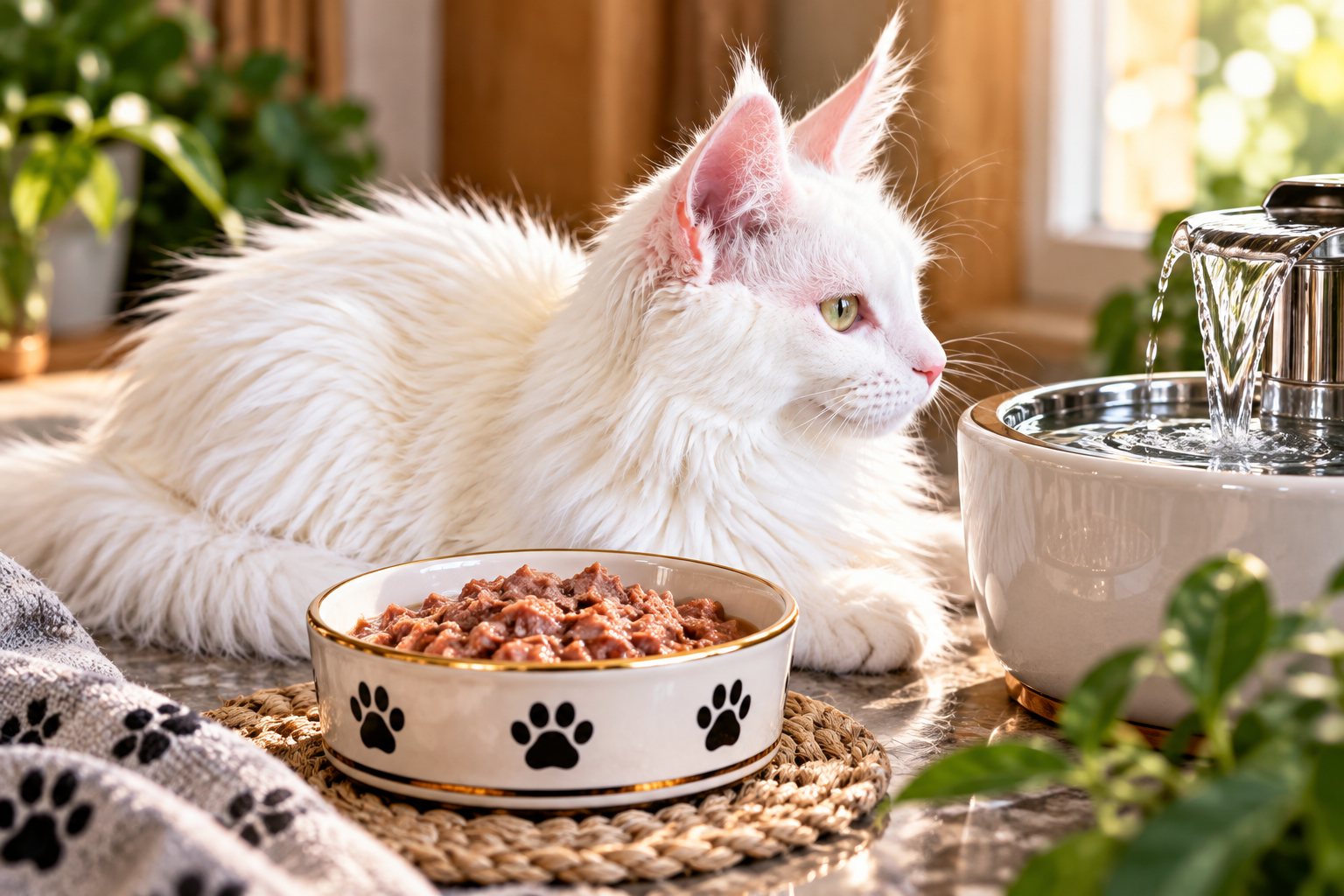
When we think about hydration, we usually think about drinking water. But cats can get water from two primary places: the water they drink + the moisture contained in their food. That's where wet and dry foods differ considerably.
Wet cat foods commonly contain roughly 70–80% moisture, while dry foods generally contain around 10% moisture or less. That means a cat eating wet food is consuming water every time they eat—even before they visit the water bowl. A cat eating primarily dry food needs to obtain much more of their total water intake through drinking.
And that's why moisture gets so much attention.
🐱 Why Is Hydration So Important for Cats?
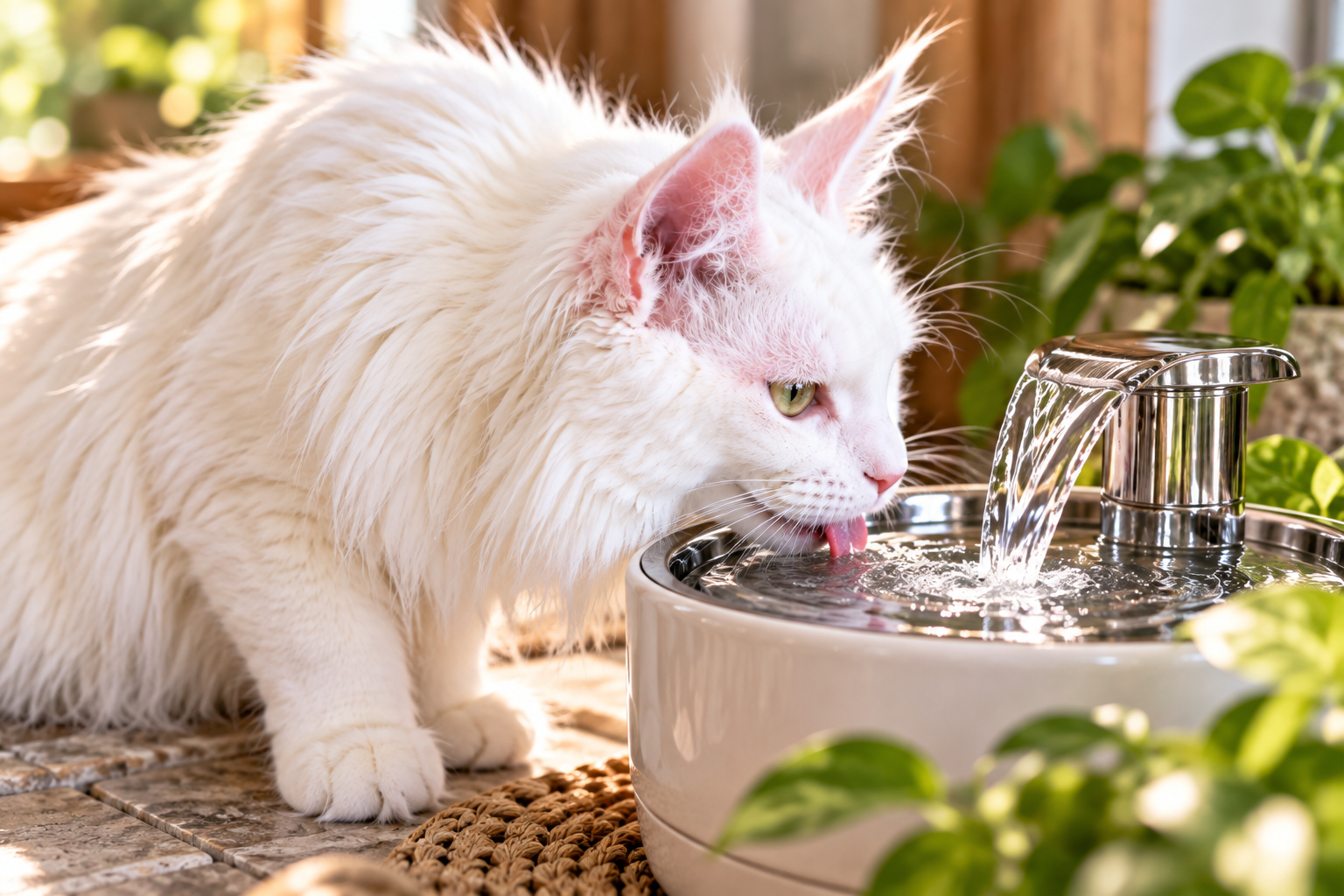
Water is involved in virtually every system in the body.
Adequate hydration supports things like:
💧 Normal kidney function
💧 Normal urinary function
💧 Digestion
💧 Circulation
💧 Temperature regulation
💧 Normal cellular function
It also contributes to urine volume and concentration, which is one reason veterinarians may pay particularly close attention to dietary moisture in cats with certain urinary or kidney conditions. That doesn't mean wet food prevents every urinary or kidney problem.
It means water intake matters, and food can be one way of increasing it.
🐾 But Won't Cats Just Drink More Water?
Cats eating dry food generally do drink more water than cats eating wet food. That's an important part of this conversation. If there's less water coming from the food, the cat can compensate by drinking more. However, drinking behavior varies considerably between individual cats.
Some cats practically live at their fountain. Others take a few tiny drinks throughout the day. That's why we shouldn't look at the food bowl alone when thinking about hydration. We should consider the cat's total water intake.
💧 Water from food + water from drinking = the bigger hydration picture.
🥫 Why Does Wet Food Get So Much Attention?
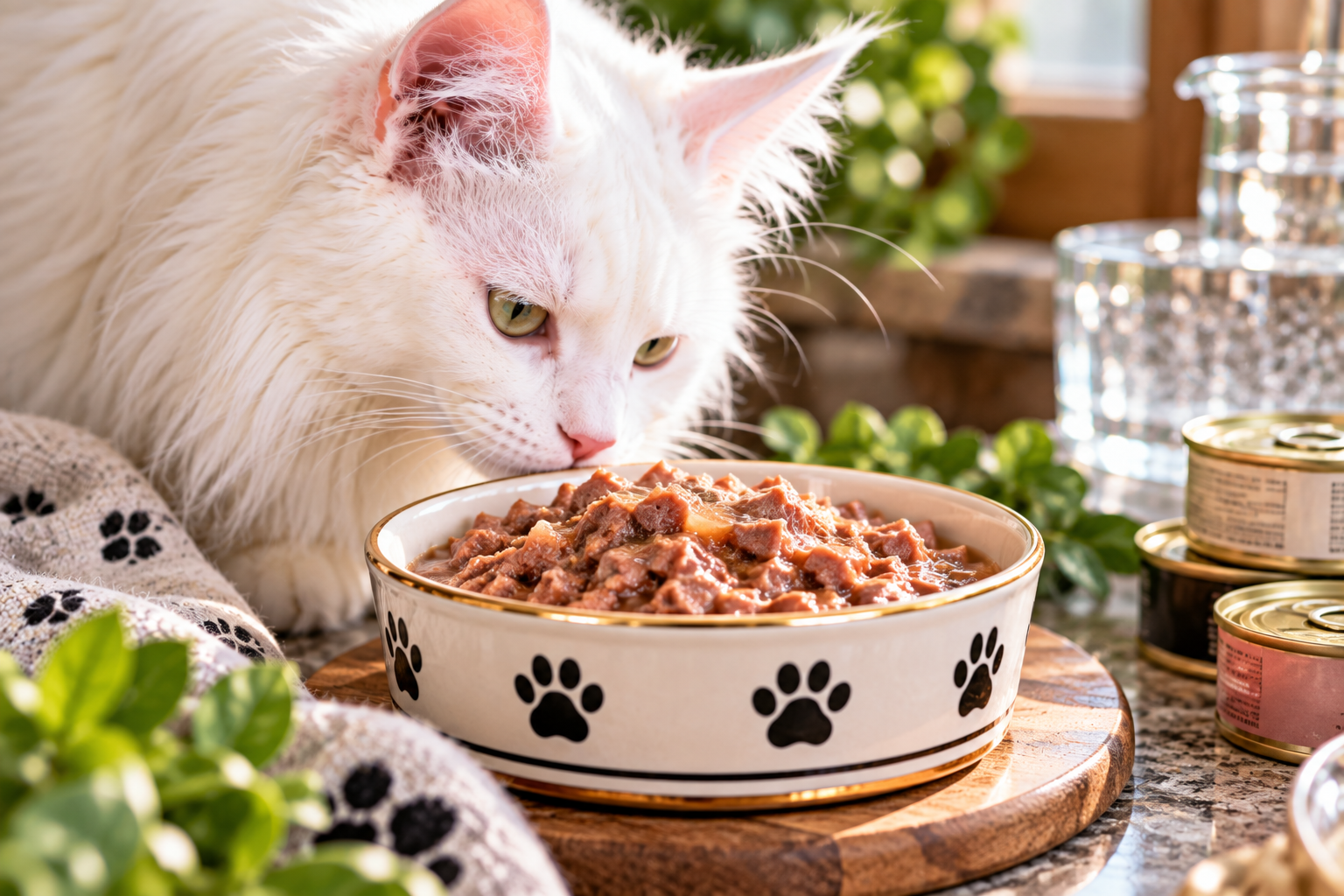
This is where wet food has a very obvious advantage: Water is already built into the meal. Your cat doesn't have to make a separate decision to walk over to the fountain and drink that moisture. Every bite contains it.
For cats that don't drink much on their own—or cats for whom increased water intake has been recommended by a veterinarian—that can be particularly useful. But this is also where nutrition conversations sometimes become overly simplified.
More moisture does not automatically mean a food is nutritionally better in every other way.
A food still needs to provide appropriate nutrition.
🔎 Moisture Isn't the Only Thing That Matters
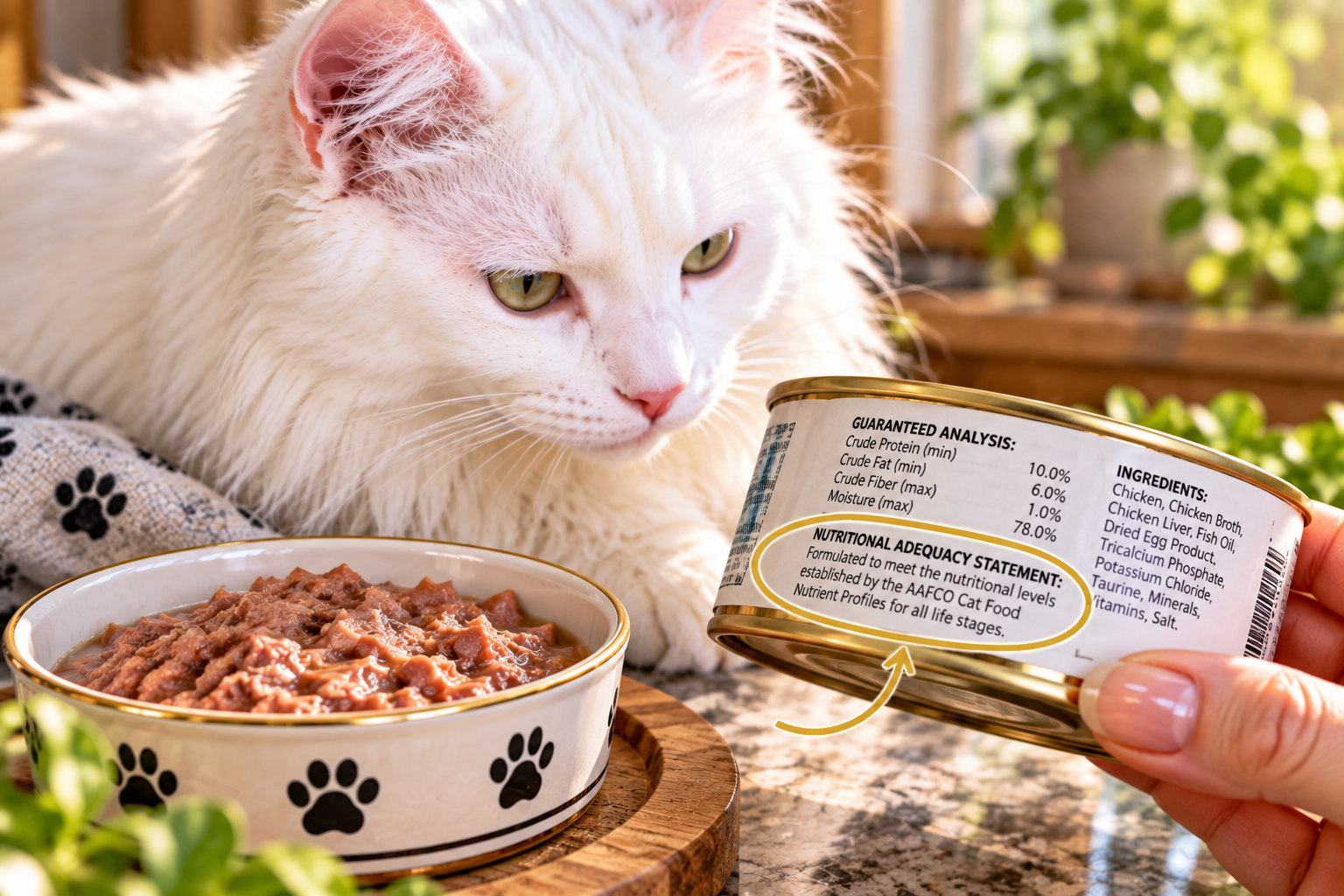
Imagine comparing two foods. One contains lots of moisture but is labeled for supplemental or intermittent feeding only. The other contains less moisture but provides complete and balanced nutrition appropriate for the cat's life stage. You can't determine which is the appropriate primary diet simply by looking at moisture content.
We still need to consider:
🐾 Nutritional adequacy
🐾 Life stage
🐾 Calorie needs
🐾 Overall formulation
🐾 The individual cat's health
🐾 Body condition
🐾 What else the cat eats
Moisture is one piece of nutrition—not the entire puzzle.
🥣 Does This Mean Dry Food Dehydrates Cats?
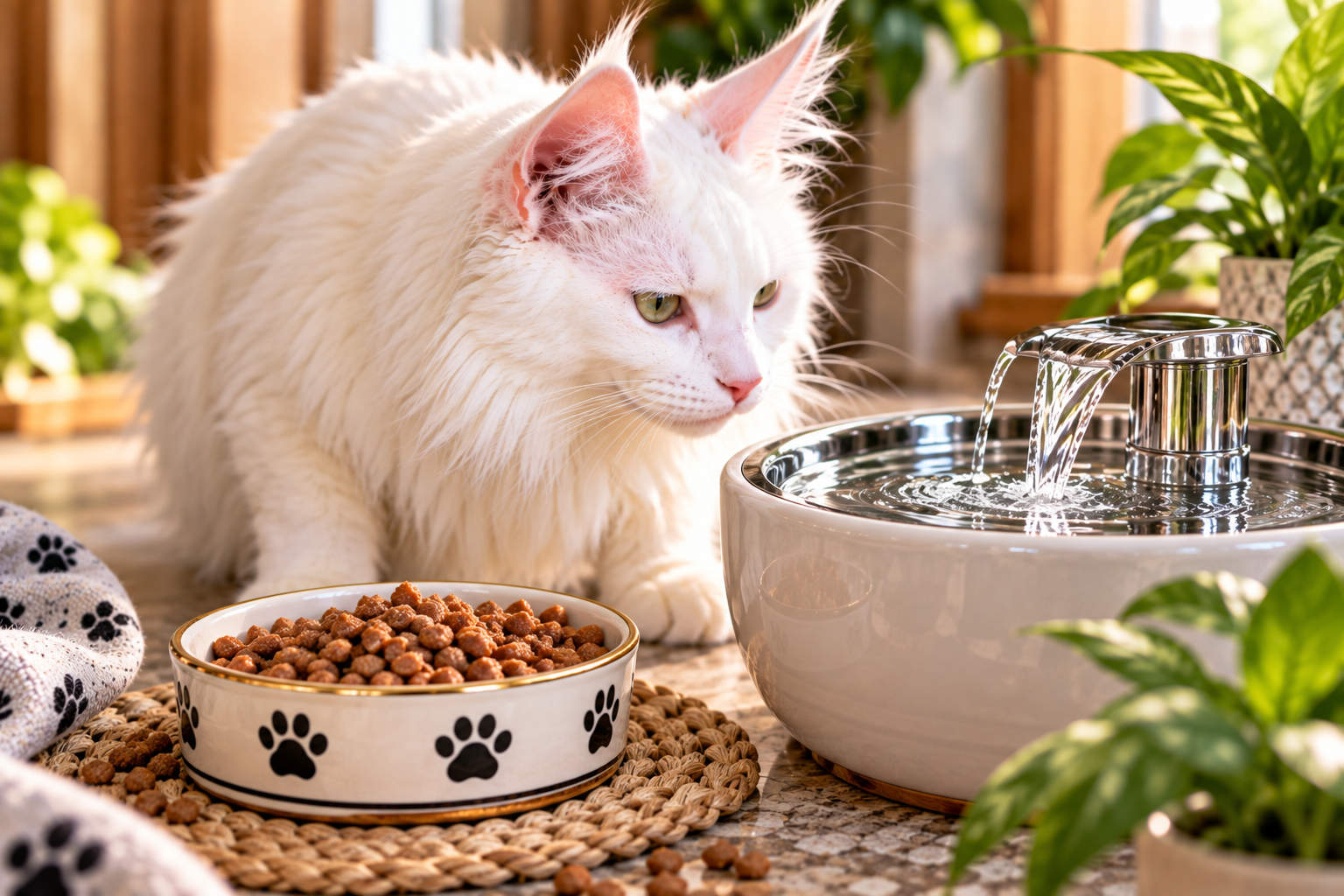
This is an important distinction. Dry food does not automatically mean a cat is dehydrated. Cats eating dry diets can drink water separately. The important question is whether the individual cat is maintaining adequate hydration and receiving an appropriate overall diet.
For families feeding primarily dry food, there are several simple ways to encourage water intake:
💧 Keep fresh water available at all times
⛲ Try a fountain if your cat prefers moving water
🏠 Place multiple water stations around the home
🧼 Keep bowls and fountains clean
👀 Pay attention to changes in drinking or urination
And some families choose combination feeding, using both wet and dry foods.
🥫 + 🥣 Combination Feeding Can Add Moisture Too
Feeding wet food doesn't have to be an all-or-nothing decision. A cat might eat measured dry food as part of its routine and receive wet food at another meal. That allows families to incorporate additional dietary moisture while keeping some of the convenience of dry food.
The important part is remembering that all of those foods—and all of those calories—still count toward the total diet.
Yes, even the Churus. 😂
🐱 What About Maine Coons Specifically?
Maine Coons need adequate hydration for the same fundamental reasons other cats do. Being a large breed doesn't create an entirely different hydration system.
Their water needs still vary according to factors such as:
🐾 Body size
🐾 Diet
🐾 Activity
🐾 Environment
🐾 Life stage
🐾 Reproductive status
🐾 Health
The goal isn't to chase one magical number of ounces that every Maine Coon must drink. Instead, look at the entire cat and the entire diet.
👀 Pay Attention to Changes
One of the most useful things we can do as cat owners is learn what's normal for our individual cats.
If a cat suddenly begins drinking dramatically more or less than usual, urinates differently, strains in the litter box, produces very little urine, stops eating or drinking, or simply seems unwell, that's not something to solve by changing foods based on something you read online.
Contact your veterinarian.
Changes in thirst or urination can sometimes be important health clues.
🖤 So Why Does Everyone Talk About Moisture?
Because moisture provides something very simple and very important: Water. Wet food allows cats to consume a meaningful amount of water while they're eating. That's a genuine nutritional advantage of wet food.
But it doesn't mean: Wet food = automatically good or Dry food = automatically bad. Nutrition rarely fits into boxes that neatly. A better question is: “Is my cat receiving appropriate nutrition AND adequate hydration?”
Because what goes into the bowl matters—but understanding why we're putting it there matters too. 🖤🐾
💬 Join the conversation
How does your Maine Coon prefer to drink?
⛲ Fountain?
🥣 Water bowl?
🚰 Straight from the faucet like they own the house? 😂
🥫 Or do they get much of their moisture through wet food?
Tell us below!
🖤 Keep Learning With A Velvet Claw
Food Week isn’t over yet! 🥣🥫🐾
We’ll be sharing more about Maine Coon nutrition, feeding choices, hydration, treats, reading food labels, and the questions cat families ask most.
🐾 Follow A Velvet Claw Maine Coon Cattery for more Maine Coon education, behind-the-scenes moments with our cats, responsible breeding information, and plenty of Maine Coon personality along the way.
Fur - ever grateful: Lexie & Melina
Wet cat food moisture - Maine Coon hydration Wet food for Maine Coons
Cat hydration - Maine Coon nutrition - Wet cat food benefits,