
How We Socialize Every Maine Coon Kitten
Bringing home a Maine Coon kitten should feel like welcoming a new member of the family. While genetics, health, and responsible breeding are incredibly important, there is another part of raising kittens that can shape the rest of their lives: socialization.
At A Velvet Claw, socialization isn't something we wait to begin when our kittens are almost ready to leave. It is something that develops gradually as they grow. Our goal is to raise Maine Coon kittens who leave us curious, confident, affectionate, and prepared for life with their future families.
What Does Kitten Socialization Actually Mean?
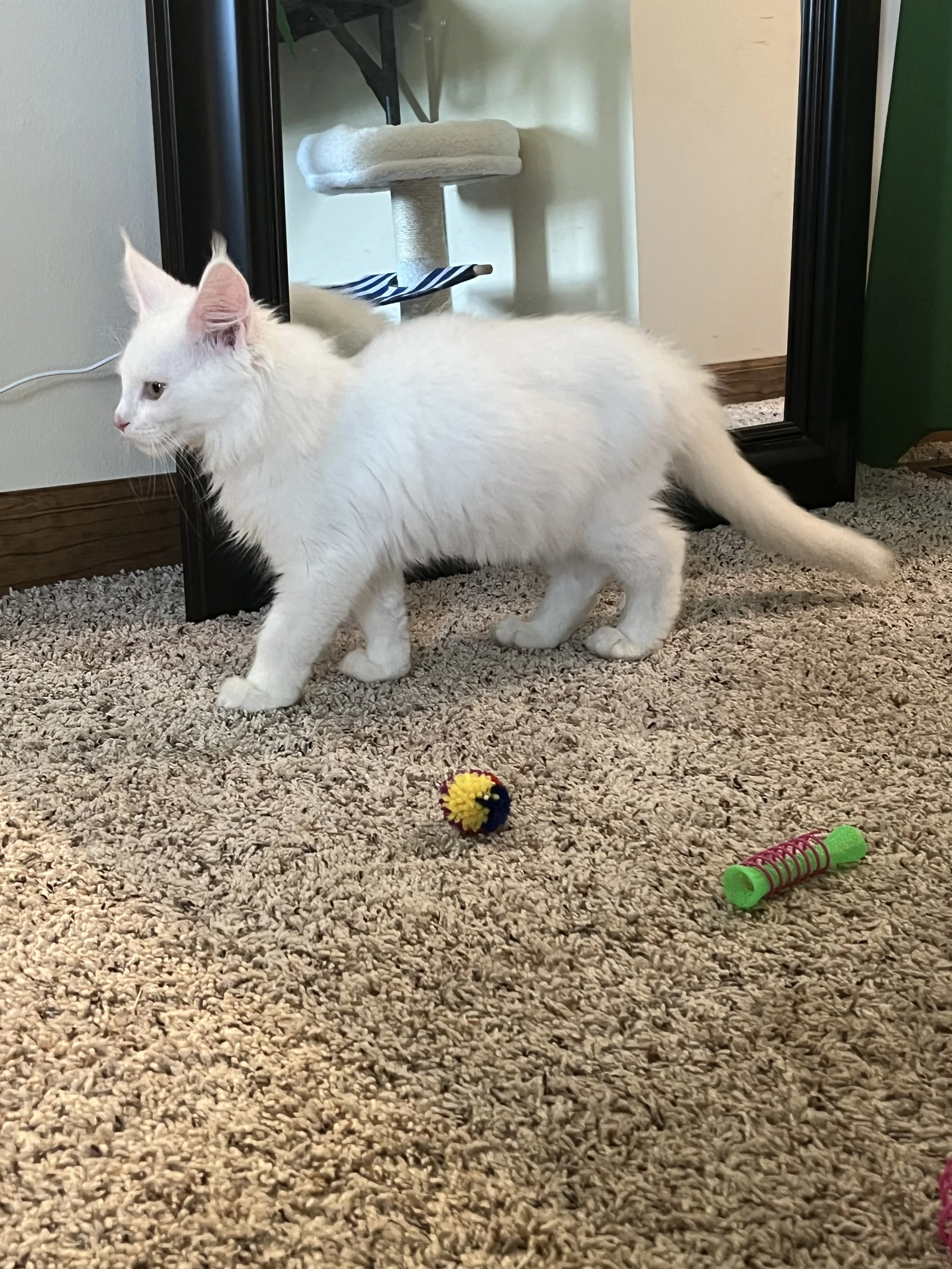
King Rembrandt walking around his new room! These are just a few of his toys with different textures.
Socialization is much more than simply playing with kittens. During their first weeks and months of life, kittens are learning how to respond to people, sounds, handling, other animals, new environments, and unfamiliar experiences. Positive experiences during this time can help a kitten learn an important lesson:
New doesn't have to mean scary.
We introduce experiences gradually and always pay attention to each kitten's individual personality. Some kittens charge toward something new immediately. Others prefer to observe before deciding it's safe. Both are perfectly normal.
Our job isn't to force confidence. It's to help build it.
Gentle Handling Starts Early
As our kittens grow, gentle human interaction becomes part of everyday life. We want being touched and handled to feel completely normal, so kittens are gradually introduced to things such as:
Being held and cuddled
Having their paws touched
Gentle ear handling
Having their face and mouth touched
Being brushed
Having their nails handled
Being picked up and carried
These simple experiences can make a huge difference later when it comes to grooming, nail trims, veterinary examinations, and everyday care. For a breed like the Maine Coon, regular grooming will be part of life, so creating positive associations with handling is especially important.
Everyday Household Sounds
A completely silent environment might seem peaceful, but it doesn't necessarily prepare a kitten for a real home. Homes have noises. Vacuum cleaners run. Doors close. Televisions play. Phones ring. People talk. Something inevitably gets dropped in the kitchen.
Rather than shielding our kittens from normal life, we want them to gradually experience it. Exposure is always age-appropriate and controlled. The goal isn't to frighten kittens with loud noises. It's to allow ordinary household sounds to become exactly that:
Ordinary.
Play Builds More Than Coordination
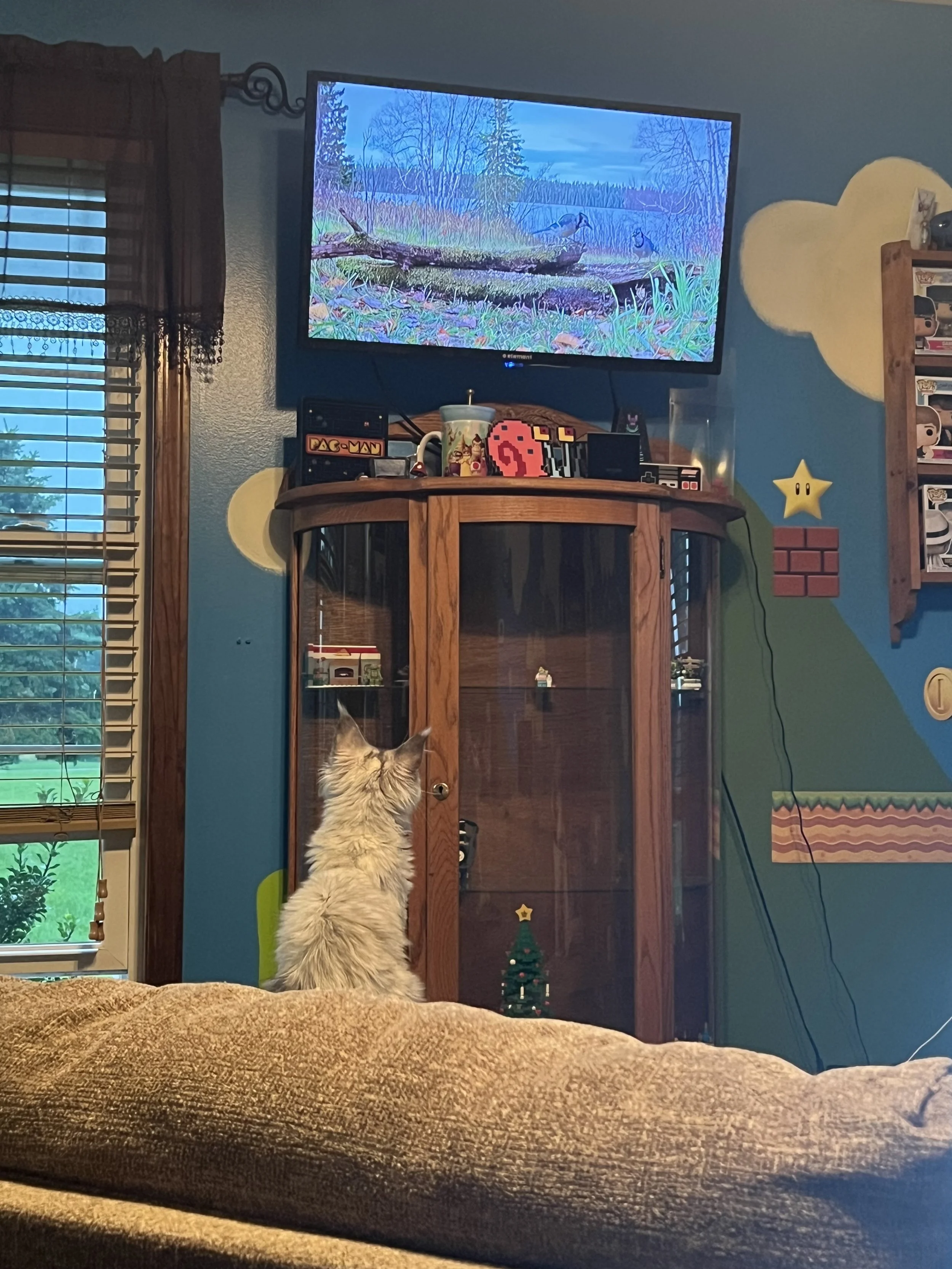
Queen Wren enjoys watching Cat TV and all the different animals!
Play is one of the most important parts of kitten development. Through play, kittens practice stalking, chasing, climbing, balancing, problem-solving, and interacting appropriately with their littermates. We provide different types of toys and enrichment so kittens can explore different textures, movements, heights, and challenges. And sometimes the expensive toy will still lose to the cardboard box.
Because, of course, they're cats.
Learning From Mom and Littermates
Humans play an important role in socialization, but some of the most valuable lessons come from other cats. Mom and littermates help kittens learn boundaries, communication, appropriate play, and feline body language. A wrestling match with a sibling might look like pure chaos to us, but kittens are constantly learning from those interactions. These early relationships are one reason we believe kittens deserve time to develop naturally rather than being rushed away from their mother and littermates.
Meeting Different People
We don't want our kittens to believe that one particular person is the only safe human in the world. As they become developmentally ready, positive interaction with different people can help kittens become more comfortable meeting someone new. Different voices, movements, appearances, and ways of interacting all become part of their understanding of people.
Every kitten still develops preferences — Maine Coons certainly aren't short on personality — but positive early experiences can help create a strong foundation.
Preparing for Grooming
That beautiful Maine Coon coat requires maintenance. Instead of waiting until a kitten has a full adult coat to introduce grooming, we begin creating positive associations while they're young. Short, gentle grooming experiences help introduce kittens to brushes, combs, paw handling, and the feeling of being examined. We want grooming to become part of normal life rather than a battle that begins the moment someone picks up a brush.
Introducing New Experiences
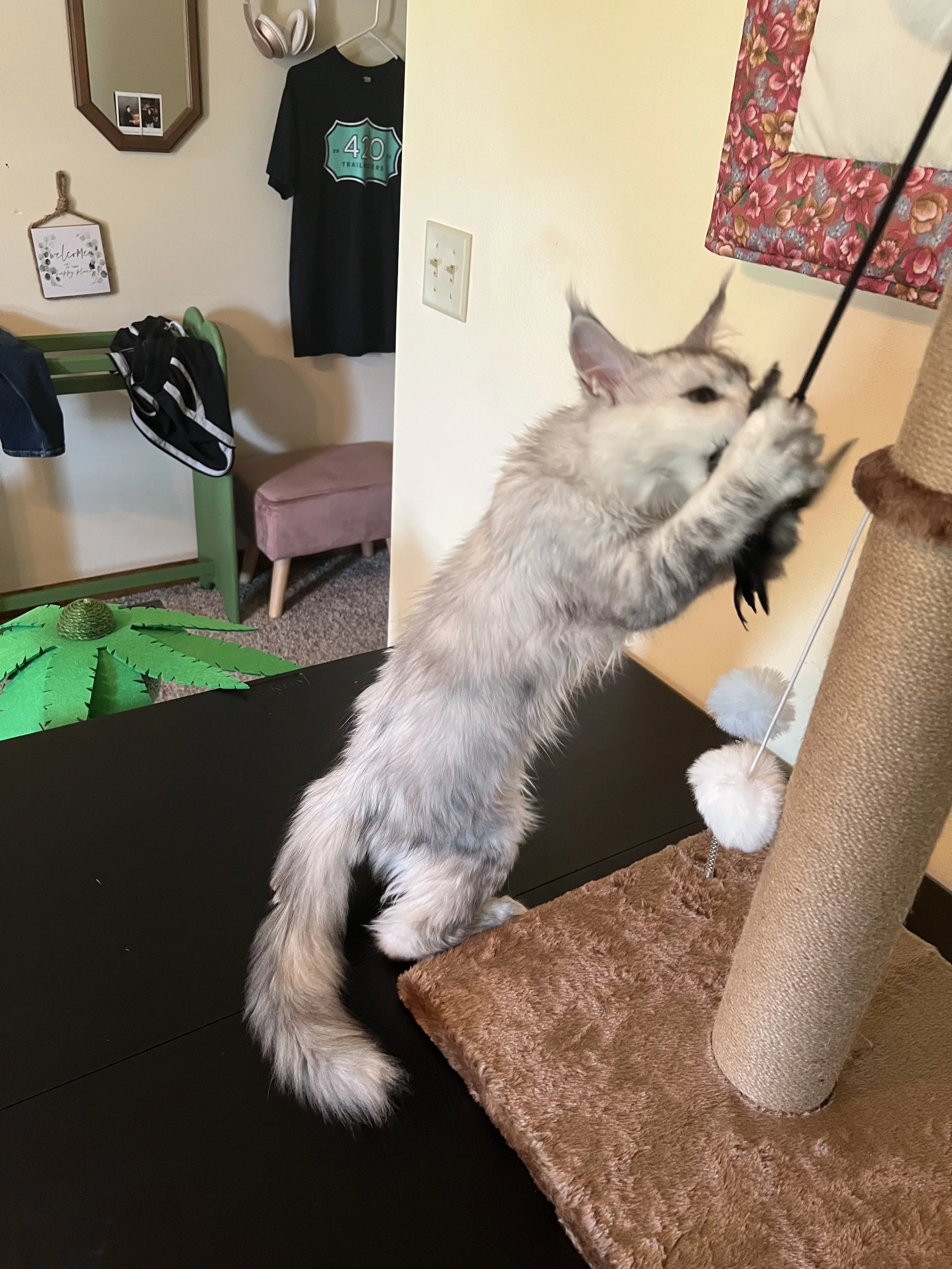
Queen Wren enjoys climbing high to reach the feather toy!
Confidence grows through successful experiences. As kittens develop, we can introduce them to different safe surfaces, toys, climbing opportunities, rooms, carriers, and other age-appropriate experiences. We allow them to investigate at their own pace.
A confident kitten isn't necessarily a kitten who has never been afraid. It's a kitten who has repeatedly learned that they can encounter something unfamiliar, investigate it, and discover that they're safe.
Preparing for the Carrier and Travel
Eventually, every kitten will need to travel — whether it's going to the veterinarian, attending a show, moving to a new home, or simply accompanying their family somewhere. We don't want the first introduction to a carrier to happen on the day a kitten leaves. Allowing kittens to investigate carriers and become familiar with them can help make future transportation less intimidating.
For kittens who may eventually participate in cat shows, travel, grooming, handling, and unfamiliar environments become even more important pieces of their preparation.
Every Kitten Is Different
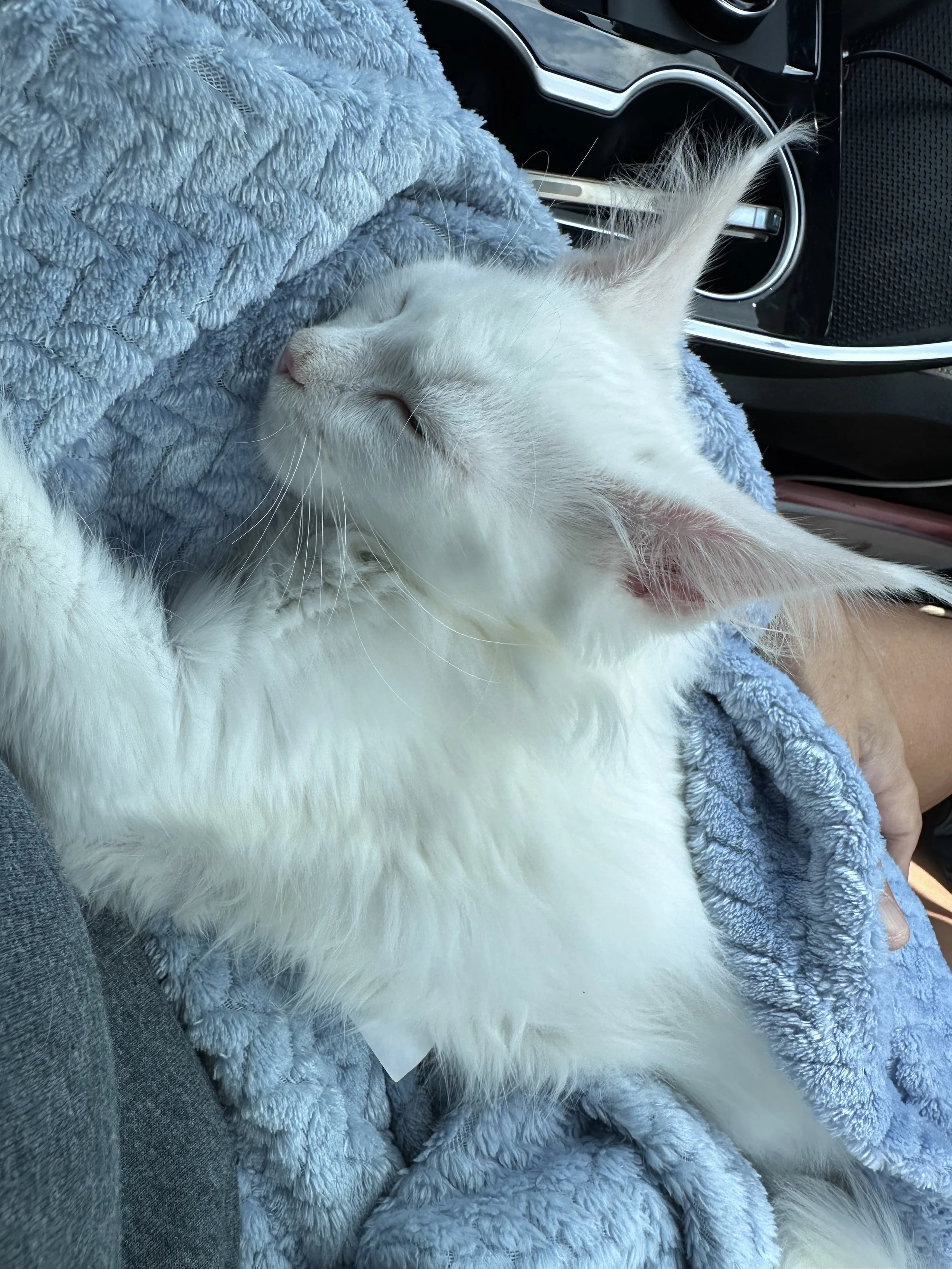
King Rembrandt being the most relaxed kitten.
Perhaps the most important part of our approach is recognizing that socialization isn't one-size-fits-all. One kitten may be fearless. Another may be thoughtful. One may want to climb directly into your lap. Another may sit three feet away and study you before deciding you're worthy of an audience. We don't expect every kitten to have the same personality. Instead, we work with the kitten standing in front of us.
The goal isn't to create identical personalities. It's to help each kitten become the most confident version of themselves.
Socialization Doesn't End When They Leave Us
When one of our kittens goes home, their socialization journey continues. Their new family becomes part of the next chapter. We encourage families to continue introducing new experiences positively and gradually while providing plenty of affection, play, enrichment, grooming, and opportunities to explore. The foundation begins with us. But the relationship that kitten develops with their family will continue shaping them for years to come.
Raising More Than Beautiful Maine Coons
There is no question that Maine Coons are extraordinary cats. Their size, coats, expressions, and personalities make them impossible to overlook. But when we think about the kittens we hope to raise at A Velvet Claw, appearance is only part of the picture. We want beautiful Maine Coons. We also want kittens who know the comfort of human hands, recognize the sound of everyday life, approach the world with curiosity, and are prepared to form incredible relationships with their families. Because someday, one of our kittens won't simply be our kitten anymore.
They'll be someone's best friend and preparing them for that life begins long before the day they go home.
Fur-ever grateful: Lexie & Melina
Maine Coon Kittens, Kitten Socialization, Maine Coon Care,
Kitten Development, Maine Coon Breeder