
🦴 Hip Dysplasia in Maine Coons: It’s Not Just a Dog Problem
Why Responsible Breeders Pay Attention to Hips—Even When a Cat Runs, Jumps and Plays Normally
When you hear the words hip dysplasia, what animal comes to mind? Probably a large dog. German Shepherd. Labrador. Great Dane. But here's something many cat owners don't realize:
Cats can develop hip dysplasia too—and Maine Coons are one of the breeds where hip health deserves particular attention. 🐾
That might sound surprising when you're watching a Maine Coon race through the house, leap onto a cat tree and launch themselves across the furniture like gravity is merely a suggestion. 😂 But that's exactly why hip screening is important.
A cat can appear active, athletic and completely comfortable while still having changes in the hip joint that aren't obvious from watching them walk. For responsible breeders, evaluating hips isn't about looking for a “perfect” cat.
It's about gathering as much information as possible before making breeding decisions.
1. What Exactly Is Hip Dysplasia? 🦴
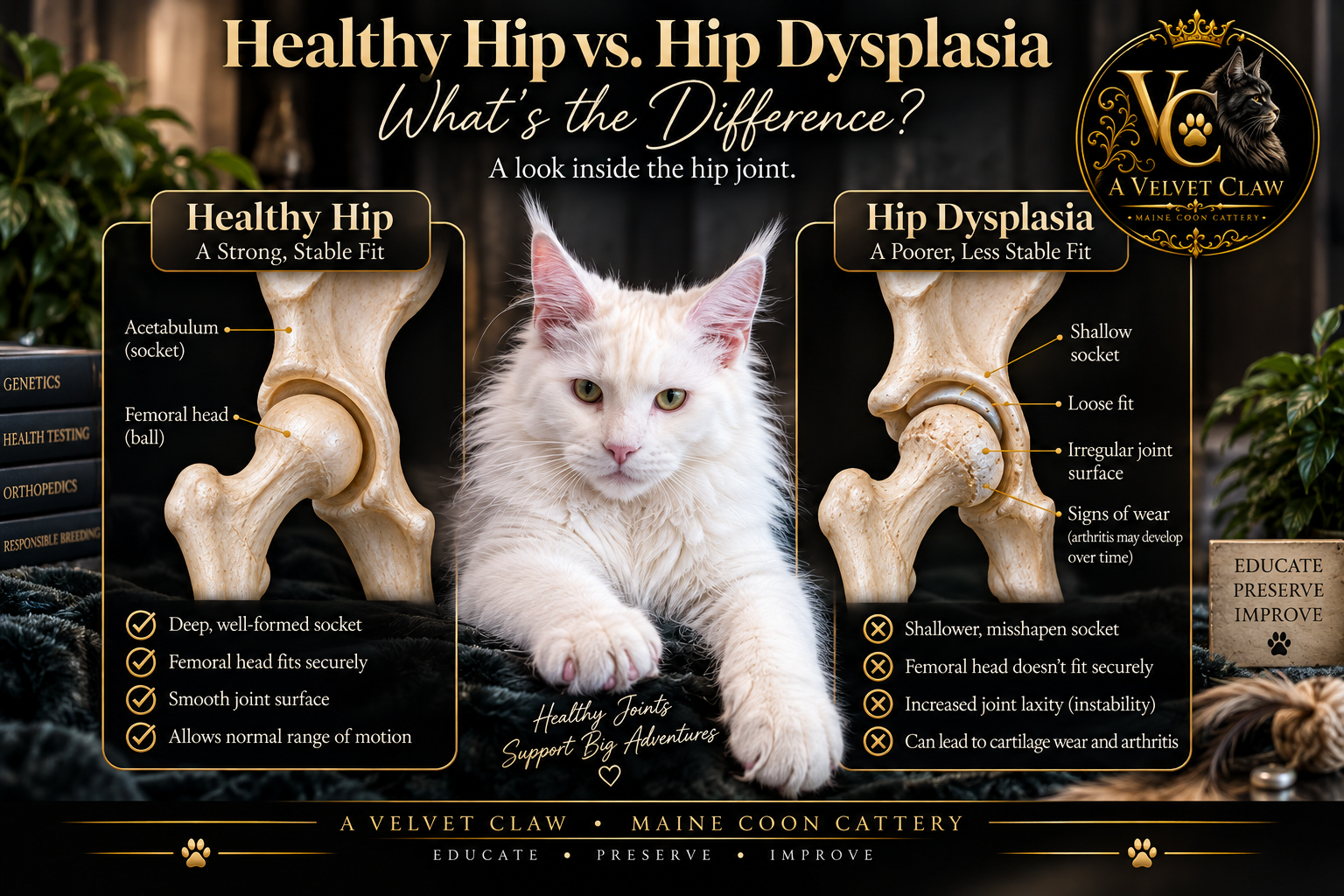
The hip is a ball-and-socket joint. The rounded head of the femur acts as the ball, while a portion of the pelvis called the acetabulum forms the socket. In a healthy hip, these structures should fit together securely and allow smooth movement.
With hip dysplasia, the hip joint develops abnormally. The fit between the ball and socket can be too loose or otherwise poorly formed. Over time, abnormal movement within the joint can contribute to cartilage damage, inflammation and osteoarthritis.
The severity can vary tremendously from one cat to another. And here's an important distinction:
Hip dysplasia is not the same thing as simply “having arthritis.”
Hip dysplasia describes abnormal development/conformation of the hip joint. Arthritis can develop as a consequence of that abnormal joint.
2. Yes—Maine Coons Can Get Hip Dysplasia 🐾
Hip dysplasia is much more commonly discussed in dogs, but it is well documented in cats. Research has also found breed differences in feline hip dysplasia, with Maine Coons among the breeds reported to have a higher prevalence than many others.
That doesn't mean: “Maine Coons have bad hips.” And it certainly doesn't mean every Maine Coon will develop hip problems.
It means this is a health concern worth understanding and considering within a responsible breeding program. That's a very different statement.
3. Why Might Maine Coons Be More Susceptible? 🤔
Hip dysplasia is considered a complex, multifactorial condition. In other words, there isn't one simple “hip dysplasia gene” that breeders can test for and eliminate. Genetics play an important role, but other factors may influence how disease develops or how severely it affects an individual.
Those can include things such as:
Body size and structure
Growth and development
Body condition
Nutrition
Activity and mechanical stress
Other environmental influences
Maine Coons are large, substantial cats with long skeletal development. But size alone isn't the whole explanation.
This is exactly why responsible breeding should never focus on producing the “biggest Maine Coon possible.”
Bigger does not automatically mean better. Structure, movement, health and overall balance matter far more than chasing a number on a scale.
4. Hip Dysplasia Can Be Genetic Without Having a Simple DNA Test 🧬
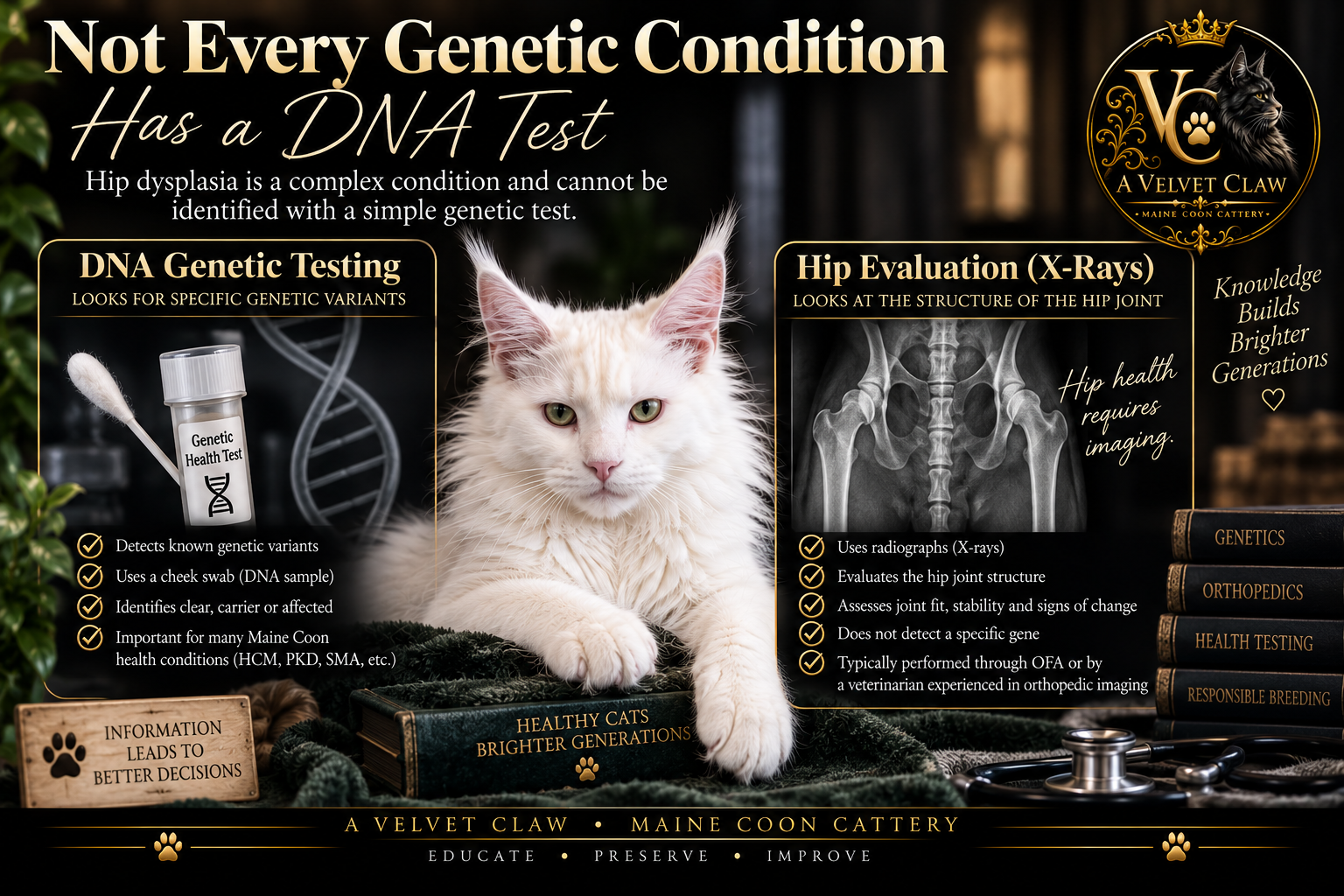
This is a really important concept. People sometimes assume: Genetic condition = DNA test.
That's not always true. Some diseases are strongly associated with specific genetic variants that laboratories can test directly. Hip dysplasia is different. It's generally considered polygenic and multifactorial, meaning many genes plus environmental factors contribute to risk.
So instead of sending in a cheek swab and receiving: CLEAR ✅ or AFFECTED ❌
breeders need another way of gathering information. That's where radiographic hip evaluation comes in.
5. “But My Cat Runs and Jumps Fine!” 🐈💨
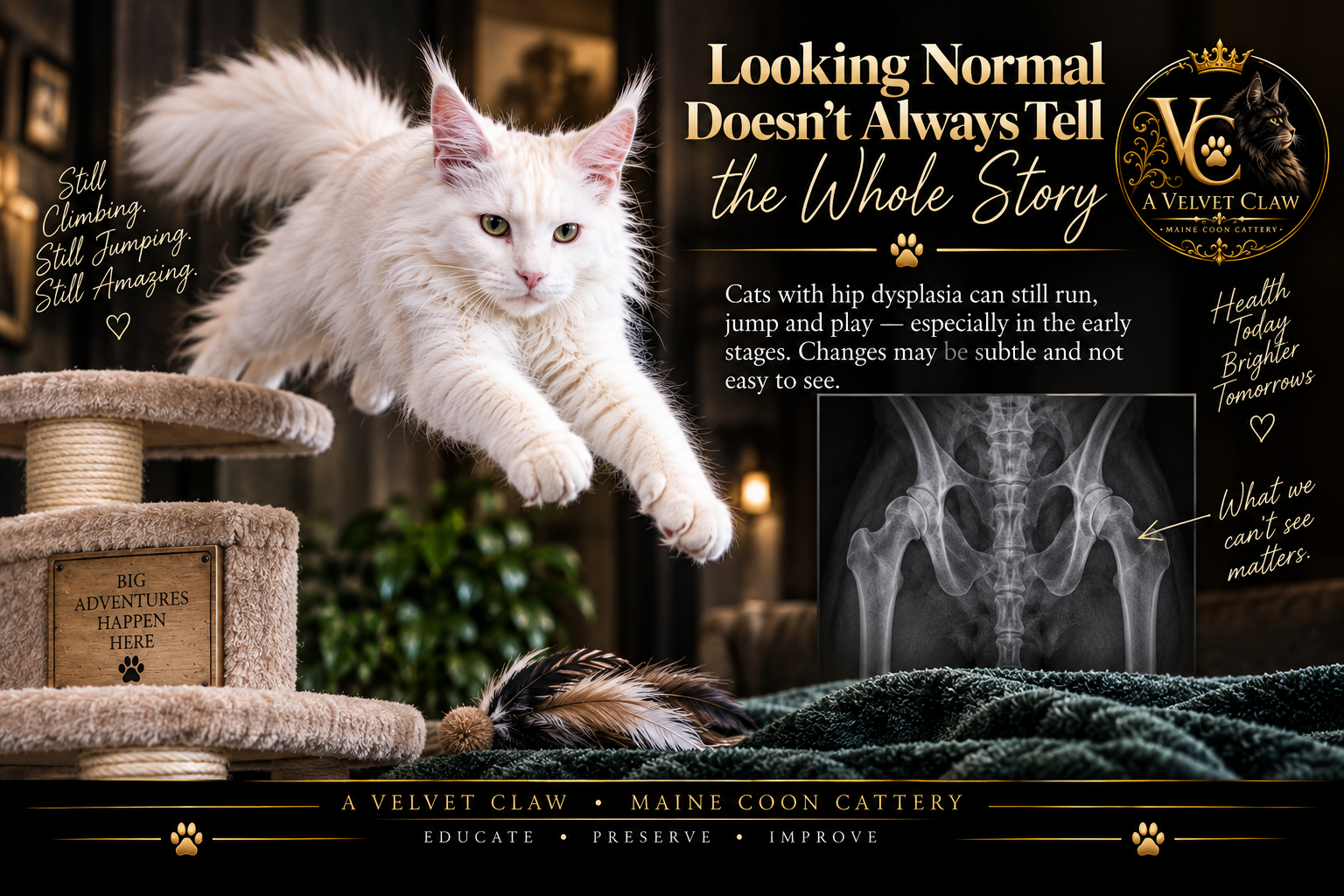
That's wonderful—but it doesn't necessarily tell us everything about the hips. Cats are incredibly good at compensating for discomfort. They also don't have to walk into the veterinary clinic dramatically limping for something to be happening inside a joint. Some cats with hip dysplasia may have few or subtle outward signs, particularly when they're young. Others may eventually show more obvious changes.
That's why: Watching a cat move isn't a substitute for properly evaluating the hip joint.
The outside tells us part of the story. Imaging lets us look inside.
6. What Are the Signs of Hip Dysplasia in a Maine Coon? 🔎
When symptoms occur, they can vary.
An owner might notice things such as:
Reluctance to jump as high as before
Difficulty climbing stairs
Reduced activity
Stiffness after resting
Changes in gait
Sensitivity around the hips
Difficulty getting up
Less interest in playing
Changes in grooming
Muscle loss around the hindquarters
Irritability when the rear of the body is touched
But here's the tricky part: Some cats may show very little.
A Maine Coon doesn't have to be obviously limping to justify concern about hip health. And any new mobility problem deserves veterinary evaluation because many conditions besides hip dysplasia can cause similar symptoms.
7. How Are Maine Coon Hips Evaluated? 🩻
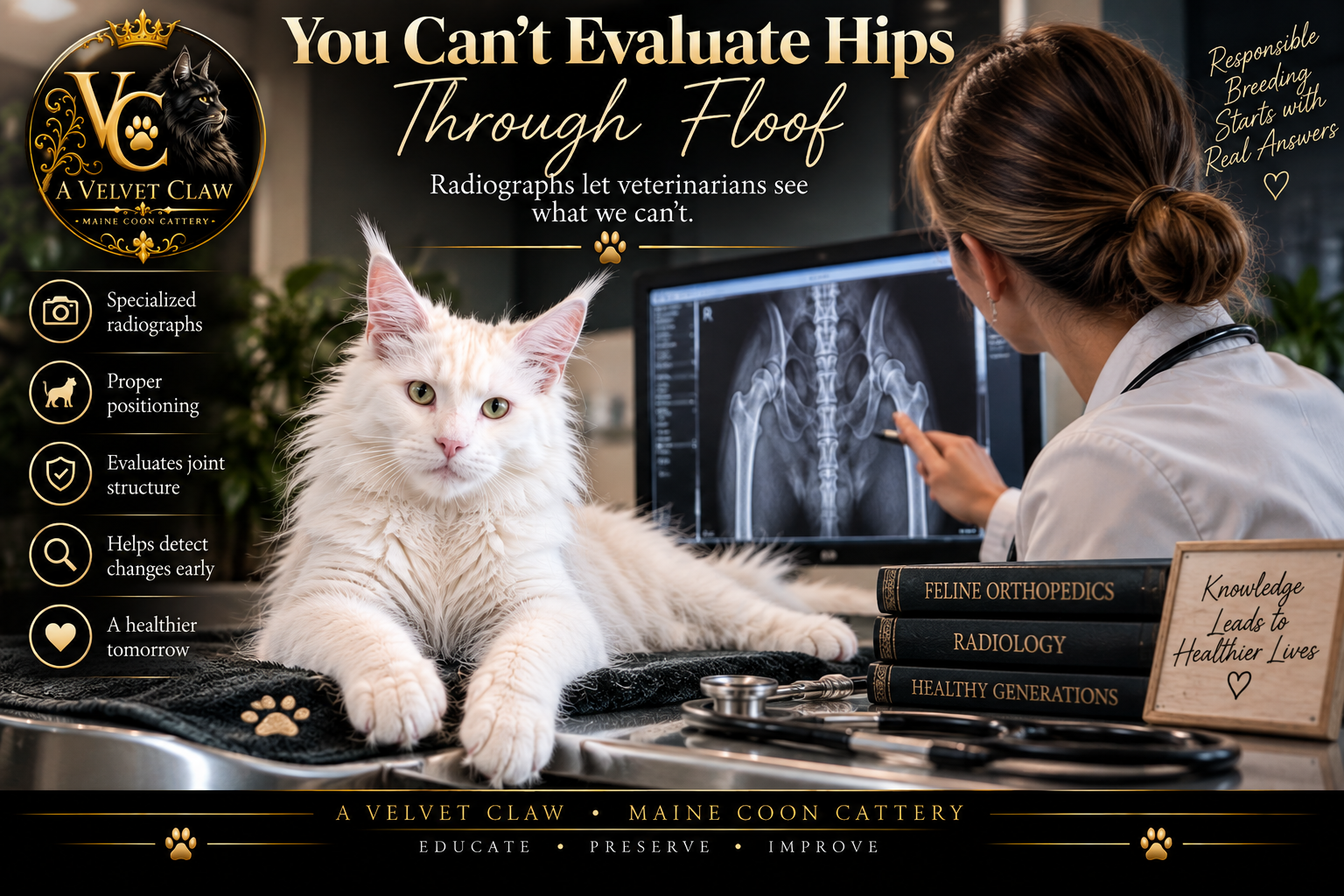
One important tool is radiography—X-rays of the hips. The cat is positioned so the veterinarian can obtain images that allow the hip joints to be evaluated. Organizations such as the Orthopedic Foundation for Animals (OFA) maintain screening programs for hip dysplasia in cats as well as dogs.
The radiographs can be evaluated for features such as joint congruity, the relationship between the femoral head and acetabulum, and evidence of degenerative joint changes. Depending on the screening program and the cat's age, evaluations may be considered preliminary or eligible for a final certification.
The exact screening protocol and timing should be discussed with a veterinarian and the organization being used.
8. Why Proper Positioning Matters 📸
A hip X-ray isn't just: “Take a picture of the back legs.”
Positioning matters. Poor positioning can make interpreting orthopedic radiographs more difficult. That's why breeders should work with veterinarians who understand the requirements of the screening method being used.
Depending on the cat, veterinarian and imaging procedure, sedation may also be recommended so the cat can be positioned correctly and comfortably. The goal isn't simply to have an X-ray in the medical record. The goal is to obtain an image that provides useful information.
9. Why Screen a Cat That Has Never Had a Hip Problem? 🖤
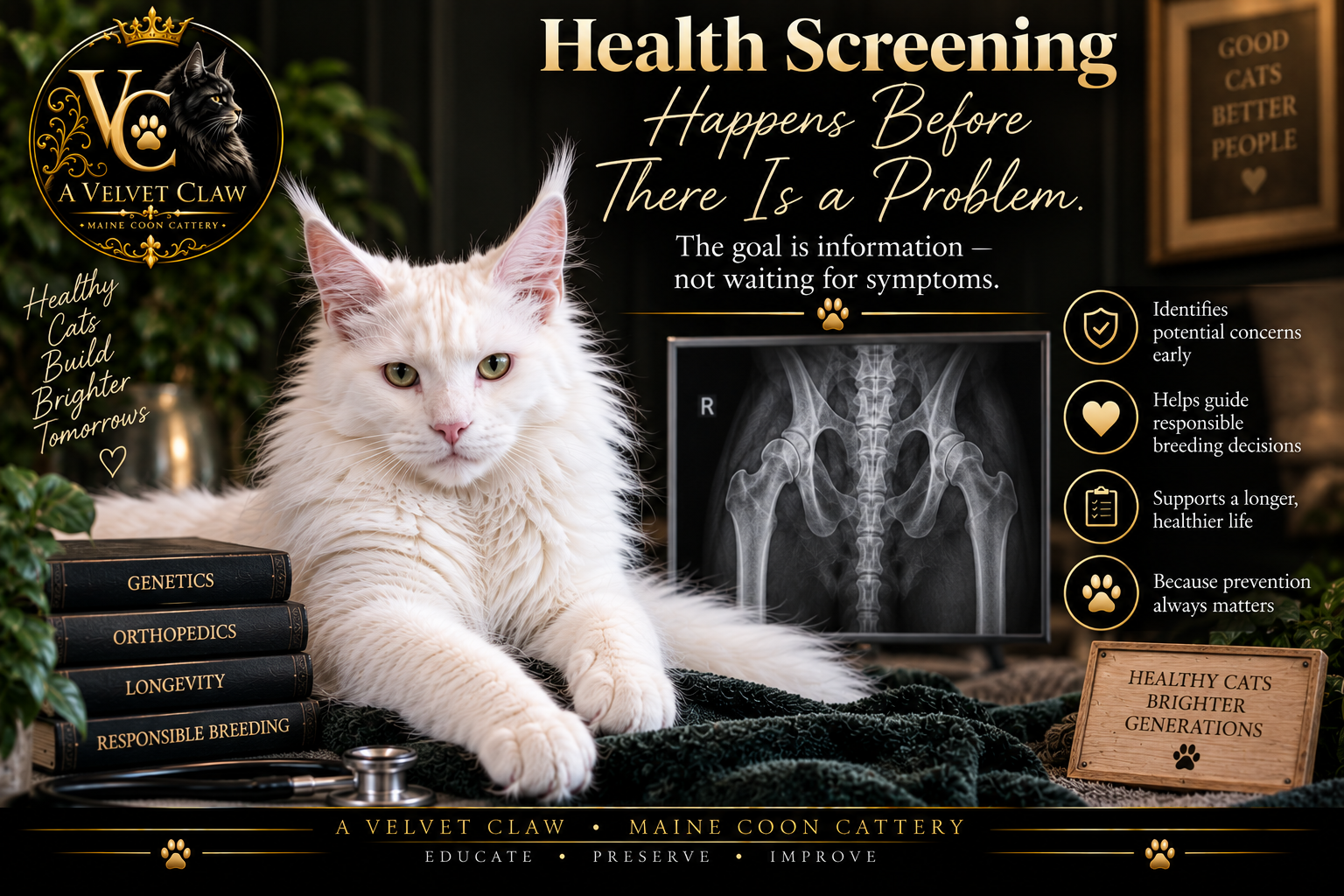
This is where health screening and ordinary veterinary care serve slightly different purposes. If a pet Maine Coon develops pain or difficulty moving, imaging may be performed to help determine why that individual cat is having symptoms.
Breeding screening asks a different question: “What information can we gather about this apparently healthy cat before deciding whether to reproduce them?”
That's why waiting until a breeding cat develops obvious symptoms misses much of the point. Screening is intended to help breeders make informed decisions before problems appear in future generations.
10. Does a Good Hip Result Guarantee the Kittens Will Have Good Hips? 🧬
No. And this is another place where responsible breeding education matters. Two parents with favorable hip evaluations can still produce a kitten that eventually develops hip dysplasia. Why? Because we're dealing with a complex trait influenced by multiple genes and environmental factors.
Likewise, a screening result isn't a crystal ball predicting exactly what will happen to every descendant. Health screening reduces uncertainty. It doesn't eliminate biology. That's true for many areas of breeding. The goal isn't to promise perfection.
The goal is to make better-informed decisions with the information available.
11. What Happens If a Breeding Cat Has an Abnormal Hip Evaluation? 📋
There isn't a responsible one-size-fits-all answer that can be determined from a single number or image without context. The breeder and veterinarian need to consider the severity of the findings, the cat's clinical health, family history, pedigree, previous offspring if applicable, the intended mate and the goals of the breeding program.
Depending on the findings, breeding plans may need to change.
And sometimes the responsible decision is: This cat shouldn't be part of the breeding program.
That can be emotionally difficult. Breeders invest tremendous amounts of time, money and love into their cats. But purchasing a cat with breeding rights doesn't guarantee that cat will ultimately become a breeding cat. Health and development have to come first.
12. Why Not Breed Only Cats With “Perfect” Hips? 🤔
This is where responsible breeding becomes more complicated than checking boxes.
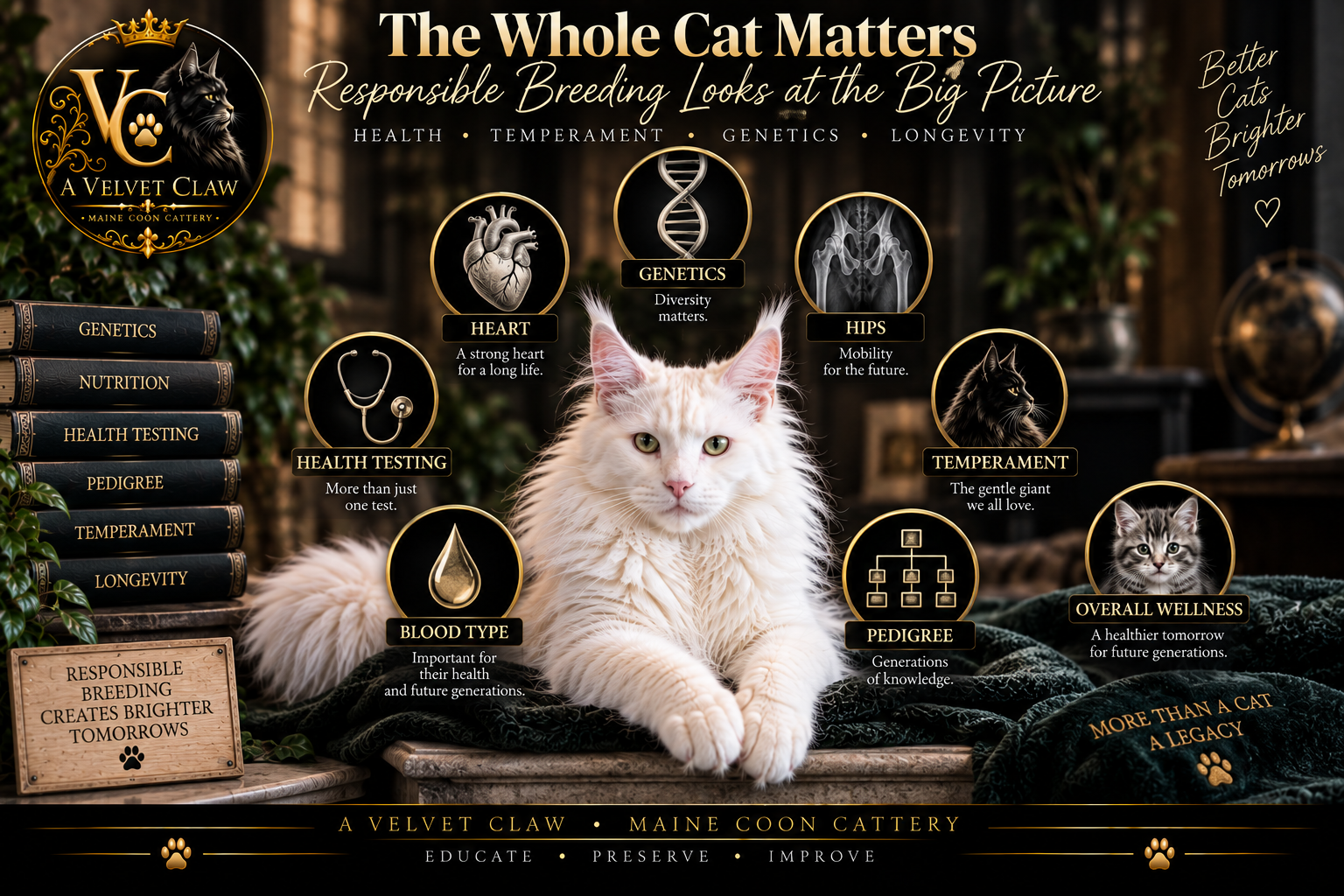
Breeders are simultaneously considering:
Hip health
Heart health
Genetic disease testing
Blood type
Pedigree
Genetic diversity
Temperament
Structure
Overall health
Family history
Making breeding decisions based on a single trait while ignoring everything else can create unintended consequences. The goal should be to improve health over generations while maintaining a healthy, genetically diverse population. Responsible breeding evaluates the whole cat—and the whole pairing.
13. Can Weight Affect Hip Health? ⚖️
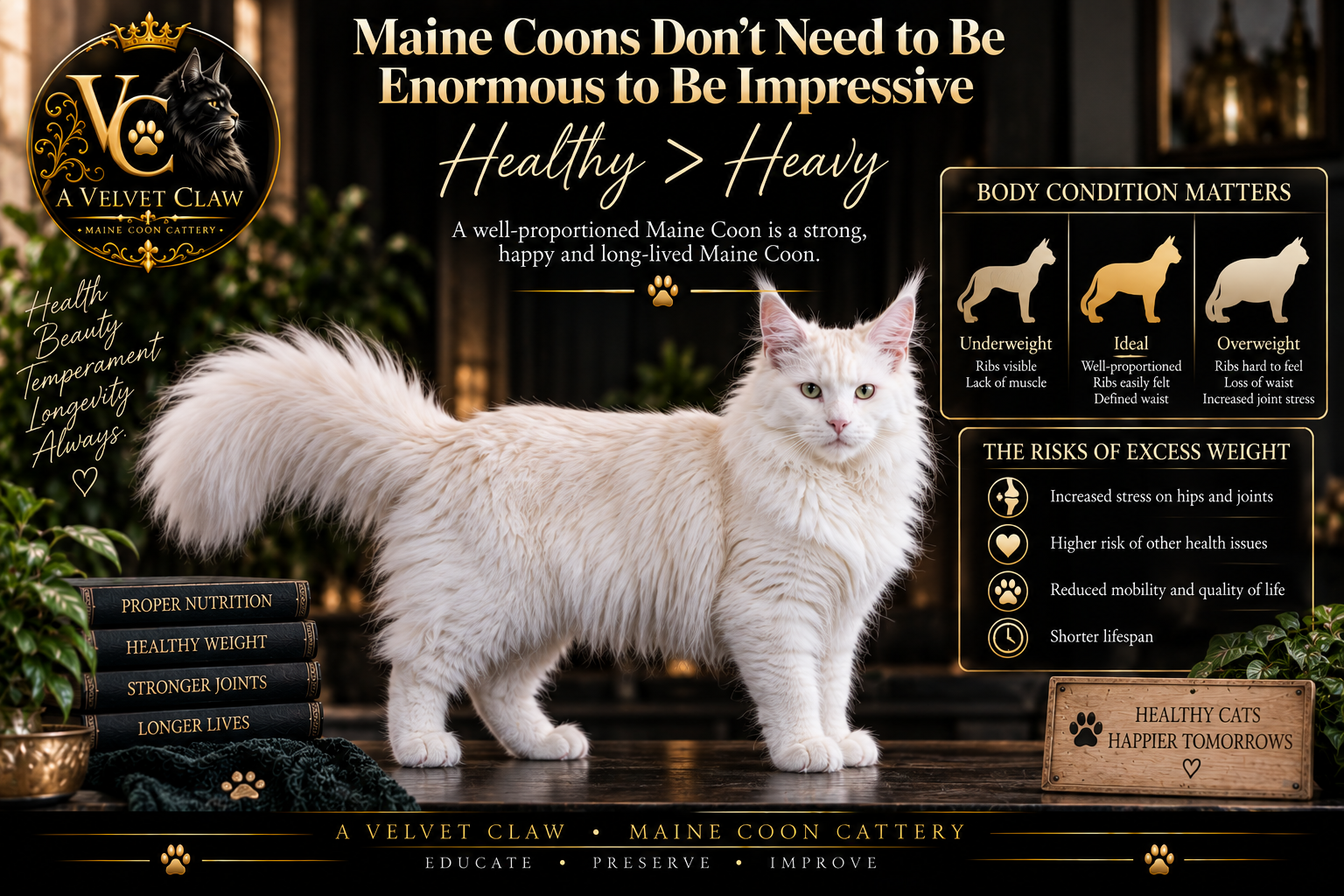
Body condition matters tremendously for joints. Excess body weight places additional mechanical stress on the musculoskeletal system and can worsen the burden of existing joint disease. That doesn't mean an overweight cat “caused” its genetic hip dysplasia.
Those are two different things. But maintaining an appropriate body condition is one of the practical ways owners can help support joint health. And with Maine Coons, this deserves special attention because people sometimes become obsessed with making them as large as possible. A Maine Coon doesn't need to weigh 25 pounds to be impressive.
Healthy is more important than heavy. Every single time.
14. Should Maine Coon Owners Have Their Pet's Hips X-Rayed? 🏡
Not every pet Maine Coon automatically needs screening radiographs simply because they're a Maine Coon. That's a conversation to have with your veterinarian based on the individual cat. But owners should know what normal movement looks like for their cat.
If your Maine Coon suddenly:
Stops jumping onto favorite surfaces…
Moves differently…
Becomes reluctant to climb…
Seems stiff…
Shows pain…
Or changes normal activity patterns…
Don't dismiss it as:
“They're just getting older.”
Ask your veterinarian.
Cats can't tell us where it hurts. Behavior often does the talking for them.
15. What Should Kitten Buyers Ask a Breeder? 🔎
Instead of asking only: “Are the parents health tested?”
Try asking: “What health screening do you perform on your breeding cats, and may I see the results?”
That's a much more useful question. A responsible breeder should be able to explain what testing they perform, why they perform it and what the results mean. And it's okay if you don't understand every medical abbreviation.
Ask.
Good breeders shouldn't be afraid of educated kitten families. They should welcome them. 🖤
16. Health Testing Isn't About Creating “Perfect Cats” 🧬❤️
If you've been following our educational series, you've probably noticed a theme. Genetic testing isn't a guarantee. Blood typing isn't a guarantee. HCM screening isn't a guarantee. Hip evaluation isn't a guarantee.
Nothing in biology comes with a promise that says: “Nothing will ever go wrong.”
Responsible breeders aren't trying to manufacture genetically perfect animals. We're trying to gather information. Recognize risks. Make thoughtful pairings. Avoid preventable problems when possible. Learn from previous generations.
And make decisions that hopefully move the next generation in a healthier direction.
🦴 It's Not Just a Dog Problem
Hip dysplasia may never be the first thing someone thinks about when they see a magnificent Maine Coon. They see the enormous paws. The ear tufts. The flowing coat. That huge tail.
And, of course, the personality that somehow manages to occupy even more space than the cat does. 😂 But underneath all that beautiful floof is a skeleton supporting one of the largest domestic cat breeds. And those joints matter.
Responsible breeding means caring about the things people can see—and the things they can't.
Hip screening is one more piece of that responsibility. Not because we're searching for perfect cats. But because every piece of information gives us another opportunity to make a better decision. Health testing isn't about predicting the future.
It's about doing everything reasonably possible to give that future a healthier start. 🖤💛🐾
🖤 Keep Learning With A Velvet Claw
At A Velvet Claw, we believe families deserve to understand the why behind responsible breeding. Follow along as we continue exploring Maine Coon genetics, health screening, development, pedigrees and responsible breeding—along with plenty of giant paws, ear tufts and floof. 🐾
Educate. Preserve. Improve. Better knowledge. Better decisions. Brighter generations. 🖤💛
Fur - ever grateful: Lexie & Melina
Maine Coon hip dysplasia • Hip dysplasia in Maine Coons • Feline hip dysplasia
Maine Coon hip screening • Maine Coon hip health • Maine Coon health testing