

When it comes to feeding our magnificent Maine Coons, one question comes up frequently:
Can I feed my Maine Coon both wet and dry food?
The short answer is yes!
In fact, many cat owners choose a combination of wet and dry food to provide variety, convenience, and additional moisture in their cat’s daily diet.
But there’s more to mixed feeding than simply putting out two different types of food.
Understanding portion sizes, nutritional balance, and your Maine Coon’s individual needs can help you develop a healthy feeding routine.
Let’s explore how mixed feeding works!
What Is Mixed Feeding?
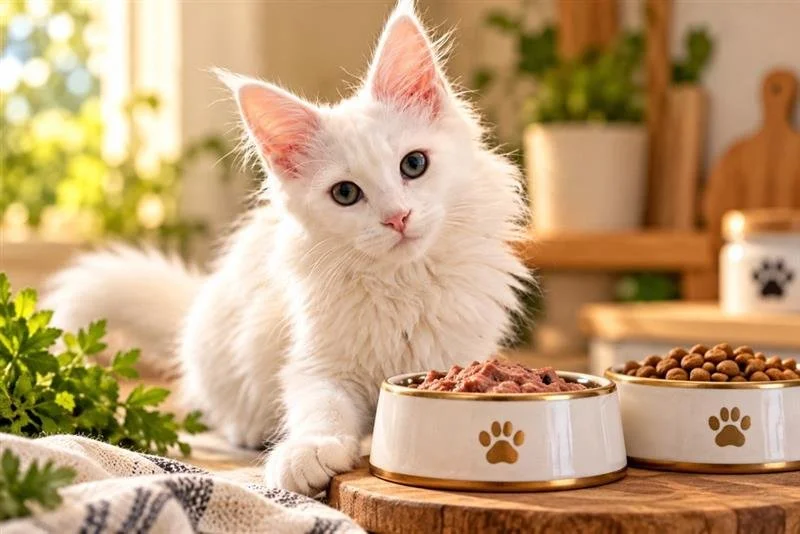
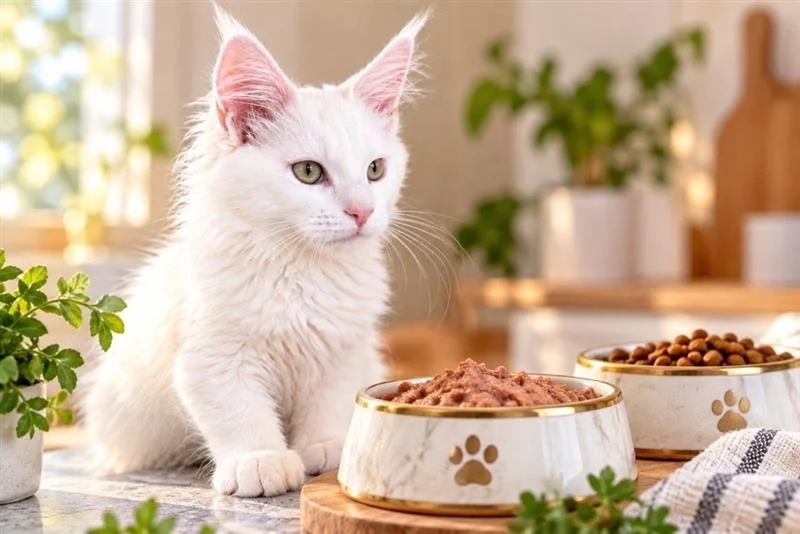
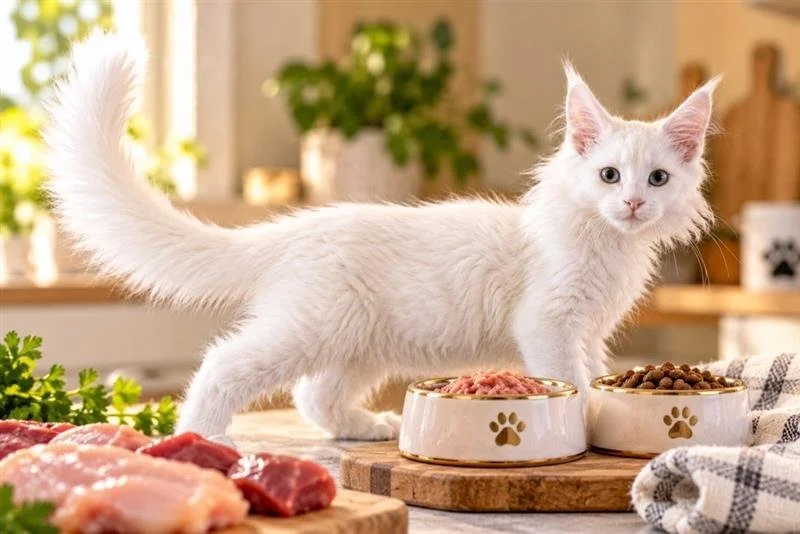
Mixed feeding means incorporating both wet and dry cat food into your cat’s regular diet.
For example, a Maine Coon might receive:
Wet food for breakfast
A measured portion of dry food during the day
Wet food again in the evening
Other families may prefer serving wet and dry food together in the same meal.
Both approaches can work!
The key is ensuring that the total amount of food provides appropriate nutrition and calories for your cat.
Why Do Some Maine Coon Owners Choose Mixed Feeding?
There are several reasons why combining wet and dry food may appeal to Maine Coon families.
1. Supporting Hydration
Cats naturally have a relatively low thirst drive compared with many other animals.
Wet food typically contains approximately 70–80% moisture, while dry food generally contains around 10% or less.
Including wet food in your Maine Coon’s diet can increase the amount of water consumed through food.
However, fresh drinking water should always be available, regardless of feeding method.
2. Providing Different Textures
Maine Coons can develop individual preferences for certain textures, flavors, and food consistencies.
Some love crunchy kibble, while others prefer pâté, shredded meat, or food in gravy.
Offering different textures may help some cats accept a wider variety of foods.
However, not every cat enjoys variety, and dietary changes should be introduced gradually.
3. Convenience for Busy Families
Dry food is convenient to measure, store, and serve.
Wet food provides additional moisture but requires more attention to storage and handling.
Combining the two can offer flexibility for families balancing work, household routines, and their cats’ feeding schedules.
4. Supporting a Consistent Feeding Routine
Many cats benefit from predictable meal schedules.
Serving measured portions at consistent times can help owners monitor appetite and notice changes in eating habits.
This is particularly useful in multi-cat households where it’s important to know how much each cat is eating.
The Biggest Mistake: Overfeeding
One of the most common mistakes with mixed feeding is giving a cat its full recommended daily serving of dry food plus a full daily serving of wet food.
This can result in excessive calorie intake.
For example, suppose a cat needs 300 calories per day.
If its dry food provides 400 calories per cup and its wet food provides 90 calories per can, a possible daily combination would be:
½ cup of dry food = 200 calories
1 can of wet food = 90 calories
Total = 290 calories
This is only a mathematical example, not a feeding recommendation for every Maine Coon.
Actual calorie needs depend on age, body condition, activity level, reproductive status, and health.
Always check the calorie information on the specific foods you’re feeding.
Do Both Foods Need to Be Complete and Balanced?
Ideally, both foods used as regular meals should be labeled complete and balanced for your cat’s appropriate life stage.
Look for an AAFCO nutritional adequacy statement on the packaging.
A food labeled for supplemental or intermittent feeding only should not replace a substantial portion of a complete diet unless the overall feeding plan has been properly formulated.
This matters especially for growing kittens.
Mixed Feeding for Maine Coon Kittens
Maine Coon kittens have significant nutritional requirements during their early development.
Because Maine Coons are a slow-maturing breed, owners sometimes assume they should remain on kitten food for several years.
However, the appropriate time to transition to adult food depends on the individual cat, its growth, body condition, and veterinary guidance.
A kitten’s diet must provide complete and balanced nutrition for growth.
When combining foods for a kitten:
Choose foods appropriate for growth.
Provide enough calories to support healthy development.
Offer meals frequently enough for the kitten’s age.
Monitor weight and body condition.
Adjust portions as the kitten grows.
Avoid restricting a growing kitten’s calories simply to match an adult feeding schedule.
Can You Mix Wet and Dry Food in the Same Bowl?
Yes!
Wet and dry food can be combined in the same bowl, provided both foods are appropriate for your cat.
However, once dry kibble is mixed with wet food, it should be treated as perishable.
Do not leave the mixture sitting out for extended periods.
Refrigerate unused wet food according to the manufacturer’s directions, discard uneaten portions promptly, and wash food bowls regularly.
Some cats prefer their wet and dry food served separately, and that’s perfectly fine too!
How Should You Introduce Mixed Feeding?
If your Maine Coon has only been eating one type of food, introduce the new food gradually.
A transition over approximately 7–10 days works for many healthy cats, although some require a slower approach.
Start with a small amount of the new food while slightly reducing the existing food to maintain an appropriate total calorie intake.
Gradually increase the new food while monitoring your cat’s appetite, stool consistency, and overall comfort.
If vomiting, diarrhea, or refusal to eat occurs, contact your veterinarian.
Cats should not be allowed to go without eating for prolonged periods.
What About Dental Health?
It’s a common belief that dry kibble automatically cleans a cat’s teeth.
However, ordinary dry food is not a substitute for dental care.
Some specially formulated dental diets have evidence supporting their effectiveness, but regular kibble does not reliably prevent dental disease.
Routine veterinary dental examinations and appropriate home dental care remain important, regardless of whether your Maine Coon eats wet food, dry food, or both.
Is Mixed Feeding Right for Every Maine Coon?
Not necessarily.
Some cats do best with a single complete and balanced diet.
Others may require prescription foods or specialized feeding plans for medical conditions.
Mixed feeding can be a practical option for many healthy cats, but it isn’t automatically superior to feeding an appropriate wet-only or dry-only diet.
The best approach is the one that safely meets your individual cat’s nutritional needs.
Final Thoughts From A Velvet Claw
At A Velvet Claw Maine Coon Cattery, we believe responsible cat ownership starts with understanding your cat’s needs.
There isn’t one perfect feeding method for every Maine Coon.
Whether your cat enjoys wet food, dry food, or a combination of both, what matters most is providing complete and balanced nutrition, appropriate portions, fresh water, and consistent care.
Mixed feeding can offer convenience, variety, and additional dietary moisture when done thoughtfully.
Remember: It’s not about how many different foods you offer. It’s about how well those foods meet your cat’s needs.
Fur-ever grateful,
A Velvet Claw Maine Coon Cattery - Melina & Lexie
Extraordinary Cats. Brighter Tomorrows.
www.avelvetclaw.com
⸻
Educational disclaimer: This article provides general nutritional information and does not replace veterinary advice tailored to your individual cat.