
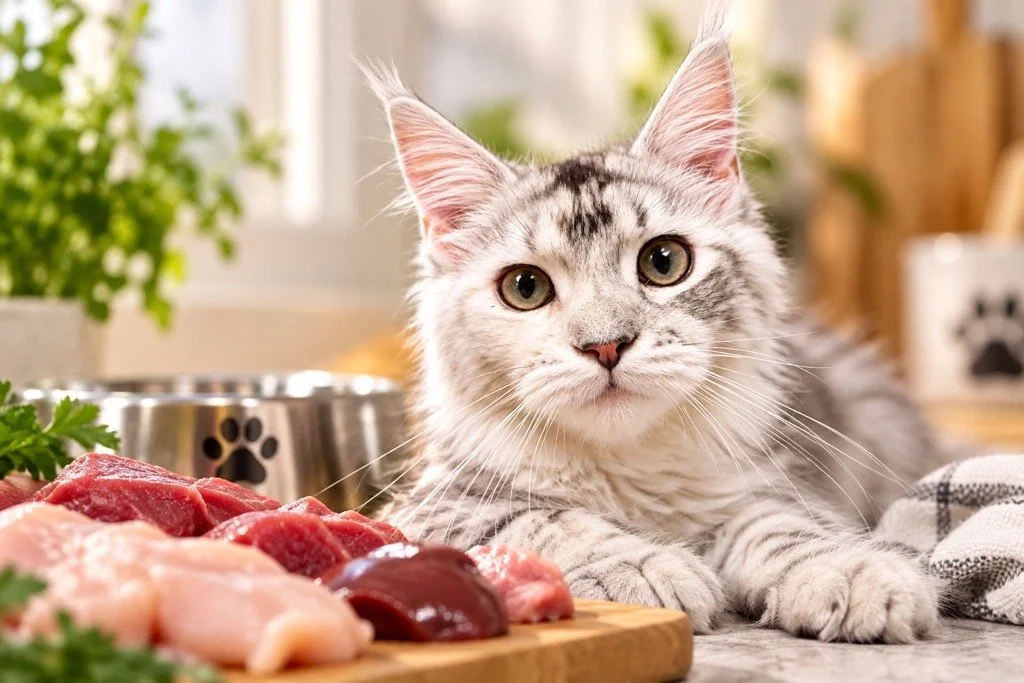
When it comes to feeding our beloved Maine Coons, there’s one topic that tends to spark plenty of conversation: raw feeding.
Some cat owners swear by it. Others prefer traditional commercial diets. And many new Maine Coon families are simply trying to understand what raw feeding actually involves.
With so much conflicting information online, how do you separate nutritional facts from marketing claims?
Let’s explore what raw feeding is, why some owners are interested in it, and what you should consider before making changes to your cat’s diet.
What Is a Raw Diet?
A raw diet consists of uncooked animal-based ingredients. Depending on the feeding approach, it may contain:
Raw muscle meat, such as chicken, turkey, or beef
Organ meats, including liver and kidney
Raw bones or ground bone
Eggs or other animal-based ingredients
Added vitamins, minerals, and supplements
Raw diets may be commercially prepared, frozen, freeze-dried, or homemade.
However, not every raw diet is nutritionally complete, and not every freeze-dried food is raw. Some products are cooked before freeze-drying.
Why Do Some Maine Coon Owners Choose Raw Feeding?
There are several reasons cat owners become interested in raw diets.
1. High animal-protein content
Cats are obligate carnivores, meaning they require nutrients naturally found in animal tissues.
Many raw diets emphasize animal proteins, although high-quality cooked diets can provide these nutrients as well.
2. Ingredient control
Some owners appreciate knowing exactly which ingredients are included in their cat’s food.
This is especially appealing to families interested in limited-ingredient diets.
However, ingredient simplicity does not automatically mean a diet provides complete nutrition.
3. Moisture content
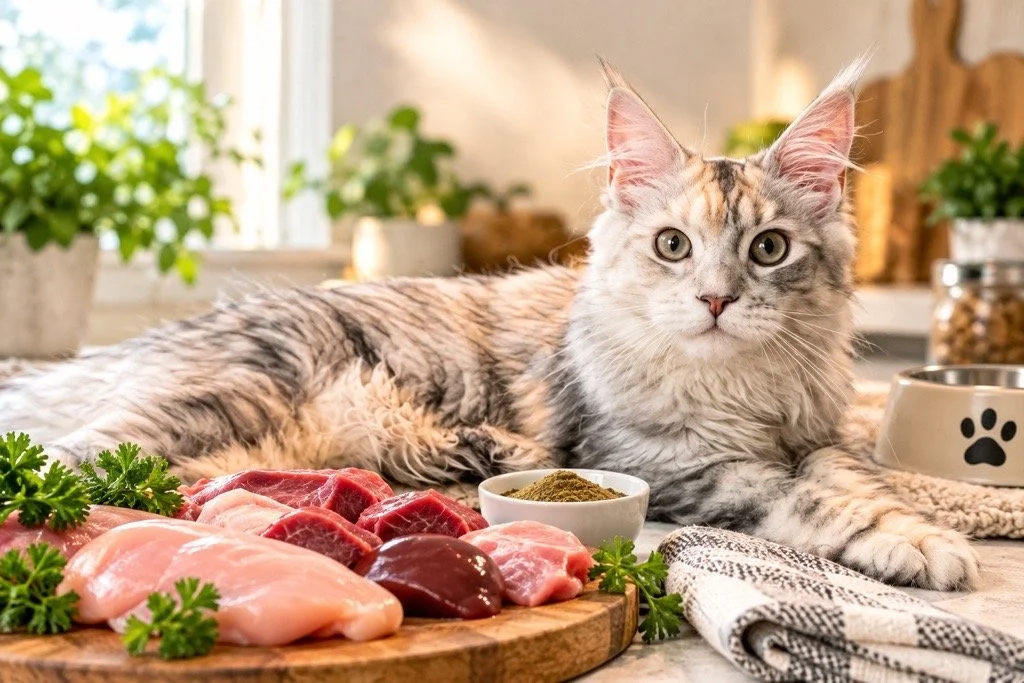
Fresh or thawed raw meat contains substantial moisture, which can contribute to a cat’s water intake.
Wet commercial cat food can provide a similar hydration benefit without the additional risks associated with raw meat.
4. Perceived improvements in appearance or digestion
Some raw-feeding enthusiasts report shinier coats, smaller stools, or improved digestion.
While these experiences may be meaningful to individual owners, they do not establish that raw diets are healthier than properly formulated cooked diets.
What Are the Risks of Raw Feeding?
This is where careful research becomes especially important.
Raw animal products may contain harmful microorganisms, including Salmonella, Listeria, and certain strains of E. coli.
These organisms can cause illness in cats and may also expose people in the household.
Even cats that appear perfectly healthy can potentially shed harmful bacteria.
Another concern is highly pathogenic avian influenza, commonly called H5N1 or bird flu. Cats can become seriously ill after exposure to contaminated uncooked animal products.
Freezing and freeze-drying do not reliably eliminate every harmful pathogen.
For these reasons, major veterinary and public-health organizations, including the American Veterinary Medical Association and the Centers for Disease Control and Prevention, discourage feeding raw animal-based diets to cats.
Nutritional Balance Matters More Than Whether Food Is Raw
Maine Coons are large cats, but their size doesn’t eliminate the need for precise nutritional balance.
They require appropriate amounts of:
High-quality, digestible protein
Essential fatty acids
Taurine
Calcium and phosphorus
Vitamins and trace minerals
Adequate calories for their life stage
One of the biggest concerns with homemade raw diets is that simply combining meat, organs, and bones does not guarantee a complete and balanced meal.
For example, feeding muscle meat alone can create serious nutritional deficiencies.
Growing Maine Coon kittens are particularly vulnerable to imbalances because their developing bones and bodies require carefully controlled nutrition.
A diet intended as the primary food should carry an appropriate nutritional adequacy statement for the cat’s life stage or be formulated by a board-certified veterinary nutritionist.
Is Raw Feeding Better for Maine Coon Kittens?
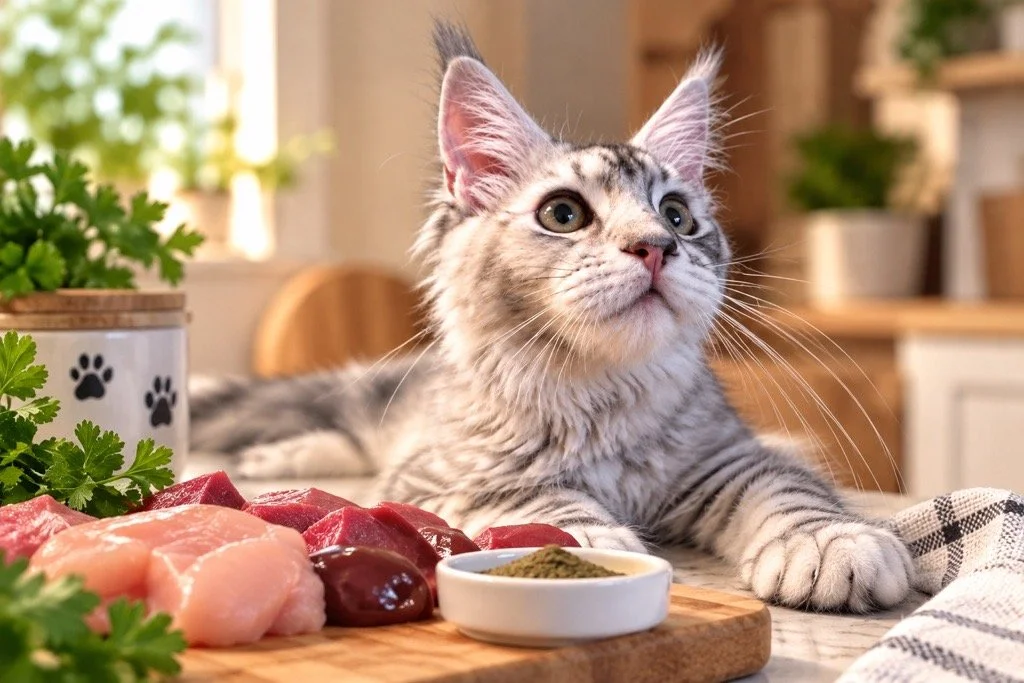
There is no convincing evidence that raw feeding is necessary for Maine Coon kittens to grow properly or develop healthy coats and muscles.
In fact, kittens may be particularly susceptible to foodborne illness.
During their early development, the priority should be a nutritionally complete and balanced kitten diet that supports healthy growth.
Maine Coon kittens need the right nutrition, not simply the highest possible protein percentage or the most expensive food.
What About Commercial Raw Food?
Commercial raw diets may be more convenient than preparing raw meals at home, but commercially manufactured does not automatically mean safe.
Some manufacturers use additional pathogen-reduction processes and conduct microbial testing.
These practices may reduce certain risks, but they do not guarantee that a raw product is free from harmful organisms.
Before considering any specialty diet, ask the manufacturer about its nutritional formulation, quality controls, food safety testing, and whether qualified veterinary nutrition professionals are involved.
Are There Safer Alternatives?
Absolutely!
For families who want to provide animal-based nutrition while avoiding the added risks of raw meat, several options are available:
Complete and balanced canned cat food
Complete and balanced cooked dry food
Commercially prepared, fully cooked fresh cat food
Properly formulated home-cooked diets developed with a veterinary nutritionist
The most important considerations are nutritional adequacy, digestibility, food safety, and your individual cat’s needs.
Our Thoughts at A Velvet Claw
At A Velvet Claw Maine Coon Cattery, we believe responsible cat ownership begins with education.
Our goal isn’t to criticize anyone’s feeding preferences. It’s to encourage families to understand the benefits, limitations, and potential risks of every feeding approach.
Raw feeding is a personal choice, but it is not a requirement for raising a healthy Maine Coon, and veterinary experts generally recommend safer, properly cooked alternatives.
Before making a major dietary change, speak with your veterinarian or a board-certified veterinary nutritionist.
After all, the goal isn’t to follow the latest feeding trend.
The goal is to help our Maine Coons live healthy, happy lives.
Fur-ever grateful,
A Velvet Claw Maine Coon Cattery - Melina & Lexie
Extraordinary Cats. Brighter Tomorrows.
www.avelvetclaw.com
⸻
Educational note: This article provides general information and does not replace individualized veterinary nutritional advice.