
A Velvet Claw Maine Coon Cattery | Extraordinary Cats. Brighter Tomorrows. | FELINE DENTAL HEALTH WEEK
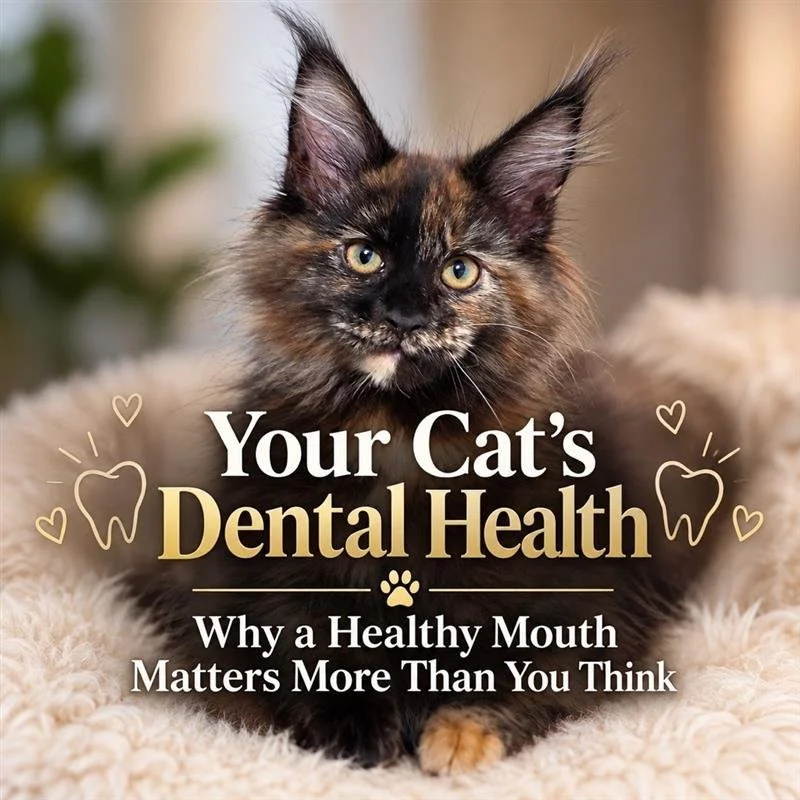
Your Cat’s Dental Health: Why a Healthy Mouth Matters More Than You Think 🧷
When we think about keeping our cats healthy, we often focus on nutrition, grooming, exercise, and regular veterinary visits. But there’s one important part of feline health that many cat owners overlook: dental care!
Just like humans, cats need healthy teeth and gums to live comfortable, happy lives. Unfortunately, dental disease is one of the most common health problems affecting adult cats, and it can develop long before owners notice anything is wrong.
At A Velvet Claw Maine Coon Cattery, we believe that educating cat owners is an important part of responsible cat ownership. That’s why we’re dedicating this entire week to something every cat parent should understand: feline dental health.
🦷 Why Is Dental Health So Important for Cats?
Your cat uses their mouth for much more than eating. Their teeth help them grasp food, groom themselves, and interact with their environment.
When dental problems develop, everyday activities can become uncomfortable or even painful.
Dental disease can cause:
Painful, inflamed, or bleeding gums
Persistent bad breath
Difficulty chewing or eating
Loose or damaged teeth
Oral infections
Tooth loss
Changes in behavior caused by discomfort
Cats are especially good at hiding pain. A cat with significant dental disease may continue eating, playing, and behaving normally.
That means your cat could be experiencing dental discomfort without showing obvious symptoms.
🐾 Understanding Plaque and Tartar
Dental problems often begin with something very familiar: plaque.
Plaque is a sticky film of bacteria that continuously forms on the surface of your cat’s teeth.
If plaque isn’t removed regularly, it can mineralize into hardened tartar, also called dental calculus.
Over time, plaque accumulating near the gumline can contribute to gingivitis, which is inflammation of the gums.
Without appropriate care, some cats develop periodontal disease, which damages the tissues and bone supporting their teeth.
The good news? Consistent preventive care can make a meaningful difference.
🐱 Are Maine Coons More Prone to Dental Problems?
Maine Coons, like all cat breeds, can develop dental disease.
While some cats may have individual or inherited predispositions to certain oral conditions, being a Maine Coon does not automatically mean a cat will develop dental problems.
One condition worth understanding is feline chronic gingivostomatitis, a painful inflammatory disease affecting the tissues of the mouth. It has been reported in Maine Coons, although it can occur in other breeds as well.
Maine Coon owners should pay attention to changes in their cat’s gums, breath, eating habits, and overall comfort.
Remember, even a young cat can develop oral health problems.
❤️ Five Warning Signs Your Cat May Have Dental Problems
1. Persistent bad breath
A consistently unpleasant odor coming from your cat’s mouth can be a sign of dental disease. Healthy cat breath should not be persistently foul.
2. Red, swollen, or bleeding gums
Healthy gums are generally pink, although normal pigmentation varies. Redness, swelling, or bleeding should be evaluated by a veterinarian.
3. Changes in eating habits
Your cat may begin dropping food, chewing on one side, preferring softer foods, or eating less.
4. Excessive drooling or pawing at the mouth
These behaviors can indicate oral discomfort, particularly if they’re new or accompanied by other symptoms.
5. Changes in personality or grooming
Some cats become withdrawn, irritable, or less interested in grooming when they’re experiencing pain.
Important: Cats may have significant dental disease without displaying any of these warning signs. Regular veterinary examinations are essential.
🪥 Can You Prevent Dental Disease?
While not every dental condition is preventable, there are several ways to support your cat’s oral health.
Brush your cat’s teeth regularly.
Daily brushing with cat-safe toothpaste is one of the most effective ways to reduce plaque buildup. Never use human toothpaste, which can contain ingredients unsafe for cats.
Schedule routine veterinary dental examinations.
Your veterinarian can evaluate your cat’s mouth and recommend professional dental cleaning when necessary. A complete dental assessment may require anesthesia and dental X-rays to identify problems beneath the gumline.
Consider veterinarian-recommended dental products.
Some dental diets, treats, and oral care products can help reduce plaque or tartar. Look for products accepted by the Veterinary Oral Health Council (VOHC).
Start dental care early when possible.
Introducing gentle oral handling and toothbrushing during kittenhood can make dental care easier as your cat grows.
Never ignore changes in your cat’s mouth.
If your cat develops bleeding gums, difficulty eating, significant drooling, or other signs of oral pain, contact your veterinarian.
👑 Building Healthy Habits for a Lifetime
At A Velvet Claw Maine Coon Cattery, we believe responsible cat ownership goes far beyond providing food, toys, and a comfortable home.
It’s about understanding your cat’s needs throughout every stage of life.
Whether you’re raising a playful Maine Coon kitten or caring for a beloved senior cat, dental health deserves a place in your regular care routine.
And remember, it’s never too late to speak with your veterinarian about improving your cat’s oral health.
🐾 Coming Up This Week: Feline Dental Health Education
We’re spending the entire week exploring ways to keep our cats’ teeth and gums healthy!
We’ll discuss how to brush your cat’s teeth, what dental products actually help, common dental problems, and ways to make dental care less stressful for both you and your cat.
Our goal is simple: help cat parents feel more confident caring for their feline companions.
Because a healthy mouth is an important part of a happy, comfortable life.
Extraordinary Cats. Brighter Tomorrows.
A Velvet Claw Maine Coon Cattery - Melina & Lexie
www.avelvetclaw.com
Educational Disclaimer: This article is intended for general feline health education and does not replace professional veterinary advice. Always consult your veterinarian about your cat’s individual dental care needs.